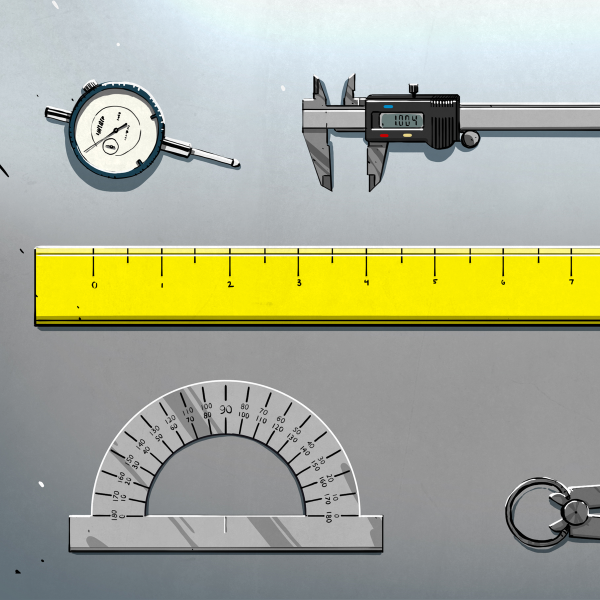
A Tale Of Tutor Texts

Have you ever had one of those books that let you choose your own adventure? You know, the book will say “The bully tells you to hand over the secret message. If you want to run away, turn to page 48. If you want to fight him, turn to page 70.” While this is normally a staple of children’s literature, there were a series of training books known as Tutor Texts that used the format to teach technical topics.

In fact, one of these books was my first introduction to computer programming more years ago than I care to admit. But it wasn’t just computer programming. There were titles from the same publisher about trigonometry, slide rules, and even how to play bridge. I own four of these old books and it got me to thinking about how we deliver information on the web. Maybe these books were ahead of their time.

Continue reading “A Tale Of Tutor Texts”

The Mini Console Revolution, And Why Hackers Passed Them By

The Raspberry Pi was initially developed as an educational tool. With its bargain price and digital IO, it quickly became a hacker favorite. It also packed just enough power to serve as a compact emulation platform for anyone savvy enough to load up a few ROMs on an SD card.

Video game titans haven’t turned a blind eye to this, realising there’s still a market for classic titles. Combine that with the Internet’s love of anything small and cute, and the market was primed for the release of tiny retro consoles.

Often selling out quickly upon release, the devices have met with a mixed reception at times due to the quality of the experience and the games included in the box. With so many people turning the Pi into a retrogaming machine, these mini-consoles purpose built for the same should have been immediately loved by hardware hackers, right? So what happened?

Continue reading “The Mini Console Revolution, And Why Hackers Passed Them By”

Dealing With A Hacked Brain; Let’s Talk About Depression

This post is different from normal Hackaday fare. I don’t want to presume anything about you, but I’m pretty sure the story I’m about to share resonates with at least some of you.

I’ve been having a tough time, exacerbated by this age of social distancing. This all crept up on me at first, but as I began to look back on my behavior and moods, I began noticing patterns that I hadn’t noticed before. This is certainly a relevant issue in this community, so let’s talk about mental health, beginning with my own journey.

Continue reading “Dealing With A Hacked Brain; Let’s Talk About Depression”

Frances Allen Optimised Your Code Without You Even Knowing

In 2020, our digital world and the software we use to create it are a towering structure, built upon countless layers of abstraction and building blocks — just think about all the translations and interactions that occur from loading a webpage. Whilst abstraction is undoubtedly a great thing, it only works if we’re building on solid ground; if the lower levels are stable and fast. What does that mean in practice? It means low-level, compiled languages, which can be heavily optimised and leveraged to make the most of computer hardware. One of the giants in this area was Frances Allen, who recently passed away in early August. Described by IBM as “a pioneer in compiler organization and optimization algorithms,” she made numerous significant contributions to the field. Continue reading “Frances Allen Optimised Your Code Without You Even Knowing”

Damage To Arecibo Leaves Gaping Hole In Astronomy

In the early morning hours of August 10th, a support cable at the Arecibo Observatory pulled lose from its mount and crashed through the face of the primary reflector below. Images taken from below the iconic 305 meter dish, made famous by films such as Contact and GoldenEye, show an incredible amount of damage. The section of thick cable, estimated to weigh in at around 6,000 kilograms (13,000 pounds), had little difficulty tearing through the reflector’s thin mesh construction.

Worse still, the cable also struck the so-called “Gregorian dome”, the structure suspended over the dish where the sensitive instruments are mounted. At the time of this writing it’s still unclear as to whether or not any of that instrumentation has been damaged, though NASA at least has said that the equipment they operate inside the dome appears to have survived unscathed. At the very least, the damage to the dome structure itself will need to be addressed before the Observatory can resume normal operations.

The Arecibo Observatory by JidoBG [CC-BY-SA 4.0]
But how long will the repairs take, and who’s going to pay for them? It’s no secret that funding for the 60 year old telescope has been difficult to come by since at least the early 2000s. The cost of repairing the relatively minor damage to the telescope sustained during Hurricane Maria in 2017 may have been enough to shutter the installation permanently if it hadn’t been for a consortium led by the University of Central Florida. They agreed to share the burden of operating the Observatory with the National Science Foundation and put up several million dollars of additional funding.

It’s far too early to know how much time and money it will take to get Arecibo Observatory back up to operational status, but with the current world situation, it seems likely the telescope will be out of commission for at least the rest of the year. Given the fact that repairs from the 2017 damage still haven’t been completed, perhaps even longer than that. In the meantime, astronomers around the globe are left without this wholly unique resource.

Continue reading “Damage To Arecibo Leaves Gaping Hole In Astronomy”

Microsoft Flight Simulator’s Data Insanity Spawns Enormous Buildings And Anomalies From OpenStreetMap

The OpenStreetMap project is an excellent example of how powerful crowdsourced data can be, but that’s not to say the system is perfect. Invalid data, added intentionally or otherwise, can sometimes slip through the cracks and lead to some interesting problems. A fact that developers Asobo Studio are becoming keenly aware of as players explore their recently released Microsoft Flight Simulator 2020.

Like a Wiki, users can update OpenStreetMap and about a year ago, user nathanwright120 marked a 2 story building near Melbourne, Australia as having an incredible 212 floors (we think it’s this commit). The rest of his edits seem legitimate enough, so it’s a safe bet that it was simply a typo made in haste. The sort of thing that could happen to anyone. Not long after, thanks to the beauty of open source, another user picked up on the error and got it fixed up.

But not before some script written by Asobo Studio went through sucked up the OpenStreetMap data for Australia and implemented it into their virtual recreation of the planet. The result is that the hotly anticipated flight simulator now features a majestic structure in the Melbourne skyline that rises far above…everything.

The whole thing is great fun, and honestly, players probably wouldn’t even mind if it got left in as a Easter egg. It’s certainly providing them with some free publicity; in the video below you can see a player by the name of Conor O’Kane land his aircraft on the dizzying edifice, a feat which has earned him nearly 100,000 views in just a few days.

But it does have us thinking about filtering crowdsourced data. If you ask random people to, say, identify flying saucers in NASA footage, how do you filter that? You probably don’t want to take one person’s input as authoritative. What about 10 people? Or a hundred?

Continue reading “Microsoft Flight Simulator’s Data Insanity Spawns Enormous Buildings And Anomalies From OpenStreetMap”

Airlines Seek Storage For Grounded Fleets Due To COVID-19

Ask any airline executive what their plans were back in January 2020, and you’d probably get the expected spiel about growing market share and improving returns for shareholders. Of course, the coronovirus pandemic quickly changed all that in the space of just a few months. Borders closed, and worldwide air travel ground to a halt.

Suddenly, the world’s airlines had thousands of planes and quite literally nowhere to go. Obviously, leaving the planes just sitting around in the open wouldn’t do them any good. So what exactly is involved in mothballing a modern airliner?

Continue reading “Airlines Seek Storage For Grounded Fleets Due To COVID-19”