Icestorm Tools Roundup: Open Source FPGA Dev Guide

We like the ICE40 FPGA from Lattice for two reasons: there are cheap development boards like the Icestick available for it and there are open source tools. We’ve based several tutorials on the Icestorm toolchain and it works quite well. However, the open source tools don’t always expose everything that you see from commercial tools. You sometimes have to dig a little to find the right tool or option.

Sometimes that’s a good thing. I don’t need to learn yet another fancy IDE and we have plenty of good simulation tools, so why reinvent the wheel? However, if you are only using the basic workflow of Yosys, Arachne-pnr, icepack, and iceprog, you could be missing out on some of the most interesting features. Let’s take a deeper look.

Continue reading “Icestorm Tools Roundup: Open Source FPGA Dev Guide”

Bitcoin’s Double Spending Flaw Was Hush-Hush During Rollout

For a little while it was possible to spend Bitcoin twice. Think of it like a coin on a string, you put it into the vending machine to get a delicious snack, but if you pull the string quickly enough you could spend it again on some soda too. Except this coin is worth something like eighty-grand.

On September 20, the full details of the latest fix for the Bitcoin Core were published. This information came two days after the fix was actually released. Two vulnerabilities were involved; a Denial of Service vulnerability and a critical inflation vulnerability, both covered in CVE-2018-17144. These were originally reported to several developers working on Bitcoin Core, as well as projects supporting other cryptocurrencies, including ABC and Unlimited.

Let’s take a look at how this worked, and how the network was patched (while being kept quiet) to close up this vulnerability.

Continue reading “Bitcoin’s Double Spending Flaw Was Hush-Hush During Rollout”

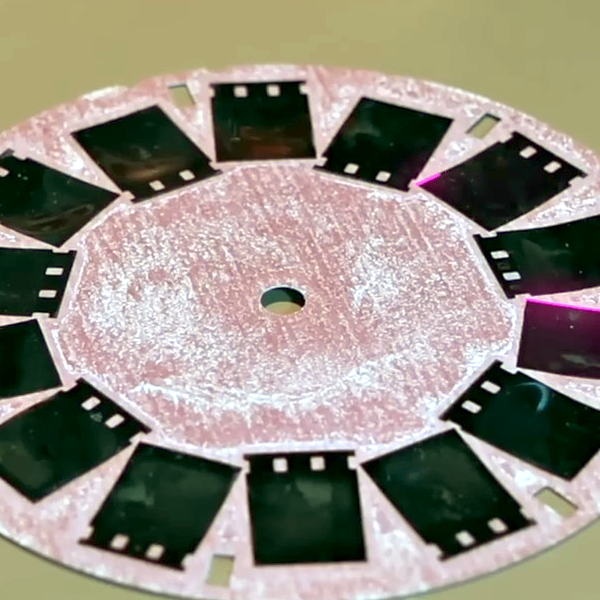
Remember When Blockbuster Video Tried Burning Game Cartridges On Demand?

By the onset of the 1990s one thing was clear, the future was digital. Analog format sales for music were down, CD sales were up; and it was evident, at least in the US, that people were bringing more computing devices into their homes. At the beginning of the decade, roughly 1 in 3 American households had a Nintendo Entertainment System in them, according to this Good Morning America segment.

With all those consoles out there, every shopping season became a contest of “who could wait in line the longest” to pickup the newest titles. This left last minute shoppers resorting to taking a rain check or return home empty handed. Things didn’t have to be this way. The digital world had emerged and physical media just needed to catch up. It would take an unlikely alliance of two disparate companies for others to open their minds.

Continue reading “Remember When Blockbuster Video Tried Burning Game Cartridges On Demand?”

Inductance In PCB Layout: The Good, The Bad, And The Fugly

When current flows through a conductor it becomes an inductor, when there is an inductor there is an electromagnetic field (EM). This can cause a variety of issues during PCB layout if you don’t plan properly, and sometimes we get burned even when we think we have planned for unwanted inductance and the effects that come with them.

When doing high speed logic we need to be able to deliver sudden changes in current to the devices if we want to have proper switching times and logic levels. Unfortunately inductance is usually not a friend in these circumstances as it resists those sudden changes in current. If the high speed devices are driving capacitive loads, which themselves are resisting changes in voltage, even more instantaneous current is needed.

Simply put, inductors resist a change of current, and can act as a low pass filter when in series with the signal or power supply flow. Inductors do this by storing energy in the flux surrounding the conductor. Alternatively capacitors resist a change in voltage (again by storing energy) and can act as a high pass filter when in series with the signal. This makes them a valuable tool in the fight against unwanted inductance in power supply distribution.

In the video below, and the remainder of this article, I’m going to dive into the concept of inductance and how it affects our design choices when laying out circuit boards.

Continue reading “Inductance In PCB Layout: The Good, The Bad, And The Fugly”

Laser Noob: Getting Started With The K40 Laser

Why spend thousands on a laser cutter/engraver when you can spend as little as $350 shipped to your door? Sure it’s not as nice as those fancy domestic machines, but the plucky K40 is the little laser that can. Just head on down to Al’s Laser Emporium and pick one up.  Yes, it sounds like a used car dealership ad, but how far is it from the truth? Read on to find out!

Laser cutting and engraving machines have been around for decades. Much like 3D printers, they were originally impossibly expensive for someone working at home. The closest you could get to a hobbyist laser was Epilog laser, which would still cost somewhere between $10,000 and $20,000 for a small laser system. A few companies made a go with the Epilog and did quite well – notably Adafruit used to offer laptop laser engraving services.

Over the last decade or so things have changed. China got involved, and suddenly there were cheap lasers on the market. Currently, there are several low-cost laser models available in various power levels. The most popular is the smallest – a 40-watt model, dubbed the K40. There are numerous manufacturers and there have been many versions over the years. They all look about the same though: A blue sheet metal box with the laser tube mounted along the back. The cutting compartment is on the left and the electronics are on the right. Earlier versions came with Moshidraw software and a parallel interface.

Continue reading “Laser Noob: Getting Started With The K40 Laser”

Can You “Take Back” Open Source Code?

It seems a simple enough concept for anyone who’s spent some time hacking on open source code: once you release something as open source, it’s open for good. Sure the developer might decide that future versions of the project close up the source, it’s been known to happen occasionally, but what’s already out there publicly can never be recalled. The Internet doesn’t have a “Delete” button, and once you’ve published your source code and let potentially millions of people download it, there’s no putting the Genie back in the bottle.

But what happens if there are extenuating circumstances? What if the project turns into something you no longer want to be a part of? Perhaps you submitted your code to a project with a specific understanding of how it was to be used, and then the rules changed. Or maybe you’ve been personally banned from a project, and yet the maintainers of said project have no problem letting your sizable code contributions stick around even after you’ve been kicked to the curb?

Due to what some perceive as a forced change in the Linux Code of Conduct, these are the questions being asked by some of the developers of the world’s preeminent open source project. It’s a situation which the open source community has rarely had to deal with, and certainly never on a project of this magnitude.

Is it truly possible to “take back” source code submitted to a project that’s released under a free and open source license such as the GPL? If so, what are the ramifications? What happens if it’s determined that the literally billions of devices running the Linux kernel are doing so in violation of a single developer’s copyright? These questions are of grave importance to the Internet and arguably our way of life. But the answers aren’t as easy to come by as you might think.

Continue reading “Can You “Take Back” Open Source Code?”

Building A Hardware Store Faraday Cage

Most Hackaday readers are no doubt familiar with the Faraday cage, at least in name, and nearly everyone owns one: if you’ve ever stood watching a bag of popcorn slowly revolve inside of a microwave, you’be seen Michael Faraday’s 1836 invention in action. Yet despite being such a well known device, the average hacker still doesn’t have one in their arsenal. But why?

It could be that there’s a certain mystique about Faraday cages, an assumption that their construction requires techniques or materials outside the realm of the home hacker. While it’s true that building a perfect Faraday cage for a given frequency involves math and careful attention to detail, putting together a simple model for general purpose use and experimentation turns out to be quick and easy.

As an exercise in minimalist hacking I recently built a basic Faraday cage out of materials sourced from Home Depot, and thought it would be interesting to not only describe its construction but give some ideas as to how one can put it to practical use in the home lab. While it’s hardly a perfect specimen, it clearly works, and it didn’t take anything that can’t be sourced locally pretty much anywhere in the world.

Continue reading “Building A Hardware Store Faraday Cage”