Escape Cable Hell With An Audio I/O Multiplexer

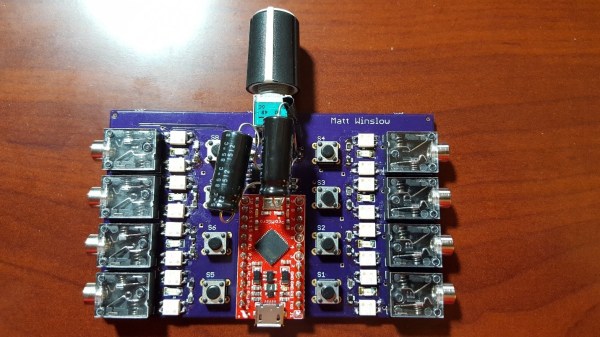
If you ever find yourself swapping between a mix of audio inputs and outputs and get tired of plugging cables all the time, check out [winslomb]’s audio multiplexer with integrated amplifier. The device can take any one of four audio inputs, pass the signal through an amplifier, and send it to any one of four outputs.

The audio amplifier has a volume control, and the inputs and outputs can be selected via button presses. An Arduino Pro Mini takes care of switching the relays based on the button presses. On the input side, you can plug in devices like a phone, TV, digital audio player or a computer. The output can be fed to speakers, headsets or earphones.

At the center of the build lies a TI TPA152 75-mW stereo audio power amplifier. This audio op-amp is designed to drive 32 ohm loads, so performance might suffer when connecting it to lower impedance devices, but it seems to work fine for headphones and small computer speakers. The dual-gang potentiometer controls the volume, and the chip has a useful de-pop feature. The circuit is pretty much a copy of the reference shown in the data sheet. Switching between inputs or outputs is handled by a bank of TLP172A solid state relays with MOSFET outputs, and it’s all tied together with a micro-controller, allowing for WiFi or BLE functionality to be added on later.

[winslomb] laid out the design using Eagle and he made a couple of footprint mistakes for the large capacitors and the opto-relays. (As he says, always double-check part footprints!) In the end, he solder-bridged them on to the board, but they should probably be fixed for the next revision.

[winslomb] built the switch as his capstone project while on his way to getting a Masters in EE, and although the device did function as required, there is still room for improvement. The GitHub repository contains all the hardware and software sources. Check out the video below where he walks through a demo of the device in action. If you are looking for something simpler, here is a two input – one output audio switcher with USB control and on the other end of the spectrum, here’s an audio switch that connects to the Internet.

Continue reading “Escape Cable Hell With An Audio I/O Multiplexer” →
Stellarator Is Germany’s Devilishly Complex Nuclear Fusion

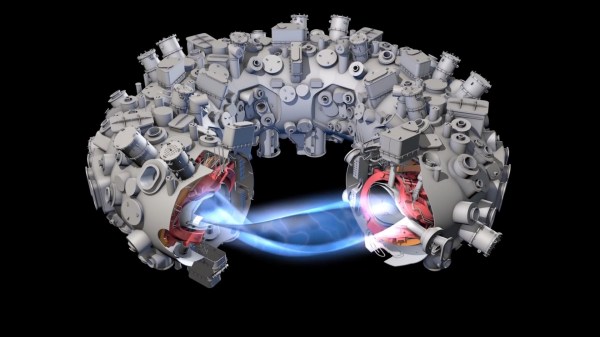
You may not have heard of a Stellarator before, but if all goes well later this month in a small university town in the far northeast of Germany, you will. That’s because the Wendelstein 7-X is finally going to be fired up. If it’s able to hold the heat of a fusion-capable plasma, it could be a huge breakthrough.

So what’s a stellarator? It’s a specific type of nuclear fusion containment geometry that, while devilishly complex to build and maintain, stands a chance at being the first fusion generator to achieve break-even, where the energy extracted from the fusion reaction is greater or equal to the energy used in creating the necessary hot plasma.

There’s an awesome video on the W7-X, and some of the theory behind the reactor just below the break.

Continue reading “Stellarator Is Germany’s Devilishly Complex Nuclear Fusion” →

Who Said FORTRAN Is Dead?

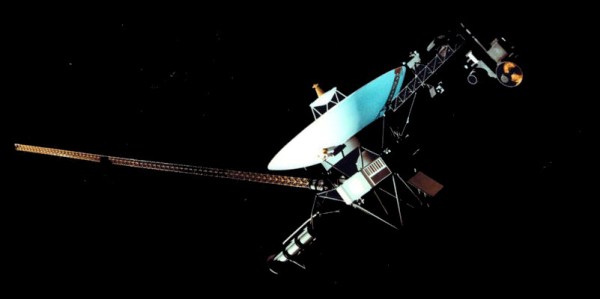
NASA has an urgent need for a FORTRAN developer to support the Voyager spacecraft. Popular Mechanics interviewed Voyager program manager [Suzanne Dodd] who is looking to fill [Larry Zottarell’s] shoes when he retires.

We had a lot of people comment on my recent Hackaday article, “This Is Not Your Father’s FORTRAN”, who studied the language at some point. Maybe one of you would like to apply? You need to do so soon! NASA is hoping to give the new hire six to twelve months with [Zottarell] for on-the-job training. You’ll need to brush up on your vintage assembly language too.

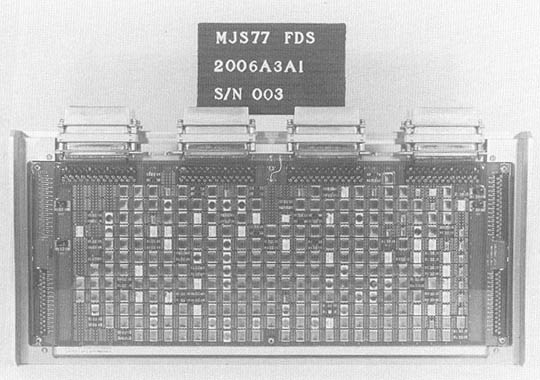
light data system hwThe two Voyagers were some of the first NASA spacecraft to use computers. The resources are limited in the three 40 year-old computers found on each probe. They handle the spacecraft’s science and flight software. The software is a little more recent having been updated only 25 years ago in 1990.

A big problem is a lot of the engineering design materials are no longer in existence. People’s memories of the events and reasons for decisions made that long ago are bit hazy. But NASA does have an emergency list of those former engineers when questions arise. That means this could be more than just a job where you program for ancient hardware, you could find a lot of reasons to interact with the people who pioneered this field!

This will be an awesome hack. Anyone up to doing remote computing at a distance of 12 billion miles?

A video on the history of the two voyagers is found after the break.

Continue reading “Who Said FORTRAN Is Dead?” →

A Peek Under The Hood Of The 741 Op-Amp

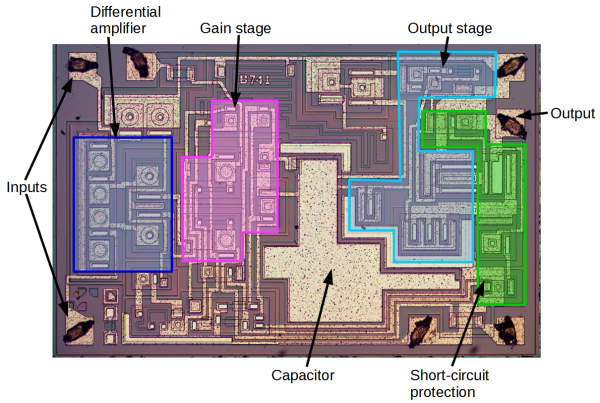
First introduced as an IC back in 1968, but with roots that go back to 1941, the 741 has been tweaked and optimized over the years and is arguably the canonical op-amp. [Ken Shirriff] decided to take a look inside everybody’s favorite op-amp, and ended up with some good-looking photomicrographs and a lot of background on the chip.

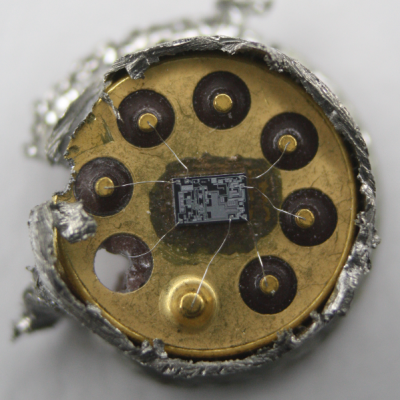
canRather than risk the boiling acid method commonly used to decap epoxy-potted ICs, [Ken] wisely chose a TO-99 can format to attack with a hacksaw. With the die laid bare for his microscope, he was able to locate all the major components and show how each is implemented in silicon. Particularly fascinating is the difference between the construction of NPN and PNP transistors, and the concept of “current mirrors” as constant current sources. And he even whipped up a handy interactive chip viewer – click on something in the die image and find out which component it is on the 741 schematic. Very nice.
We’ve seen lots of chip decappings before, including this reveal of TTL and CMOS logic chips. It’s nice to see the guts of the venerable 741 on display, though, and [Ken]’s tour is both a great primer for the newbie and a solid review for the older hands. Don’t miss the little slice of history he included at the end of the post.

Developed On Hackaday – HaDge Is Back To The Drawing Board

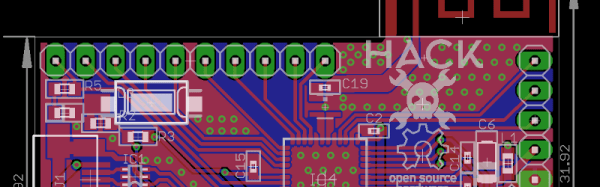
A couple of days back, we wrote about the HACK – a prototyping platform designed by [Michele Perla] based on the Atmel SAM R21 MCU. It’s one of the new breed of devices consisting of an ARM Cortex-M0 MCU + IEEE 802.15.4 Wireless radio bundled together. This was exciting since we could pack a lot of punch in the HaDge hardware. We planned to use the same design later to power the HaDge. Building HACK would have allowed us to get it in the hands of the software team, while the hardware folks worked on the real HaDge layout.

The HACK design was ready for review and we asked around to verify the antenna layout, which was the part we were not too sure about.  We asked Atmel for help with verifying the layout. That’s when we had the facepalm moment. They asked us – “What about FCC certification?” Since we plan to build the badges in quantities of a few hundred at the very least, it’s obvious we cannot escape from FCC certification. A design based around the R21 is ruled out – the cost of obtaining approval is pretty high. This means we need to punt the R21 and instead use an off-the-shelf radio module which is already FCC certified. Sigh.

Now the good news. This is a setback in terms of time, and effort put in by [Michele]. But beyond that, we’re good to go back to the drawing board and start afresh. First off, we decided to revert back to the Atmel D21 as the main controller. It’s a fairly decent MCU, and there’s a fairly robust tool chain available that a lot of people are familiar with. For the Radio, we are looking at some of these available options :

The last one from Microchip looks quite promising. But we’re open for better and cheaper suggestions, so please chime in with your comments.

Code Craft: Using Eclipse For Arduino Development

As we work on projects we’re frequently upgrading our tools. That basic soldering iron gives way to one with temperature control. The introductory 3D printer yields to one faster and more capable. One reason for this is we don’t really understand the restrictions of the introductory level tools. Sometimes we realize this directly when the tool fails in a task. Other times we see another hacker using a better tool and realize we must have one!.

The same occurs with software tools. The Arduino IDE is a nice tool for starting out. It is easy to use which is great if you have never previously written software. The libraries and the way it ties nicely into the hardware ecosystem is a boon.

When you start on larger projects, say you upgrade to a Due or Teensy for more code or memory space, the Arduino IDE can hamper your productivity. Moving beyond these limitations requires a new, better tool.

Where do we find a better tool? To begin, recognize, as [Elliot] points out that There is no Arduino “Language”, we’re actually programming in C or C++. We chose which language through the extension on the file, ‘c’ for C and ‘cpp’ for C++. An Arduino support library may be written in C or C++ depending on the developer’s preference. It’s all mix ‘n match.

Potentially any environment that supports C/C++ can replace the Arduino IDE. Unfortunately, this is not easy to do, at least for inexperienced developers, because it means setting up the language tool chain and tools for uploading to the board. A developer with that much experience might eschew an integrated development environment altogether, going directly to using makefiles as [Joshua] describes in Arduino Development; There’s a Makefile for That.

The reality is the Arduino IDE is not much more than a text editor with the ability to invoke the tools needed to compile and download the code to the Arduino. A professional IDE not only handles those details but provides additional capabilities that make the software development process easier.

Continue reading “Code Craft: Using Eclipse For Arduino Development” →

The Key To Modular Smartphones

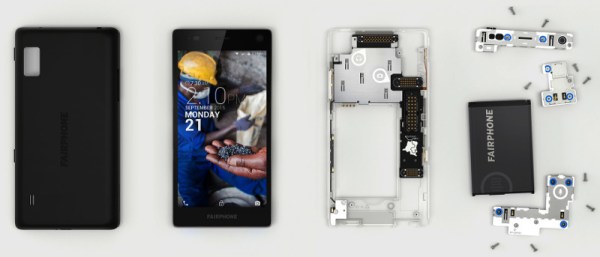
Cellphone startup Fairphone is now taking pre-orders for their modular smartphone, which is expected to start shipping in December of this year. Although I’m much more familiar with Google’s project Ara, this is the first modular concept to make it to market. It does lead me to a few questions though: is this actually a modular smartphone, and how widely will modular concepts be adopted?

Continue reading “The Key To Modular Smartphones” →