Archimedes Would Have Known Better If He Could Count To A Million

Today is March 14th, or Pi Day because 3.14 is March 14th rendered in month.day date format. A very slightly better way to celebrate the ratio of a circle’s circumference to its diameter is July 22nd, or 22/7 written in day/month order, a fractional approximation of pi that’s been used for thousands of years and is a better fit than 3.14. Celebrating Pi Day on July 22nd also has the advantage of eschewing middle-endian date formatting.

But Pi Day is completely wrong. We should be celebrating Tau Day, to celebrate the ratio of the circumference to the radius instead of the diameter. That’s June 28th, or 6.283185…. Nonetheless, today is Pi Day and in the absence of something truly new and insightful — we’re still waiting for someone to implement a spigot algorithm in 6502 assembly, by the way — this is a fantastic opportunity to discuss something tangentially related to pi, the history of mathematics, and the idea that human knowledge builds upon itself in an immense genealogy stretching back to the beginning of history.

This is our Pi Day article, but instead of complaining about date formats, or Tau, we’re going to do something different. This is how you approximate pi with the Monte Carlo method, and how anyone who can count to a million can get a better approximation of one the fundamental constants of the Universe than Archimedes.

Continue reading “Archimedes Would Have Known Better If He Could Count To A Million”

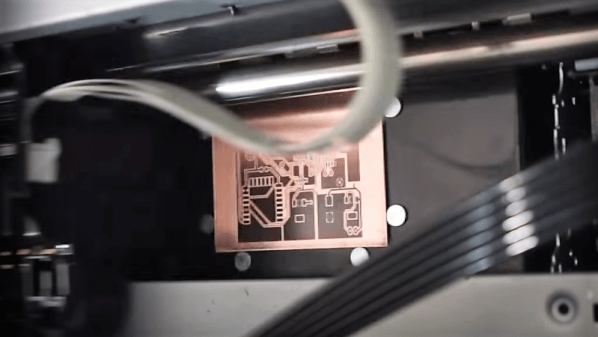
A DIY 5V-3V Switching Converter In The Space Of A TO-220 Package

We’re suckers for miniaturization projects. Stuff anything into a small enough package and you’ve probably got our attention. Make that something both tiny and useful, like this 5-volt to 3.3-volt converter in a TO-220 sized package, and that’s something to get excited about. It’s a switch mode power supply that takes the same space as a traditional linear regulator.

Granted, the heavy lifting in [Kevin Hubbard]’s diminutive buck converter is done by a PAM2305 DC-DC step-down converter chip which needs only a few supporting components. But the engineering [Kevin] put into this to squeeze everything onto a scrap of PCB 9-mm on a side is impressive. The largest passive on the board is the inductor in 0805. Everything else is in 0603, so you’ll be putting your SMD soldering skills to the test if you decide to make this. Check the video after the break for a speedrun through the hand soldering process.

The total BOM including the open-source PCB only runs a buck or two, and the end result is a supply with steady 750-mA output that can handle a 1-A surge for five seconds. We wonder if a small heatsink tab might not help that; along with some black epoxy potting, it would at least complete the TO-220 look.

[Kevin]’s Black Mesa Labs has a history of turning out interesting projects, from a legit video card for Arduino to a 100-watt hotplate for reflow work that’s the size of a silver dollar. We’re looking forward to whatever’s next — assuming we can see it.

Continue reading “A DIY 5V-3V Switching Converter In The Space Of A TO-220 Package”

Nicely Engineered Boost Converter Powers Nixies From USB Charger

Love them or hate them, Nixies are here to stay. Their enduring appeal is due in no small part to the fact that they’re hardly plug-and-play; generating the high-voltage needed to drive the retro displays is part of their charm. But most Nixie power supplies seem to want 9 volts or more on the input side, which can make integrating them into the typical USB-powered microcontroller project difficult.

Fixing that problem is the idea behind [Mark Smith]’s 5-volt Nixie power supply. The overall goal is simple: 5 volts in, 170 volts out at 20 mA. But [Mark] paid special care to minimize the EMI output of the boost converter through careful design, and he managed to pack everything into a compact 14-cm² PCB. He subjected his initial design to a lot of careful experimentation to verify that he had met his design goals, and then embarked on a little tweaking mission in KiCad to trim the PCB’s footprint down by 27%. The three separate blog posts are well worth a read by anyone interested in learning about electronics design.

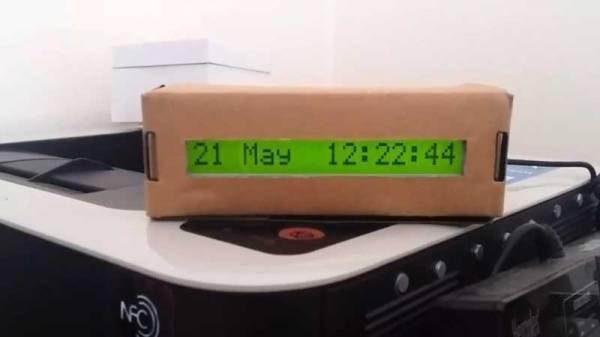
Now that [Mark] has his Nixie power supply, what will become of it? We can’t say for sure, but it’ll be a clock. It’s always a clock. Unless it’s a power meter or a speedometer.

Touchless Shop Doors Over-Engineered To A Blissful Level

When [John Saunders] wanted an automatic door for his shop, rather than settle for a commercial unit, he designed and built a proximity-sensing opener to ease his passing. Sounds simple, right?

Fortunately for us, there are no half-measures at Saunders Machine Works, thanks to the multiple Tormach workcells and the people who know how to use them. The video below treats us to quite a build as a result; the first part is heavy on machining the many parts for the opener, so skip ahead to 8:33 if you’re more interested in the control electronics and programming.

The opener uses time-of-flight distance sensors and an Arduino to detect someone approaching, with a pneumatic cylinder to part a plastic strip curtain. [John] admits to more than a little scope creep with this one, which is understandable when you’ve got easy access to the tools needed to create specialized parts at will.

In the end, though, it works well for everyone but [Judd], the shop dog, and it certainly looks like it was a fun build to boot. [John]’s enthusiasm for mixing machining and electronics is infectious; check out his automated bowl feeder for assembly line use.

Continue reading “Touchless Shop Doors Over-Engineered To A Blissful Level”

High-Effort Streaming Remote For Low-Effort Bingeing

There’s no limit to the amount of work some people will put into avoiding work. For instance, why bother to get up from your YouTube-induced vegetative state to adjust the volume when you can design and build a remote to do it for you?

Loath to interrupt his PC streaming binge sessions, [miroslavus] decided to take matters into his own hands. When a commercially available wireless keyboard proved simultaneously overkill for the job and comically non-ergonomic, he decided to build a custom streaming remote. His recent microswitch encoder is prominently featured and provides scrolling control for volume and menu functions, and dedicated buttons are provided for play controls. The device reconfigures at the click of a switch to support Netflix, which like YouTube is controlled by sending keystrokes to the PC through a matching receiver. It’s a really thoughtful design, and we’re sure the effort [miroslavus] put into this will be well worth the dozens of calories it’ll save in the coming years.

A 3D-printed DIY remote is neat, but don’t forget that printing can also save a dog-chewed remote and win the Repairs You Can Print contest.

Continue reading “High-Effort Streaming Remote For Low-Effort Bingeing”

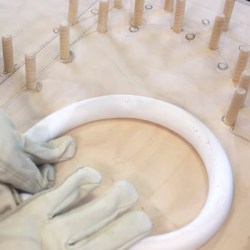
Mechanical Wooden Turing Machine

Alan Turing theorized a machine that could do infinite calculations from an infinite amount of data that computes based on a set of rules. It starts with an input, transforms the data and outputs an answer. Computation at its simplest. The Turing machine is considered a blueprint for modern computers and has also become a blueprint for builders to challenge themselves for decades.

Inspired by watching The Imitation Game, a historical drama loosely based on Alan Turing, [Richard J. Ridel] researched Alan Turing and decided to build a Turing machine of his own. During his research, he found most machines were created using electrical parts so he decided to challenge himself by building a purely mechanical Turing machine.

Unlike the machine Alan Turing hypothesized, [Richard J. Ridel] decided on building a machine that accommodated three data elements (0, 1, and “b” for blank) and three states. This was informed by research he did on the minimum amount of data elements and states a machine could have in order to perform any calculation along with his own experimentation and material constraints.

Read more about Richard’s trial and error build development, how his machine works, and possible improvements in the document he wrote linked to above. It’s a great document of process and begs you to learn from it and take on your own challenge of building a Turing machine.

For more inspiration on how to build a Turing machine check out how to build one using readily available electronic components.

Continue reading “Mechanical Wooden Turing Machine”

Building A Bioactive Vivarium From An IKEA Shelf

Pets are often worth a labour of love. [leftthegan] — in want of a corn snake — found that Sweden’s laws governing terrarium sizes made all the commercial options to too small for a fully-grown snake. So they took matters into their own hands, building a bioactive vivarium for their pet!

[leftthegan] found an IKEA Kallax 4×4 shelving unit for a fair price, and after a few design iterations — some due to the aforementioned regulations — it was modified by adding a shelf extension onto the front and cutting interior channels for cabling. For the vivarium’s window, they settled on plexiglass but strongly recommend glass for anyone else building their own as the former scratches and bends easily — not great if their snake turns out to be an escape artist! In the interim, a 3D printed handle works to keep the window closed and locked.

Continue reading “Building A Bioactive Vivarium From An IKEA Shelf”