Wave Goodbye To Honda Asimo, A Robot That Would Wave Back

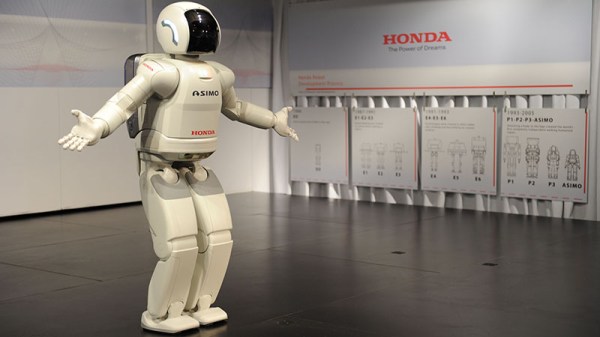
Fans of technology will recall a number of years when Honda’s humanoid robot Asimo seemed to be everywhere. In addition to its day job in a research lab, Asimo had a public relations side gig showing everyone that Honda is about more than cars and motorcycles. From trade shows to television programs, even amusement parks and concert halls, Asimo worked a busy publicity schedule. Now a retirement party may be in order, since the research project has reportedly been halted.

Asimo’s activity has tapered off in recent years so this is not a huge surprise. Honda’s official Asimo site itself hasn’t been updated in over a year. Recent humanoid robots in media are more likely to be in context of events like DARPA Robotics Challenge or from companies like Boston Dynamics. Plus the required technology has become accessible enough for us to build our own two-legged robots. So its torch has been passed on, but Asimo would be remembered as the robot who pioneered a lot of thinking into how humanoid robots would interact with flesh and blood humans. It was one of the first robots who could recognize human waving as a gesture, and wave back in return.

Many concepts developed from Asimo will live on as Honda’s research team shift focus to less humanoid form factors. We can see Honda’s new ambitions in their concept video released during CES 2018 (embedded below.) These robots are still designed to live and work alongside people, but now they are specialized to different domains and they travel on wheels. Which is actually a step closer to the Jetsons’ future, because Rosie rolls on wheels!

Continue reading “Wave Goodbye To Honda Asimo, A Robot That Would Wave Back”
Hackers Want Cambridge Dictionary To Change Their Definition

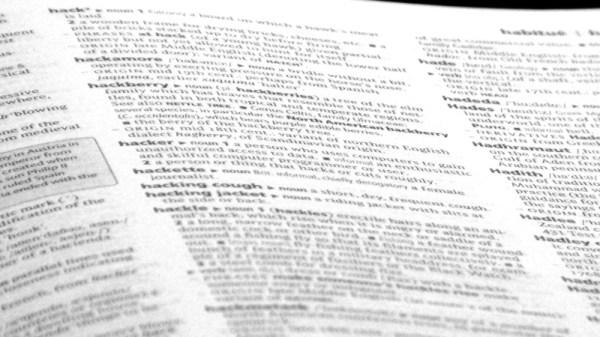
Maybe it’s the silly season of high summer, or maybe a PR bunny at a cybersecurity company has simply hit the jackpot with a story syndicated by the Press Association, but the non-tech media has been earnestly talking about a call upon the Cambridge Dictionary to remove the word “illegal” from their definition of “Hacker”. The weighty tome from the famous British university lists the word as either “a person who is skilled in the use of computer systems, often one who illegally obtains access to private computer systems:” in its learners dictionary, or as “someone who illegally uses a computer to access information stored on another computer system or to spread a computer virus” in its academic dictionary. The cybersecurity company in question argues that hackers in fact do a lot of the work that improves cybersecurity and are thus all-round Good Eggs, and not those nasty computer crooks we hear so much about in the papers.

We’re right behind them on the point about illegality, because while there are those who adopt the hacker sobriquet that wear hats of all colours including black, for us being a hacker is about having the curiosity to tinker with anything presented to us, whatever it is. It’s a word that originated among railway modelers (Internet Archived version), hardly a community that’s known for its criminal tendencies!

Popular Usage Informs Definition

It is however futile to attempt to influence a dictionary in this way. There are two types of lexicography: Prescriptive and Descriptive. With prescriptive lexicography, the dictionary instructs what something must mean or how it should be spelled, while descriptive lexicography tells you how something is used in the real world based on extensive usage research. Thus venerable lexicographers such as Samuel Johnson or Noah Webster told you a particular way to use your English, while their modern equivalents lead you towards current usage with plenty of examples.

It’s something that can cause significant discontent among some dictionary users as we can see from our consternation over the word “hacker”. The administration team at all dictionaries will be familiar with the constant stream of letters of complaint from people outraged that their pet piece of language is not reflected in the volume they regard as an authority. But while modern lexicographers admit that they sometimes walk in an uneasy balance between the two approaches, they are at heart scientists with a rigorous approach to evidence-based research, and are very proud of their efforts.

Big Data Makes for Big Dictionaries

Lexicographic research comes from huge corpora, databases of tens or hundreds of millions of words of written English, from which they can extract the subtlest of language trends to see where a word is going. These can be interesting and engrossing tools for anyone, not just linguists, so we’d urge you to have a go for yourself.

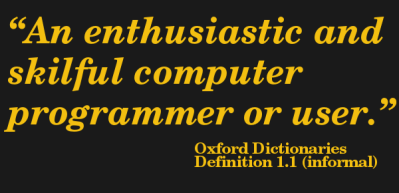
Sadly for us the corpus evidence shows the definition for “Hacker” has very firmly trended toward the tabloid newspaper meaning that associates cybercriminality. All we can do is subvert that trend by doing our best to own the word as we would prefer it to be used, re-appropriating it. At least the other weighty tome from a well-known British university has a secondary sense that we do agree with: An enthusiastic and skilful computer programmer or user“.

Disclosure: Jenny List used to work in the dictionary business.

SiFive Releases Smaller, Lower Power RISC-V Cores

Today, SiFive has released two new cores designed for the lower end of computing. This adds to the company’s existing portfolio of microcontrollers and SoCs based on the Open RISC-V ISA. Over the last two years, SiFive has introduced a number of cores based on the RISC-V ISA, an Open Architecture ISA that gives anyone to design and develop a microcontroller or microprocessor platform. These two new cores fill out the low-power end of SiFive’s core portfolio.

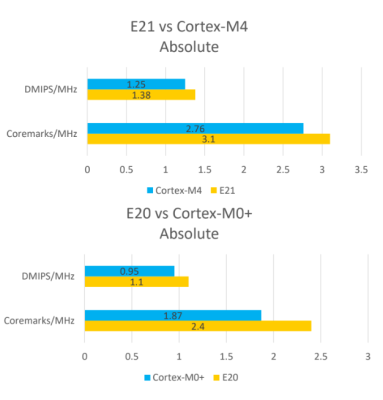
The two new cores included in the announcement are the SiFive E20 and E21, both meant for low-power applications, and according to SiFive presentations, they’re along the lines of an ARM Cortex-M0+ and ARM Cortex-M4. This is a core — it’s not a chip yet — but since the introduction of SiFive’s first microcontrollers, many companies have jumped on the RISC-V bandwagon. Western Digital, for example, has committed to using the RISC-V architecture in SoCs and as controllers for hard drive, SSDs, and NASes.

The first chip from SiFive was the HiFive 1, which was based on the SiFive E31 CPU. We got our hands on the HiFive 1 early last year, and it is a beast. With the standard complement of benchmarks, in terms of raw power, it’s approximately twice as fast as the Teensy 3.6, based on the Kinetis K66, a 180 MHz ARM Cortex-M4F. The SiFive E31 is about 1.5 times as fast as the Teensy 3.6 on a pure calculations per clock basis. This is remarkable because the Teensy 3.6 is our go-to standard for when you want to toggle pins really really fast with a cheap, readily available microcontroller platform.
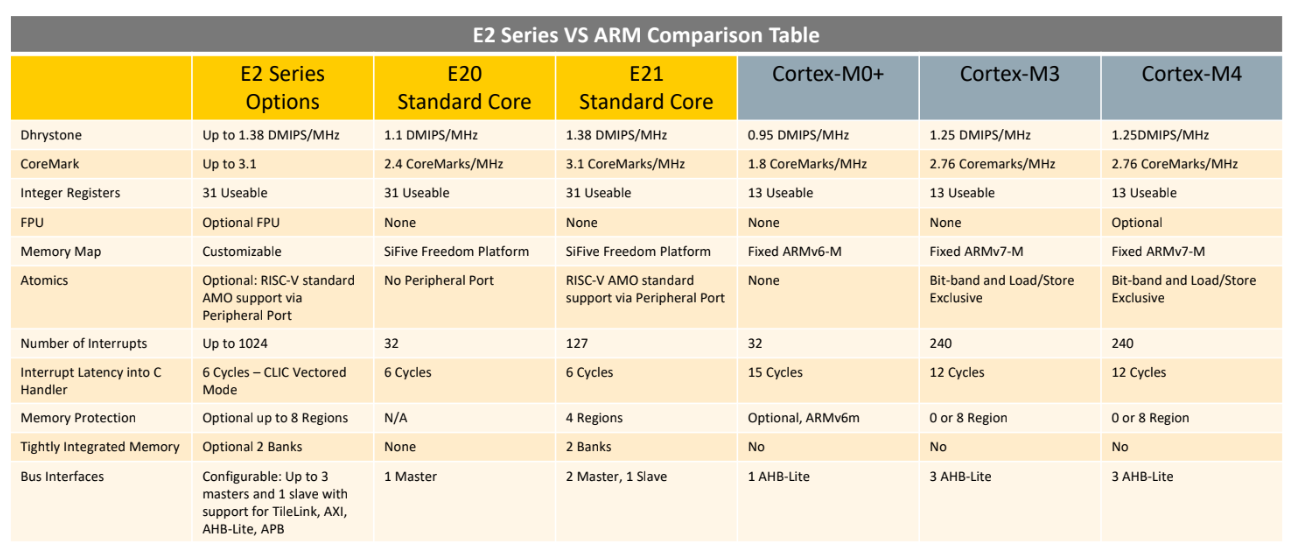
But sometimes you don’t need the fastest or best microcontroller. To that end, SiFive is looking toward a lower-power microcontroller based on the RISC-V core. The new offerings are built on the E2 Core IP series, with two standard cores. The E21 core provides mainstream performance for microcontrollers, and the E20 core is the most power-efficient core offered by SiFive. In effect, the E21 core is a replacement for the ARM Cortex-M3 and Cortex-M4, while the E20 is a replacement for the ARM Cortex-M0+.

Just a few months ago, SiFive released a gigantic, multicore, Linux-capable processor called the HiFive Unleashed. With support for DDR4 and Gigabit Ethernet, this chip would be more at home in a desktop than an Internet of Things thing. The most popular engine ever produced isn’t a seven-liter turbo diesel, it’s whatever goes into a Honda econobox; likewise, many more low-power microcontrollers like the Cortex-M0 and -M3 are sold than the newer, more powerful, and more expensive chips. Even though it’s not as exciting as a new workstation CPU, the world needs microcontrollers, and the more Open, the better.

Nvidia Transforms Standard Video Into Slow Motion Using AI

Nvidia is back at it again with another awesome demo of applied machine learning: artificially transforming standard video into slow motion – they’re so good at showing off what AI can do that anyone would think they were trying to sell hardware for it.

Though most modern phones and cameras have an option to record in slow motion, it often comes at the expense of resolution, and always at the expense of storage space. For really high frame rates you’ll need a specialist camera, and you often don’t know that you should be filming in slow motion until after an event has occurred. Wouldn’t it be nice if we could just convert standard video to slow motion after it was recorded?

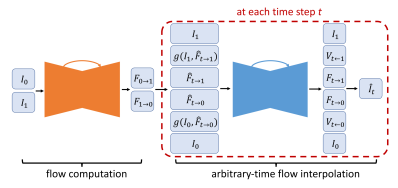
That’s just what Nvidia has done, all nicely documented in a paper. At its heart, the algorithm must take two frames, and artificially create one or more frames in between. This is not a manual algorithm that interpolates frames, this is a fully fledged deep-learning system. The Convolutional Neural Network (CNN) was trained on over a thousand videos – roughly 300k individual frames.

Since none of the parameters of the CNN are time-dependent, it’s possible to generate as many intermediate frames as required, something which sets this solution apart from previous approaches.  In some of the shots in their demo video, 30fps video is converted to 240fps; this requires the creation of 7 additional frames for every pair of consecutive frames.

The video after the break is seriously impressive, though if you look carefully you can see the odd imperfection, like the hockey player’s skate or dancer’s arm. Deep learning is as much an art as a science, and if you understood all of the research paper then you’re doing pretty darn well. For the rest of us, get up to speed by wrapping your head around neural networks, and trying out the simplest Tensorflow example.

Continue reading “Nvidia Transforms Standard Video Into Slow Motion Using AI”

Bunnie Weighs In On Tariffs

[Bunnie] has penned his thoughts on the new 25% tariffs coming to many goods shipped from China to the US. Living and working both in the US and China, [Bunnie] has a unique view of manufacturing and trade between the two countries. The creator of Novena and Chumby, he’s also written the definitive guide on Shenzen electronics.

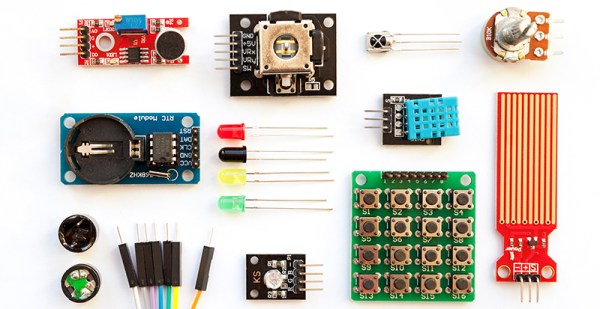
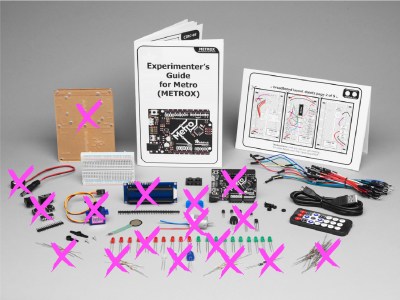
All the marked items are included in the new tariffs

The new US tariffs come into effect on July 6th. We covered the issue last week, but Bunnie has gone in-depth and really illustrates how these taxes will have a terrible impact on the maker community. Components like LEDs, resistors, capacitors, and PCBs will be taxed at the new higher rate. On the flip side, Tariffs on many finished consumer goods such as cell phone will remain unchanged.

As [Bunnie] illustrates, this hurts small companies buying components. Startups buying subassemblies from China will be hit as well. Educators buying parts kits for their classes also face the tax hike. Who won’t be impacted? Companies building finished goods. If the last screw of your device is installed in China, there is no tax. If it is installed in the USA, then you’ll pay 25% more on your Bill of Materials (BOM). This incentivizes moving assembly offshore.

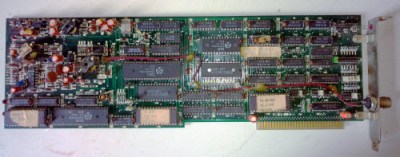
What will be the end result of all these changes? [Bunnie] takes a note from Brazil’s history with a look at a PC ISA network card. With DIP chips and all through-hole discrete components, it looks like a typical 80’s design. As it turns out the card was made in 1992. Brazil had similar protectionist tariffs on high-tech goods back in the 1980’s. As a result, they lagged behind the rest of the world in technology. [Bunnie] hopes these new tariffs don’t cause the same thing to happen to America.


[Thanks to [Robert] and [Christian] for sending this in]

Changing Color Under Pressure

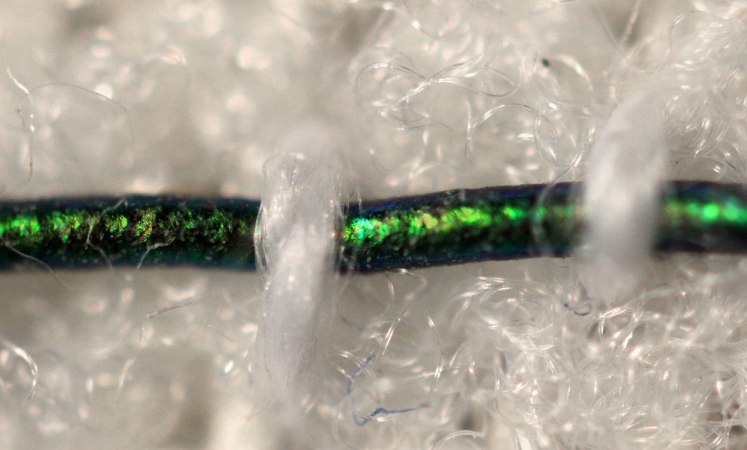
When you saw the picture for this article, did you think of a peacock’s feather? These fibers are not harvested from birds, and in fact, the colors come from transparent rubber. As with peacock feathers, they come from the way light reflects off layers of differing materials, this is known as optical interference, and it is the same effect seen on oil slicks. The benefit to using transparent rubber is that the final product is flexible and when drawn, the interference shifts. In short, they change color when stretched.

Most of the sensors we see and feature are electromechanical, which has the drawback that we cannot read them without some form of interface. Something like a microcontroller, gauge, or a slew of 555 timers. Reading a single strain gauge on a torque wrench is not too tricky, but simultaneously reading a dozen gauges spread across a more complex machine such as a quadcopter will probably require graphing software to generate a heat map. With this innovation it could now be done with an on-board camera in real-time. Couple that with machine learning and perhaps you could launch Skynet. Or build a better copter.

The current proof-of-concept weaves the fibers into next-generation bandages to give an intuitive sense of how tightly a dressing should be applied. For the average first-aid responder, the rule is being able to slide a finger between the fabric and skin. That’s an easy indicator, but it only works after the fact whereas saying that the dressing should be orange while wrapping gives constant feedback.

Making Electronics Just Got 25% More Expensive In The US

As reported by the BBC, the United States is set to impose a 25% tariff on over 800 categories of Chinese goods. The tariffs are due to come into effect in three weeks, on July 6th. Thousands of different products are covered under this new tariff, and by every account, electronic designers will be hit hard. Your BOM cost just increased by 25%.

The reason for this tariff is laid out in a report (PDF) from the Office of the United States Trade Representative. In short, this tariff is retaliation for the Chinese government subsidizing businesses to steal market share and as punishment for stealing IP. As for what products will now receive the 25% tariff, a partial list is available here (PDF). The most interesting product, by far, is nuclear reactors. This is a very specific list; one line item is, ‘multiphase AC motors, with an output exceeding 746 Watts but not exceeding 750 Watts’.

Of importance to Hackaday readers is the list of electronic components covered by the new tariff. Tantalum capacitors are covered, as are ceramic caps. Metal oxide resistors are covered. LEDs, integrated circuits including processors, controllers, and memories, and printed circuit assemblies are covered under this tariff. In short, nearly every bit that goes into anything electronic is covered.

This will hurt all electronics manufacturers in the United States. For a quick example, I’m working on a project using half a million LEDs. I bought these LEDs (120 reels) two months ago for a few thousand dollars. This was a fantastic buy; half a million of the cheapest LEDs I could find on Mouser would cost seventeen thousand dollars. Sourcing from China saved thousands, and if I were to do this again, I may be hit with a 25% tariff. Of course; the price on the parts from Mouser will also go up — Kingbright LEDs are also made in China. Right now, I have $3000 worth of ESP-12e modules sitting on my desk. If I bought these three weeks from now, these reels of WiFi modules would cost $3750.

There are stories of a few low-volume manufacturers based in the United States getting around customs and import duties. One of these stories involves the inexplicable use of the boxes Beats headphones come in. But (proper) electronics manufacturing isn’t usually done by simply throwing money at random people in China or committing customs fraud. These tariffs will hit US-based electronics manufacturers hard, and the margins on electronics may not be high enough to absorb a 25% increase in the cost of materials.

Electronics made in America just got 25% more expensive to produce.