Corral Some Zippy Blue Flames Into 3D Printed Troughs

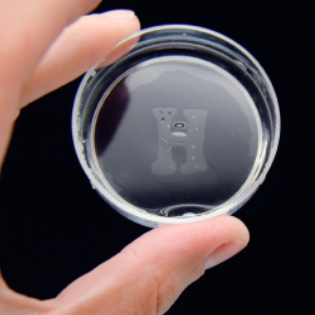
[Steve Mould] came across an interesting little phenomenon of blue flames zipping around a circular track. This led to diving down a bit of a rabbit hole about excitable mediums, ultimately leading him to optimize the shapes and come up with some pretty wild variations which he shows off in a video (also embedded below.)

After figuring out that the moving flame depended on combustion of fuel vapor in an environment that didn’t allow for the whole surface to stay lit at once, [Steve] tried to optimize the design of 3d-printed channels and raceways to encourage this effect, and he came up with some pretty novel ones. The 3D models are here if you’d like to try them for yourself (we especially like the “figure eight” and “rays” models.)

The video is an excellent show & tell of everything [Steve] dove into, complete with plenty of demonstrations of harnessing this effect to create some nifty running flames. Check it out in the video below, and if unintuitive physical effects are your thing, don’t miss [Steve]’s peeling apart of the turntable paradox.

Continue reading “Corral Some Zippy Blue Flames Into 3D Printed Troughs”

Wine In Beverage Cans Had A Rotten Egg Problem, Until Now

Aluminum beverage cans are used for all kinds of drinks, but when it comes to wine there are some glitches. Chief among them is the fact that canned wine occasionally smelled like rotten eggs. Thankfully, researchers have figured out why that happens, and how to stop it. How was this determined? As the image above hints at, lots and lots of samples and testing.

What causes this, and why don’t other beverages have this problem? Testing revealed that the single most important factor was the presence of molecular sulfur dioxide (SO2), a compound commonly used in winemaking as an antioxidant and antimicrobial.

It turns out that the thin plastic lining on the inside of beverage cans doesn’t fully stop molecular SO2 from reacting with the surrounding aluminum, creating hydrogen sulfide (H2S) in the process. H2S has a very noticeable rotten egg smell, even in low concentrations.

Researchers discovered that if a canned beverage contained more than 0.5 ppm of molecular SO2, a noticeable increase in hydrogen sulfide was likely to be present within four to eight months. The problem is that since most wines aim for around 0.5 ppm of SO2, the average can on wine sitting on a shelf will have a problem sooner rather than later. The more SO2 in the wine (reds tend to contain less, whites more), the worse the problem.

Simply increasing the thickness of the plastic liner is an imperfect solution since it increases manufacturing costs as well as waste. So, researchers believe the right move is to use a more durable liner formulation combined with a lower SO2 concentration than winemakers are usually comfortable with. Unlike bottles, cans can be hermetically sealed which should offset the increased oxidation risk of using a lower concentration of SO2. The result should be wine as a canned beverage, with a shelf life of at least 8 months.

The research is published here and gives a great look at just how one approaches this kind of scientific problem, as well as highlighting just how interesting the humble aluminum beverage can really is.

Synthesis Of Goldene: Single-Atom Layer Gold With Interesting Properties

The synthesis of single-atom layer versions of a range of atoms is currently all the hype, with graphene probably the most well-known example of this. These monolayers are found to have a range of mechanical (e.g. hardness), electrical (conduction) and thermal properties that are very different from the other forms of these materials. The major difficulty in creating monolayers is finding a way that works reliably and which can scale. Now researchers have found a way to make monolayers of gold – called goldene – which allows for the synthesis of relatively large sheets of this two-dimensional structure.

In the research paper by [Shun Kashiwaya] and colleagues (with accompanying press release) as published in Nature Synthesis, the synthesis method is described. Unlike graphene synthesis, this does not involve Scotch tape and a stack of graphite, but rather the wet-etching of Ti3Cu2 away from Ti3AuC2, after initially substituting the Si in Ti3SiC2 with Au. At the end of this exfoliation procedure the monolayer Au is left, which electron microscope studies showed to be stable and intact. With goldene now relatively easy to produce in any well-equipped laboratory, its uses can be explored. As a rare metal monolayer, the same wet exfoliation method used for goldene synthesis might work for other metals as well.

The Myth Of Propellantless Space Propulsion Refuses To Die

In a Universe ruled by the harsh and unyielding laws of Physics, it’s often tempting to dream of mechanisms which defy these rigid restrictions. Although over the past hundred years we have made astounding progress in uncovering ways to work within these restrictions — including splitting and fusing atoms to liberate immense amounts of energy — there are those who dream of making reality a bit more magical. The concept of asymmetrical electrostatic propulsion is a major player here, with the EmDrive the infamous example. More recently [Dr. Charles Buhler] proposed trying it again, as part of his company Exodus Propulsion Technologies.

This slide from Dr. Buhler’s APEC presentation shows the custom-made vacuum chamber built to test their propellantless Propulsion drive in a simulated space environment. Image Credit: Exodus Propulsion Technologies, Buhler, et al.

The problem with such propellantless space propulsion proposals is that they violate the core what we know about the physical rules, such as the conclusion by Newton that for any action there has to be an opposite reaction. If you induce an electrostatic field or whatever in some kind of device, you’d expect any kind of force (‘thrust’) this creates to act in all directions equally, ergo for thrust to exist, it has to push on something in the other direction. Rocket and ion engines (thrusters) solve this by using propellant that create the reaction mass.

The EmDrive was firmly disproven 2021 by [M. Tajmar] and colleagues in their paper titled High-accuracy thrust measurements of the EMDrive and elimination of false-positive effects as published in CEAS Space Journal, which had the researchers isolate the EmDrive from all possible outside influences. Since the reported thrust was on the level of a merest fraction of a Newton, even the impact from lighting in a room and body heat from the researchers can throw off the results, not to mention the heat developed from a microwave emitter as used in the EmDrive.

Meanwhile True Believers flock to the ‘Alt Propulsion Engineering Conference’ (APEC), as no self-respecting conference or scientific paper will accept such wishful claims. In the case of [Buhler], he claims that their new-and-improved EmDrive shows a force of 10 mN in a ‘stacked system’, yet no credible paper on the experiments can be found other than APEC presentations. Until their prototype is tested the way the EmDrive was tested by [M. Tajmar] et al., it seems fair to assume that the rules of physics as we know them today remain firmly intact.

Dual-Wavelength SLA 3D Printing: Fast Continuous Printing With ROMP And FRP Resins

As widespread as 3D printing with stereolithography (SLA) is in the consumer market, these additive manufacturing (AM) machines are limited to a single UV light source and the polymerization of free-radical polymerization (FRP) resins. The effect is that the object is printed in layers, with each layer adhering not only to the previous layer, but also the transparent (FEP or similar) film at the bottom of the resin vat. The resulting peeling of the layer from the film both necessitates a pause in the printing process, but also puts significant stress on the part being printed. Over the years a few solutions have been developed, with Sandia National Laboratories’ SWOMP technology (PR version) being among the latest.

Unlike the more common FRP-based SLA resins, SWOMP (Selective Dual-Wavelength Olefin Metathesis 3D-Printing) uses ring-opening metathesis polymerization (ROMP), which itself has been commercialized since the 1970s, but was not previously used with photopolymerization in this fashion. For the monomer dicyclopentadiene (DCPD) was chosen, with HeatMet (HM) as the photo-active olefin metathesis catalyst. This enables the UV-sensitivity, with an added photobase generator (PBG) which can be used to selectively deactivate polymerization.

Continue reading “Dual-Wavelength SLA 3D Printing: Fast Continuous Printing With ROMP And FRP Resins”

The Hunt For MH370 Goes On With Barnacles As A Lead

On March 8, 2014, Malaysia Airlines Flight 370 vanished. The crash site was never found, nor was the plane. It remains one of the most perplexing aviation mysteries in history. In the years since the crash, investigators have looked into everything from ocean currents to obscure radio phenomena to try and locate the plane. All have thus far failed to find the wreckage.

It was on July 2015 when a flaperon from the aircraft washed up on Réunion Island. It was the first piece of wreckage found, and it was hoped it could provide clues to the airliner’s final resting place. While it’s yet to reveal a final answer as to the aircraft’s fate, some of the ocean life living on it could help investigators need to find the plane. The picture is murky right now, but in an investigation where details are scarce, every little clue helps.

Continue reading “The Hunt For MH370 Goes On With Barnacles As A Lead”

The MUSE Permanent Magnet Stellarator: Fusion Reactor With Off-The-Shelf Parts

(a) The 12 permanent magnet holder subsegments. (b) The 16 planar, circular toroidal field coils are positioned inside the water-jet cut support structure. (c) The glass vacuum vessel is joined by 3D-printed low-thickness couplers. Glass ports were hot welded to the torus. (Credit: T.M. Qian et al., 2023)

When you think of a fusion reactor like a tokamak or stellarator, you are likely to think of expensive projects requiring expensive electromagnets made out of exotic alloys, whether superconducting or not. The MUSE stellarator is an interesting study in how to take things completely in the opposite direction. Its design and construction is described in a 2023 paper by [T.M. Qian] and colleagues in the Journal of Plasma Physics. The theory is detailed in a 2020 Physical Review Letters paper by [P. Helander] and colleagues. As the head of the Stellarator Theory at the Max Planck Institute, [P. Helander] is well-acquainted with the world’s most advanced stellarator: Wendelstein 7-X.

As noted in the paper by [P. Helander] et al., the use of permanent magnets can substantially simplify the magnetic-field coils of a stellarator, which are then primarily used for the toroidal magnetic flux. This simplification is reflected in the design of MUSE, as it only has a limited number of identical toroidal field coils, with the vacuum vessel surrounded by 3D printed structures that have permanent magnets embedded in them. These magnets follow a pattern that helps to shape the plasma inside the vacuum vessel, while not requiring a power supply or (at least theoretically) cooling.

Naturally, as noted by [P. Helander] et al, a limitation of permanent magnets is their limited field strength, inability to be tuned, and demagnetization at high temperatures. This may limit the number of practical applications of this approach, but researchers at Princeton Plasma Physics Laboratory (PPPL) recently announced in a self-congratulatory article that they will  ‘soon’ commence actual plasma experiments with MUSE. The lack of (cooled) divertors will of course limit the experiments that MUSE can be used for.