You know me, I like to get my feet involved when I use my computer, which happens pretty much all day every day at this point. My cache of pedal inputs keeps growing like mushrooms in the darkness under my desk: every upper case letter in this post and dozens more have been capitalized with a shift pedal!
Naturally, I’ve thought about what it might be like to mouse with my toes. The more time I can spend with both hands on the keyboard, the better. I started sniffing around for foot-sized trackball candidates, thinking maybe I could just build one with regular mouse guts. Then I found a 15-year-old Golden Tee home edition console at a thrift store. It has a large ball and four buttons, so it seemed ripe for turning into a mouse as-is, or just stealing the ball to build my own. So far, that hasn’t happened, though I did solder a bunch of wires for testing out the controls. Continue reading “Inputs Of Interest: BIGtrack Mouse Might Make You Squeal”→
Creating music is a perfect hobby for anyone into hacking, and the amount of musical hacks and self-made instruments we come across here makes that supremely evident. It’s just a great match: you can either go full-on into engineering mode as music is in the end “just” applied physics, or simply ignore all of the theory and take an artistic approach by simply doing whatever feels right. The sweet spot is of course somewhere in between — a solid grasp of some music theory fundamentals won’t hurt, but too much overthinking eventually will.
The obvious choice to combine a favorite pastime like electronics or programming with creating music would be in the realm of electronic music, and as compelling as building synthesizers sounds, I’ll be going for the next best thing instead: the electric guitar. Despite its general popularity, the enormous potential that lies within the electric guitar is rarely fully utilized. Everyone seems to just focus on amp settings and effect pedals when looking for that special or unique sound, while the guitar itself is seen as this immutable object bestowed on us by the universe with all its predestined, magical characteristics. Toggle a pickup switch, and if we’re feeling extra perky, give that tone pot a little spin, that’s all there is to it.
The thing is, the guitar’s electrical setup — or wiring — in its stock form simply is as boring and generic as it can get. Sure, it’s a safe choice that does the job well enough, but there’s this entirely different world of tonal variety and individual controllability locked inside of it, and all it really takes is a screwdriver and soldering iron to release it. Plus, this might serve as an interesting application area to dive into simple analog electronics, so even if guitars aren’t your thing yet, maybe this will tickle your creativity bone. And if bass is more your thing, well, let me be ignorant and declare that a bass is just a longer guitar with thicker, lower-tuned strings, meaning everything that follows pretty much applies to bass as well, even if I talk about guitars.
However, in order to modify something, it helps to understand how it functions. So today, we’ll only focus on the basics of an electric guitar, i.e. what’s inside them and what defines and affects their tone. But don’t worry, once we have the fundamentals covered, we’ll be all settled to get to the juicy bits next time.
If you have more than one Linux computer, you probably use ssh all the time. It is a great tool, but I’ve always found one thing about it strange. Despite having file transfer capabilities in the form of scp and sftp, there is no way to move a file back or forth between the local and remote hosts without starting a new program on the local machine or logging in from the remote machine back to the local machine.
That last bit is a real problem since you often access a server from behind a firewall or a NAT router with an ephemeral IP address, so it can’t reconnect to you anyway. It would be nice to hit the escape character, select a local or remote file, and teleport it across the interface, all from inside a single ssh session.
I didn’t quite get to that goal, but I did get pretty close. I’ll show you a script that can automatically mount a remote directory on the local machine. You’ll need sshfs on the local machine, but no changes on the remote machine where you may not be able to install software. With a little more work, and if your client has an ssh server running, you can mount a local directory on the remote machine, too. You won’t need to worry about your IP address or port blocking. If you can log into the remote machine, you are good.
Combined, this got me me very close to my goal. I can be working in a shell on either side and have access to read or write files on the other side. I just have to set it up carefully. Continue reading “Linux Fu: Simple SSH File Sharing”→
By now, you’ve likely heard that scientists have found a potential sign of biological life on Venus. Through a series of radio telescope observations in 2017 and 2019, they were able to confirm the presence of phosphine gas high in the planet’s thick atmosphere. Here on Earth, the only way this gas is produced outside of the laboratory is through microbial processes. The fact that it’s detectable at such high concentrations in the Venusian atmosphere means we either don’t know as much as we thought we did about phosphine, or more tantalizingly, that the spark of life has been found on our nearest planetary neighbor.
Venus, as seen by Mariner 10 in 1974
To many, the idea that life could survive on Venus is difficult to imagine. While it’s technically the planet most like Earth in terms of size, mass, composition, and proximity to the Sun, the surface of this rocky world is absolutely hellish; with a runaway greenhouse effect producing temperatures in excess of 460 C (840 F). Life, at least as we currently know it, would find no safe haven on the surface of Venus. Even the Soviet Venera landers, sent to the planet in the 1980s, were unable to survive the intense heat and pressure for more than a few hours.
While the surface may largely be outside of our reach, the planet’s exceptionally dense atmosphere is another story entirely. At an altitude of approximately 50 kilometers, conditions inside the Venusian atmosphere are far more forgiving. The atmospheric pressure at this altitude is almost identical to surface-level pressures on Earth, and the average temperature is cool enough that liquid water can form. While the chemical composition of the atmosphere is not breathable by Earthly standards, and the clouds of sulfuric acid aren’t particularly welcoming, it’s certainly not out of the realm of possibility that simple organisms could thrive in this CO2-rich environment. If there really is life on Venus, many speculate it will be found hiding in this relatively benign microcosm high in the clouds.
In short, all the pieces seem to be falling into place. Observations confirm a telltale marker of biological life is in the upper levels of the Venusian atmosphere, and we know from previous studies that this region is arguably one of the most Earth-like environments in the solar system. It’s still far too early to claim we’ve discovered extraterrestrial life, but it’s not hard to see why people are getting so excited.
But this isn’t the first time scientists have turned their gaze towards Earth’s twin. In fact, had things gone differently, NASA might have sent a crew out to Venus after the Apollo program had completed its survey of the Moon. If that mission had launched back in the 1970s, it could have fundamentally reshaped our understanding of the planet; and perhaps even our understanding of humanity’s place in the cosmos.
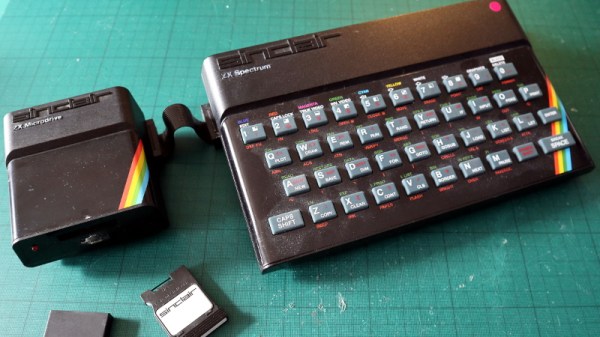
An enduring memory for most who used the 8-bit home computers of the early 1980s is the use of cassette tapes for program storage. Only the extremely well-heeled could afford a disk drive, so if you didn’t fancy the idea of waiting an eternity for your code to load then you were out of luck. If you had a Sinclair Spectrum though, by 1983 you had another option in the form of the unique Sinclair ZX Microdrive.
This was a format developed in-house by Sinclair Research that was essentially a miniaturized version of the endless-loop tape carts which had appeared as 8-track Hi-Fi cartridges in the previous decade, and promised lightning fast load times of within a few seconds along with a relatively huge storage capacity of over 80 kB. Sinclair owners could take their place alongside the Big Boys of the home computer world, and they could do so without breaking the bank too much.
The big news this week is the huge flaw in Microsoft’s Active Directory, CVE-2020-1472 (whitepaper). Netlogon is a part of the Windows domain scheme, and is used to authenticate users without actually sending passwords over the network. Modern versions of Windows use AES-CFB8 as the cryptographic engine that powers Netlogon authentication. This peculiar mode of AES takes an initialization vector (IV) along with the key and plaintext. The weakness here is that the Microsoft implementation sets the IV to all zeros.
XKCD.com CC BY-NC 2.5
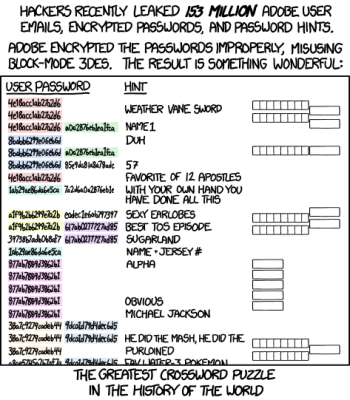
It’s worth taking a moment to cover why IVs exist, and why they are important. The basic AES encryption process has two inputs: a 128 bit (16 byte) plaintext, and a 128, 192, or 256 bit key. The same plaintext and key will result in the same ciphertext output every time. Encrypting more that 128 bits of data with this naive approach will quickly reveal a problem — It’s possible to find patterns in the output. Even worse, a clever examination of the patterns could build a decoding book. Those 16 byte patterns that occur most often would be guessed first. It would be like a giant crossword puzzle, trying to fill in the gaps.
This problem predates AES by many years, and thankfully a good solution has been around for a long time, too. Cipher Block Chaining (CBC) takes the ciphertext output of each block and mixes it (XOR) with the plaintext input of the next block before encrypting. This technique ensures the output blocks don’t correlate even when the plaintext is the same. The downside is that if one block is lost, the entire rest of the data cannot be decrypted Update: [dondarioyucatade] pointed out in the comments that it’s just the next block that is lost, not the entire stream. You may ask, what is mixed with the plaintext for the first block? There is no previous block to pull from, so what data is used to initialize the process? Yes, the name gives it away. This is an initialization vector: data used to build the initial state of a crypto scheme. Generally speaking, an IV is not secret, but it should be randomized. In the case of CBC, a non-random IV value like all zeros doesn’t entirely break the encryption scheme, but could lead to weaknesses. Continue reading “This Week In Security: AD Has Fallen, Two Factor Flaws, And Hacking Politicians”→
In 2018, the Camp Fire devastated a huge swathe of California, claiming 85 lives and costing 16.65 billion dollars. Measured in terms of insured losses, it was the most expensive natural disaster of the year, and the 13th deadliest wildfire in recorded history.
The cause of the fire was determined to be a single failed component on an electrical transmission tower, causing a short circuit and throwing sparks into the dry brush below – with predictable results. The story behind the failure was the focus of a Twitter thread by [Tube Time] this week, who did an incredible job of illuminating the material evidence that shows how the disaster came to be, and how it could have been avoided.
Mismanagement and Money
The blame for the incident has been laid at the feet of Pacific Gas and Electric, or PG&E, who acquired the existing Caribou-Palermo transmission line when it purchased Great Western Power Company back in 1930. The line was originally built in 1921, making the transmission line 97 years old at the time of the disaster. Despite owning the line for almost a full century, much of the original hardware was not replaced in the entire period of PG&Es ownership. Virtually no records were created or kept, and hardware from the early 20th century was still in service on the line in 2018.

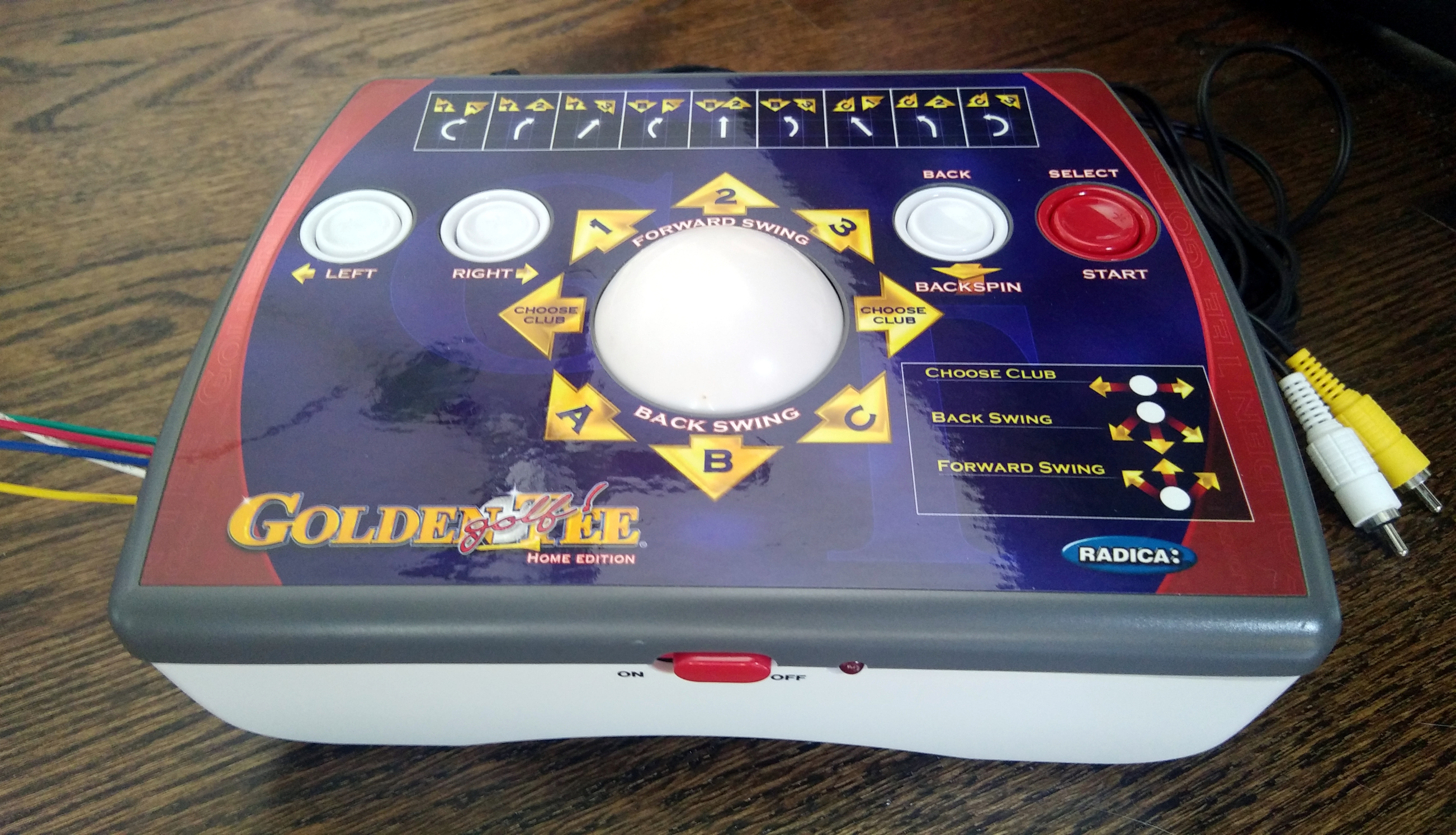 Naturally, I’ve thought about what it might be like to mouse with my toes. The more time I can spend with both hands on the keyboard, the better. I started sniffing around for foot-sized trackball candidates, thinking maybe I could just build one with regular mouse guts. Then I found a 15-year-old Golden Tee home edition console at a thrift store. It has a large ball and four buttons, so it seemed ripe for turning into a mouse as-is, or just stealing the ball to build my own. So far, that hasn’t happened, though I did solder a bunch of wires for testing out the controls. Continue reading “Inputs Of Interest: BIGtrack Mouse Might Make You Squeal”