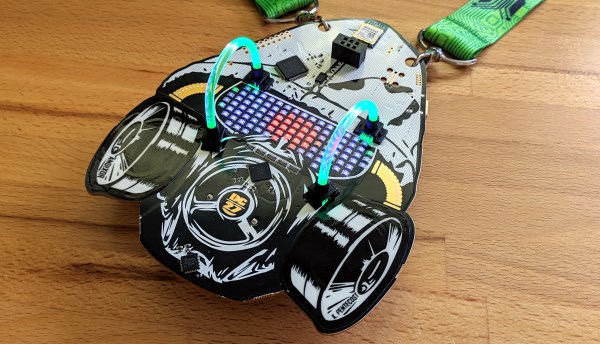
The newest offering from the AND!XOR team is out and it delivered exactly what hardware badges were missing: light pipes. No joke, the DEF CON 27 edition AND!XOR badge will be most recognizable because of two arcs of light pipe material blinging RGB goodness in three dimensions. But if you can peel your eyes away from that oddity there’s a lot to love about the new design.
USB stands for Universal Serial Bus and ever since its formation, the USB Implementers Forum have been working hard on the “Universal” part of the equation. USB Type-C, which is commonly called USB-C, is a connector standard that signals a significant new chapter in their epic quest to unify all wired connectivity in a single specification.
Many of us were introduced to this wonder plug in 2015 when Apple launched the 12-inch Retina MacBook. Apple’s decision to put everything on a single precious type-C port had its critics, but it was an effective showcase for a connector that could handle it all: from charging, to data transfer, to video output. Since then, it has gradually spread to more devices. But as the recent story on the Raspberry Pi 4’s flawed implementation of USB-C showed, the quest for a universal connector is a journey with frequent setbacks.
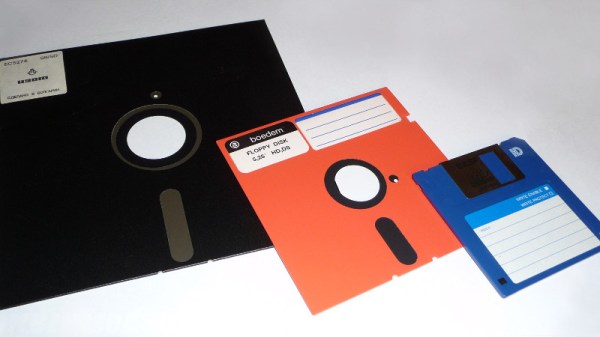
About a week ago, Linus Torvalds made a software commit which has an air about it of the end of an era. The code in question contains a few patches to the driver for native floppy disc controllers. What makes it worthy of note is that he remarks that the floppy driver is now orphaned. Its maintainer no longer has working floppy hardware upon which to test the software, and Linus remarks that “I think the driver can be considered pretty much dead from an actual hardware standpoint“, though he does point out that active support remains for USB floppy drives.
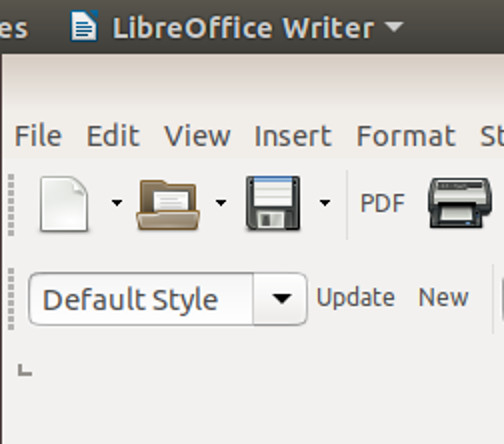
It’s a very reasonable view to have arrived at because outside the realm of retrocomputing the physical rather than virtual floppy disk has all but disappeared. It’s well over a decade since they ceased to be fitted to desktop and laptop computers, and where once they were a staple of any office they now exist only in the “save” icon on your wordprocessor. The floppy is dead, and has been for a long time.
The save icon in LibreOffice and other desktop software is probably the last place the floppy exerts a hold over us.
Still, Linus’ quiet announcement comes as a minor jolt to anyone of A Certain Age for whom the floppy disk and the computer were once inseparable. When your digital life resided not in your phone or on the cloud but in a plastic box of floppies, those disks meant something. There was a social impact to the floppy as well as a technological one, they were a physical token that could contain your treasured ephemeral possessions, a modern-day keepsake locket for the digital age. We may have stopped using them over a decade ago, but somehow they are still a part of our computing DNA.
So while for some of you the Retrotechtacular series is about rare and unusual technology from years past, it’s time to take a look at something ubiquitous that we all think we know. Where did the floppy disk come from, where is it still with us, and aside from that save icon what legacies has it bestowed upon us?
Selfblow (Don’t google that at work, by the way) is a clever exploit by [Balázs Triszka] that affects every Nvidia Tegra device using the nvtboot bootloader — just about all of them except the Nintendo Switch. It’s CVE 2019-5680, and rated at an 8.2 according to Nvidia, but that high CVE rating isn’t entirely reflective of the reality of the situation. Taking advantage of the vulnerability means writing to the boot device, which requires root access, as well as a kernel flag set to expose the boot partitions to userspace. This vulnerability was discovered as part of an effort by [Balázs] and other LineageOS developers to build an open source bootloader for Nvidia Tegra devices.
The Tegra boot process is a bit different, having several stages and a dedicated Boot and Power Management CPU (BPMP). A zero-stage ROM loads nvtboot to memory and starts it executing on the BPMP. One of the tasks of nvtboot is to verify the signature of the next bootloader step, nvtboot-cpu. The file size and memory location are embedded in the nvtboot-cpu header. There are two problems here that together make this vulnerability possible. The first is that the bootloader binary is loaded to its final memory location before the signature verification is performed. The code is written to validate the bootloader signature before starting it executing on the primary CPU, so all is well, right? Continue reading “This Week In Security: Selfblow, Encryption Backdoors, Killer Apps, And The VLC Apocalypse That Wasn’t”→
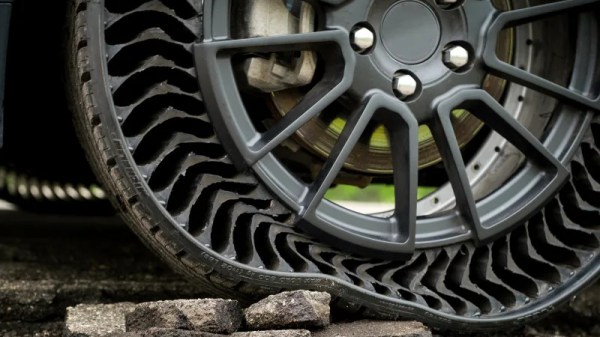
The average motorist has a lot to keep track of these days. Whether its how much fuel is left in the tank, how much charge is left in the battery, or whether or not the cop behind noticed them checking Twitter, there’s a lot on a driver’s mind. One thing they’re not thinking about is tires, theirs or anyone else’s for that matter. It a testament to the state of tire technology, they just work and for quite a long time before replacements are needed.
There hasn’t been a major shift in the underlying technology for about fifty years. But the times, they are a changing — and new tire technology is claimed to be just around the corner. Several companies are questioning whether the pneumatic tire is the be-all and end all, and futuristic looking prototypes have been spotted at trade shows the world over. Continue reading “Airless Tire For Your Car: Michelin Says 2024, Here’s What They’re Up Against”→
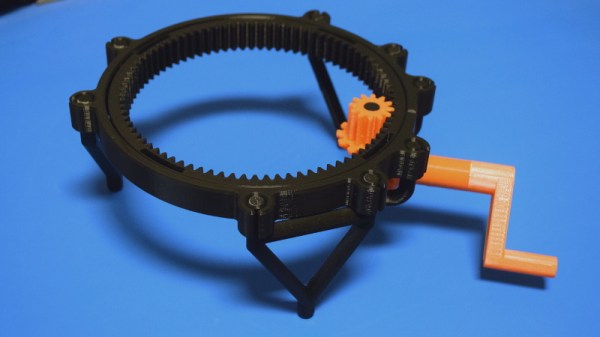
Even a relatively low-end desktop 3D printer will have no problems running off custom enclosures or parts for your latest project, and for many, that’s more than worth the cost of admission. But if you’re willing to put in the time and effort to become proficient with necessary CAD tools, even a basic 3D printer is capable of producing complex gadgets and mechanisms which would be extremely time consuming or difficult to produce with traditional manufacturing techniques.
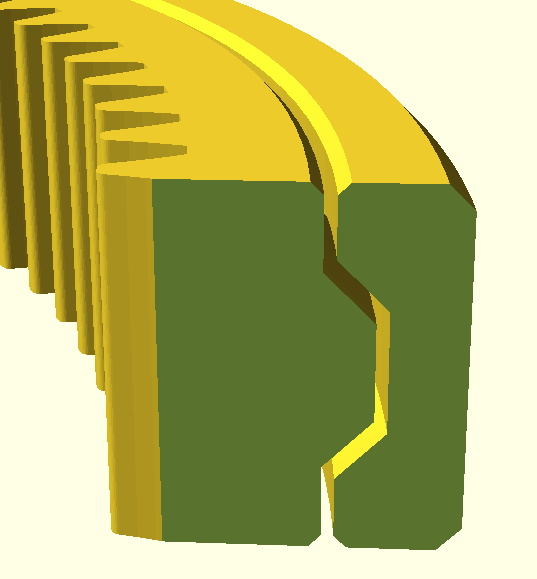
Printable bearing cross-section
Once you find yourself at this stage of your 3D printing career, there’s something of a fork in the road. The most common path is to design parts which are printed and then assembled with glue or standard fasteners. This is certainly the easiest way forward, and lets you use printed parts in a way that’s very familiar. It can also be advantageous if you’re looking to meld your own printed parts with existing hardware.
The other option is to fully embrace the unique capabilities of 3D printing. Forget about nuts and bolts, and instead design assemblies which snap-fit together. Start using more organic shapes and curves. Understand that objects are no longer limited to simple solids, and can have their own complex internal geometries. Does a hinge really need to be two separate pieces linked with a pin, or could you achieve the desired action by capturing one printed part inside of another?
If you’re willing to take this path less traveled, you may one day find yourself creating designs such as this fully 3D printed turntable by Brian Brocken. Intended for photographing or 3D scanning small objects without breaking the bank, the design doesn’t use ball bearings, screws, or even glue. Every single component is printed and fits together with either friction or integrated locking features. This is a functional device that can be printed and put to use anywhere, at any time. You could print one of these on the International Space Station and not have to wait on an order from McMaster-Carr to finish it.
With such a clever design, I couldn’t help but take a closer look at how it works, how it prints, and perhaps even some ways it could be adapted or refined going forward.
When it comes to something as futuristic-sounding as brain-computer interfaces (BCI), our collective minds tend to zip straight to scenes from countless movies, comics, and other works of science-fiction (including more dystopian scenarios). Our mind’s eye fills with everything from the Borg and neural interfaces of Star Trek, to the neural recording devices with parent-controlled blocking features from Black Mirror, and of course the enslavement of the human race by machines in The Matrix.
And now there’s this Elon Musk guy, proclaiming that he’ll be wiring up people’s brains to computers starting next year, as part of this other company of his: Neuralink. Here the promises and imaginings are truly straight from the realm of sci-fi, ranging from ‘reading and writing’ to the brain, curing brain diseases and merging human minds with artificial intelligence. How much of this is just investor speak? Please join us as we take a look at BCIs, neuroprosthetics and what we can expect of these technologies in the coming years.