A vintage British sportscar is a wonderful thing. Inimitable style and luxury, beautiful curves, and a soundtrack that could make even Vinnie Jones shed a tear. However, even under the most diligent maintenance schedule, they are known, above all, for their unreliability. As the value of such cars is tied heavily to their condition as unmodified examples, owners are typically reluctant to make modifications to remedy these issues.
However, things are starting to change. Cities across the world are enacting measures to ban fossil fuel vehicles from their streets, and sales of such vehicles are similarly going to be banned entirely. The automotive industry is preparing for a major pivot towards electric drivetrains, and no carmaker will be left untouched. In this landscape, it’s not just Tesla and Nissan who are selling electric cars anymore. Luxury brands are beginning to deliver electric vehicles, too.
For those with some experience with pro audio, the term “ribbon microphone” tends to conjure up an image of one of those big, chunky mics from the Golden Age of radio, the kind adorned with the station’s callsign and crooned into by the latest heartthrob dreamboat singer. This DIY ribbon mic is none of those things, but it’s still really cool.
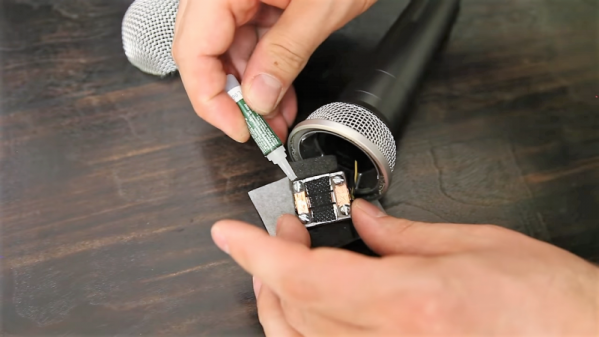
Of course the ribbon mic isn’t always huge, and the technology behind it is far from obsolete. [Frank Olsen]’s ribbon mic starts out with gutting a run-of-the-mill studio mic of its element, leaving only the body and connector behind. The element that he constructs, mostly from small scraps of aluminum and blocks of acrylic, looks very much like the ribbon element in commercial mics: a pair of magnets with a thin, corrugated strip of foil suspended between them. The foil was corrugated by passing it through a jig that [Frank] built, which is a neat tool, but he says that a paper crimper used for crafting would work too. There’s some pretty fussy work behind the cartridge build, but everything went together and fit nicely in the old mic body. The video below was narrated using the mic, so we know it works.
Fun fact: the ribbon microphone was invented by Walter Schottky. That Walter Schottky. Need more on how these mics work? Our colleague [Al Williams] has you covered with this article on the basics.
It all started when I bought a late-1990s synthesizer that needed a firmware upgrade. One could simply pull the ROM chip, ship it off to Yamaha for a free replacement, and swap in the new one — in 2003. Lacking a time machine, a sensible option is to buy a pre-programmed aftermarket EPROM on eBay for $10, and if you just want a single pre-flashed EPROM that’s probably the right way to go. But I wanted an adventure.
Spoiler alert: I did manage to flash a few EPROMs and the RM1X is happily running OS 1.13 and pumping out the jams. That’s not the adventure. The adventure is trying to erase UV-erasable EPROMS.
And that’s how I ended up with a small cardboard fire and a scorched tanning lamp, and why I bought a $5 LED, and why I left EPROMs out in the sun for four days. And why, in the end, I gave up and ordered a $15 EPROM eraser from China. Along the way, I learned a ton about old-school UV-erasable EPROMs, and now I have a stack of obsolete silicon that’s looking for a new project like a hammer looks for a nail — just as soon as that UV eraser arrives in the mail.
Many Chinese cities, among them Ningbo, are investing heavily in AI and facial recognition technology. Uses range from border control — at Shanghai’s international airport and the border crossing with Macau — to the trivial: shaming jaywalkers.
In Ningbo, cameras oversee the intersections, and use facial-recognition to shame offenders by putting their faces up on large displays for all to see, and presumably mutter “tsk-tsk”. So it shocked Dong Mingzhu, the chairwoman of China’s largest air conditioner firm, to see her own face on the wall of shame when she’d done nothing wrong. The AIs had picked up her face off of an ad on a passing bus.
False positives in detecting jaywalkers are mostly harmless and maybe even amusing, for now. But the city of Shenzhen has a deal in the works with cellphone service providers to identify the offenders personally and send them a text message, and eventually a fine, directly to their cell phone. One can imagine this getting Orwellian pretty fast.
Facial recognition has been explored for decades, and it is now reaching a tipping point where the impacts of the technology are starting to have real consequences for people, and not just in the ways dystopian sci-fi has portrayed. Whether it’s racist, inaccurate, or easily spoofed, getting computers to pick out faces correctly has been fraught with problems from the beginning. With more and more companies and governments using it, and having increasing impact on the public, the stakes are getting higher.
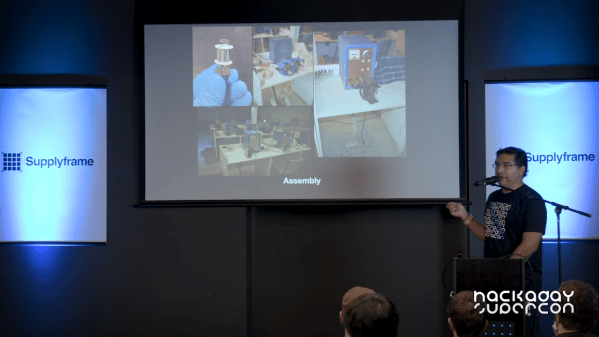
Vacuum tubes fueled a technological revolution. They made the amplification of signals a reality for transatlantic telephone cables (and transcontinental ones too), they performed logic for early computers, and they delivered that warm fuzzy sound for high fidelity audio. But they were labor intensive to produce, and fragile, so semiconductors came along and replaced tubes in almost every application. But of course tubes are still with us and some tube applications are still critical — you’ll find them used in high-power RF and there are even satellites that depend on klystrons. So there are still experts in tube fabrication around, and Charles Alexanian is one of them. His newly-published talk at the 2018 Hackaday Supercon (found below) is a whirlwind tour of what goes into building a vacuum tube.
The process of building your own vacuum tube isn’t hard, but it’s not a walk in the park. The difficulty comes in the sheer number of processes, and the tricks of the trade found at every step. Charles’ methaphor is that if you build one tube at a time each step is like learning to ride a bicycle again, but if you build many you get into the swing of it and things go a lot better. His talk is a brief overview of everything, but if you want to drill down he also wrote an excellent article that goes further in depth.
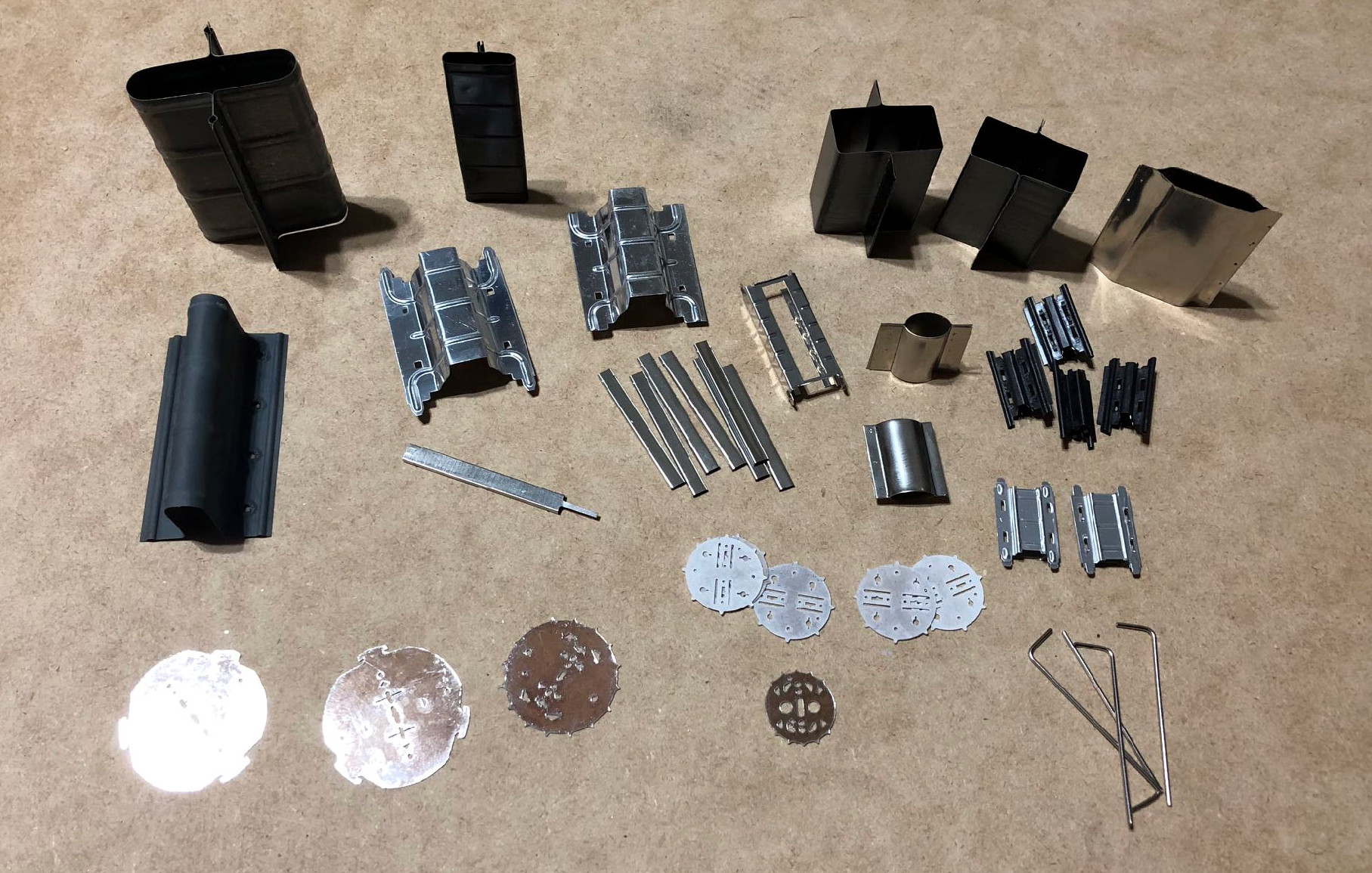
In the working components of each tube are the precision parts: the grid (or grids). For the tube to function well these must be accurately produced which can be done with photolithography, but Charles usually uses a winding process involving a lathe. After winding, the grid is stretched to straighten the nickel wire, then cut to length. Other components such as the plate are stamped using an arbor press and simple forms he fabricates for the purpose.
Tube sealing machine common in factories
Lathe setup used for 1-off tube sealing
Tube being tested for leaks
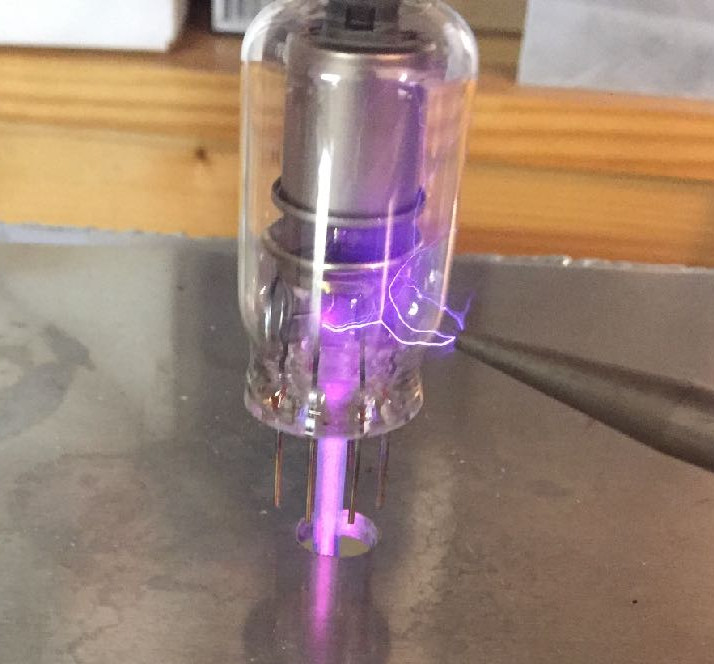
Two glass components are used, the dome itself, and feedthrough stems that have a wire for each lead passing through a glass disc. The components are spot welded to the inside portion of the feedthrough stem, then the glass is fused together, again using a lathe. It heads over to a pumping station to evacuate the air from the tube, and is finally tested for leaks using a handheld Tesla coil (see, we knew those weren’t just toys).
Charles proposed his Supercon appearance as a chance to fabricate tubes on-site. We loved the idea, but the amount of gear needed is somewhat prohibitive (annealing ovens, vacuum cabinets, torches for sealing, and the need for 220v, plus space for it all). That’s too bad since we were really hoping to see the Jolly Wrencher in Nixie-tube form — incidentally, Charles says Nixes are simple to make compared to amplifiers and switches. He also mentions that the majority of your time is spent “washing” parts to remove impurities. Fair enough, that part sounds boring, but we hope to endure it at some point in the future because vacuum tube fabrication demos feel very much like a Hackaday event!
Insurance is a funny business. Life insurance, for example, is essentially betting someone you will die before your time. With the recent focus on companies getting hacked, it isn’t surprising that cybersecurity insurance is now big business. Get hacked and get paid. Maybe.
The reason I say maybe is because of the recent court battle between Zurich and Mondelez. Never heard of them? Zurich is a big insurance company and Mondelez owns brands like Nabisco, Oreo, and Trident chewing gum, among others.
It all started with the NotPetya ransomware attack in June of 2017. Mondelez is claiming it lost over $100 million dollars because of the incident. But no problem! They have insurance. If they can get the claim paid by Zurich, that is. Let’s dig in and try to see how this will all shake out.
There are a range of integrated circuits that most of us would regard as definitive examples of their type, devices which became the go-to for a particular function and which have entered our collective consciousness as electronics enthusiasts. They have been in production since the early days of consumer integrated circuits, remaining in use because of a comprehensive understanding of their characteristics among engineers, and the job they do well.
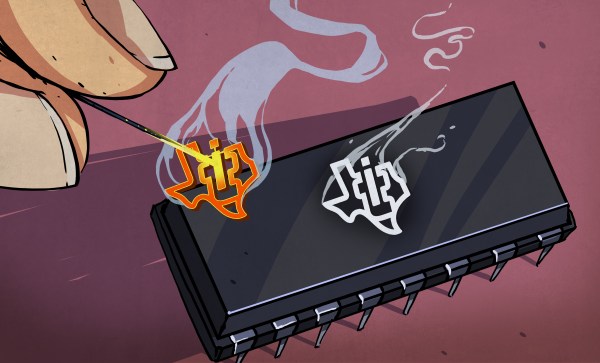
You can probably name the ones I’m going to rattle off here, the µA741 op-amp designed by David Fullagar for Fairchild in 1968, the NE555 timer from Hans Camenzind for Signetics in 1971, and a personal favourite, Bob Widlar’s µA723 linear regulator for Fairchild in 1967. There may be a few others that readers will name in the comments, but there’s one that until today it’s likely that few of you would have considered. Texas Instruments’ 5400 and 7400 TTL quad 2-input NAND gate has been in continuous production since 1964 and is the progenitor of what is probably the most numerous breed of integrated circuits, yet it doesn’t trip off the tongue when listing famous chips, and none of us can name its designer. So today we’re turning the spotlight on this neglected piece of silicon, and trying to bring it the adulation it deserves. Continue reading “The 7400 Quad 2-Input NAND Gate, A Neglected Survivor From A Pre-Microprocessor World”→




 In Ningbo, cameras oversee the intersections, and use facial-recognition to shame offenders by putting their faces up on large displays for all to see, and presumably mutter “tsk-tsk”. So it shocked Dong Mingzhu, the chairwoman of China’s largest air conditioner firm, to see her own face on the wall of shame when she’d done nothing wrong. The