Raiders Of The Lost OS: Reclaiming A Piece Of Polish IT History

In today’s digital era, we almost take for granted that all our information is saved and backed up, be it on our local drives or in the cloud — whether automatically, manually, or via some other service.  For information from decades past, that isn’t always the case, and recovery can be a dicey process.  Despite the tricky challenges, the team at [Museo dell’Informatica Funzionante] and [mera400.pl], as well as researchers and scientists from various museums, institutions, and more all came together in the attempt to recover the Polish CROOK operating system believed to be stored on five magnetic tapes.

MEERA-400 Tape Recovery 1

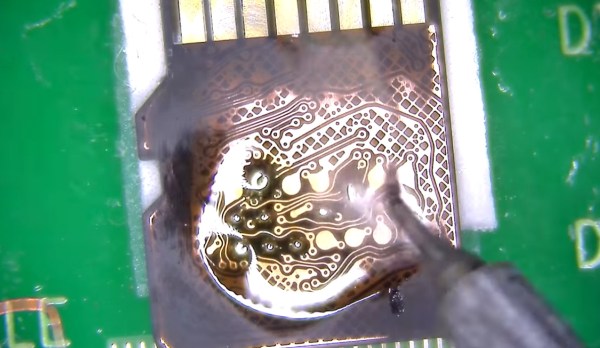
Originally stored at the Warsaw Museum of Technology, the tapes were ideally preserved, but — despite some preliminary test prep — the museum’s tape reader kept hanging at the 800 BPI NRZI encoded header, even though the rest of the tape was 1600 BPI phase encoding. Some head scratching later, the team decided to crack open their Qualstar 1052 tape reader and attempt to read the data directly off the circuits themselves!!

Continue reading “Raiders Of The Lost OS: Reclaiming A Piece Of Polish IT History”

Chicago To Host Hackaday Unconference

We’re excited to announce that Chicago will play host to the Hackaday Unconference on March 18th. We are happy to expand our unconference plans to include this event at Pumping Station One from 1-8pm on 3/18.

Astute readers will notice that this is the second location we have announced this week. On Monday we shared the news that San Francisco would host an unconference. Hackaday’s [Sophi Kravitz] and [Jordan Bunker] are organizing things in SF. [Brian Benchoff], [Bob Baddeley], and [Mike Szczys] will be in Chicago for this event that takes shape based on what you find most interesting.

We’re excited that PS:One is opening their doors for us. We’ll make sure there’s food, beverage, some exciting hardware-based door prizes, and other select swag.

Hackaday Unconference is Based on You

The Hackaday Unconference is all about finding interesting talks from anyone who attends. If you go, and you definitely should, be ready to stand up and deliver eight minutes on something that you find interesting right now. The day will start by going around and asking everyone for a talk title or topic. We’ll all make a collective decision on the schedule for the day and roll with it as talks are bound to spawn extemporaneous discussion and follow up presentations that build on the most exciting of concepts. Unconferences are interactive and not bound by the traditional presenter/audience divide of a conference.

You may speak about anything you like, but it sometimes deciding what to talk about is easier if there are some constraints. Consider the theme of the Hackaday Unconference to be Build Something That Matters. You hear this a lot from us because we think it is important. There is immense talent and incredible experience found in the Hackaday community and we like to take some time in life to direct that for the good of all people. If you have an idea to direct creative energy toward high ideal, it’s likely to make a great presentation.

Soak Up the Excitement to Propel Your Next Project

Pressure is low, excitement is high, and the potential for something spontaneous and awesome to happen is palpable. The ‘here and now’ aspect of an unconference sets it apart from events where speakers, talk subjects, and slide decks are decided upon weeks ahead of time. RSVPs will fill up. Don’t miss out on this chance to jumpstart your excitement for a current project, or to discover the direction of your next adventure.

Origin Of Wireless Security: The Marconi Radio Hack Of 1903

The place is the historic lecture theater of the Royal Institution in London. The date is the 4th of June 1903, and the inventor, Guglielmo Marconi, is about to demonstrate his new wireless system, which he claims can securely send messages over a long distance, without interference by tuning the signal.

The inventor himself was over 300 miles away in Cornwall, preparing to send the messages to his colleague Professor Fleming in the theater. Towards the end of Professor Flemings lecture, the receiver sparks into life, and the morse code printer started printing out one word repeatedly: “Rats”. It then spelled out an insulting limerick: “There was a young man from Italy, who diddled the public quite prettily”. Marconi’s supposedly secure system had been hacked.

Continue reading “Origin Of Wireless Security: The Marconi Radio Hack Of 1903”

Tesla Model S Battery Pack Teardown

We’ve heard a lot about the Tesla Model S over the last few years, it’s a vehicle with a habit of being newsworthy. And as a fast luxury electric saloon car with a range of over 300 miles per charge depending on the model, its publicity is deserved, and that’s before we’ve even mentioned autonomous driving  driver-assist. Even the best of the competing mass-produced electric cars of the moment look inferior beside it.

Tesla famously build their battery packs from standard 18650 lithium-ion cells, but it’s safe to say that the pack in the Model S has little in common with your laptop battery. Fortunately for those of a curious nature, [Jehu Garcia] has posted a video showing the folks at EV West tearing down a Model S pack from a scrap car, so we can follow them through its construction.

The most obvious thing about this pack is its sheer size, this is a large item that takes up most of the space under the car. We’re shown a previous generation Tesla pack for comparison, that is much smaller. Eye-watering performance and range come at a price, and we’re seeing it here in front of us.

The standard of construction appears to be very high indeed, which makes sense as this is not merely a performance part but a safety critical one. Owners of mobile phones beset by fires will testify to this, and the Tesla’s capacity for conflagration or electrical hazard is proportionately larger. The chassis and outer cover are held together by a huge array of bolts and Torx screws, and as they comment, each one is marked as having been tightened to a particular torque setting.

Under the cover is a second cover that is glued down, this needs to be carefully pried off to reveal the modules and their cells. The coolant is drained, and the modules disconnected. This last task is particularly hazardous, as the pack delivers hundreds of volts DC at a very low impedance. Then each of the sixteen packs can be carefully removed. The packs each contain 444 cells, the pack voltage is 24 V, and the energy stored is 5.3 kWh.

The video is below the break. We can’t help noticing some of the rather tasty automotive objects of desire in their lot.

Continue reading “Tesla Model S Battery Pack Teardown”

$10 Raspberry Pi Zero W Adds WiFi And Bluetooth

The Raspberry Pi was born on February 29th which means we’re only three years away from its second birthday, and a new hardware release from the Pi Foundation is becoming somewhat of a tradition. This year is no different: a new Raspberry Pi has been announced. The Raspberry Pi Zero W is the latest iteration of the Pi foundation’s tiny and extremely inexpensive single board computer. It’s a Raspberry Pi Zero with WiFi and Bluetooth.

The specs of the new Pi Zero W are nearly identical to the previous incarnation of the non-W Zero. It sports a 1GHz single-core processor, 512 MB of RAM, features Mini HDMI and USB OTG ports, uses a micro USB port for power, features the now-standard 40-pin header with four additional pins for composite video and a reset button. This board, like the second hardware revision of the Pi Zero, also features a CSI camera connector.

Of course, the big feature is the addition of WiFi and Bluetooth. The Pi Zero W adds the wireless functionality from the Raspberry Pi 3B. That’s 802.11n and Bluetooth 4.0.

The Pi Zero’s claim to fame was, of course, the price. The original Pi Zero was at first a bit of hardware glued to the cover of the MagPi magazine, later to sell for just $5 USD. The Raspberry Pi Zero W is priced at just $10.

Continue reading “$10 Raspberry Pi Zero W Adds WiFi And Bluetooth”

Audi Engineer Exposes Cheat Order

In an interesting turn of events last week in a German court, evidence has materialized that engineers were ordered to cheat emissions testing when developing automotive parts.

Last Tuesday, Ulrich Weiß brought forward a document that alleges Audi Board of Director members were involved in ordering a cheat for diesel emissions. Weiß was the head of engine development for Audi, suspended in November of 2015 but continued to draw more than half a million dollars in salary before being fired after prior to last week’s court testimony.

Volkswagen Group is the parent company of Audi and this all seems to have happened while the VW diesel emissions testing scandal we’ve covered since 2015 was beginning to come to light. Weiß testified that he was asked to design a method of getting around strict emissions standards in Hong Kong even though Audi knew their diesel engines weren’t capable of doing so legitimately.

According to Weiß, he asked for a signed order. When he received that order he instructed his team to resist following it. We have not seen a copy of the letter, but the German tabloid newspaper Bild reports that the letter claims approval by four Audi board members and was signed by the head of powertrain development at the company.

Hackaday was unable to locate any other sources reporting on the letter other than the Bild article we have linked to (also the source used in the Forbes article above). Sources such as Die Welt reference only “internal papers”. If you know of other reporting on the topic please leave a comment about it below.


San Francisco Tapped For Hackaday Unconference On March 18th

We want you to make the next Hackaday live event great. This is an Unconference in San Francisco on Saturday, March 18th and it depends completely on you. Get signed up now!

You’re in Control of the Hackaday Unconference

An unconference is a live event where you decide the topic, guide the discussion, and generally make it an epic Saturday. We have a handful of speakers lined up to help get things started. But we also want you to be ready to give a talk. Everyone that shows up should be prepared to stand up and deliver eight minutes on something they find exciting right now.

Kicking off the night we’ll ask each person to tell us the title or topic of their talk and approximate length of the presentation. Once all the titles are written down we’ll hammer out the schedule right then and there. If you haven’t been to an unconference this is the time to sign up, collect your thoughts, and jump into an afternoon of extemporaneous idea-sharing. If you have been to an unconference we’re guessing you signed up as soon as you saw this announcement.

Continue reading “San Francisco Tapped For Hackaday Unconference On March 18th”