Tools Of The Trade — Injection Molding

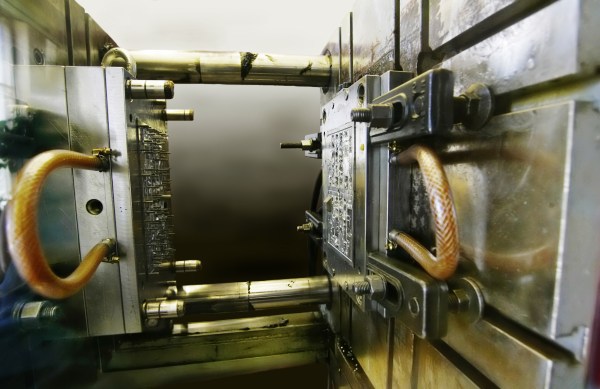
Having finished the Tools of the Trade series on circuit board assembly, let’s look at some of the common methods for doing enclosures. First, and possibly the most common, is injection molding. This is the process of taking hot plastic, squirting it through a small hole and into a cavity, letting it cool, and then removing the hardened plastic formed in the shape of the cavity.

The machine itself has three major parts; the hopper, the screw, and the mold. The hopper is where the plastic pellets are dumped in. These pellets are tiny flecks of plastic, and if the product is to be colored there will be colorant pellets added at some ratio. The hopper will also usually have a dehumidifier attached to it to remove as much water from the pellets as possible. Water screws up the process because it vaporizes and creates little air bubbles.

Next the plastic flecks go into one end of the screw. The screw’s job is to turn slowly, forcing the plastic into ever smaller channels as it goes through a heating element, mixing the melted plastic with the colorant and getting consistent coloring, temperature, and ever increasing pressure. By the time the plastic is coming out the other end of the screw, and with the assistance of a hydraulic jack, it can be at hundreds of tons of pressure.

Finally, the plastic enters the mold, where it flows through channels into the empty cavity, and allowed to sit briefly to cool.  The mold then separates and ejector pins push the part out of the cavity.

Continue reading “Tools Of The Trade — Injection Molding”

3D Printer Tragedy Claims A Life

Thankfully it’s rare that we report on something as tragic as the death of a 17-year old, but the fact that the proximate cause was a 3D printer makes it all the worse and important for us to discuss.

The BBC report tells of a recently concluded coroner’s inquest into the December death of a young man in a fire at his family’s magic shop in Lincolnshire. The building was gutted by the fire, and the victim died of smoke inhalation. The inquest found that he had been working with a 3D printer in the shop and using hairspray to prepare the bed, a tip he apparently picked up from forums and blogs.

Unfortunately for this young man and his family, the online material didn’t mention that hairspray propellant contains volatile hydrocarbons like propane, cyclopropane, n-butane and isobutane — all highly flammable. Apparently the victim used enough hairspray in a small enough space to create an explosive mixture of fuel and air. Neighbors reported a gigantic fireball that consumed the shop, which took 50 firefighters to control.

While the inquest doesn’t directly blame the 3D printer as the source of ignition — which could just as easily have been a spark from a light switch, or a pilot light on a water heater — it does mention that the hot end can reach 300C. And the fact remains that were it not for the 3D printer and the online tips, it’s unlikely that a 17-year old boy would be using enough hairspray in an enclosed space to create what amounted to a bomb.

By all accounts, the victim was a bright and thoughtful kid, and for this to have happened is an unmitigated tragedy for his family and friends. This young man probably had a bright future and stood to contribute to the hacker community but for a brief lapse of judgment. Before anyone starts slinging around the blame in the comments section, think about it — how many time haves you done something like this and gotten away with it? This kid got badly unlucky and paid the ultimate price. Maybe we should make his death worth something by looking at what we do that skates a little too close to the thin edge of the ice.

Continue reading “3D Printer Tragedy Claims A Life”

The Comic Book World Of Capacitor Marketing

The Economist is an interesting publication, a British weekly newspaper that looks for all the world like a magazine, and contains pithy insights into world politics and economic movements. It’s one of those rare print news publications that manages to deliver fresh insights even to hardened web news junkies despite its weekly publication date.

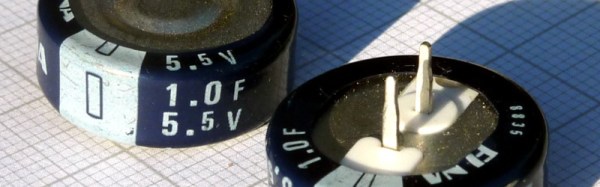
It was typical then of their wide-ranging coverage of world industries to publish a piece recently on the world of supercapacitors, with particular focus on Estonia’s Skeleton Technologies. This is an exciting field in which the products are inching their way towards energy density parity with conventional batteries, and news of new manufacturing facilities coming online should be of interest to many Hackaday readers.

Exciting though it may be it was not the news of a new capacitor plant in Germany that provided the impetus for this piece. Instead it was the language used by the Economist writer delicately skirting the distinction between the words “Supercapacitor” and “Ultracapacitor”. Images of flying crimefighters in brightly coloured capes spring instantly to mind, as Captain Ultra and Superman battle an arch-villain who is no doubt idly bouncing a piece of burning Kryptonite against the wall in readiness for the final denouement.

Continue reading “The Comic Book World Of Capacitor Marketing”

Emulating A GameBoy Advance Inside Of A Gameboy Advance

[Ryzee119]’s GBA might not look so different at first glance. The screen is way better than you remember, but that may just be your memory playing tricks on you. The sound comes out of the speakers. It feels the right weight. It runs off AA batteries. Heck, even the buttons feel right.

emulating-gba-inside-gbaIt’s not until you notice that it really shouldn’t be playing any games without a cartridge inserted that you know something is not right in the Mushroom Kingdom. When you look inside you see the edge of a Raspberry Pi Zero instead of the card edge connector you expected.



It took a lot of work for [Ryzee119] to convert a dead, water damaged, GBA to a thriving emulation station based around a Pi Zero. The first step was desolder the components he couldn’t find anywhere else. The LR buttons, the potentiometer, and even the headphone jack. The famously hard to see screen, of course, had to go.  It was replaced by a nice TFT. Also, the original speaker was too corroded from the water and he sourced a replacement.

Custom replacement PCB

Next he took a good photo of the GBA’s circuit board. We wonder if he used the scanner method mentioned in the comments of this article? He spent a lot of time in Dassault’s DraftSight, a 2D CAD program, outlining the board. Then, after thoroughly verifying the size of the board for the Nth time he imported the outlines to EagleCAD.

He managed to cram quite a bit onto the board while remaining inside the GBA’s original envelope. The switches, potentiometer, and jack went back to their original locations. Impressively, he made his own pad traces for the A, B, and D-Pad buttons. The mod even handles slowly decreasing battery voltages better than the original.

In the end it all snaps together nicely. He’s configured it to boot into the emulator right at start-up. If you’d like one for yourself, all his files are open source. 

Stealth Cell Tower Inside This Office Printer Calls To Say I Love You

If you look around the street furniture of your city, you may notice some ingenious attempts to disguise cell towers. There are fake trees, lamp posts with bulges, and plenty you won’t even be aware of concealed within commercial signage. The same people who are often the first to complain when they have no signal it seems do not want to be reminded how that signal reaches them. On a more sinister note, government agencies have been known to make use of fake cell towers of a different kind, those which impersonate legitimate towers in order to track and intercept communications.

In investigating the phenomenon of fake cells, [Julian Oliver] has brought together both strands by creating a fake cell tower hidden within an innocuous office printer. It catches the phones it finds within its range, and sends them a series of text messages that appear to be from someone the phone’s owner might know. It then prints out a transcript of the resulting text conversation along with all the identifying information it can harvest from the phone. As a prank it also periodically calls phones connected to it and plays them the Stevie Wonder classic I Just Called To Say I Love You.

In hardware terms the printer has been fitted with a Raspberry Pi 3, a BladeRF software-defined transceiver, and a pair of omnidirectional antennas which are concealed behind the toner cartridge hatch. Software comes via  YateBTS, and [Julian] provides a significant amount of information about its configuration as well as a set of compiled binaries.

In one sense this project is a fun prank, yet on the other hand it demonstrates how accessible the technology now is to impersonate a cell tower and hijack passing phones. We’re afraid to speculate though as to the length of custodial sentence you might receive were you to be caught using one as a private individual.

We’ve considered the Stingray cell phone trackers before here at Hackaday, as well as looking at a couple of possible counter-measures. An app that uses a database of known towers to spot fakes, as well as a solution that relies on an SDR receiver to gather cell tower data from a neighbourhood.

[via Hacker News]

ESP32 Modules Popping Up Everywhere, In Stock Almost Nowhere

We know what it’s like to wait for newly released electronic parts. Clicking refresh every day at your favorite online retailers, reading reviews published by the press who got preview units, and maybe even daring to order implausibly cheap devices from foreign lands. The ESP32 has many of us playing the waiting game, and we’ll level with you — they’re out of stock most places. But, if you look hard enough you can find one. At least, you could find them before we wrote this quick roundup of ESP32 hardware. If hearing about parts that are just out of reach is your sort of thing, then read on, you masochist!

Continue reading “ESP32 Modules Popping Up Everywhere, In Stock Almost Nowhere”

LED Matrix Shades You Can Actually See Though

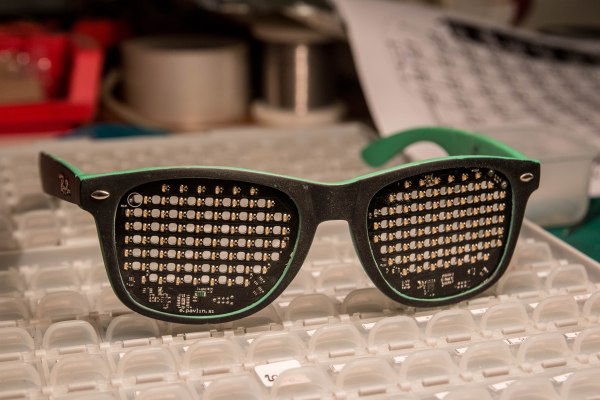
[Gal Pavlin] admits to enjoying the occasional dance music show. For those who have never been to one, LED one-upmanship at these shows is a real and terrible thing, so much so that an entire market exists around it. To that end, [Gal] built a pretty spiffy set of LED glasses.

It took quite a bit of work to arrive at the final design. All the circuitry and LEDs fit entirely within the envelope of the lenses on a pair of sunglass frames of dubious parentage. The batteries squeeze in between the user’s head and temples.

On top of the clever packaging is an equally impressive set of features. Each lens is a matrix of 69 LEDs. They have an accelerometer, a microphone, and a light sensor. There’s even a vibrating alert motor, which we feel is just showing off.  Best of all, you can actually see through the glasses, thanks to clever layout and very tiny LEDs.

The device requires a tag connect or soldering on a pigtail to program. If you’d like to build one yourself all the files are available on [Gavin]’s site. There’s a video of it in operation after the break.

Continue reading “LED Matrix Shades You Can Actually See Though”