Hacking When It Counts: The Pioneer Missions

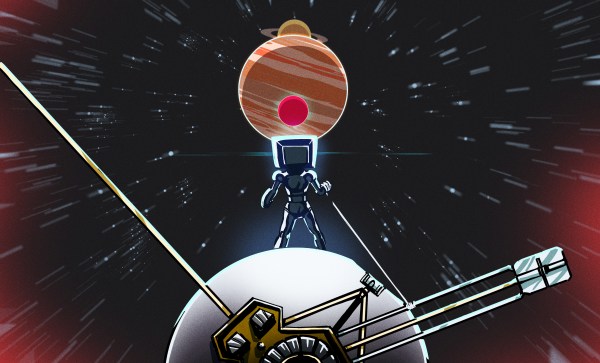
If the heady early days of space exploration taught us anything, it was how much we just didn’t know. Failure after failure mounted, often dramatic and expensive and sometimes deadly. Launch vehicles exploded, satellites failed to deploy, or some widget decided to give up the ghost at a crucial time, blinding a multi-million dollar probe and ending a mission long before any useful science was done. For the United States, with a deadline to meet for manned missions to the moon, every failure in the late 1950s and early 1960s was valuable, though, at least to the extent that it taught them what not to do next time.

For the scientists planning unmanned missions, there was another, later deadline looming that presented a rare opportunity to expand our knowledge of the outer solar system, a strange and as yet unexplored wilderness with the potential to destroy anything humans could build and send there. Before investing billions in missions to take a Grand Tour of the outer planets, they needed more information. They needed to send out some Pioneers.

Continue reading “Hacking When It Counts: The Pioneer Missions”

NASA Remotely Hacks Curiosity’s Rock Drill

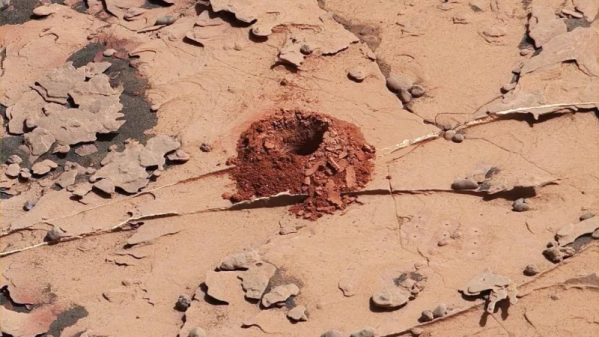
We have a lot of respect for the hackers at NASA’s Jet Propulsion Laboratory (JPL). When their stuff has a problem, it is often millions of miles away and yet they often find a way to fix it anyway. Case in point is the Curiosity Mars rover. Back in 2016, the probe’s rock drill broke. This is critical because one of the main things the rover does is drill into rock samples, collect the powder and subject it to analysis. JPL announced they had devised a way to successfully drill again.

The drill failed after fifteen uses. It uses two stabilizers to steady itself against the target rock. A failed motor prevents the drill bit from retracting and extending between the stabilizers. Of course, sending a repair tech 60 million miles is not in the budget, so they had to find another way. You can see a video about the way they found, below.

Continue reading “NASA Remotely Hacks Curiosity’s Rock Drill”

SpaceX’s Next Giant Leap: Second Stage Recovery

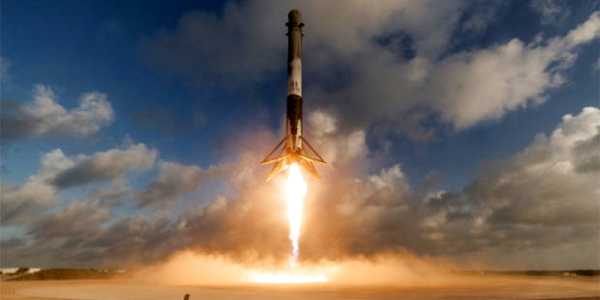
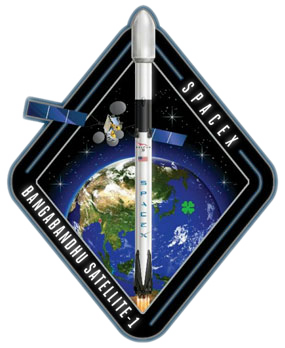
With the successful launch of the Bangabandhu-1 satellite on May 11th, the final version of the Falcon 9 rocket has finally become operational. Referred to as the “Block 5”, this version of the rocket is geared specifically towards reuse. The lessons learned from the recovery and reflight of earlier builds of the F9 have culminated into rocket that SpaceX hopes can go from recovery to its next flight in as few as 24 hours. If any rocket will make good on the dream of spaceflight becoming as routine as air travel, it’s going to be the Falcon 9 Block 5.
While there might still be minor tweaks and improvements made to Block 5 over the coming years, it’s safe to say that first stage recovery of the Falcon 9 has been all but perfected. What was once the fodder of campy science fiction, rockets propulsively lowering themselves down from the sky and coming to rest on spindly landing legs that popped out of the sides, is now a reality. More importantly, not only is SpaceX able to bring the towering first stage back from space reliably, they’re able to refuel it, inspect it, and send it back up without having to build a new one for each mission.

But as incredible a technical accomplishment as this is, SpaceX still isn’t recovering the entire Falcon 9 rocket. At best, they have accomplished the same type of partial reusability that the Space Shuttle demonstrated on its first flight all the way back in 1981. Granted they are doing it much faster and cheaper than it was done on the Shuttle, but it still goes against the classic airplane analogy: if you had to replace a huge chunk of the airliner every time it landed, commercial air travel would be completely impractical.

SpaceX has already started experimenting with recovering and reusing the payload fairings of the Falcon 9, and while they haven’t pulled it off yet, they’ll probably get there. That leaves only one piece of the Falcon 9 unaccounted for: the second stage. Bringing the second stage back to Earth in one piece might well be the most challenging aspect of developing the Falcon 9. But if SpaceX can do it, then they’ll have truly developed humanity’s first fully reusable rocket, capable of delivering payloads to space for little more than the cost of fuel.

Continue reading “SpaceX’s Next Giant Leap: Second Stage Recovery”

InSight Brings New Tech To Mars

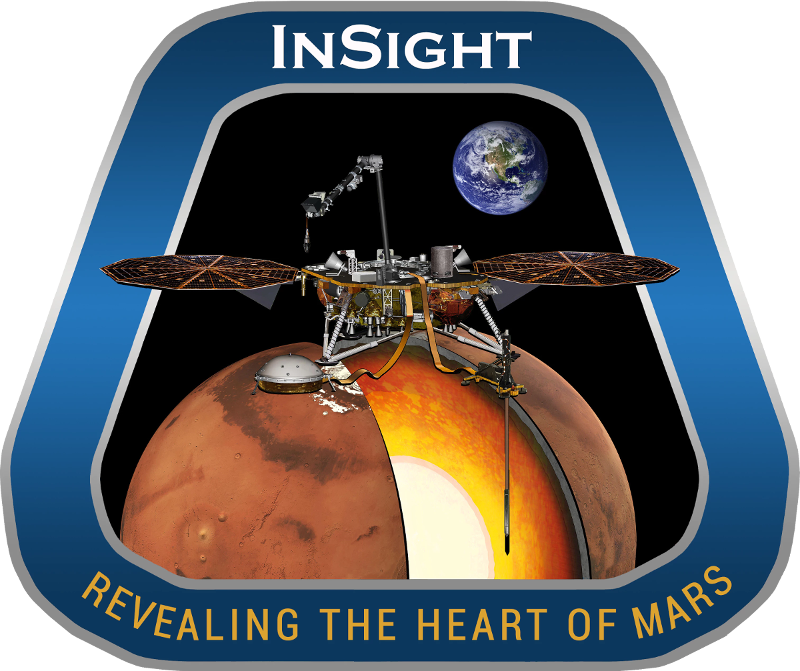
Unless you’ve got your ear on the launch pad so to speak, you might not be aware that humanity just launched a new envoy towards the Red Planet. Estimated to touch down in Elysium Planitia on November 26th, the InSight lander is relatively low-key as far as interplanetary missions go. Part of the NASA’s “Discovery Program”, it operates on a considerably lower budget than Flagship missions such as the Curiosity rover; meaning niceties like a big advertising and social media campaign to get the public excited doesn’t get a line item.

Which is a shame, because not only are there much worse things to do with tax money than increase public awareness of scientific endeavours, but because InSight frankly deserves a bit more respect than that. Featuring a number of firsts, the engineers and scientists behind InSight might have been short on dollars, but ambition was in ample supply.

So in honor of the successful launch, let’s take a look at the InSight mission, the unique technology onboard, and the answers scientists hope it will be able to find out there in the black.

Continue reading “InSight Brings New Tech To Mars”

Arduino Star Tracker Raises The Bar

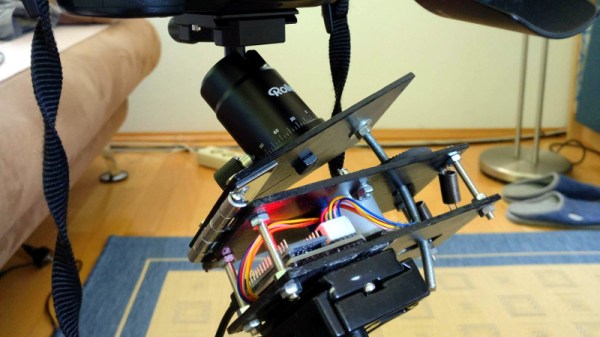
Proving that astrophotography doesn’t have to break the bank, [Gerald Gattringer] has recently documented his DIY “barn door” style star tracker which is built almost entirely from scratch. Short of the Arduino and stepper motor, all the components were either made by hand or are standard hardware store finds.

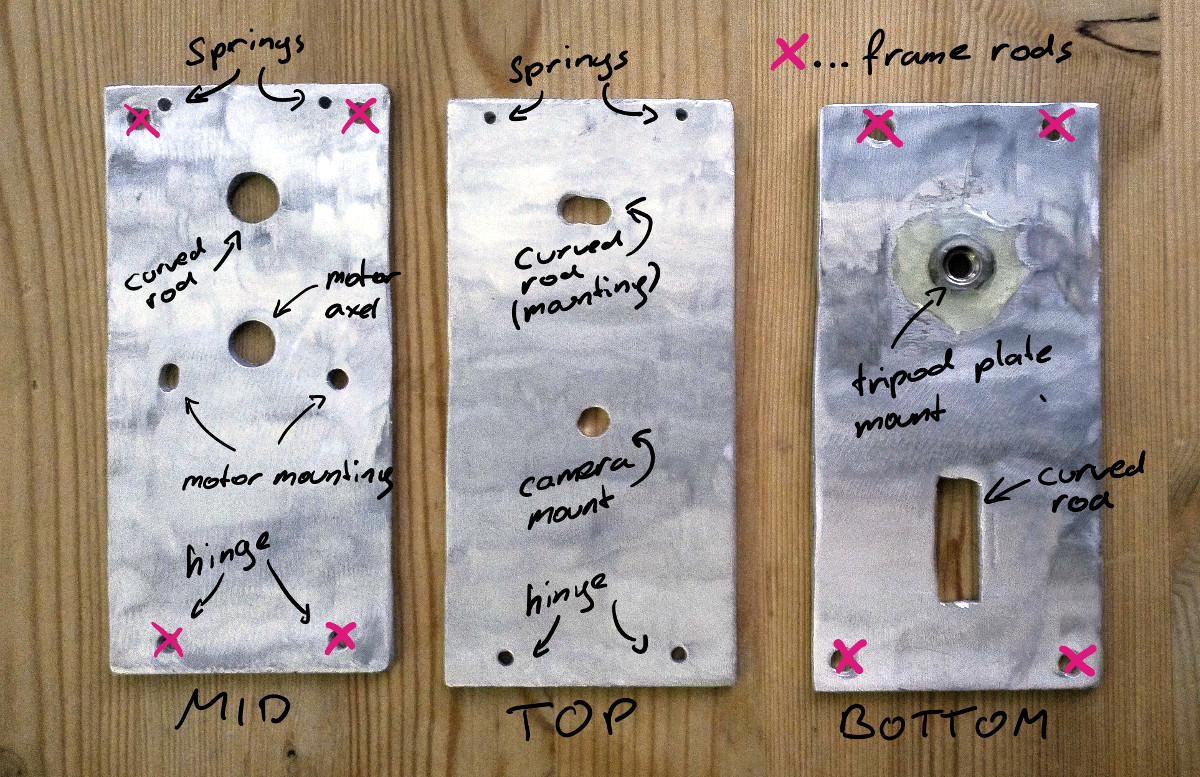
The build starts with three aluminum plates which [Gerald] cut by hand with an angle grinder. He then drilled all the necessary screw holes and a rectangular opening for the threaded rod to pass through. He even used epoxy to mount a nut to the bottom plate which would eventually attach it to the tripod.

The plates were then roughed up and spray painted black so they wouldn’t reflect light. The addition of a couple of screws, nuts, and a standard hinge.

Motion is provided by a 28BYJ-48 stepper which is connected to the drive nut by way of a belt. The spinning nut is used to raise and lower the threaded rod which opens and closes the “door”. To control the motor, [Gerald] is using an Arduino Nano coupled with a ULN2003 Darlington array which live on a routed PCB he made with his school’s Qbot MINImill. While some might say the Arduino is unnecessary for this project, it does make the final calibration of the device much easier.

We’ve covered a number of similar star trackers here on Hackaday, including one that you crank by hand. But the professional looking final result really makes this build stand out.

HP Inkjet Printer Trains For Space

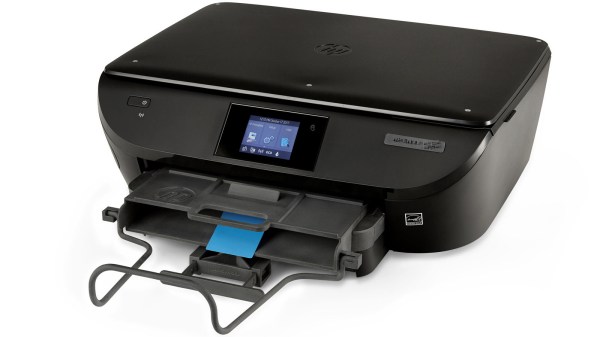
The International Space Station is one of our leading frontiers of science and engineering, but it’s easy to forget that an exotic orbiting laboratory has basic needs shared with every terrestrial workplace. This includes humble office equipment like a printer. (The ink-on-paper kind.) And if you thought your office IT is slow to update their list of approved equipment, consider the standard issue NASA space printer draws from a stock of modified Epson Stylus 800s first flown on a space shuttle almost twenty years ago. HP signed on to provide a replacement, partnering with Simplexity who outlined their work as a case study upgrading HP’s OfficeJet 5740 design into the HP Envy ISS.

Simplexity provided more engineering detail than HP’s less technical page. Core parts of inkjet printing are already well suited for space and required no modification. Their low power consumption is valued when all power comes from solar panels, and ink flow is already controlled via methods independent of gravity. Most of the engineering work focused on paper handling in zero gravity, similar to the work necessary for its Epson predecessor. To verify gravity-independent operation on earth, Simplexity started by mounting their test units upside-down and worked their way up to testing in the cabin of an aircraft in free fall.

CollectSpace has a writeup with details outside Simplexity’s scope, covering why ISS needs a printer plus additional modifications made in the interest of crew safety. Standard injection-molded plastic parts were remade with an even more fire-resistant formulation of plastic. The fax/scanner portion of the device was removed due to concerns around its glass bed. Absorbent mats were attached inside the printer to catch any stray ink droplets.

NASA commissioned a production run for 50 printers, the first of which was delivered by SpaceX last week on board their CRS-14 mission. When it wears out, a future resupply mission will deliver its replacement drawn from this stock of space printers. Maybe a new inkjet printer isn’t as exciting as 3D printing in space or exploring space debris cleanup, but it’s still a part of keeping our orbital laboratory running.

[via Engadget]


Get Your Name On The Hottest List In The Solar System

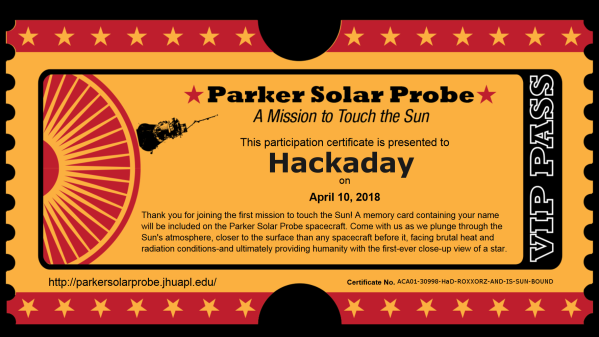
How often does NASA name a spacecraft after a living person? How often do you get to launch your name into a star? How often does NASA send probes to explore the sun? If your answer to all these questions is NEVER, then you win the honor of adding your name to an SD card bound for the center of our solar system. We’re already on the list with [William Shatner] so we’ll see you there. Submissions for the hot list aboard the Parker Solar Probe close on April 27th, 2018 and it launches in May.

The Parker Solar probe honors living astrophysicist [Eugene Parker] who theorized a great deal about how the sun, and other stars, emit energy. His work has rightly earned him the honor of seeing his name on a sun-bound probe. We even owe the term, “solar wind” to [Parker].

To draw more attention, you can have a few bits aboard this probe dedicated to you or someone you care about by adding your name to their list. Or you can send the name of your greatest enemy into the hottest furnace for millions of miles. Your call.

Even though our sun is the most prominent heavenly body, NASA hasn’t sent a probe to explore it before. They are good about sharing their models and they really know how to write standards for workmanship.

Continue reading “Get Your Name On The Hottest List In The Solar System”