Denim Sunglasses Frames Use A Wicked Set Of Jigs

An obligatory “Future’s so bright I gotta wear… denim” joke is the only way to kick off this article. Sorry!

Now that that’s out of the way, how would you turn your own blue jeans into sunglasses? Well you wouldn’t, unless you’ve built an intricate jig for assembling sunglasses frames like [Mosevic] has done. Boiled down, this is like making parts out of carbon fiber, except you swap in denim for the carbon fiber. Several layers of blue jean material are layered in a mold and impregnated with resin. Once hardened, parts can be milled or laser cut from this stock and then assembled into the frames all of the hipsters are after.

For us its the assembly jig that’s so interesting to see. [Mosevic] shared it in an unlisted video of an update to the Kickstarter campaign which ran at the end of 2019. The jig is used to align machined parts into stack ups that include brass reinforcement and pins to align layers, as well as the joining for the three parts of the frame via the metal hinges. Most of the jig is made from machined plywood. The plates that hold the three parts of the frame, the “frame front” and the two “temples” in eyeglass parlance, are interchangeable so that the same jig can be used to assemble several variants of the frame design. The most notable non-plywood part of the jig are two metal clamps that hold the hinge into the frame front as the glue dries, holding a couple of tiny chunks of denim/resin block in place.

Here you can see the jig with all clamps fully closed. There is not an insignificant amount of time just getting the parts into this jig. But parts still need quite a bit of cleanup after this process to sand, shape, and polish all edges and surfaces of the frames. And of course you have to figure in the time it took to make the parts that went into the jig in the first place. The finished frames are gorgeous, but we have a lot more respect having seen what it takes to pull it off.

Now if you like your glasses like George Washington liked his false teeth, here’s how you can pull a set of shades out of your woodshop.

Continue reading “Denim Sunglasses Frames Use A Wicked Set Of Jigs”

The Swiss Army Knife Of Bench Tools

[splat238] had a ton of spare sensors laying around that he had either bought for a separate project or on an impulse buy, so he knew he had to do something with them. He decided to build his own digital multi-tool focusing on sensors that would be particularly useful in a workshop setting. Coincidentally, he was inspired by a previous hack that we covered a while back.

He’s equipped his device with a bubble level, tachometer, IR thermometer, protractor, laser pointer, and many, many more features that would make great additions to any hacker’s workspace. There’s a good summary of each sensor, making his Instructable somewhat of a quick guide to common sensing modalities for hardware designers. The tachometer, thermometer, laser pointer, and a few other capabilities are notable upgrades from the project we highlighted previously. We also appreciate the bigger display, allowing for more detailed user feedback particularly in using the compass and bullseye digital level among other features.

The number of components in [splat238’s] build is too extensive to detail one-by-one in this article, so please see his Instructable linked above for all the details. [splat238] made his own PCB for mounting each sensor and did a good job making the design modular so you wouldn’t need to add certain components if you don’t need them. Most of the components take some through-hole soldering with only a handful of 0805 resistors required otherwise. The housing was designed such that the user can handle the tool with one hand and can switch between each function with a push of a button.

Finally, the device is powered using a rechargeable lithium-polymer battery making it very reusable. And, if there weren’t enough features already, the battery can be charged via USB or through two solar panels mounted into the housing unit. Okay, solar charging might be a case of featuritis, but still a cool build either way.

Check out some other handy DIY tools on Hackaday.

Continue reading “The Swiss Army Knife Of Bench Tools”

New Release Of FidoCadJ Draws Schematics Everywhere

Do you remember drawing your first schematic? Presumably you used a pen or a pencil and some kind of paper. Schematic capture software, though, makes it so much easier to draw schematics. There are many to choose from, but we spent some time checking out FidoCadJ and found it capable. Of course, there are many other options, but we did like that FidoCadJ runs locally and since it uses Java will run on just about any computer. Since it is open-source, you can modify it and you don’t have to worry about licensing it for your many computers or your team.

The program is a JAR file, and our first attempt to run it ran afoul of our older Java version that was the default Java Runtime Environment. But that was easy to fix, especially since a newer version was there, just not the default.

Continue reading “New Release Of FidoCadJ Draws Schematics Everywhere”

This Four-Axis Stencil Printer Is The Ultimate In SMD Alignment Tools

Here at Hackaday we love all kinds of builds, and we celebrate anytime anyone puts parts together into something else. And while we love the quick and dirty builds, there’s just something about the fit and finish of this four-axis SMD stencil printer that really pushes our buttons.

This build comes to us from [Phillip], who like many surface-mount users was sick of the various tape-and-PCB methods that are commonly used to align the solder stencil with the PCB traces. His solution is this fully adjustable stencil holder made from aluminum extrusions joined by 3D-printed parts. The flip-up frame of the device has a pair of clamps for securely holding the stainless steel stencil. Springs on the clamp guide rods provide some preload to keep the stencil taut as well as protection from overtensioning.

The stencil can move in the X-, Y-, and Z-axes to line up with a PCB held with 3D-printed standoffs on a bed below the top frame. The bed itself rotates slightly to overcome any skew in alignment of the PCB. [Phillip] was aghast at the price of an off-the-shelf slew-ring bearing for that axis, but luckily was able to print up some parts and just use simple roller bearing to do the same thing for a fraction of the cost. The frame is shown in use below; the moment when the pads line up perfectly through the stencil holds is oddly satisfying.

This puts us in mind of a recent, similar stencil printer we covered. That one was far simpler, but either one of these beats the expedient alignment methods hands down.

Continue reading “This Four-Axis Stencil Printer Is The Ultimate In SMD Alignment Tools”

Breadboarding Console Has The Power

It is hard to remember how expensive an electronic hobby used to be. It wasn’t long ago, for example, that a solderless breadboard was reasonably expensive and was likely to have some sort of baseboard. The nicer ones even had a power supply or some simple test instruments. While you can still buy that sort of thing today, the low cost of bare breadboards have made them much more common. [Sebastian] decided to use his 3D printer to give those cheap breadboards a nice home.

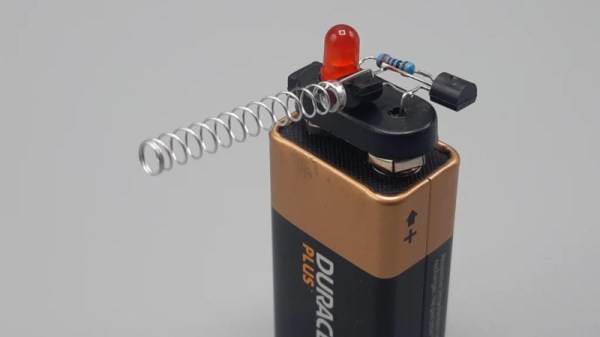
The design looks great, and frankly isn’t much of a technical triumph, but it is useful and clean looking. The build uses some banana jacks, a switch, an LED, a 9V battery, and a common small power supply module. Of course, you also need a few breadboards.

Continue reading “Breadboarding Console Has The Power”

Simple Plasma Cutter Collision Detection System

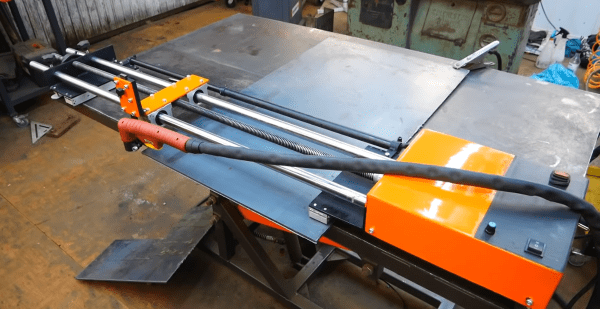
Machine tools often have powerful drive motors, allowing them to work quickly and accurately to get the job done fast. However, this can cause major damage if the tool head collides with an unexpected object. To protect against such occurances, [Xnaron] developed a simple system to shut down his plasma cutter in the event of a crash.

The system consists of a 3D printed collar that fits around the plasma cutting torch. The collar has two mating parts, which are held together with three magnets and three ball bearings to act as a key, maintaining the correct orientation. Three limit switches are then fitted, held closed by the two mating halves. When the torch collides with an object, this causes the magnetic coupling to seperate, triggering one or more of the limit switches, and shutting down the machine safely.

Video of an unplanned collision shows the device working well. It’s a neat solution that could probably be adapted to other types of machine tool that don’t experience high lateral forces. Of course, if you don’t yet have a plasma cutter, you can always make your own. Video after the break.

Continue reading “Simple Plasma Cutter Collision Detection System”

Pine Made Phones, Laptops, And Now… Soldering Irons?

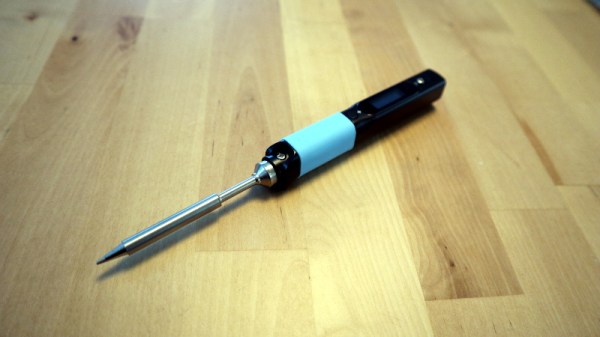
The TS100 smart soldering iron may have some new competition. Pine — the people best known for Linux-based phones and laptops — though the world needed another smart soldering iron so they announced the Pinecil — Sort of a knock off of the TS100. It looks like a TS100 and uses the same tips. But it does have some important differences.

It used to be a soldering iron was a pretty simple affair. Plug in one end; don’t touch the other end. But, eventually, things got more complicated and you wanted some way to make it hotter or cooler. Then you wanted the exact temperature with a PID controller. However, until recently, you didn’t care how much processing power your soldering iron had. The TS100 changed that. The smart and portable iron was a game-changer and people not only used it for soldering, but also wrote software to make it do other things. One difference is that the device has a RISC-V CPU. Reportedly, it also has better ergonomics and a USB C connector that allows for UART, I2C, SPI, and USB connections. It also has a very friendly price tag of $24.99.

Continue reading “Pine Made Phones, Laptops, And Now… Soldering Irons?”