Saturday: Vintage Computer Festival West

The Vintage Computer Festival West is an annual gathering to celebrate the awesome hardware that ushered in the Information Age. Normally held at the Computer History Museum in Mountain View, California, this year VCF West is happening virtually and it all starts on Saturday!

The lineup of talks looks great, covering everything from operating an Apollo DSKY display panel and how to recover magnetic tape to ENIAC technical manual bugs and the genesis of the 6502. That last one is presented by Bill Mensch who was on the team that created the 6502 in the first place. He’ll be joined by Hackaday’s own Bil Herd (himself a celebrated Commodore and MOS alum) and Eric Schlaepfer (you may remember his Monster 6502 project). You may not be able to wander the exhibits and play with the vintage hardware this year, but you can hear from a lot of people who have spent years learning the hacks and quirks that made these systems tick.

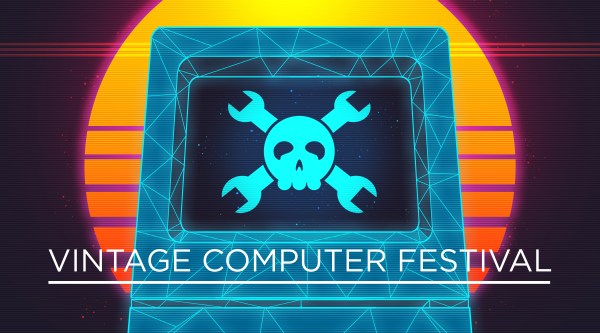
Hacakaday is proud to once again sponsor VCF West. You don’t need a ticket, the conference will live stream on their YouTube channel for all who are interested. We’ve embedded the live stream below, as well as the awesome poster at that Joe Kim produced for display at the festival.

Continue reading “Saturday: Vintage Computer Festival West”

Gaming In Different Languages

One of the perks of using older hardware is its comparative simplicity and extensive documentation. After years or decades of users programming on a platform, the amount of knowledge available for it can become extensive. This is certainly the case with the 6502 microprocessor, used in old Apple computers and some video game systems from the ’80s. The extensive amount of resources available make it a prime candidate in exploring various programming languages, and their advantages and disadvantage.

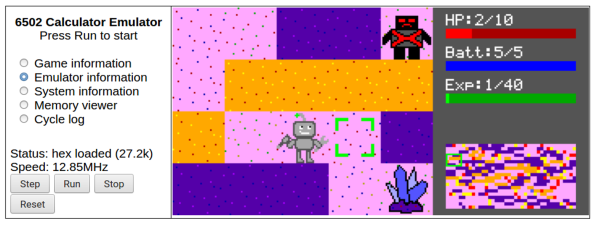
This project looks into those differences using a robot game, which has been programmed four different ways in three languages. [Joey] created the game in Python first and then began to port it to the 65C02, a CMOS variant of the 6502. The first iteration is its assembly language, and then a second iteration with optimized assembly code. From there, he ports it to C and then finally to Forth. Each version of the game is available to play in a browser using an emulator to run the 6502 hardware.

Since the games run in the browser, other tools are available to examine the way the game runs in each language. Registers can be viewed in real time, as well as the values stored in the memory. It’s an interesting look at an old piece of hardware and of its inner workings. For an even deeper dive into the 6502, it’s possible to build a working computer on breadboards using one.

Machine Learning Algorithm Runs On A Breadboard 6502

When it comes to machine learning algorithms, one’s thoughts do not naturally flow to the 6502, the processor that powered some of the machines in the first wave of the PC revolution. And one definitely does not think of gesture recognition running on a homebrew breadboard version of a 6502 machine, and yet that’s exactly what [Nick Bild] has accomplished.

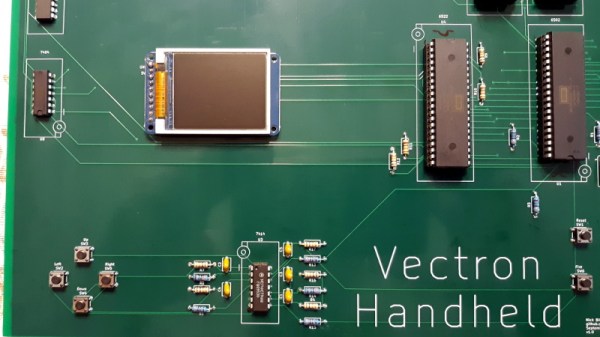
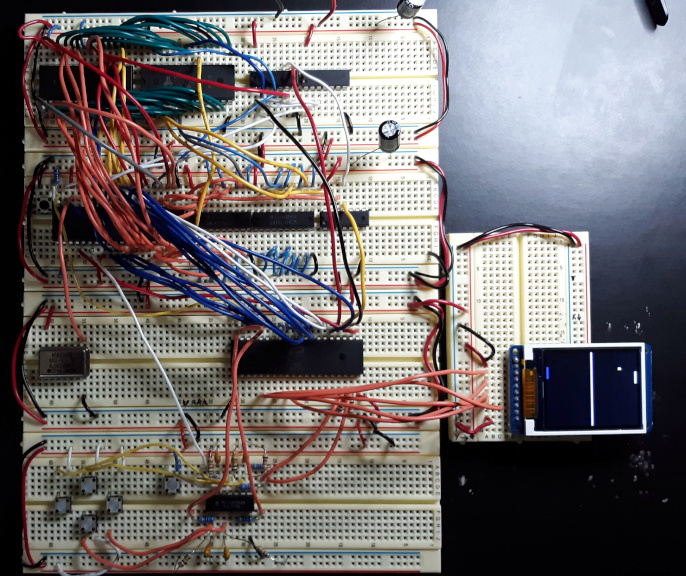
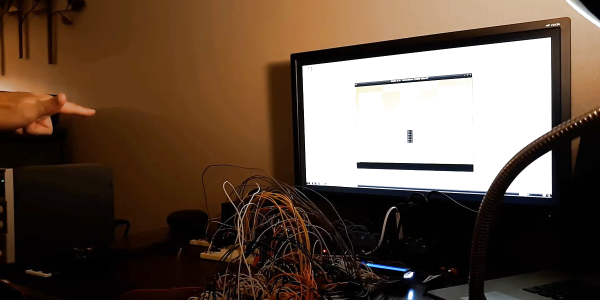
Before anyone gets too worked up in the comments, we realize that [Nick]’s Vectron breadboard computer is getting a lot of help from other, more modern machines. He’s got a pair of Raspberry Pi 3s in the mix, one to capture and downscale images from a Pi cam, and one that interfaces to an Atari 2600 emulator and sends keypresses to control games based on the gestures seen by the camera. But the logic to convert gesture to control signals is all Vectron, and uses a k-nearest neighbor algorithm executed in 6502 assembly. Fifty gesture images are stored in ROM and act as references for the four known gesture classes: up, down, left, and right. When a match between the camera image and a gesture class is found, the corresponding keypress is sent to the game. The video below shows that the whole thing is pretty responsive.

In our original article on [Nick]’s Vectron breadboard computer, [Tom Nardi] said that “You won’t be playing Prince of Persia on it.” That may be true, but a machine learning system running on the Vectron is not too shabby either.

Continue reading “Machine Learning Algorithm Runs On A Breadboard 6502”

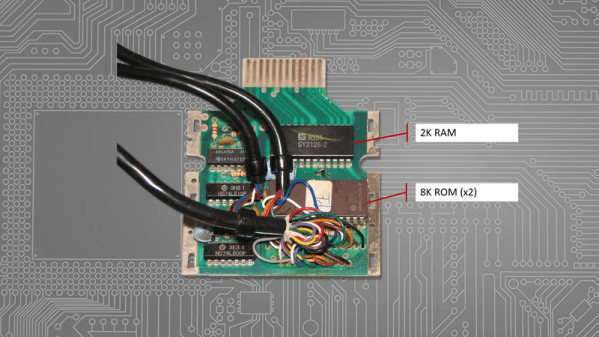
Converting An Atari 2600 Into A Home Computer; Did That Ever Work?

[Tony] posted an interesting video where he looks at the Atari 2600 and the way many companies tried to convert it into a real home computer. This reminded us of the ColecoVision, which started out as a video game but could expand to a pretty reasonable computer.

It might seem silly to convert a relatively anemic Atari video game into a computer, but keep in mind that computers were pretty expensive in those days. Not to mention, the Atari itself was a fair investment back then, too.

Continue reading “Converting An Atari 2600 Into A Home Computer; Did That Ever Work?”

A Barn Find 6502 Is Restored

The phrase “Barn find” is normally associated with the world of older cars, where enthusiasts live in the hope that they may one day stumble upon a dusty supercar lurking unloved for decades on a remote farm. It’s not so often found in the context of electronics, but that’s the phrase that [John Culver] uses for a mid-1970s Atari arcade board that had been through a very hard time indeed and was in part coated with cow dung. It’s interesting because it sports a very early example of a MOS 6502 in a ceramic package, whose date code tells us was manufactured in week 22 of 1976.

Finding a microprocessor, even a slightly rare one, is not that great an event in itself. What makes this one interesting is the state it was in when he got it, and the steps he used to retrieve it from the board without it sustaining damage, and then to clean it up and remove accumulated rust on its pins. We are fast approaching a point at which older microprocessors become artifacts rather than mere components, and it’s likely that more than one of us with an interest in such things may one day have to acquire those skills.

We’re rewarded at the end with a picture of the classic chip passing tests with flying colours, and the interesting quirk that this is a chip with the famous rotate right bug that affected early 6502s. If you are interested in the 6502 then you should definitely read our colleague [Bil Herd]’s tribute to its recently-departed designer, [Chuck Peddle].

The Ohio Scientific 300 Trainer

In the late 1970s there were a host of companies that dominated the computer market before the introduction of the IBM PC. One of these was Ohio Scientific or OSI. [BradH] has an OSI Model 300 trainer — their first major product — and gives us a peek at it along with some history of the company.

Companies like OSI, Southwest Technical Products, Osborne, Northstar, and PolyMorphic were the second wave after the likes of MITS and IMSAI had opened the personal computer market. Only a few companies like Apple hung on and made it work over the long haul.

Continue reading “The Ohio Scientific 300 Trainer”

Chuck peddle father of 6502

Honoring Chuck Peddle; Father Of The 6502 And The Chips That Went With It

Chuck Peddle, the patriarch of the 6502 microprocessor, died recently. Most people don’t know the effect that he and his team of engineers had on their lives. We often take the world of microprocessor for granted as a commonplace component in computation device, yet there was a time when there were just processors, and they were the size of whole printed circuit boards.

Chuck had the wild idea while working at Motorola that they could shrink the expensive processor board down to an integrated circuit, a chip, and that it would cost much less, tens of dollars instead of ten thousand plus. To hear Chuck talk about it, he got a cease-and-desist letter from the part of Motorola that made their living selling $14,000 processor boards and to knock off all of the noise about a $25 alternative.

In Chuck’s mind this was permission to take his idea, and the engineering team, elsewhere. Chuck and his team started MOS Technologies in the 1970’s in Norristown PA, and re-purposed their work on the Motorola 6800 to become the MOS 6502. Lawsuits followed.

Continue reading “Honoring Chuck Peddle; Father Of The 6502 And The Chips That Went With It”