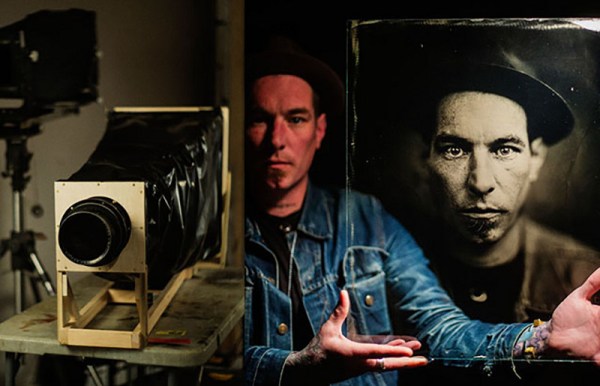
[Giles Clement] was avoiding work in a bar, nursing a pint, and doodling a sketch for a camera. He looked at his sketch, thought, “gee, that looks better than answering emails,” and called his friend. An hour later they were at home depot buying supplies, and ten hours of furious work later, they had a camera. Nothing gets a project done like avoiding work! (See it all happen before your eyes in the video below the break.)
The camera is built around a 500mm f/4.5 Goerz Dogmar lens from around 1918 and was apparently used for aerial recon out of blimps. The frame of the camera is pine and plywood. [Giles] had heard that building the bellows for these cameras had taken other hobbyists months and thousands of dollars. Rather than elaborately folded fabric, he supported his 6 mil plastic bellows on telescoping rigid rods. To view the image while he’s focusing it, he sanded a plate of glass with 100 grit sandpaper to serve as a view screen.
Once the camera was completed, they prepared the plates and exposed photos. The first step, from what we could tell, was to disregard all chemical safety practices. The second step was pouring a substance called collodion on an unsanded glass plate and tilting the plate back and forth until the whole plate had an even coat on it. Then it was put in a bath of silver nitrate to sensitize. Once sensitized the plate was placed in the frame of the focused camera and an astonishing amount of strobe light emitted. After that it’s back to the chemical baths for more safety hazards. The whole process has to be done under fifteen minutes or the plate cures before it can be used. The photos that come out are seriously cool. It’s no wonder these old styles of photography have seen a comeback.
Continue reading “I Built Myself A 16×20-Inch Camera In 10 Hours”
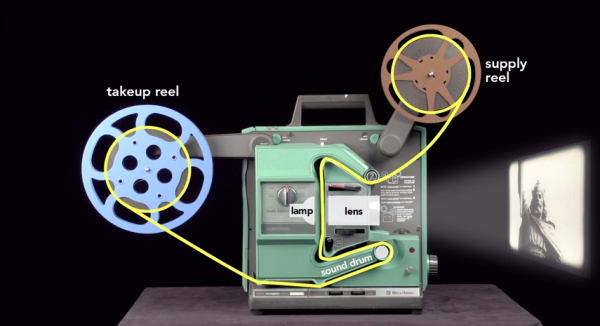
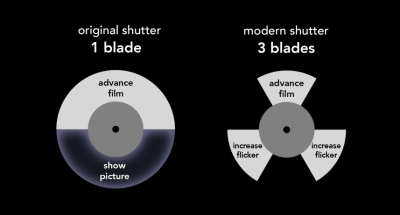 Film is projected at a rate of 24 frames per second, which is sufficient to create the POV illusion. A projector’s shutter inserts itself between the lamp and the lens, blocking the light to prevent projection of the film’s physical movement. But these short periods of darkness, or flicker, present a problem. Originally, shutters were made in the shape of a semi-circle, so they block the light half of the time. Someone figured out that increasing the flicker rate to 60-70 times per second would have the effect of constant brightness. And so the modern shutter has three blades: one blocks projection of the film’s movement, and the other two simply increase flicker.