Ask Hackaday: Why Did GitHub Ship All Our Software Off To The Arctic?

If you’ve logged onto GitHub recently and you’re an active user, you might have noticed a new badge on your profile: “Arctic Code Vault Contributor”. Sounds pretty awesome right? But whose code got archived in this vault, how is it being stored, and what’s the point?

Continue reading “Ask Hackaday: Why Did GitHub Ship All Our Software Off To The Arctic?”

The Sincerest Form Of Flattery

In the art world, it’s often wistfully said that imitation is the sincerest form of flattery. In the open-source hardware world, this flattery takes the shape of finding your open-source project mass produced in China and sold at outrageously low markups. Looking around on my lab, I’ve been the direct beneficiary of this success.

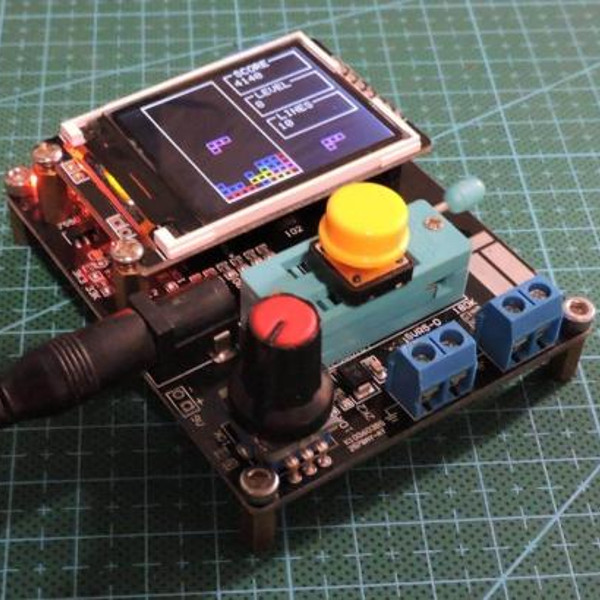
I see an AVR Transistor Tester that I picked up for a few bucks a long time ago. Lacking anything better, it’s my go-to device for measuring inductance and capacitor ESR. For $7, it is worth much more than I paid for it, due to some clever design work by a community of German hackers and the economics of mass production. They’re so cheap that we’ve seen people re-use them just for the displays and with a little modification, turned them into Tetris consoles. That’s too cool. Continue reading “The Sincerest Form Of Flattery”

Home Automation Covers Everything

When starting out on a project, it’s accepted best practice to try to avoid feature creep. Of course, we can’t all say that we follow this guideline completely every time. In fact, sometimes it can get away from us, and in rare situations it might actually turn out pretty well. That appears to be what happened with [superczar]’s home automation project which now covers basically everything possible in home automation.

The build started in 2013, so we assume that features have been added periodically and that the system wasn’t designed and built all in one furious weekend. Either way, though, it covers a lot: lights, switches, media players in several rooms, includes sensors and logging for temperature, smoke, fire, and power, supports a number of cameras, the doorbell, and the locks. It also includes voice control for most of the systems.

That’s an impressive list, but what really drew our attention to this project is that it used to be based on domoticz, but that community has waned over the years and [superczar] had kept his system patched together with self-built scripts. An accidental upgrade recently broke the entire setup, so rather than rebuild everything a migration was made to home-assistant, an open-source platform that has a more active community. We’ve seen plenty of projects around here that use it as a platform, for ceiling fans, custom remotes, and doorbells.

Thanks to [pradeepmur] for the tip!

Your Own Open Source ASIC: SkyWater-PDK Plans First 130 Nm Wafer In 2020

You might have caught Maya Posch’s article about the first open-source ASIC tools from Google and SkyWater Technology. It envisions increased access to make custom chips — Application Specific Integrated Circuits — designed using open-source tools, and made real through existing chip fabrication facilities. My first thought? How much does it cost to tape out? That is, how do I take the design on my screen and get actual parts in my hands? I asked Google’s Tim Ansel to explain some more about the project’s goals and how I was going to get my parts.

The goals are pretty straightforward. Tim and his collaborators would like to see hardware open up in the same way software has. The model where teams of people build on each other’s work either in direct collaboration or indirectly has led to many very powerful pieces of software. Tim’s had some success getting people interested in FPGA development and helped produce open tools for doing so. Custom ASICs are the next logical step.

Continue reading “Your Own Open Source ASIC: SkyWater-PDK Plans First 130 Nm Wafer In 2020”

FDA Approves Ventilator Designed By NASA’s Jet Propulsion Laboratory

Yesterday NASA’s Jet Propulsion Laboratory announced that their ventilator design has received Emergency Use Authorization from the US Food and Drug Administration. This paves the way for the design to be manufactured for use in the treatment of COVID-19 patients.

JPL, which is tightly partnered with the California Institute of Technology, designed the ventilator for rapid manufacturing to meet the current need for respiratory tools made scarce by the pandemic. The design process took only 37 days and was submitted for FDA approval around April 23rd. They call it VITAL — Ventilator Intervention Technology Accessible Locally — a nod to NASA’s proclivity for acronyms.

Continue reading “FDA Approves Ventilator Designed By NASA’s Jet Propulsion Laboratory”

Make It Easier For Your Software Project To Accept Contributions

[Flameeyes] has heard complaints (and at times, he admits, has complained himself) about big companies not contributing improvements to projects they seem to find useful, or rolling their own implementation rather than use and contribute to an existing code base. Having recently left Google after seven years, he has some insights into some of the reasons big corporations (at least Google, anyway) may sometimes seem to eschew making code contributions, and some of the reasons might come as a surprise.

There are things a corporation can do differently, but there are also some things that can be done on the project’s end to make accepting contributions easier. [Flameeyes] took some time to write out a few pointers on how to make it easier for others (particularly large corporations) to contribute code to a software project.

The biggest issue is the software license. Without one, there is no legal structure to use, distribute, or contribute to the code, and no corporate entity will want to touch it. Google specifically forbids creating patches for projects with either no license, or incompatible licenses. An example of an incompatible license is one that forbids commercial use, because everything a corporation like Google does — even research –is considered a commercial endeavor. In addition, on the corporate side making contributions might trigger a code review process of some kind for some licenses, but not for others. [Flameeyes] suggests the MIT license as one that is acceptable to pretty much everyone with a minimum of fuss. Another caution: if a project’s code resides in an online repository, make sure the repository is licensed as well.

A few other small suggestions (such as maintaining an AUTHORS file to track contributors in a tidy way) rounds out the advice. It sounds simple, but software licensing is so critical to the whole affair that it’s important to get it right — he suggests the REUSE tool for anyone wanting to make sure a project’s licensing is tidy.

[Flameeyes] makes a point that none of this guidance is based on secret or institutional knowledge. Google has a public document detailing exactly how they use and deal with open source, and it’s a solid guide for how to make your project more accepting of contributions from a corporate entity like Google. (Or, if you prefer, a guide on how to set up as many barriers as possible for your project.)

In case you missed it, we just want to remind you that our favorite recent open source project from Google is definitely Pigweed.

Modular Mouse Packs Features

Not only do console gamers complain about the use of a mouse, but PC users themselves often don’t have kind words to say even about some of the higher-end options. Granted, their gripes aren’t about game experience or balance, they’re usually about comfort, features, or longevity of the mice themselves. So far we haven’t seen many people try to solve these problems, but [benw] recently stepped on the scene with a modular mouse that can fit virtually any need.

Called the RX-Modulus, this mouse has been designed from the ground up to be completely open source from hardware to software. Most of the components can be 3D printed to suit an individual’s particular grip style by making adjustments. The electronics can be custom fitted as well. Users can swap out mouse buttons and wheels in any number of positions, and replace them when they wear out. To that end, one of the goals of this project is also to avoid any planned obsolescence that typically goes along with any current consumer-level product.

While [benw] currently only has a few prototypes under his belt, he’s far enough along with the project that he’s willing to show it off to the community. His hopes are that there are others that see a need for this type of mouse and can contribute to the final design. After all, there are all kinds of other custom mice out there that would have been much easier builds with [benw]’s designs at hand.