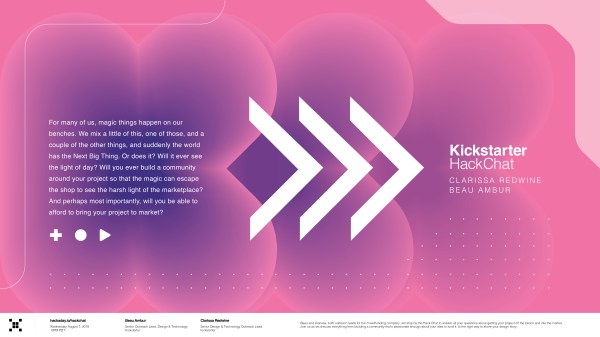
Join us on Wednesday, August 7th at noon Pacific for the Kickstarter Hack Chat with Beau Ambur and Clarissa Redwine!
For many of us, magic things happen on our benches. We mix a little of this, one of those, and a couple of the other things, and suddenly the world has the Next Big Thing. Or does it? Will it ever see the light of day? Will you ever build a community around your project so that the magic can escape the shop and survive the harsh light of the marketplace? And perhaps most importantly, will you be able to afford to bring your project to market?
Crowdfunding is often the answer to these questions and more, and Kickstarter is one of the places where hackers can turn their project into a product. Beau and Clarissa, both outreach leads for the crowdfunding company, will stop by the Hack Chat to answer all your questions about getting your project off the bench and into the marketplace. Join us as we discuss everything from building a community that’s passionate enough about your idea to fund it, to the right way to share your design story.
 Our Hack Chats are live community events in the Hackaday.io Hack Chat group messaging. This week we’ll be sitting down on Wednesday, August 7 at 12:00 PM Pacific time. If time zones have got you down, we have a handy time zone converter.
Click that speech bubble to the right, and you’ll be taken directly to the Hack Chat group on Hackaday.io. You don’t have to wait until Wednesday; join whenever you want and you can see what the community is talking about.