Hackaday Links Column Banner

Hackaday Links: June 7, 2020

For many of us who were in college at the time, the 1989 release of Will Wright’s classic SimCity sounded the death knell of our GPAs. Being able to create virtual worlds and then smite them with a tornado or a kaiju attack was the stuff of a procrastinator’s dreams. We always liked the industrial side of the game best, and took great pains in laying out the factory zones, power plants, and seaports. Those of a similar bent will be happy to know that Maxis, the studio behind the game, had a business simulations division, and one of their products was a complete refinery simulator the studio built for Chevron called, unsurprisingly, SimRefinery. The game, which bears a striking resemblance to SimCity, has been recovered and is now available for download, which means endless procrastination by playing virtual petrochemical engineer is only a mouse click away.

Speaking of time wasters, we stumbled upon another simulation this week that sucked away a couple of hours of productivity. As RTL-SDR.com reports, YouTuber called Information Zulu has a 24/7 live stream showing arrivals and departures at Los Angeles International Airport. That may sound boring, but the cameras used to watch the runways are virtual, and the planes are animated based on ADS-B data being scooped up by an RTL-SDR dongle. We pinged Information Zulu and asked for a rundown of the gear behind the system, but never heard back. If we do, we’ll post a full article on what we learned, because the level of detail is amazing. The arriving and departing planes sport the correct livery for the airline, the current weather conditions are shown, taxiing is shown in real time, and there’s even an audio feed from air traffic control.

If you’re looking to gain back a little of the productivity lost to the last two items, Digi-Key might be able to help with their new PCB Builder service. All you have to do is upload your gerbers and select your materials, and they’ll give you options for a bunch of different quick-turn fabrication houses. Looks mighty convenient.

Steve Mould dropped a video this week about vibration analysis. That might not sound very exciting, but the fascinating bit is how companies are now using motion amplification video techniques to show how and where industrial equipment is moving, even if those motions are too subtle to be seen by the naked eye. It’s frankly terrifying to see how pipes flex and tanks expand and contract, and how pumps and motors move relative to each other. The technique used is similar to the way a person’s pulse can be detected on a video by the subtle color change as blood rushes into capillaries. We’d love to see someone tackle a homebrew version of this so we can all see what’s going on around us.

And finally, we want to remind everyone that the Hackaday Prize is back, and that you should get your entries going. What’s new this year is the Dream Team challenges, where four worthy non-profits organizations will each assemble a three-person team to work on a specific pain-point in their process. The application deadline has been extended to June 9, and there are two $3,000 microgrants, one in June and one in July, for each team member. So look through the design briefs and see if your skills match their needs.
Milling A Custom 6-Pin DIN Connector

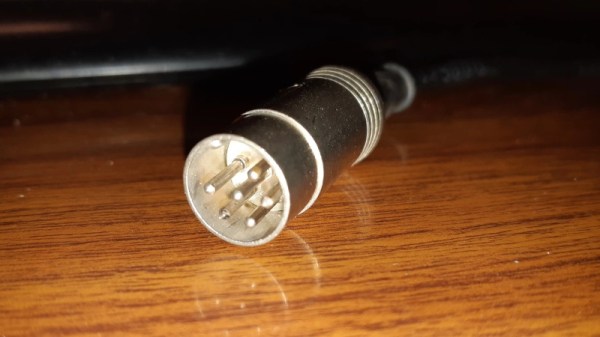
When [Charles Ouweland] found himself in need of a DIN connector that had a somewhat unusual pin arrangement, he figured he could fashion his own in less time than it would take to have a replacement shipped to him. In the end it sounds as though it took a lot longer than expected, but given the worldwide situation, we don’t doubt this bespoke connector was still put to work before its eBay counterpart would have arrived.

More importantly, the connector [Charles] produced looks fantastic. If we weren’t told otherwise, we’d have assumed the finished product was commercially produced. Although to be fair, he did have a little help there. The housing and pins themselves were pulled from a sacrificial connector; his primary contribution was the insulating block that holds the pins in their proper position.

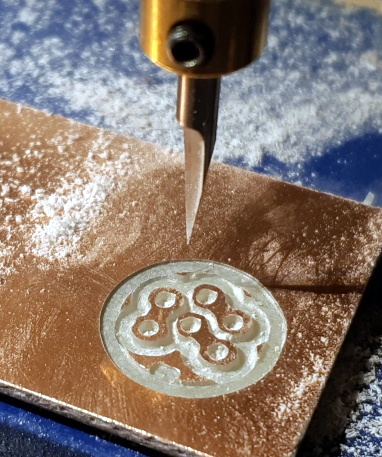
So how did he make it? He had considered using a piece of scrap material and just putting the holes in it with a drill press, but he was worried getting the aliment right. Instead, he decided to call his cheap CNC router into service. By routing his design out of copper clad PCB, he was even able to tie the appropriate pins together right in the connector.

Admittedly, we don’t see a lot of hardware that still uses DIN connectors these days. But this tip is certainly worth filing away just in case. You never know when you might find an old piece of hardware that just needs a little TLC to get up and running again. Who knows, you might even find a dumpster full of them.

Cheap Alternative Solvents For PCB Cleaning

If you’re in the habit of using isopropyl alcohol to clean your PCBs after soldering, you probably have a nice big jug of the stuff stashed away. If you don’t, you’re probably out of luck, since the COVID-19 pandemic has pretty much cleared IPA out of the retail market. But don’t fret: depending on where you live, alternative PCB cleaning solutions may be as close as your nearest auto parts store.

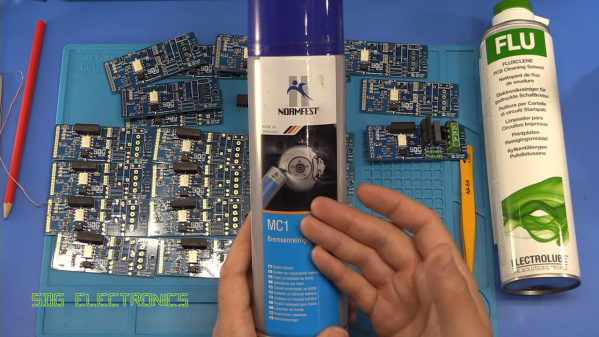
[Steven]’s search for a cheaper and perhaps more readily available substitute for his usual dedicated flux cleaner lead him to try automotive brake cleaner on a few test boards. He suspected that they might contain acetone, which is prone to yield unfortunate results with solder resist and silkscreen on PCBs, so some tests were in order. The brand he tried was Normfest Bremsenreiniger MC-1, a German brand that according to its Safety Data Sheet contains only hydrocarbons like alkanes, butane, and propane. It did a fine job cleaning all but the crustiest rosin flux without collateral damage.

In the video below, [Steven] goes through a few more brands with similar results, and we were encouraged enough by his results to check brake cleaners made for the US market. Alas, almost all of the cheap and readily available aerosols have acetone as the principle ingredient, mixed in with methanol, ethanol, and assorted ingredients that together will probably make for a bad day. About the only US-sold brand without acetone that we could find was Keller-Heartt, which lists only naptha and ethanol on its SDS. There may be others, but make sure you test whatever you find.

Aerosol solvents aren’t the only way to clean a PCB, of course. Ultrasonic cleaners do a great job, and as [Steven] discovered, they’re generally safe for most components.

Continue reading “Cheap Alternative Solvents For PCB Cleaning”

KiCad Panelization Made Easy

There’s a new Python-based script that will panelize your KiCad circuit boards from the command line. The project by [Jan Mrázek] is called KiKit and works on .kicad_pcb files to arrange them in a grid with your choice of mousebites or v-cuts for separating the boards after production.

When working with smaller boards it’s common practice to group them together into panels. This is done to speed up PCB assembly as multiple boards can have solder paste applied, go through a pick and place machine, and be sent into the reflow oven as a single unit. Often this is done manually, but in many cases this script will save you the time while delivering the results you need.

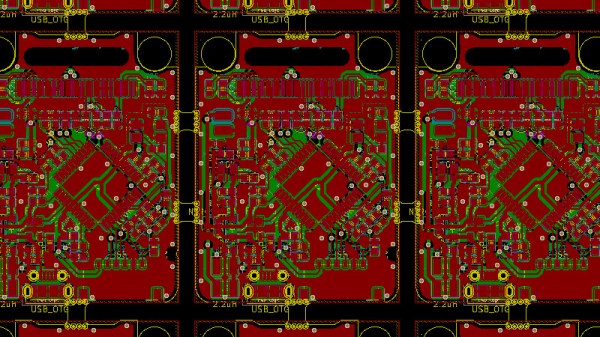
Let’s say you really wanted to make a whole bunch of those Xling open source Tamagotchi-like key fobs we saw a couple of weeks back. Using KiKit you can gang up six of the boards at a time, using “mousebites” to keep them together during production but make it easy to separate them after all the components are soldered:

/usr/local/bin/kikit panelize grid --space 3 --gridsize 2 3 --tabwidth 3 --tabheight 3 --htabs 2 --vtabs 1 --mousebites 0.5 1 0.25 --radius 1 Xling/hardware/xling.kicad_pcb xling_panel.kicad_pcb

You can see that the parameters let you set space between the boards, number of boards in the grid, width of the tabs, tab dimensions, number of tabs between boards, and even the radius of the curve where the tabs meet the board. These settings were pulled from the examples page, which demonstrates outcomes for many different settings options.

If you want to give this a try, we suggest installing directly from the repository, as improvements are ongoing and the pip3 version didn’t have all of the options shown in the examples. For us this was as easy as sudo python3 setup.py install and then calling the script with the full path /usr/local/bin/kikit.

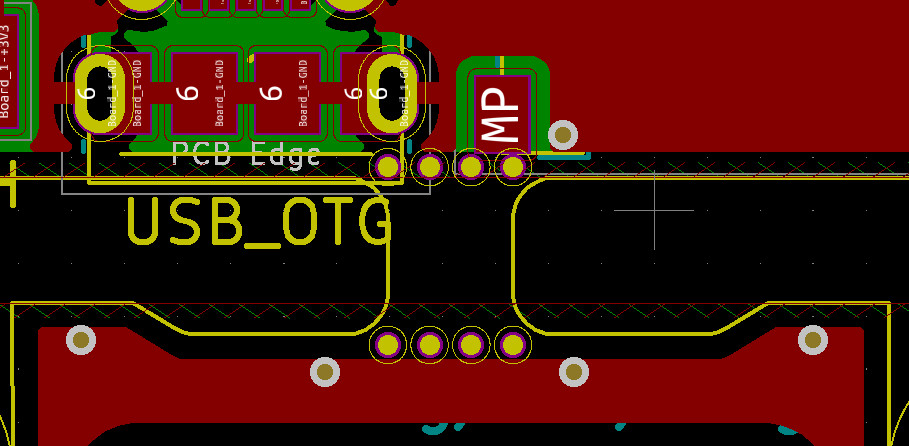
Results from this board are both impressive and cautionary. You can see the top edge of the design is recessed yet the most up-to-date version of KiKit was still able to make the connection. However, how this affects the USB connector on the bottom of the board design may be something to consider before pulling the trigger on your panel order.

PCB Bring-Up Hack Chat

Join us on Wednesday, April 15 at noon Pacific for the PCB Bring-Up Hack Chat with Mihir Shah and Liam Cadigan!

The printed circuit design process is pretty unique among manufacturing processes. Chances are pretty good that except for possibly a breadboard prototype, the circuit that sits before you after coming back from assembly has only ever existed in EDA software or perhaps a circuit simulator. Sure, it’s supposed to work, but will it?

You can — and should — do some power-off testing of new boards, but at some point you’re going to have to flip the switch and see what happens. The PCB bring-up process needs to be approached carefully, lest debugging any problems that crop up become more difficult than need be. Mihir and Liam from inspectAR will discuss the bring-up process in depth, offering tips and tricks to make things go as smoothly as possible, as well as demonstrating how the inspectAR platform can fit into that process, especially with teams that are distributed across remote sites. If your board releases the Magic Smoke, you’ll want to know if it’s your design or an assembly issue, and an organized bring-up plan can be a big help.

Note: Liam will be doing a simulcast web demo of inspectAR via Zoom. ​

join-hack-chatOur Hack Chats are live community events in the Hackaday.io Hack Chat group messaging. This week we’ll be sitting down on Wednesday, April 15 at 12:00 PM Pacific time. If time zones have got you down, we have a handy time zone converter.

Click that speech bubble to the right, and you’ll be taken directly to the Hack Chat group on Hackaday.io. You don’t have to wait until Wednesday; join whenever you want and you can see what the community is talking about.

Continue reading “PCB Bring-Up Hack Chat”

Hackaday Links Column Banner

Hackaday Links: April 5, 2020

Git is powerful, but with great power comes the ability to really bork things up. When you find yourself looking at an inscrutable error message after an ill-advised late-night commit, it can be a maximum pucker-factor moment, and keeping a clear enough head to fix the problem can be challenging. A little proactive social engineering may be in order, which is why Jonathan Bisson wrote git-undo, a simple shell script that displays the most common un-borking commands he’s likely to need. There are other ways to prompt yourself through Git emergencies, like Oh Shit, Git (or for the scatologically sensitive, Dangit Git), but git-undo has the advantage of working without an Internet connection.

Suddenly find yourself with a bunch of time on your hands and nothing to challenge your skills? Why not try to write a program in a single Tweet? The brainchild of Dominic Pajak, the BBC Micro Bot Twitter account accepts tweets and attempts to run them as BASIC programs on a BBC Microcomputer emulator, replying with the results of the program. It would seem that 280 characters would make it difficult to do anything interesting, but check out some of the results. Most are graphic displays, some animated, and with an unsurprising number of nods to 1980s pop culture. Some are truly impressive, though, like Conway’s Game of Life written by none other than Eben Upton.

The COVID-19 pandemic is causing all sorts of cultural shifts, but we didn’t expect to see much change in the culture of a community that’s been notoriously resistant to change for over a century: amateur radio. One of the most basic facts of life in the amateur radio world is that you need a license to participate, with governments regulating the process. But as a response to the pandemic, Spain has temporarily lifted licensing requirements for amateur radio operators. Normally, an unlicensed person is only allowed to operate on amateur bands under the direct supervision of a licensed amateur. The rules change allows unlicensed operators to use a station without supervision and is intended to give schoolchildren trapped at home an educational experience. In another change, some countries are allowing special callsign suffixes, like “STAYHOME,” to raise awareness during the pandemic. And the boom in interest in amateur radio since the pandemic started is remarkable; unfortunately, finding a way to take your test in a socially distant world is quite a trick. Our friend Josh Nass (KI6NAZ) has some thoughts about testing under these conditions that you might find interesting.

And finally, life goes on during all this societal disruption, and every new life deserves to be celebrated. And when Lauren Devinck made her appearance last month, her proud parents decided to send out unique birth announcement cards with a printed circuit board feature. The board is decorative, not functional, but adds a distinctive look to the card. The process of getting the boards printed was non-trivial; it turns out that free-form script won’t pass most design rule tests, and that panelizing them required making some compromises. We think the finished product is classy, but can’t help but think that a functional board would have really made a statement. Regardless, we welcome Lauren and congratulate her proud parents.