The Rotary-X Engine Is A Revolution In Thermodynamics

If you’re running an army, chances are good that you need a lot of portable power for everything from communications to weapons control systems. When it comes to your generators, every ounce counts. The smaller and lighter you can get them, the better.

Connecticut-based company LiquidPiston is developing a high-powered generator for the US Army that uses the company’s own rotary x-engine — a small, light, and powerful beast that sounds like a dream come true. It can run on gasoline, diesel, natural gas, kerosene, or jet fuel, and is scalable from 1 to 1,000 horsepower (PDF).

Co-founder and CEO Alex Schkolnik describes the design as a combination of the best parts of the Otto and Atkinson cycle engines, the Diesel, and the Wankel rotary while solving the big problems of the latter two. That sounds impressive, but it doesn’t mean much unless you understand how each of these engines work and what their various advantages and disadvantages are. So let’s take a look under the hood, shall we?

Continue reading “The Rotary-X Engine Is A Revolution In Thermodynamics”
Print-in-Place Connectors Aim To Make Wiring Easier

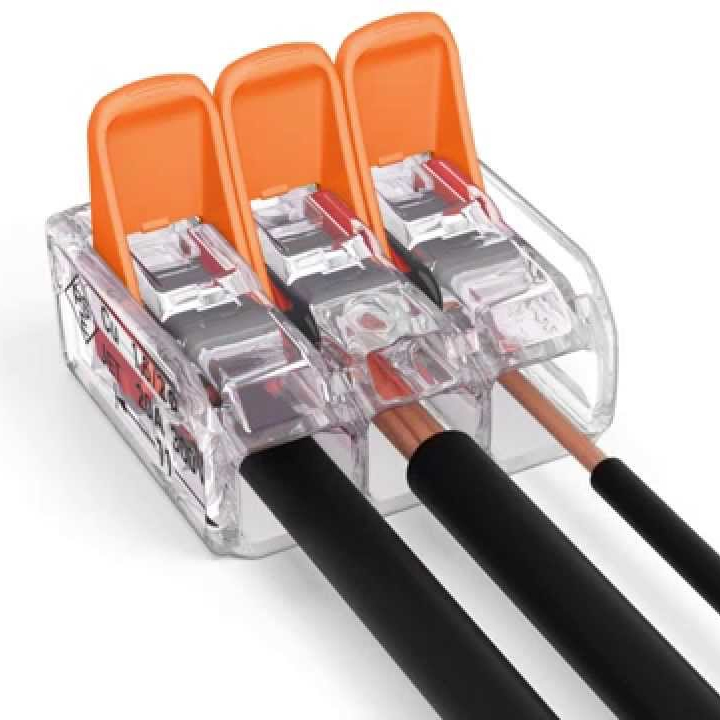
One thing some of us here in the United States have always been jealous of is the WAGO connectors that seem so common in electrical wiring everywhere else in the world. We often wonder why the electrical trades here haven’t adopted them more widely — after all, they’re faster to use than traditional wire nuts, and time is money on the job site.

Wago 221 compact lever connector via the Wago YouTube channel

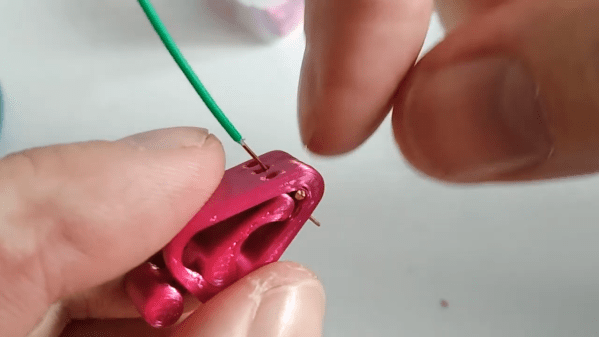
This print-in-place electrical connector is inspired by the WAGO connectors, specifically their Lever Nut series. We’ll be clear right up front that [Tomáš “Harvie” Mudruňka’s] connector is more of an homage to the commercially available units, and should not be used for critical applications. Plus, as a 3D-printed part, it would be hard to compete with something optimized to be manufactured in the millions. But the idea is pretty slick. The print-in-place part has a vaguely heart-shaped cage with a lever arm trapped inside it.

After printing and freeing the lever arm, a small piece of 1.3-mm (16 AWG) solid copper wire is inserted into a groove. The wire acts as a busbar against which the lever arm squeezes conductors. The lever cams into a groove on the opposite wall of the cage, making a strong physical and electrical connection. The video below shows the connectors being built and tested.

We love the combination of print-in-place, compliant mechanisms, and composite construction on display here. It reminds us a bit of these printable SMD tape tamers, or this print-in-place engine benchmark.

Continue reading “Print-in-Place Connectors Aim To Make Wiring Easier”

Ghidra Used To Patch Fahrenheit Into An Air Quality Meter

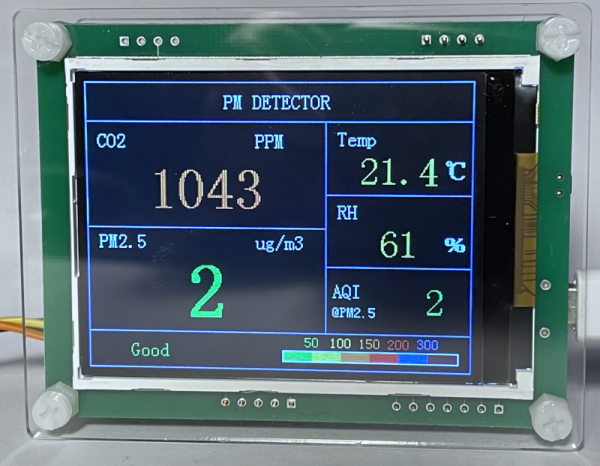
Even though most of the world population couldn’t tell you what room or body temperature is in Fahrenheit, there are some places on this globe where this unit is still in common use. For people in those areas, it’s therefore a real hassle when, say, a cheap Chinese air quality measurement systems only reports in degrees Celsius. Fortunately, [BSilverEagle] managed to patch such a unit to make it display temperature in Fahrenheit.

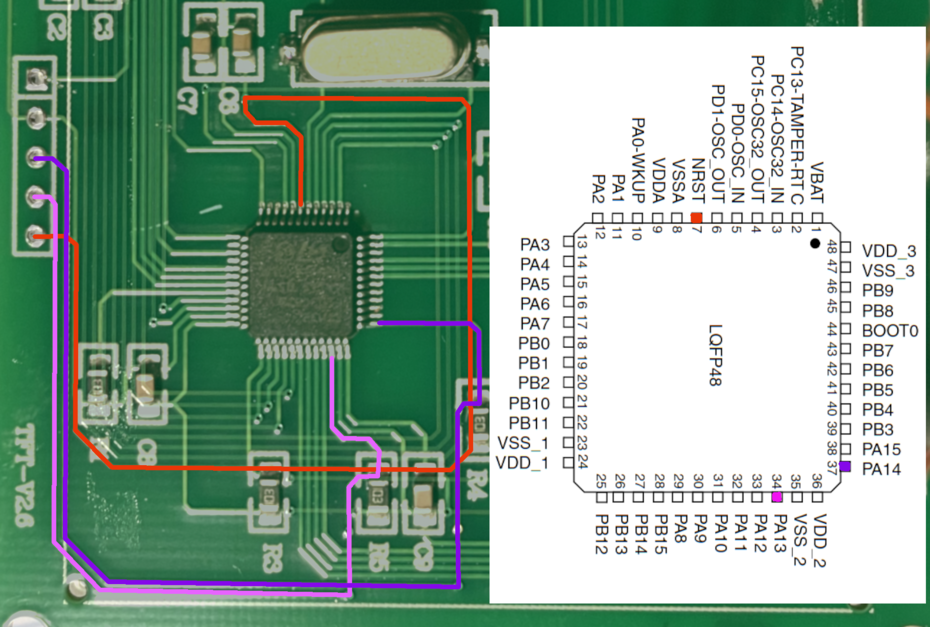
The reverse engineering begins by finding a way to dump the firmware. It’s nice to hear that [BSilverEagle] used some the skills demonstrated in [Eric Shlaepfer’s] PCB reverse engineering workshop from Hackaday Remoticon last November to trace out the debug header and the SWD pins of STM32F103C8 MCU. After that, OpenOCD could be used to dump the firmware image, with no read protection encountered. The firmware was then reverse-engineered using Ghidra, so that [BSilverEagle] could figure out where the temperature was being calculated and where the glyph for the Celsius symbol was stored. From there this it was a straight-forward rewrite of those two parts of the original firmware to calculate the temperature value in Fahrenheit, change the glyph and reflash the MCU.

So why buy this thing in the first place if it didn’t spit out units useful for your current locale? Cost. Buying this consumer(ish) device was about the same cost as buying the individual parts, designing and manufacturing the PCB, and writing the firmware for it. The only downside for their use case was the lack of Fahrenheit. Not a problem for those who demand full control of the hardware they own.

Need a boot camp for using Ghidra? Matthew Alt put together a spectacular video series on Reverse Engineering with Ghidra.

Machine Learning Helps You Track Your Internet Misery Index

We all seem to intuitively know that a lot of what we do online is not great for our mental health. Hang out on enough social media platforms and you can practically feel the changes your mind inflicts on your body as a result of what you see — the racing heart, the tight facial expression, the clenched fists raised in seething rage. Not on Hackaday, of course — nothing but sweetness and light here.

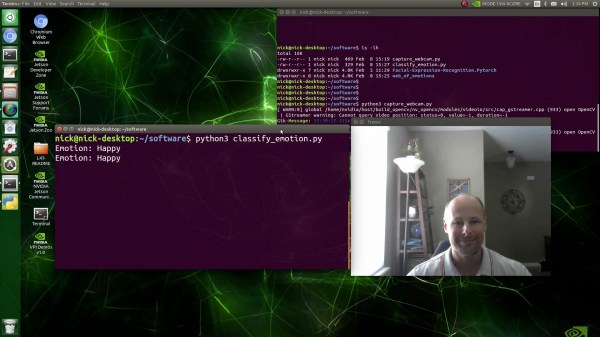
That’s all highly subjective, of course. If you’d like to quantify your online misery more objectively, take a look at the aptly named BrowZen, a machine learning application by [Nick Bild]. Built around an NVIDIA Jetson Xavier NX and a web camera, BrowZen captures images of the user’s face periodically. The expression on the user’s face is classified using a facial recognition model that has been trained to recognize facial postures related to emotions like anger, surprise, fear, and happiness. The app captures your mood and which website you’re currently looking at and stores the results in a database. Handy charts let you know which sites are best for your state of mind; it’s not much of a surprise that Twitter induces rage while Hackaday pushes [Nick]’s happiness button. See? Sweetness and light.

Seriously, we could see something like this being very useful for psychological testing, marketing research, or even medical assessments. This adds to [Nick]’s array of AI apps, which range from tracking which surfaces you touch in a room to preventing you from committing a fireable offense on a video conference.

Continue reading “Machine Learning Helps You Track Your Internet Misery Index”

The First Hacker Camp To Show Up On Google Maps

Our summer gatherings at hacker camps are fleeting and ephemeral, anticipated for months but over far too quickly. Afterwards we have only our memories, and perhaps the occasional Hackaday write-up. We think BornHack 2020 in Denmark was the only hacker camp that wasn’t forced to go online-only by the pandemic last year, and now as far as we know it has also become the only one ever that has left its mark for the wider world by being captured for posterity by Google Earth.

Visible in the forest is the sparsely populated and socially distanced main field of what was a considerably smaller camp than normal, as well as in separate clearings the speakers tent and the loud field. Perhaps it doesn’t help as much in explaining to outsiders what a hacker camp is as might a picture of one of the larger ones, but it does at least serve as a visible reminder that we weren’t quite snuffed out last year.

It’s a moment of nostalgia to see BornHack 2020 on Google Maps for those of us who were there, but perhaps the point of all this is to take a moment to consider the likely prospects for similar events in 2021 given the pandemic. Both the British EMF Camp and American Toorcamp had to cancel their events last year and should return in 2022, there’s no word as yet about 2021 from the Serbian BalCCon or the Italian IHC,  our latest update on Luxembourg’s HaxoGreen is that it’s still slated to go ahead with its move to 2021, and currently both BornHack and the Dutch MCH are expecting to run as normal this summer.

In the grip of a savage third wave of the pandemic where this is being written, it’s by no means a foregone conclusion that 2020’s cancellations may not repeat themselves. International borders remain difficult to cross without exacting quarantine requirements. If you make it to a camp this year you may be one of the lucky few, and in the increasingly likely event that we don’t, we’ll be suitably envious. Don’t loose hope, we shall all meet again… eventually.

If you fancy a closer look at BornHack 2020, have a read of our write-up.

FreeTouchDeck Upgrades Its Hardware And Its Name: ESP32 Touchdown

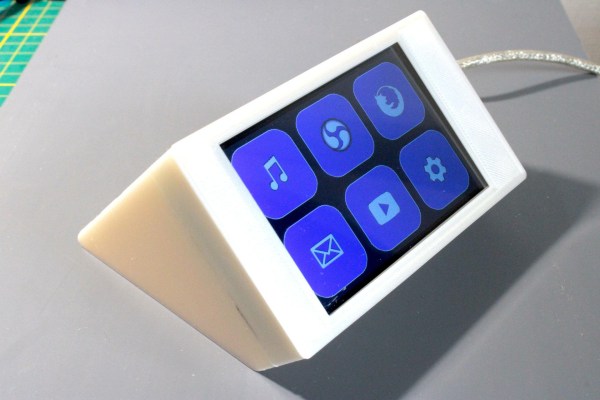
With many folks continuing to work from home for far longer than they ever thought, it’s no surprise that we’re seeing the rise of small DIY devices to make that video call or virtual presentation a little easier. [Dustin Watts] was interested in the functionality of the Elgato Stream Deck — a macro keyboard where each key is its own screen. But that kind of fancy hardware comes with a formidable price tag. So he built his own, and made it open source!

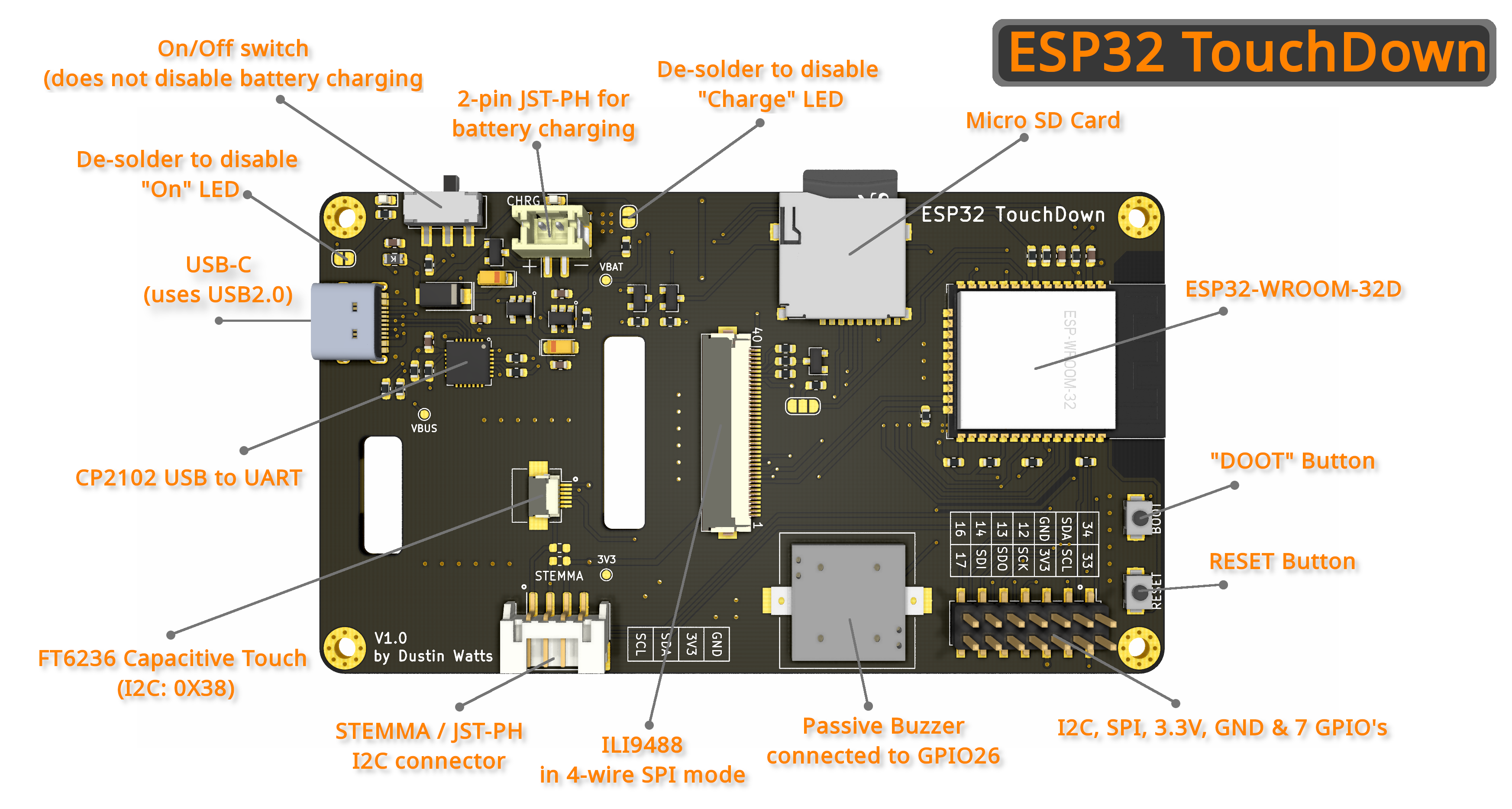
His first iteration — FreeTouchDeck — was built using commonly available modules but has since evolved into the ESP32 Touchdown which does it all with a single PCB. It’s a highly-customizable touchscreen macro keyboard which provide easy access shortcuts and macros for quick actions. Need a quick mute button, want to switch camera views on OBS, or maybe you want smarter shortcut keys for your CAD of choice. This will can get you there.

There a few key differences from the first version (FreeTouchDeck). The ESP32 dev board was ditched for a tidy PCB the directly integrates the module. This one has a capacitive touch controller (FT6236) rather than a resistive one as the capacitive screens deliver a far nicer user experience. A built-in battery and charger circuit (which the FreeTouchDesk didn’t have) allows for the extra bit of flexibility to stream from anywhere (within wireless range of course). Multiple case designs are available in STL form that allows it to be placed on a wall or desk with ease.

Datasheets, gerbers, kicad files, BOMs, and example firmware is provided on GitHub. The software is easily configurable so it can be set up to do any sort of macro, key combination, or action. This isn’t just limited to emulating a Bluetooth keyboard as there are examples showing how to connect to Home Assistant. All in all, this is a wonderful example of continued iteration on a project.

Thanks [Timothy Gregory] for sending this one in!

How To Bake Brownies With A Perfect Glossy Skin

If you’re anything at all like this writer, you don’t spend a lot of time inspecting brownies past the initial object identification phase, preferring to insert them directly into the mouth post-haste. But those with more of an aesthetic focus take great care to produce brownies with a glossy, attractive skin. [Adam Ragusea] decided to find out what it takes to get a perfect brownie skin, time after time.

After many, many trays of brownies, [Adam], with the assistance of [Dr. Pia Sörensen], determined that the key seems to be making a brownie mixture with very finely dissolved sugar, in sucrose form, with a carefully controlled amount of water in the mixture. This produces a thick mixture which can hold together against the gases bubbling out during the cooking process, and produces a nice glossy skin. Too much water, and the mixture isn’t viscous enough to hold up, leading to brownies full of pock marks, while alternative sugars like fructose and glucose likely disrupt the ordered structure of sucrose molecules necessary for a shiny surface.

Together, [Adam] and [Pia] do a great job of exploring the molecular chemistry behind the process, as well as ruling out several myths that have been perpetuated in the viciously insular brownie subculture. All they’re missing is a set of standardised reflectivity tests executed with an Arduino and some photodiodes, but we’ll assume that was just cut for time. We’ve seen other hacks in the realm of molecular gastronomy before, like this homebrew kitchen centrifuge. Video after the break.

Continue reading “How To Bake Brownies With A Perfect Glossy Skin”