Guitar Pickguard Adds MIDI Capabilities

For a standard that has been in use since the 1980s, MIDI is still one of the most dominant forces on the musical scene even today. It’s fast, flexible, and offers a standard recognized industry-wide over many different types of electronic instruments. Even things which aren’t instruments can be turned into musical devices like the infamous banana keyboard via the magic of MIDI, and it also allows augmentation of standard instruments with other capabilities like this guitar with a MIDI interface built into the pick guard.

[Ezra] is the creator of this unique musical instrument which adds quite a few capabilities to his guitar. The setup is fairly straightforward: twelve wires run to the pick guard which are set up as capacitive sensors and correspond with a note on the chromatic scale. Instead of using touchpads, using wires allows him to bend away the “notes” that he doesn’t need for any particular piece of music. The wires are tied back to an Adafruit Feather 32u4 microcontroller behind the neck of the guitar which also has a few selectors for changing the way that the device creates tones. He can set the interface to emit single notes or continuously play notes, change the style, can change their octave, and plenty of other features as well.

One of the goals of this project was to increase a guitar player’s versatility when doing live performances, and we would have to agree that this gives a musician a much wider range of abilities without otherwise needing a lot of complex or expensive equipment on stage. We’ve seen a few other MIDI-based builds focused on live performances lately, too, like this one which allows a band to stay in sync with each other.

Continue reading “Guitar Pickguard Adds MIDI Capabilities”

Bass Guitar Gets Shapeshifting Pickups

Electric guitars were the hip new thing back in the mid-century. The electrification of the common and portable guitar opened up a lot of avenues in terms of sound and technique. Specifically, the use of the pickup, an electromagnetic device which converts the vibrations of the guitar strings into electrical signals, increased the number of ways that a musician can alter the guitar’s sound on-the-fly. Some guitars have several rows of pickups which can be used in any number of ways, but this custom guitar has a single pickup which can be moved around the guitar’s body instead.

[Breno] was gifted this Dolphin bass guitar to start learning after years of playing a regular guitar, and while they aren’t known for high-quality instruments this guitar seemed to play and sound well enough to attempt this modification. First, a hole had to be cut all the way through the guitar’s body in order to accommodate the build. The pickup for this guitar is then mounted on two rods which allow it to move in various positions along the strings, and a second set of adjustments can be made to bring the pickups closer or further away from the strings. Some additional custom circuitry was added to control it and also to handle the volume and tone knobs, and while this was being added [Breno] and his friend [Arthur] decided this would be a great time to build some effects into the guitar’s now-custom electronics as well.

While this was largely a project for [Breno] to understand in greater depth the effect of moving the pickups around an electric guitar, the finished product looks ready to play some live shows. The addition of some extras like the effects really adds some punch to this guitar and it looks to be completely original. The nearest thing we could find is this guitar which uses hot-swappable pickups but even those are mounted in fixed locations.

Keep The Sparks Away With A Plasma Cutting Table

For one-off projects or prototypes it’s not uncommon for us to make do with whatever workspace we have on hand. Using a deck railing as an impromptu sawhorse, for example, is one that might be familiar to anyone who owns a circular saw, but [Daniel] has a slightly different situation. He had been setting up metal workpieces on random chunks of brick in order to use his plasma cutter, but just like the home handyman who gets tired of nicking their deck with a saw, he decided to come up with a more permanent solution and built a custom plasma cutting table.

Plasma cutting has a tendency to throw up a lot of sparks, so most commercial offerings for plasma cutting tables include a water bath to catch all of the debris from the cutting process. [Daniel] builds his table over a metal tub to hold some water for this purpose. The table itself is built out of aluminum and designed to be built without welding even though most people with plasma cutters probably have welders as well. The frame is designed to be exceptionally strong and includes curved slats which add to the strength of the table. The table is also designed to be portable, so the curved slats stay in place when the table is moved.

While this might seem like an average metal table at first glance, the table is actually being designed with a homemade CNC machine in mind which [Daniel] is working on. The CNC plasma cutter needs a sturdy, flat surface and can’t be set up on bricks in the driveway, so this table suits both [Daniel]’s immediate needs to not shower himself in sparks every time he cuts something and also his future CNC machine’s need for a sturdy, flat workspace. We look forward to seeing that build being completed but in the meantime take a look at this motorized plasma cutter which has the beginnings of a CNC machine if in one direction only.

Continue reading “Keep The Sparks Away With A Plasma Cutting Table”

Smart Ruler Has Many Features

For those of us who remember old ball mice, they were a lot like modern optical mice except that they needed to be cleaned constantly. Having optical mice as a standard way of interacting with a computer is a major improvement over previous eras in computing. With extinction of the ball mouse, there are an uncountable number of cheap optical mice around now which are easy pickings for modern hacking, and this latest project from [Vipul] shows off some of the ways that optical mice can be repurposed by building a digital ruler.

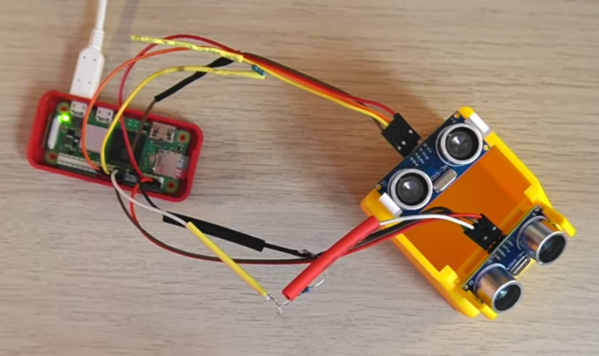
The build seems straightforward on the surface. As the ruler is passed over a surface the device keeps track of exactly how far it has moved, making it an effective and very accurate ruler. To built it, the optical component of a mouse was scavenged and mated directly to a Raspberry Pi Zero W over USB. Originally he intended to use an ESP32 but could not get the USB interface to work. [Vipul] was then able to write some software which can read the information from the mouse’s PCB directly and translate it into human-readable form where it is displayed on a small screen. The entire device is housed in a custom 3D-printed enclosure to wrap everything up, but the build doesn’t stop there though. [Vipul] also leveraged the Bluetooth functionality of the Pi and wrote a smartphone app which can be used to control the ruler as well.

While the device does have some limitations in that it has to make contact with the object being measured across its entire length, there are some situations where we can imagine something like this being extremely useful especially when measuring things that aren’t a straight line. [Vipul] has also made all of the code for this project publicly available for those of us who might have other uses in mind for something like this. We’ve seen optical mice repurposed for all kinds of things in the past, too, including measuring travel distances in autonomous vehicles.

Continue reading “Smart Ruler Has Many Features”

Play Runescape IRL

Runescape is pushing nearly 21 years old, and while that’s quite a long time for a game to stay active with an engaged userbase, it’s also a long time for people to modify the game in all kinds of colorful ways. For some older games like Team Fortress 2 this means spinning up a bot to ruin servers, but for Runescape the hacks are a little more lighthearted and fun. Like this axe which allows [BigFancyBen] to play Runescape in real life.

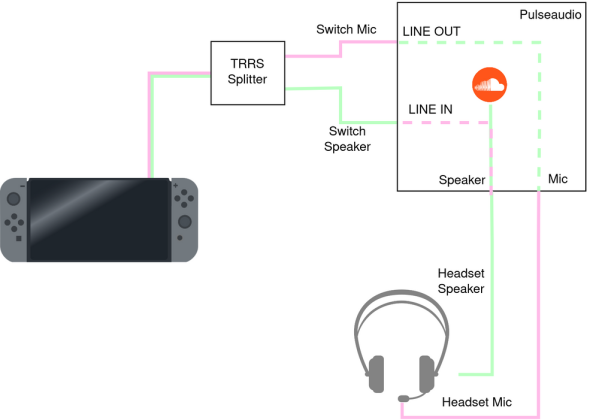
This is more of an augmented reality hack which upgrades his normal human interface device from a simple keyboard and mouse to also include this axe. When the axe is manipulated in real life, the in-game axe can be used at the same time. There are a lot of layers to this one but essentially a Switch joycon is connected to the axe to sense motion, which relays the information on axe swings to an API via a Python script. A bot in the game then chops the virtual tree, which is reported back to the API which then reports it back to [BigFancyBen]’s viewscreen which is additionally streamed on Twitch.

While this started off as frustration with the game’s insistence on grinding in order to reach certain objectives, it seems that there are some fun ways of manipulating that game mechanic for the greater good. [BigFancyBen] originally said he would rather go to the gym than “click anymore rooftops”  this is quite the start on the full IRLScape world. Don’t forget that it’s equally possible to take this type of build in the opposite direction and control real-world things from inside a video game.

Continue reading “Play Runescape IRL”

Detect Starlink Satellites Passing By

The Starlink beta has semi-officially ended, but it seems as though the global chip shortage is still limiting how many satellites are flying around the world for broadband internet access for those that might not be served by traditional ISPs. Not every location around the world has coverage even if you can get signed up, so to check that status the hard way you can always build a special antenna that tracks the Starlink beacons as they pass overhead.

[Derek] is using this project to show of some of his software-defined radio skills, so this will require an SDR that can receive in the 1600 MHz range. It also requires a power injector to power the satellite receiver, but these are common enough since they are used to power TV antennas. The signals coming from the Starlink satellites have a very high signal-to-noise ratio so [Derek] didn’t even need a dish to focus the signals. This also helped because the antenna he is using was able to see a much wider area as a result. Once everything was set up and the computer was monitoring the correct location in the spectrum, he was able to see very clearly how often a satellite passed him by.

Of course, [Derek] lives in an area with excellent coverage so this might be a little more difficult for those in rural areas, but possibly not for long as the goal of Starlink is to bring broadband to people who otherwise wouldn’t have access to it. There is some issue with how much these satellites might interfere with other astronomical activities though, so take that with a grain of salt.

Thanks to [Spritle] for the tip!

Solder Paste Dispenser Without Giant Compressor

We have certainly all had our moments with solder paste. Some of us hate it; it’s sticky and gooey, and it gets everywhere. That is, unless you have a solder paste dispenser. The trouble with these is that they typically require the use of an air compressor, which can be cumbersome to haul around in certain situations. If you need a solder paste dispenser that fits conveniently where air compressors won’t, take a look at this small one from [Nuri Engineer] called the solderocket.

This design foregoes the traditional compressor in favor of pressurized carbon dioxide canisters. These are common enough and used for things like rapidly inflating bicycle tires, but for this more delicate procedure the pressurized gas needs to be handled more daintily. A rotary knob is attached to the canister to regulate pressure, and a second knob attached to a microcontroller adjusts the amount of time the air pressure is applied to the solder paste. With this small compact setup, any type of paste can be delivered to a PCB without needing to use messy stencils or needing larger hardware like a compressor.

This could be just the tool that you need if you regularly work with surface-mount components. Of course there are other methods of dispensing solder paste that don’t require any compressed gas of any kind, but as long as something is around that gets the job done, we can’t really argue with either method.