Wheelbarrow Bass Drives A Sound Garden

One of the best things about making music is that it’s so easy to do. There are countless ways to make interesting sounds out of nearly anything if you’re willing to experiment a little bit — just ask anyone who has ever made a guitar out of a cigar box and a broom handle.

[Vicious Squid] dug in to the fertile soil of the garden implement world and cultivated a three-string upright bass with a rich, soulful sound from a familiar workhorse — an aluminium wheelbarrow. Much of the build is made from reclaimed wood, like the solid mahogany neck from an old door frame, and a broom handle.

The bass is constructed arch-top style, meaning that the soundboard — the wood on the front with the f-holes — is a flat piece tacked to curved ribs that span the width of the ‘barrow. A broom handle sound post mounted front to back pushes vibrations from the soundboard to the aluminium body. To round out the agricultural aesthetic, [Vicious Squid] strung it with weed-whacker bass strings, which are no doubt inspired by the use of actual trimmer line.

It’s already plenty loud, but [Vicious Squid] added a piezo pickup for wheeling it into the recording studio. Slap your way past the break to hear a little ditty.

Are your instrument-building skills at the sapling stage? Start with something simpler, like a sliding rubber bandolin.

Continue reading “Wheelbarrow Bass Drives A Sound Garden”

Stay Smarter Than Your Smart Speaker

Smart speakers have always posed a risk to privacy and security — that’s just the price we pay for getting instant answers to life’s urgent and not-so-urgent questions the moment they arise. But it seems that many owners of the 76 million or so smart speakers on the active install list have yet to wake up to the reality that this particular trick of technology requires a microphone that’s always listening. Always. Listening.

With so much of the world’s workforce now working from home due to the global SARS-CoV-2 pandemic, smart speakers have suddenly become a big risk for business, too — especially those where confidential conversations are as common and crucial as coffee.

Imagine the legions of lawyers out there, suddenly thrust from behind their solid-wood doors and forced to set up ramshackle sub rosa sanctuaries in their homes to discuss private matters with their equally out-of-sorts clients. How many of them don’t realize that their smart speaker bristles with invisible thorns, and is even vulnerable to threats outside the house? Given the recent study showing that smart speakers can and do activate accidentally up to 19 times per day, the prevalence of the consumer-constructed surveillance state looms like a huge crisis of confidentiality.

So what are the best practices of confidential work in earshot of these audio-triggered gadgets?

Continue reading “Stay Smarter Than Your Smart Speaker”

Perhaps August Dvorak Is More Your Type

One of the strangest things about human nature is our tendency toward inertia. We take so much uncontrollable change in stride, but when our man-made constructs stop making sense, we’re suddenly stuck in our ways — for instance, the way we measure things in the US, or define daytime throughout the year. Inertia seems to be the only explanation for continuing to do things the old way, even when new and scientifically superior ways come along. But this isn’t about the metric system — it’s about something much more personal. If you use a keyboard with any degree of regularity, this affects you physically.

Many, many people are content to live their entire lives typing on QWERTY keyboards. They never give a thought to the unfortunate layout choices of common letters, nor do they pick up even a whisper of the heated debates about the effectiveness of QWERTY vs. other layouts. We would bet that most of our readers have at least heard of the Dvorak layout, and assume that a decent percentage of you have converted to it.

Hardly anyone in the history of typewriting has cared so much about subverting QWERTY as August Dvorak. Once he began to study the the QWERTY layout and all its associated problems, he devoted the rest of his life to the plight of the typist. Although the Dvorak keyboard layout never gained widespread adoption, plenty of people swear by it, and it continues to inspire more finger-friendly layouts to this day.

Continue reading “Perhaps August Dvorak Is More Your Type”

Rock Out While You Knock Out Germs

We don’t know about you, but we’re pretty tired of singing two rounds of “Happy Birthday” or counting Mississippi to 20 each time we wash our hands. It’s difficult to do it without thinking about the reason why, and that’s not good for positivity. If you’d rather have your spirits lifted every time you hit the sink, you need a better soundtrack.

[Deeplocal] made a soap dispenser that gathers one of your top 20 tunes from Spotify and plays it for 20 seconds while you lather. The best part is that the songs don’t start at 0:00 — the code is written to use the preview clip of each one, so you get the algorithmically-determined best part.

Scrubber is a pretty simple build that uses a Raspberry Pi Zero W and a speaker bonnet powered by a LiPo, but we dig it just the same. The switch is adaptable to pretty much any soap dispenser — just stick two pieces of copper tape where they’ll make contact when the pump is pushed down, and solder wires to them. Check out the demo after the break.

We’ve often wondered how much more water we’re using with all the increased hand-washing out there. Adjusting to this apocalypse is arduous for all of us, but the environment is still a concern, so try to remember to turn the water off while you’re not using it. Is anyone out there working on an easy way to adapt home faucets to add motion or foot control? Because that would be awesome right about now.

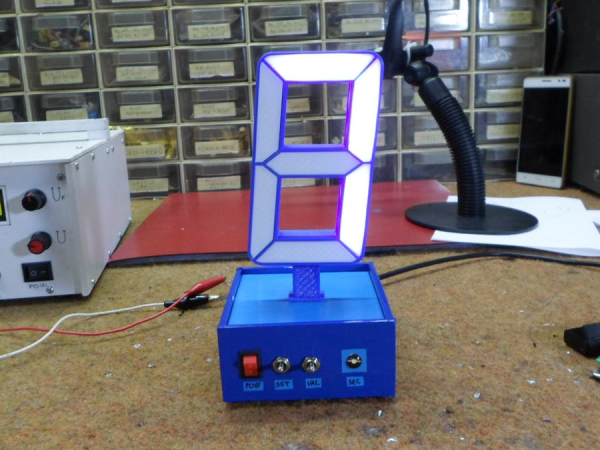
The nice thing about Scrubber is that you can focus on washing your hands and doing so properly. If you’d rather watch a digital hourglass to pass the time, light up your lockdown lavatory lifestyle with LEDs.

Continue reading “Rock Out While You Knock Out Germs”

Self-Playing Whistle While You Work From Home

In ridiculous times, it can help to play ridiculous instruments such as the slide whistle to keep your bristles in check. But since spittle is more than a little bit dangerous these days, it pays to come up with alternative ways to play away the days during lockdown life.

Thanks to some clever Arduino-driven automation, [Gurpreet] can maintain a safe distance from his slide whistle while interacting with it. Slide whistles need two things — air coming in from the top, and actuation at the business end. The blowing force now comes from a focused fan like the ones that cool your printed plastic as soon as the hot end extrudes it. A stepper motor moves the slide up and down using a printed rack and pinion.

Here’s a smooth touch — [Gurpreet] added a micro servo to block and unblock the sound hole with a cardboard flap to make the notes more distinct. Check out the build video after the break, which includes a music video for “My Heart Will Go On”, aka the theme from Titanic. It’s almost like the ship herself is playing it on the steam whistles from the great beyond.

Speaking of, did you hear about the effort to raise and restore the remains of her radio room?

Continue reading “Self-Playing Whistle While You Work From Home”

Launch Console Delivers Enjoyment To Software Deployment

Sometimes it feels as though all the good physical interactions with machines have disappeared. Given our current germ warfare situation, that is probably a good thing. But if fewer than ten people ever will be touching something, it’s probably okay to have a little fun and make your own interfaces for things.

Fun definitely seems to be some of the inspiration behind [sethvoltz]’s retro-style launch console. This two-factor authorization token-based system is responsible for an important task that usually receives no fanfare — deploying code to production.

The console is centered around a Yubikey, which is type of hardware dongle for 2FA. Flipping the guarded toggle switch will initiate the launch sequence, and then it’s time to insert the Yubikey into the 3D-printed lock cylinder and wait for authorization. If the Raspberry Pi decides all systems are go, then the key can be turned ninety degrees and the mushroom button mashed. You have our permission to peek at the declassified demo after the break. Stick around for a CAD view inside the lock cylinder.

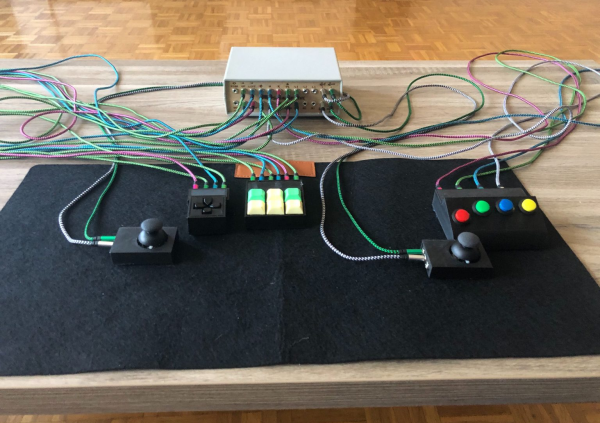
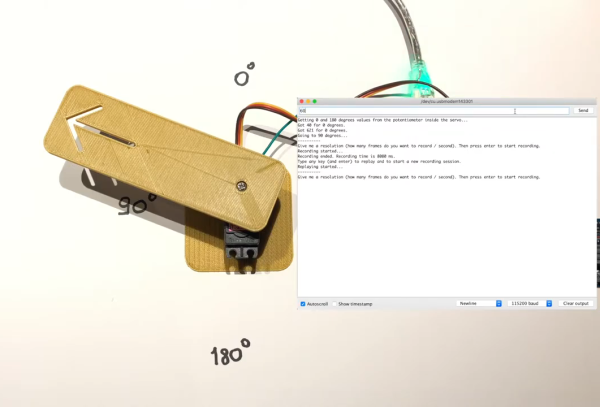
Console culture was great, but the old full-size cabinets sure took up a lot of space. If you’re more of a hardware person, check out this mini-console for testing multiple servos.

Continue reading “Launch Console Delivers Enjoyment To Software Deployment”

Put Down New Roots From Home With A Free-Form Tree Of Life

Mandalas are meditative objects that mean many things to myriad religions. Psychologist Carl Jung equated them with the concept of the Self as a whole, and put forth the notion that an urge to create mandalas signifies a period of intense personal growth.

[Sander van de Bor] took up the mandala challenge at the beginning of 2020 and decided to create several of them in free-form electronic style. If you’re looking for a healthy new way to deal, [Sander] has step-by-step instructions for making your own light-up tree of life by wrangling a wad of wires into a trunk and branches. Big bonus if you already find soldering to be soothing.

[Sander] starts by forming a circle from brass rod. This is the base for the rest of the build and will tie all the LED grounds together. The tree is twisted from a cluster of enameled copper wires that are eventually soldered together to distribute power from a coin cell out to the six SMT LEDs.

You could argue that the tree should be ground because it’s rooted to Earth, but you could also argue that the circle should be ground because the circle of life is a grounding force. Something to think about while you design and build your own, eh?

If electronic sculpture becomes your new thing, explore all the angles with the master manipulator, [Mohit Bhoite].