Behold A 3D Display, Thanks To A Speeding Foam Ball

We’ve seen 3D image projection tried in a variety of different ways, but this is a new one to us. This volumetric display by Interact Lab of the University of Sussex creates a 3D image by projecting light onto a tiny foam ball, which zips around in the air fast enough to create a persistence of vision effect. (Video, embedded below.) How is this achieved? With a large array of ultrasonic transducers, performing what researchers call ‘acoustic trapping’.

This is the same principle behind acoustic levitation devices which demonstrate how lightweight objects (like tiny polystyrene foam balls) can be made to defy gravity. But this 3D display is capable of not only moving the object in 3D space, but doing so at a high enough speed and with enough control to produce a persistence of vision effect. The abstract for their (as yet unreleased) paper claims the trapped ball can be moved at speeds of up to several meters per second.

It has a few other tricks up its sleeve, too. The array is capable of simultaneously creating sounds as well as providing a limited form of tactile feedback by letting a user touch areas of high and low air pressure created by the transducers. These areas can’t be the same ones being occupied by the speeding ball, of course, but it’s a neat trick. Check out the video below for a demonstration.
Continue reading “Behold A 3D Display, Thanks To A Speeding Foam Ball”

Ask Hackaday: Is Anyone Sad Phone VR Is Dead?

It’s official: smartphone-based VR is dead. The two big players in this space were Samsung Gear VR (powered by Oculus, which is owned by Facebook) and Google Daydream. Both have called it quits, with Google omitting support from their newer phones and Oculus confirming that the Gear VR has reached the end of its road. Things aren’t entirely shut down quite yet, but when it does it will sure leave a lot of empty headsets laying around. These things exist in the millions, but did anyone really use phone-based VR? Are any of you sad to see it go?

Google Cardboard, lowering cost and barrier to entry about as low as it could go.

In case you’re unfamiliar with phone-based VR, this is how it works: the user drops their smartphone into a headset, puts it on their head, and optionally uses a wireless controller to interact with things. The smartphone takes care of tracking motion and displaying 3D content while the headset itself takes care of the optics and holds everything in front of the user’s eyeballs. On the low end was Google Cardboard and on the higher end was Daydream and Gear VR. It works, and is both cheap and portable, so what happened?

In short, phone-based VR had constraints that limited just how far it could go when it came to delivering a VR experience, and these constraints kept it from being viable in the long run. Here are some of the reasons smartphone-based VR hit the end of the road: Continue reading “Ask Hackaday: Is Anyone Sad Phone VR Is Dead?”

Adding Sensors To Improve Your Curling Game? Turns Out It’s Really Hard

Sometimes, a project turns out to be harder than expected at every turn and the plug gets pulled. That was the case with [Chris Fenton]’s efforts to gain insight into his curling game by adding sensors to monitor the movement of curling stones as well as the broom action. Luckily, [Chris] documented his efforts and provided us all with an opportunity to learn. After all, failure is (or should be) an excellent source of learning.

The first piece of hardware was intended to log curling stone motion and use it as a way to measure the performance of the sweepers. [Chris] wanted to stick a simple sensor brick made from a Teensy 3.0 and IMU to a stone and log all the motion-related data. The concept is straightforward, but in practice it wasn’t nearly as simple. The gyro, which measures angular velocity, did a good job of keeping track of the stone’s spin but the accelerometer was a different story. An accelerometer measures how much something is speeding up or slowing down, but it simply wasn’t able to properly sense the gentle and gradual changes in speed that the stone underwent as the ice ahead of it was swept or not swept. In theory a good idea, but in practice it ended up being the wrong tool for the job.

The other approach [Chris] attempted was to make a curling broom with a handle that lit up differently based on how hard one was sweeping. It wasn’t hard to put an LED strip on a broom and light it up based on a load sensor reading, but what ended up sinking this project was the need to do it in a way that didn’t interfere with the broom’s primary function and purpose. Even a mediocre curler applies extremely high forces to a broom when sweeping in a curling game, so not only do the electronics need to be extremely rugged, but the broom’s shaft needs to be able to withstand considerable force. The ideal shaft would be a clear and hollow plastic holding an LED strip with an attachment for the load sensor, but no plastic was up to the task. [Chris] made an aluminum-reinforced shaft, but even that only barely worked.

We’re glad [Chris] shared his findings, and he said the project deserves a more detailed report. We’re looking forward to that, because failure is a great teacher, and we’ve celebrated its learning potential time and again.

Robotics Controller For The Pi Boasts An Impressive Feature List

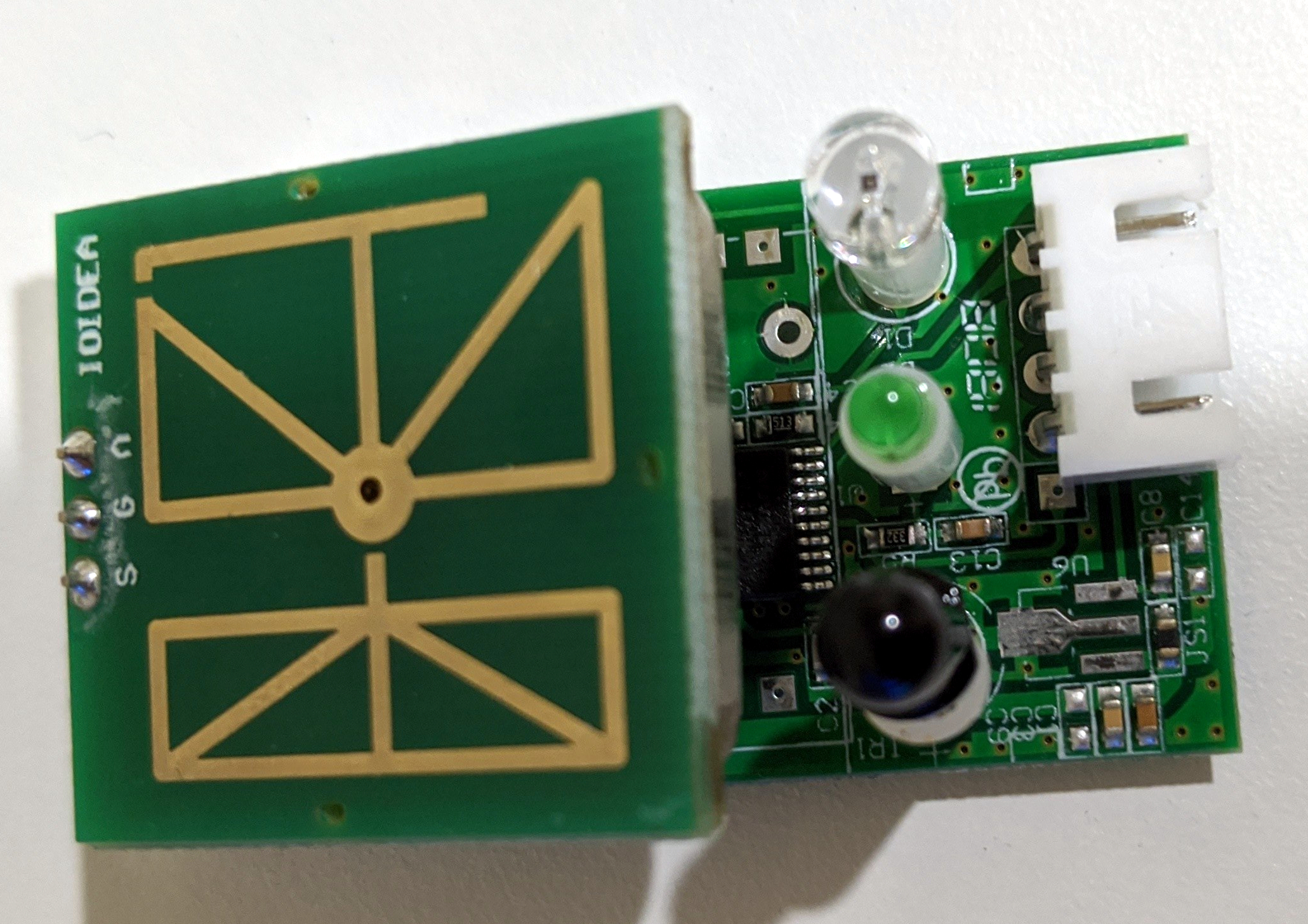
[Michael Horne] recently shared his thoughts on the RedBoard+, a motor controller board for the Raspberry Pi aimed at robotic applications. His short version for busy people is: if you’re at all into robotics, get one because it’s fantastic.

At heart the RedBoard+ is a motor controller, but it’s packed with I/O and features that set it above the usual fare. It can drive two DC motors and up to twelve servos, but what is extra useful is the wide input range of 7-24 V and its ability to power and control the underlying Raspberry Pi. A user-programmable button defaults to either doing a reboot or safe shutdown, depending on how long the button is held. Another neat feature is the ability to blink out the IP address of the Pi using the onboard RGB LED, which is always handy in a pinch.

The RedBoard+ has a GitHub repository which provides a variety of test scripts and an easy to use library, as well as a variety of hookup guides and quickstart guides. There’s even a pre-configured SD image for those who prefer to simply dive in.

A brief demo video showing the board in operation is embedded below. If you’re interested in one, Creator [Neil] of RedRobotics has made it available for sale on Tindie.

Continue reading “Robotics Controller For The Pi Boasts An Impressive Feature List”

Big Beautiful Vintage Computers, And Where To Find Them

An IBM 3380E disk storage system, 5 gigabyte capacity.

[Ken Shirriff] recently shared some pictures and a writeup from his visit to the Large Scale Systems Museum, a remarkable private collection of mainframes and other computers from the 1970s to the 1990s. Housed in a town outside Pittsburgh, it contains a huge variety of specimens including IBM mainframes and desk-sized minicomputers, enormous disk and tape storage systems, and multiple 90s-era Cray supercomputers. It doesn’t stop there, either. Everything through the minicomputer revolution leading to personal home computers is present, and there are even several Heathkit HERO robot kits from the 80s. (By the way, we once saw a HERO retrofitted with wireless and the ability to run Python.)

Something really special is that many of the vintage systems are in working order, providing insight into how these units performed and acted. The museum is a private collection and is open only by appointment but they encourage interested parties not to be shy. If a trip to the museum isn’t for you, [Ken] has some additional photos from his visit here for you to check out.

Robot Joints Go Modular With This Actuator Project

[John Lauer] has been hard at work re-thinking robot arms. His project to create modular, open source actuators that can be connected to one another to form an arm is inspiring, and boasts an impressively low parts cost as well. The actuators are each self-contained, with an ESP32 and a design that takes advantage of the form factors of inexpensive modules and parts from vendors like Aliexpress.

Flex spline in action, for reducing backlash

Each module has 3D printed gears (with an anti-backlash flex spline), an RGB LED for feedback, integrated homing, active cooling, a slip ring made from copper tape, and a touch sensor dial on the back for jogging and training input. The result is a low backlash, low cost actuator that keeps external wiring to an absolute minimum.

Originally inspired by a design named WE-R2.4, [John] has added his own twist in numerous ways, which are best summarized in the video embedded below. That video is number three in a series, and covers the most interesting developments and design changes while giving an excellent overview of the parts and operation (the video for part one is a basic overview and part two shows the prototyping process, during which [John] 3D printed the structural parts and gears and mills out a custom PCB.)

Continue reading “Robot Joints Go Modular With This Actuator Project”

The MorningRod Wants Your Mornings Easier, Not Harder

Curtains are about as simple as household devices get, but they can be remarkably troublesome to automate. Everyone’s window treatments are slightly different, which frustrates a standardized solution. [dfrenkel] has a passion for DIY and wanted his mornings flooded with sunlight for more peaceful awakenings, so the MorningRod Smart Curtain Rod was born.

Replacing the curtain rod with aluminum extrusion and 3D printed fixtures goes a long way towards standardizing for automation.

MorningRod’s design takes advantage of affordable hardware like aluminum extrusions and 3D printed parts to create a system that attempts to allow users to keep their existing curtains as much as possible.

The curtain rod is replaced with aluminum extrusion. MorningRod borrows ideas from CNC projects to turn the curtain rod into a kind of double-ended linear actuator, upon which the curtains are just along for the ride. An ESP32 serves as the brains while a NEMA17 stepper motor provides the brawn. The result is a motorized curtain opening and closing with a wireless interface that can be easily integrated into home automation projects.

[dfrenkel] is offering a kit, but those who would prefer to roll their own should check out the project page on Thingiverse.