Hackaday Links Column Banner

Hackaday Links: April 4, 2021

Can I just say that doing a links roundup article in a week that includes April Fool’s Day isn’t a fun job? Because it’s not. I mean, how can you take something like reports of X-rays flowing from Uranus seriously when they release the report on such a day? It sure looks like a legitimate story, though, and a pretty interesting one. Planets emitting X-rays isn’t really a new thing; we’ve known that Jupiter and Saturn are both powerful X-ray sources for decades. Even though Uranus is the odd child of our solar system, finding evidence for X-ray emissions buried in data captured by the Chandra observatory in 2007 was unexpected. Astronomers think the X-rays might be coming from Uranus’ rings, or they might be reflections of X-rays streaming out from the sun. Or, it might be the weird alignment of the gas giant’s magnetic field causing powerful aurorae that glow in the X-ray part of the spectrum. Whatever it is, it’s weird and beautiful, which all things considered isn’t a bad way for things to be.

Another potential jest-based story popped up this week about the seemingly impossible “EmDrive”. It seems that when you appear to be breaking the laws of physics, you’re probably doing it wrong, and careful lab tests showed that fuel-free propulsion isn’t here yet. One would think it was self-obvious that filling a closed asymmetrical chamber with microwaves would produce absolutely no thrust, but EmDrive proponents have reported small but measurable amounts of thrust from the improbable engine for years. A team at TU Dresden found otherwise, though. Even though they were able to measure a displacement of the engine, it appears to be from the test stand heating up and warping as the RF energy flowed into the drive chamber. By changing the way the engine was supported, they were able to cancel out the dimensional changes that were making it look like the EmDrive was actually working.

Want to use surface-mount parts, but don’t want to bother spinning up an SMD board? Not a problem, at least if you follow the lead of David Buchanan and perform no-surface surface-mount prototyping. We stumbled upon this on Twitter and thought it looked cool — it’s got a little bit of a circuit sculpture feeling, and we like the old-school look of plain 0.1″ perfboard. David reports that the flying leads are just enameled magnet wire; having done our share of scraping and cleaning magnet wire prior to soldering, we figured that part of the build must have been painful. We pinged David and asked if he had any shortcuts for prepping magnet wire, but alas, he says he just used a hot blob of solder and a little patience while the enamel cooked off. We still really like the style of this build, and we applaud the effort.

Speaking of stumbling across things, that’s one of the great joys of this job — falling down algorithmically generated rabbit holes as we troll about for the freshest hacks. One such serendipitous was this YouTube channel documenting a really nice jet engine build. We’ve seen plenty of jet engines before, but very few with afterburners like this one has. There’s also something deeply satisfying about the variable-throat nozzle that Praendy built for the engine — it’s a level of complexity that you don’t often see in hobbyist jet engines, and yet the mechanism is very simple and understandable.
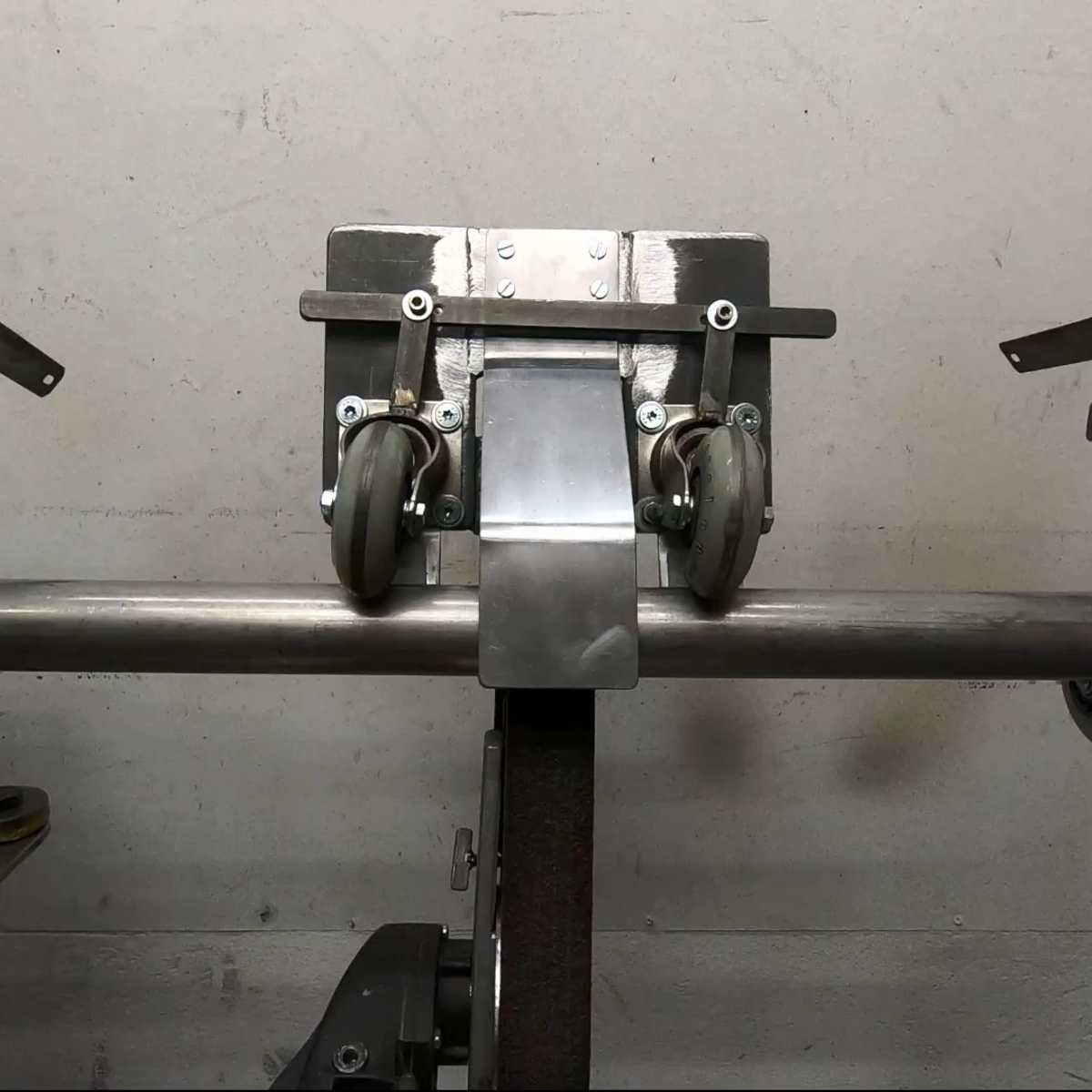
The other rabbit hole we discovered was after reporting on this cool TIG tungsten grinding tool. That took us into The Metalist’s back catalog, where we found a lot of interesting stuff. But the real treat was this automatic tube polisher (video), which we have to say kept us guessing up to the very end. If you’ve got 12 minutes and you enjoy metalworking builds at all, watch it and see if you’re not surprised by the cleverness of this tool.

And finally, we had heard of the travails of Anatoli Bugorski before, but never in the detail presented in this disturbing video. (Embedded below.)

Who is Anatoli Bugorski, you ask? He is a Russian particle physicist who, while working in an accelerator lab in 1978, managed to get his head directly in the path of a 76 GeV proton beam. Despite getting a huge dose of radiation, Bugorski not only survived the accident but managed to finish his Ph.D. and went on to a long career in nuclear physics. He also got married and had a son. He was certainly injured — facial paralysis and partial deafness, mainly — but did not suffer anything like the gruesome fates of the Chernobyl firefighters or others receiving massive radiation doses. The video goes into some detail about how the accident happened — two light bulbs are better than one, it turns out. We enjoyed the video, but couldn’t stop thinking that Bugorski was the Russian atomic-age equivalent of Phineas Gage.

JIT Vs. AM: Is Additive Manufacturing The Cure To Fragile Supply Chains?

As fascinating and frustrating as it was to watch the recent Suez canal debacle, we did so knowing that the fallout from it and the analysis of its impact would be far more interesting. Which is why this piece on the potential of additive manufacturing to mitigate supply chain risks caught our eye.

We have to admit that a first glance at the article, by [Davide Sher], tripped our nonsense detector pretty hard. After all, the piece appeared in 3D Printing Media Network, a trade publication that has a vested interest in boosting the additive manufacturing (AM) industry. We were also pretty convinced going in that, while 3D-printing is innovative and powerful, even using industrial printers it wouldn’t be able to scale up enough for print parts in the volumes needed for modern consumer products. How long would it take for even a factory full of 3D-printers to fill a container with parts that can be injection molded in their millions in China?

But as we read on, a lot of what [Davide] says makes sense. A container full of parts that doesn’t arrive exactly when they’re needed may as well never have been made, while parts that are either made on the factory floor using AM methods, or produced locally using a contract AM provider, could be worth their weight in gold. And he aptly points out the differences between this vision of on-demand manufacturing and today’s default of just-in-time manufacturing, which is extremely dependent on supply lines that we now know can be extremely fragile.

So, color us convinced, or at least persuaded. It will certainly be a while before all the economic fallout of the Suez blockage settles, and it’ll probably longer before we actually see changes meant to address the problems it revealed. But we would be surprised if this isn’t seen as an opportunity to retool some processes that have become so optimized that a gust of wind could take them down.

Scratch-Built CO2 Laser Tube Kicks Off A Laser Cutter Build

When we see a CO2 laser cutter build around these parts, chances are pretty good that the focus will be on the mechatronics end, and that the actual laser will be purchased. So when we see a laser cutter project that starts with scratch-building the laser tube, we take notice.

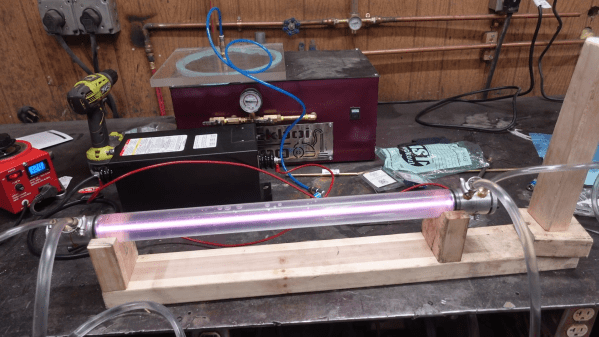
[Cranktown City]’s build style is refreshingly informal, but there’s a lot going on with this build that’s worth looking at — although it’s perhaps best to ignore the sourcing of glass tubing by cutting the ends off of an old fluorescent tube; there’s no mention of what became of the mercury vapor or liquid therein, but we’ll just assume it was disposed of safely. We’ll further assume that stealing nitrogen for the lasing gas mix from car tires was just prank, but we did like the rough-and-ready volumetric method for estimating the gas mix.

The video below shows the whole process of building and testing the tube. Initial tests were disappointing, but with a lot of tweaking and the addition of a much bigger neon sign transformer to power the tube, the familiar bluish-purple plasma made an appearance. Further fiddling with the mirrors revealed the least little bit of laser output — nowhere near enough to start cutting, but certainly on the path to the ultimate goal of building a laser cutter.

We appreciate [Cranktown City]’s unique approach to his builds; you may recall his abuse-powered drill bit index that we recently covered. We’re interested to see where this laser build goes, and we’ll be sure to keep you posted.

Continue reading “Scratch-Built CO2 Laser Tube Kicks Off A Laser Cutter Build”

Put The Perfect Point On Your Tungstens With This Die Grinder Attachment

Aspiring TIG welders very quickly learn the importance of good tungsten electrode grinding skills. All it takes is a moment’s distraction or a tiny tremor in the torch hand to plunge the electrode into the weld pool, causing it to ball up and stop performing its vital function. Add to that the fussy nature of the job — tungstens must only be ground parallel to the long axis, never perpendicular, and at a consistent angle — and electrode maintenance can become a significant barrier to the TIG beginner.

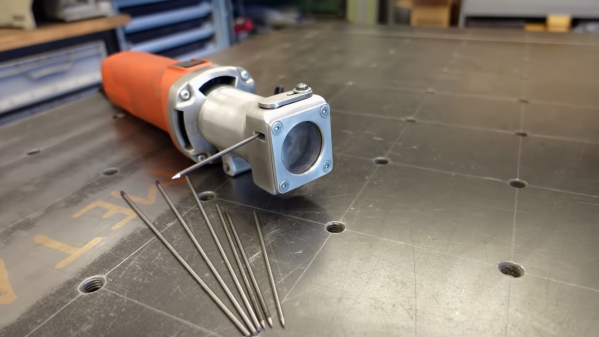
A custom tungsten grinder like this one might be just the thing to flatten that learning curve. It comes to us by way of [The Metalist], who turned an electric die grinder into a pencil sharpener for tungsten electrodes. What we find fascinating about this build is the fabrication methods used, as well as the simplicity of the toolkit needed to accomplish it. The housing of the attachment is built up from scraps of aluminum tubing and sheet stock, welded together and then shaped into a smooth, unibody form that almost looks like a casting. Highlights include the mechanism for adjusting the angle of the grind as well as the clever way to slit the body of the attachment so it can be clamped to the nosepiece of the die grinder. We also thought the inclusion of a filter to capture tungsten dust was a nice touch; most TIG electrodes contain a small amount of lanthanum or thorium, so their slight radioactivity is probably best not inhaled.

We love builds like this that make a tedious but necessary job a little quicker and easier to bear, and anything that stands to make us a better welder — from simple purpose-built fixtures to large-scale rotary tables — is OK in our book.

Continue reading “Put The Perfect Point On Your Tungstens With This Die Grinder Attachment”

Physics Of Lightning Hack Chat

Join us on Wednesday, March 31 at noon Pacific for the Physics of Lightning Hack Chat with Greg Leyh!

Of all the things that were around to terrify our ancestors, lightning must have been right up there on the list. Sure, the savannahs were teeming with things that wanted to make lunch out of you, but to see a streak of searing blue-white light emerge from a cloud to smite a tree out of existence must have been a source of dread to everyone. Even now, knowing much more about how lightning happens and how to protect ourselves from it, it’s still pretty scary stuff to be around.

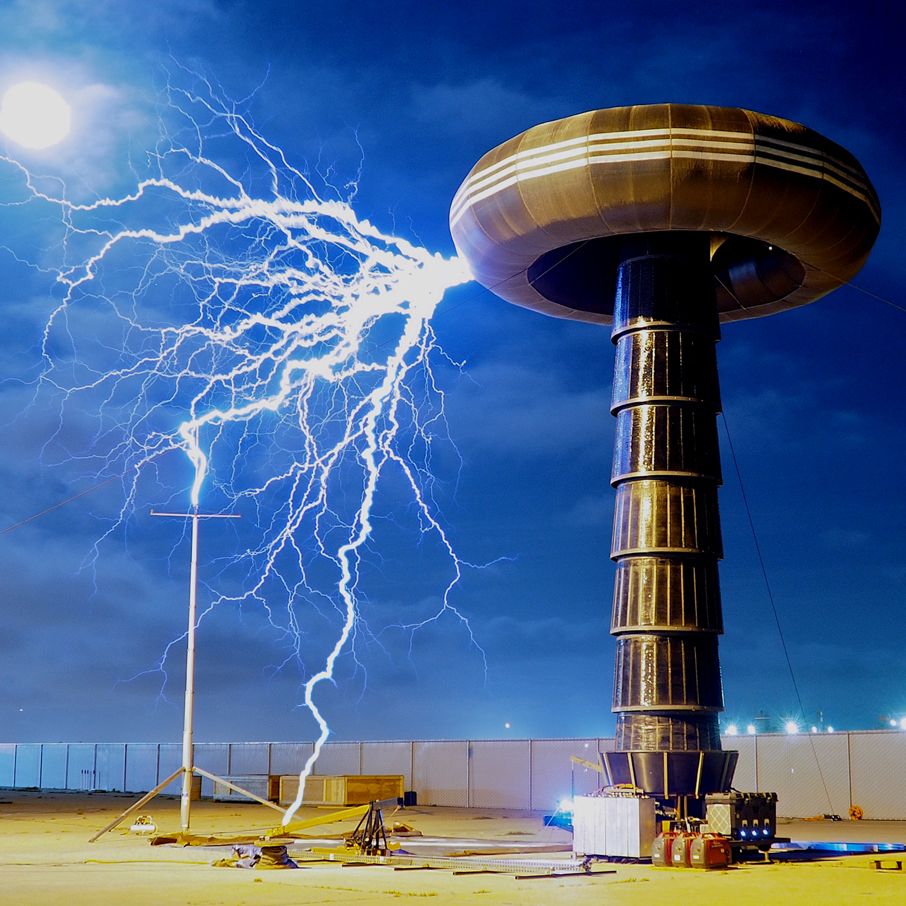
But for as much as we know about lightning, there are plenty of unanswered questions about its nature. To get to the bottom of this, Greg Leyh wants to build a lightning machine of gargantuan proportions: a pair of 120 foot (36 m) tall Tesla towers. Each 10-story tower will generate 8.8 million volts and recreate the conditions inside storm clouds. It’s an ambitious goal, but Greg and his team at Lightning on Demand have already built and demonstrated a 1/3-scale prototype Tesla tower, which is impressively powerful in its own right.

As you can imagine, there are a ton of engineering details that have to be addressed to make a Tesla tower work, not to mention the fascinating physics going on inside a machine like this. Greg will stop by the Hack Chat to answer our questions about the physics of lightning, as well as the engineering needed to harness these forces and call the lightning down from the sky.

join-hack-chatOur Hack Chats are live community events in the Hackaday.io Hack Chat group messaging. This week we’ll be sitting down on Wednesday, March 31 at 12:00 PM Pacific time. If time zones have you tied up, we have a handy time zone converter.

Click that speech bubble to the right, and you’ll be taken directly to the Hack Chat group on Hackaday.io. You don’t have to wait until Wednesday; join whenever you want and you can see what the community is talking about.
Continue reading “Physics Of Lightning Hack Chat”

An AI-Free Way To Catch Wildlife On Camera

Judging by the over-representation of the term “AI” in our news feeds these days, we’re clearly in the exponential phase of the artificial intelligence hype cycle, and very nearly at the dreaded “Peak of Inflated Expectations.” It seems like there’s nothing that AI can’t do, and nowhere that its principles can’t be applied to virtuous — and profitable — effect.

We don’t deny that AI has massive potential, but we strongly suspect that there will soon come a day when eyes will roll and stomachs will turn at yet another AI application that could have been addressed with something easier. An example of the simpler approach can be seen in this non-AI wildlife photo trap, cobbled together by [Sebastian] to capture pictures of some camera-shy squirrels. Rather than train an AI with gigabytes of squirrel images, he instead relies on his old Sony Alpha camera, which has a built-in WiFi. A Python script connects to the camera, which is trained on a feeder box and set to a very narrow depth of field. That makes a good percentage of the scene out of focus until a squirrel or other animal comes along looking for treats. The script detects the increased area of the scene that is now in-focus with a Laplace operator in OpenCV, and triggers the camera shutter. [Sebastian] ended up with some wonderful shots of the shy squirrels using this scheme; the video below describes the setup in more detail.

It’s not the first time we’ve seen Laplace transforms used to gauge image sharpness, of course, but we really like the approach [Sebastian] took here for its simplicity. The squirrels are cute too.

Continue reading “An AI-Free Way To Catch Wildlife On Camera”

Should Have Used A Vacuum Tube 555

“You should have used a 555” has become a bit of a meme around these parts lately, and for good reason. There seems to be little that these ubiquitous chips can’t be used for, and in a world where code often substitutes for hardware, it’s easy to point to instances where one could have just used a simple timer chip instead.

Definitely not in the meme category, though, is this overkill vacuum tube 555 timer. It comes to us via [David Lovett], aka [Usagi Electric], who has lately caught the “hollow state” electronics bug and has been experimenting with all sorts of vacuum tube recreations of circuits we’re far more used to seeing rendered in silicon than glass. The urge to replicate the venerable 555 in nothing but vacuum tubes is understandable, as it uses little more than a pair of comparators and a flip-flop, circuits [David] has already built vacuum tube versions of. The only part left was the discharge transistor; a pentode was enlisted to stand in for that vital function, making the circuit complete.

To physically implement the design, [David] built a large PCB to hold the 18 vacuum tubes and the handful of resistors and capacitors needed. Mounted on eight outsized leads made from sheet steel, the circuit pays homage to the original 8-pin DIP form of the 555. The video below shows the design and build process as well as testing of all the common modes of operation for the timer chip.

You can check out more of our coverage of [David]’s vacuum tube adventures, which started with his reverse-engineering of an old IBM logic module. And while he did a great job explaining the inner workings of the 555, you might want to take a deeper dive into how the venerable chip came to be.

Continue reading “Should Have Used A Vacuum Tube 555”