TMD-1 Makes Turing Machine Concepts Easy To Understand

For something that has been around since the 1930s and is so foundational to computer science, you’d think that the Turing machine, an abstraction for mechanical computation, would be easily understood. Making the abstract concepts easy to understand is what this Turing machine demonstrator aims to do.

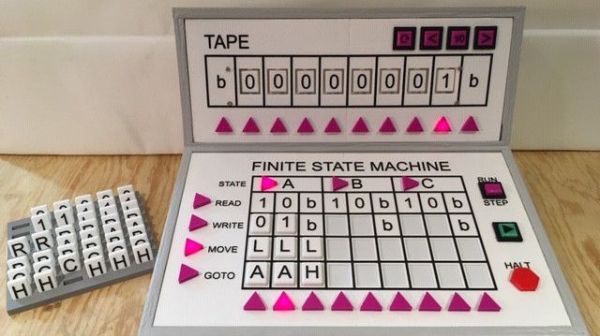
The TMD-1 is a project that’s something of a departure from [Michael Gardi]’s usual fare, which has mostly been carefully crafted recreations of artifacts from the early days of computer history, like the Minivac 601  trainer and the DEC H-500 computer lab. The TMD-1 is, rather, a device that makes the principles of a Turing machine more concrete. To represent the concept of the “tape”, [Mike] used eight servo-controlled flip tiles. The “head” of the machine conceptually moves along the tape, its current position indicated by a lighted arrow while reading the status of the cell above it by polling the position of the servo.

Below the tape and head panel is the finite state machine through which the TMD-1 is programmed. [Mike] limited the machine to three states and four transitions three symbols, each of which is programmed by placing 3D-printed tiles on a matrix. Magnets were inserted into cavities during printing; Hall Effect sensors in the PCB below the matrix read the pattern of magnets to determine which tiles are where. The video below shows the TMD-1 counting from 0 to 10, which is enough to demonstrate the basics of Turing machines.

It’s hard not to comment on the irony of a Turing machine being run by an Arduino, but given that [Mike]’s goal was to make abstract concepts easy to understand, it makes perfect sense to leverage the platform rather than try to do this with discrete logic. And you can’t argue with results — TMD-1 made Turing machines clear to us for the first time.

Continue reading “TMD-1 Makes Turing Machine Concepts Easy To Understand”

Discrete-Logic UART Keeps 8-Bit TTL Computer Connected

Pity the poor TTL computer aficionado. It’s an obsession, really — using discrete logic chips to scratch-build a computer that would probably compare unfavorably to an 80s era 8-bit machine in terms of performance. And yet they still forge ahead with their breadboards full of chips and tangles of wire. It’s really quite beautiful when you think about it.

[Duncan] at Shepherding Electrons has caught the TTL bug, and while building his 8-bit machine outfitted it with this discrete logic UART. The universal asynchronous receiver-transmitter is such a useful thing that single-chip versions of the device have been available since the early 1970s. [Duncan]’s version makes the magic of serial communications happen in just 12 chips, all from the 74LS logic family.

As if the feat of building a discrete logic UART weren’t enough, [Duncan] pulled this off without the aid of an oscilloscope. Debugging was a matter of substituting the 2.4576 MHz crystal oscillator clock with a simple 1 Hz 555 timer circuit; the reduced clock speed made it easier to check voltages and monitor the status of lines with LEDs. Once the circuit was working, the full-speed clock was substituted back in, allowing him to talk to his 8-bit computer at up to 38,400 bps. Color us impressed.

For more TTL computer goodness, and to see where [Duncan] got his inspiration, check out [Ben Eater]’s many discrete logic projects — his scratch-built 6502, a low-end video card, or even his take on serial communications.

Mini CNC Mill Goes Horizontal To Reuse CD Drives

Here at Hackaday, we pride ourselves on bringing you the freshest of hacks, preferably as soon as we find out about them. Thanks to the sheer volume of cool hacks out there, though, we do miss one occasionally, like this e-waste horizontal CNC mill that we just found out about.

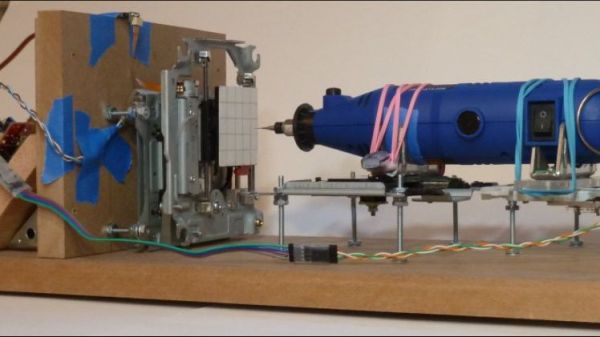
Aptly called the “CDCNC” thanks to its reliance on cast-off CD drive mechanisms for its running gear, [Paul McClay]’s creation is a great case study on what you can do without buying almost any new parts. It’s also an object lesson in not getting caught in standard design paradigms. Where most CNC mills mount the spindle vertically, [Paul] tilted the whole thing 90 degrees so the spindle lies on its side. Moving it back and forth on a pair of CD drive mechanisms is far easier than fighting gravity for control, and as a bonus the X- and Y-axes have minimal loading too. The video below shows the mill in action, and it’s easy to see how the horizontal arrangement really helps make this junk bin build into something special.

We think [Paul] did a great job of thinking around the problem with this build, and we’re glad he took the time to tip us off. Apparently it was the upcoming CNC on the Desktop Hack Chat that moved him to let us know about this build. Here’s hoping he drops by for the chat and shares his experience with us.

Continue reading “Mini CNC Mill Goes Horizontal To Reuse CD Drives”

CNC On The Desktop Hack Chat

Join us on Wednesday, August 26 at noon Pacific for the CNC on the Desktop Hack Chat with Matt Hertel and John Allwine!

Once limited to multi-million dollar machines on the floors of cavernous factories, CNC technology has moved so far downscale in terms of machine size that it’s often easy to lose track of where it pops up. Everything from 3D-printers to laser engravers use computer numeric control to move a tool to some point in three-dimensional space, and do it with unmatched precision and reproducibility.

CNC has gotten so pervasive that chances are pretty good that there’s a CNC machine of some sort pretty close to everyone reading this, with many of those machines being homebrew designs. That’s the backstory of Pocket NC, a company that was literally started in a one-bedroom apartment in 2011 by Matt and Michelle Hertel. After a successful Kickstarter that delivered 100 of their flagship five-axis desktop CNC mills to backers, they geared up for production and now turn out affordable machine tools for the masses. We’ve even seen some very complex parts made on these mills show up in projects we’ve featured.

For this Hack Chat, we’ll be joined by Pocket NC CTO and co-founder Matt Hertel and John Allwine, who recently joined the company as Principal Software Engineer. We’ll discuss not only Pocket NC’s success and future plans, but the desktop CNC landscape in general. Drop by with your questions regarding both the hardware and the software side of CNC, about turning an idea into a business, and where the CNC world and next-generation manufacturing will be heading in the future.

join-hack-chatOur Hack Chats are live community events in the Hackaday.io Hack Chat group messaging. This week we’ll be sitting down on Wednesday, August 26 at 12:00 PM Pacific time. If time zones baffle you as much as us, we have a handy time zone converter.

Click that speech bubble to the right, and you’ll be taken directly to the Hack Chat group on Hackaday.io. You don’t have to wait until Wednesday; join whenever you want and you can see what the community is talking about.

MIDI Slide Whistle Shows The Value Of A Proper Fipple

We pride ourselves on knowing the proper terms for everyday things: aglet, glabella, borborygmi, ampersands. But we have to confess to never having heard of a “fipple” before finding this interesting MIDI-controlled slide whistle, where we learned that the mouthpiece of a penny whistle or a recorder is known as a fipple. The more you know.

This lesson comes to us by way of a Twitter post by [The Mixed SIgnal], which showed off the finished mechanism in a short video and not much else. We couldn’t leave that alone, so we reached out for more information and were happy to find that [The Mixed SIgnal] quickly posted a build log on Hackaday.io as well as the build video below.

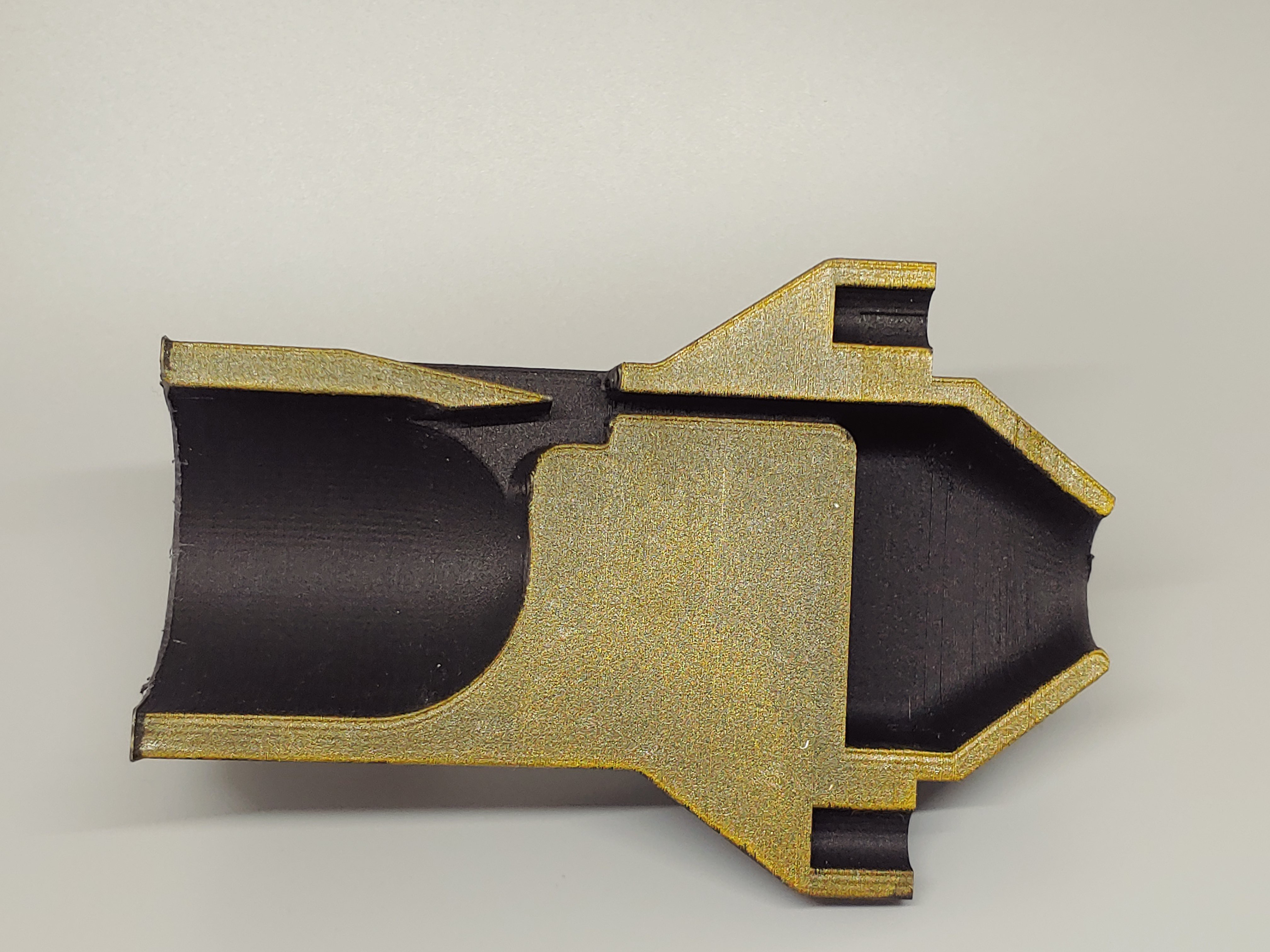
The slide whistle is a homebrew version of the kind we’ve all probably annoyed our parents with at one time or another, with a 3D-printed fipple (!) and piston, both of which go into a PVC tube. Air is supplied to the pipe with a small centrifugal blower, while a 3D-printed rack and pinion gear of unusual proportions moves the piston back and forth. An Arduino Due with a CNC shield controls the single stepper motor. The crude glissandos of this primitive wind instrument honestly are a little on the quiet side, especially given the racket the stepper and rack and pinion make when queuing up a new note. Perhaps it needs more fipple.

While the humble author is new to fipple-isms, luckily the Hackaday editors see all and know that there two epic hacks featuring fipples to create bottle organs. These are far from the first weirdest instruments we’ve seen — a modulin, a Wubatron, and the Drum-Typeulator all fit that bill well. But we like what [The Mixed Signal] has done here, and we’re looking forward to more.

Continue reading “MIDI Slide Whistle Shows The Value Of A Proper Fipple”

E-Paper Display Shows Movies Very, Very Slowly

How much would you enjoy a movie that took months to finish? We suppose it would very much depend on the film; the current batch of films from the Star Wars franchise are quite long enough as they are, thanks very much. But a film like Casablanca or 2001: A Space Odyssey might be a very different experience when played on this ultra-slow-motion e-paper movie player.

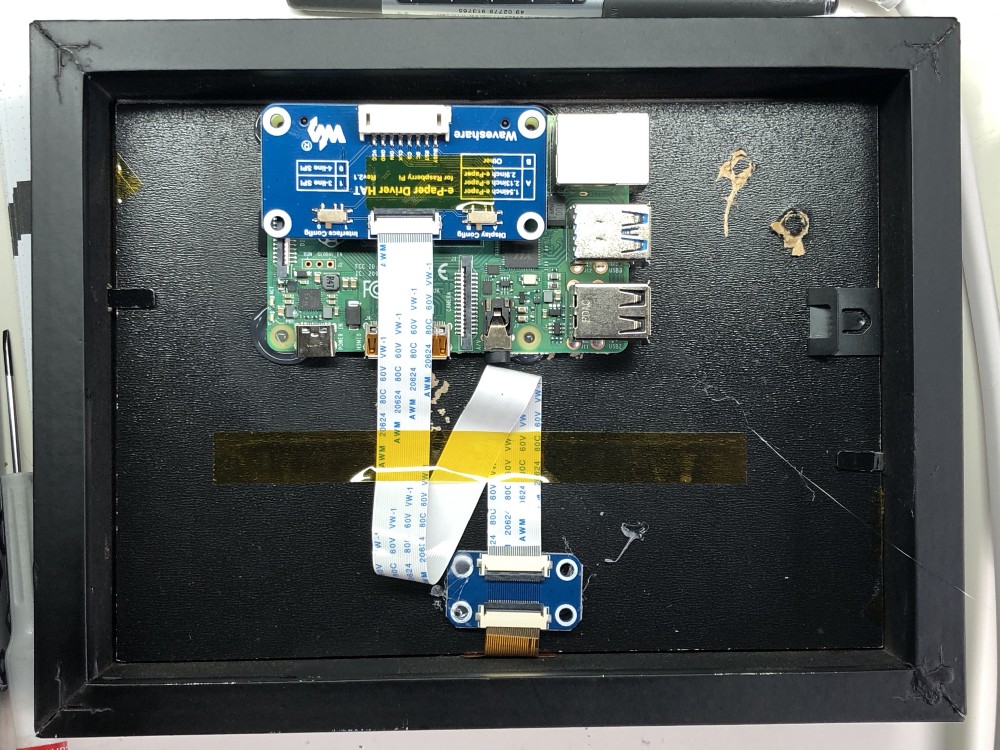
The idea of displaying a single frame of a movie up for hours rather than milliseconds has captivated [Tom Whitwell] since he saw [Bryan Boyer]’s take on the concept. The hardware [Tom] used is similar: a Raspberry Pi, an SD card hat with a 64 GB card for the movies, and a Waveshare e-paper display, all of which fits nicely in an IKEA picture frame.

[Tom]’s software is a bit different, though; a Python program uses FFmpeg to fetch and dither frames from a movie at a configurable rate, to customize the viewing experience a little more than the original. Showing one frame every two minutes and then skipping four frames, it has taken him more than two months to watch Psycho. He reports that the shower scene was over in a day and a half — almost as much time as it took to film — while the scene showing [Marion Crane] driving through the desert took weeks to finish. We always wondered why [Hitch] spent so much time on that scene.

With the proper films loaded, we can see this being an interesting way to really study the structure and flow of a good film. It’s also a good way to cut your teeth on e-paper displays, which we’ve seen pop up in everything from weather stations to Linux terminals.

Hackaday Links Column Banner

Hackaday Links: August 23, 2020

Apple, the world’s first trillion-dollar company — give or take a trillion — has built a bit of libertarian cachet by famously refusing to build backdoors into their phones, despite the entreaties of the federal government. So it came as a bit of a surprise when we read that the company may have worked with federal agents to build an “enhanced” iPod. David Shayer says that he was one of three people in Apple who knew about the 2005 program, which was at the behest of the US Department of Energy. Shayer says that engineers from defense contractor Bechtel, seemed to want to add sensors to the first-generation iPod; he was never clued in fully but suspects they were adding radiation sensors. It would make sense, given the climate in the early 2000s, walking down the street with a traditional Geiger counter would have been a bit obvious. And mind you, we’re not knocking Apple for allegedly working with the government on this — building a few modified iPods is a whole lot different than turning masses of phones into data gathering terminals. Umm, wait…

A couple of weeks back, we included a story about a gearhead who mounted a GoPro camera inside of a car tire. The result was some interesting footage as he drove around; it’s not a common sight to watch a tire deform and move around from the inside like that. As an encore, the gearhead in question, Warped Perception, did the same trick bit with a more destructive bent: he captured a full burnout from the inside. The footage is pretty sick, with the telltale bubbles appearing on the inside before the inevitable blowout and seeing daylight through the shredded remains of the tire. But for our money, the best part is the slo-mo footage from the outside, with the billowing smoke and shredded steel belts a-flinging. We appreciate the effort, but we’re sure glad this guy isn’t our neighbor.

Speaking of graphic footage, things are not going well for some remote radio sites in California. Some towers that host the repeaters used by public service agencies and ham radio operators alike have managed to record their last few minutes of life as wildfires sweep across the mountains they’re perched upon. The scenes are horrific, like something from Dante’s Inferno, and the burnover shown in the video below is terrifying; watch it and you’ll see a full-grown tree consumed in less than 30 seconds. As bad as the loss of equipment is, it pales in comparison to what the firefighters face as they battle these blazes, but keep in mind that losing these repeaters can place them in terrible jeopardy too.

Continue reading “Hackaday Links: August 23, 2020”