Crowd Supply Hack Chat With Josh Lifton

Join us on Wednesday, July 24th at noon Pacific for the Crowd Supply Hack Chat with Josh Lifton!

When you’re ready to take your Next Big Idea from a project to a product, you face problems that don’t normally present themselves to the hobbyist. Building one of something is quite different from building many of them, and soon you’re dealing with issues with parts suppliers, PCB fabrication, assembly, packaging, shipping, marketing, and support.

It takes a lot to get your idea to market, and a guiding hand would be most welcome to the budding hardware tycoon. That’s the logic behind Crowd Supply, the Portland-based crowdfunding and mentoring company. Josh Lifton is its CEO, and he’ll drop by the Hack Chat to answer all your questions about how crowdfunding works, what Crowd Supply offers to help creators, and what the fundamentals of a successful project are.

join-hack-chatOur Hack Chats are live community events in the Hackaday.io Hack Chat group messaging. This week we’ll be sitting down on Wednesday July 24 at 12:00 PM Pacific time. If time zones have got you down, we have a handy time zone converter.

Click that speech bubble to the right, and you’ll be taken directly to the Hack Chat group on Hackaday.io. You don’t have to wait until Wednesday; join whenever you want and you can see what the community is talking about.

[Photo credit: Jon House, Portland Tribune]


Hackaday Links Column Banner

Hackaday Links: July 21, 2019

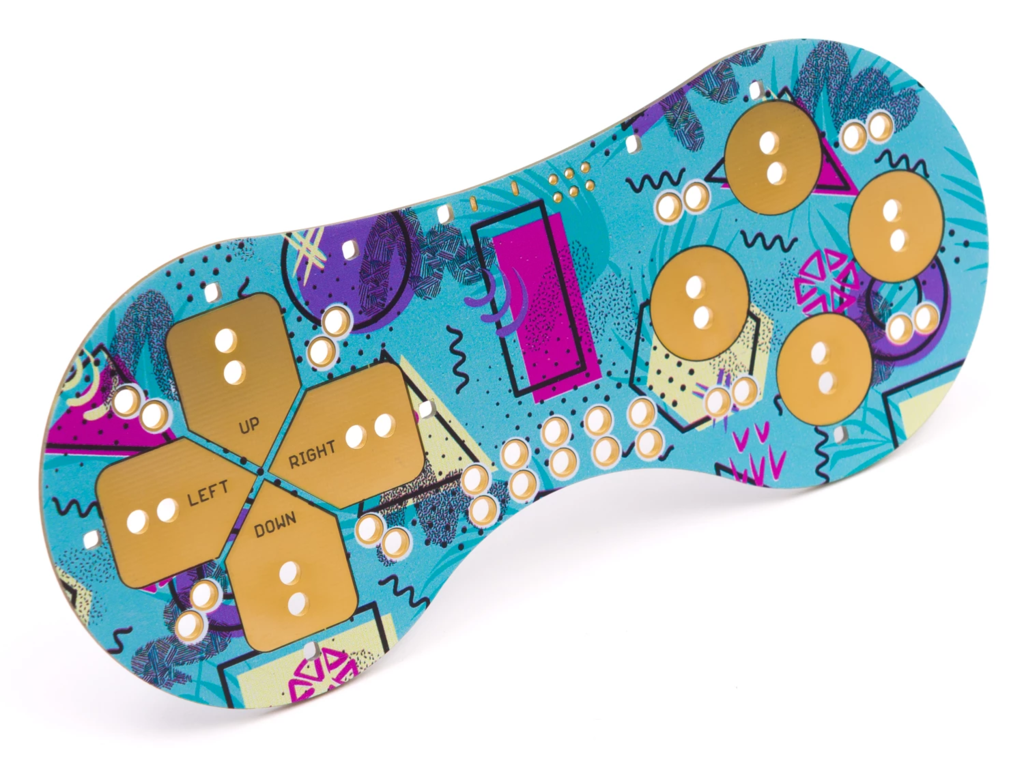
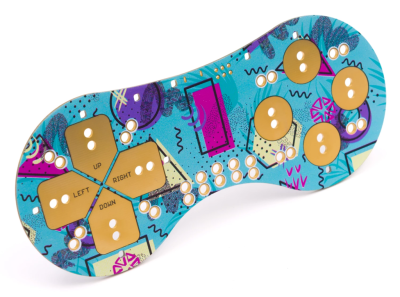
Ordering a PCB used to be a [Henry Ford]-esque experience: pick any color you like, as long as it’s green. We’ve come a long way in the “express yourself” space with PCBs, with slightly less than all the colors of the rainbow available, and some pretty nice silkscreening options to boot. But wouldn’t it be nice to get full-color graphics on a PCB? Australian company Little Bird thinks so, and they came up with a method to print graphics on a board. The results from what looks like a modified inkjet printer are pretty stunning, if somewhat limited in application. But I bet you could really make a splash with these in our Beautiful Hardware contest.

The 50th anniversary of the Apollo 11 landing has come and gone with at least as much fanfare as it deserves. Part of that celebration was Project Egress, creation of a replica of the Columbia crew hatch from parts made by 44 hackers and makers. Those parts were assembled on Thursday by [Adam Savage] at the National Air and Space Museum in an event that was streamed live. A lot of friends of Hackaday were in on the build and were on hand, like [Fran Blanche], [John Saunders], [Sophy Wong], and [Estefannie]. The Smithsonian says they’ll have a recording of the stream available soon, so watch this space if you’re interested in a replay.

From the “Don’t try this at home” department, organic chemist [Derek Lowe] has compiled a “Things I won’t work with” list. It’s real horror show stuff that regales the uninitiated with all sorts of chemical nightmares. Read up on chlorine trifluoride, an oxidizer of such strength that it’s hypergolic with anything that even approaches being fuel. Wet sand? Yep, bursts into flames on contact. Good reading.

Continuing the safety theme, machinist [Joe Pieczynski] offers this lathe tip designed to keep you in possession of a full set of fingers. He points out that the common practice of using a strip of emery cloth to polish a piece of round stock on either a wood or metal lathe can lead to disaster if the ends of the strip are brought into close proximity, whereupon it can catch and act like a strap wrench. Your fingers don’t stand a chance against such forces, so watch out. [Joe] doesn’t share any gory pictures of what can happen, but they’re out there. Only the brave need to Google “degloving injury.” NSFL – you’ve been warned.

On a happier note, wouldn’t it be nice to be able to print water-clear parts on a standard 3D printer? Sure it would, but the “clear” filaments and resins all seem to result in parts that are, at best, clearish. Industrial designer [Eric Strebel] has developed a method of post-processing clear SLA prints. It’s a little wet sanding followed by a top coat of a super stinky two-part urethane clearcoat. Fussy work, but the results are impressive, and it’s a good technique to file away for someday.


Inside The Mysterious Global Navigation Outage You Probably Didn’t Notice

The entire world has come to depend on satellite navigation systems in the forty or so years since the first Global Positioning System satellites took to orbit. Modern economies have been built on the presumption that people and assets can be located to within a meter or better anywhere on, above, or even slightly under the surface of the planet. For years, GPS was the only way to do that, but billions have been sunk into fielding other global navigation systems, achieving a measure of independence from GPS and to putting in place some badly needed redundancy in case of outages, like that suffered by the European Union’s Galileo system recently.

The problem with Galileo, the high-accuracy public access location system that’s optimized for higher latitudes, seems to be resolved as of this writing. The EU has been tight-lipped about the outage, however, leaving investigation into its root cause to a few clever hackers armed with SDRs and comprehensive knowledge of exactly how a constellation of satellites can use the principles of both general and special relativity to point you to your nearest Starbucks.

Continue reading “Inside The Mysterious Global Navigation Outage You Probably Didn’t Notice”

Turning A Single Bolt Into A Combination Lock

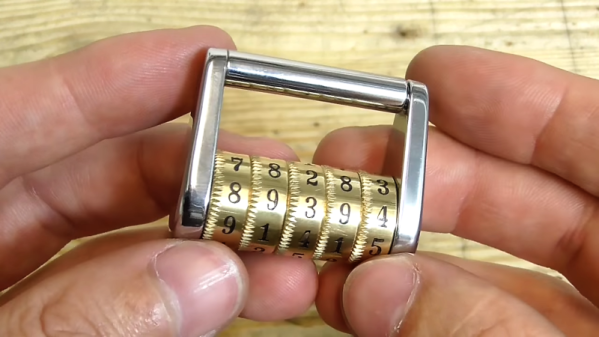
In our search for big-box convenience, we tend to forget that locksmiths once not only copied keys but also created complex locks and other intricate mechanisms from scratch. [my mechanics] hasn’t forgotten, and building a lock is his way of celebrating of the locksmith’s skill. Building a combination lock from a single stainless bolt is probably also showing off just a little, and we’re completely fine with that.

Granted, the bolt is a rather large one – an M20x70 – and a few other materials such as brass rod and spring wire were needed to complete the lock. But being able to look at a single bolt and slice it up into most of the stock needed for the lock is simply amazing. The head became the two endplates, while the shank was split in half lengthwise and crosswise after the threads were turned off; those pieces were later turned down into the tubes and pins needed to create the lock mechanism. The combination wheels probably could have come from another – or longer – bolt, but we like the look of the brass against the polished stainless, as well as the etched numbers and subtle knurling. The whole thing is a locksmithing tour de force, and the video below captures all of it without any fluff or nonsense.

If working in steel and brass isn’t your thing, fear not – a 3D-printed combination lock is probably within your reach. Or laser cut wood. Or even plain paper, if you’re not into the whole security thing.

Continue reading “Turning A Single Bolt Into A Combination Lock”

Project Egress: The Hinges

A door’s hinges are arguably its most important pieces. After all, a door without hinges is just, well, a wall. Or a bulkhead, if we’re talking about a hingeless hatch on a spacecraft.

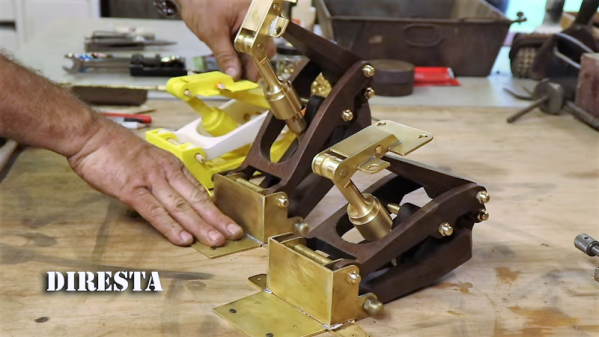
And so the assignment for creating hinges for Progress Egress, the celebration of the 50th anniversary of the Apollo 11 landing by creating a replica of the command module hatch, went to [Jimmy DiResta]. The hinges were complex linkages that were designed to not only handle the 225 pound (102 kg) hatch on the launch pad, but to allow extended extravehicular activity (EVA) while en route to the Moon. [Jimmy], a multimedia maker, is just as likely to turn metal as he is to work in wood, and his hinges are a study of 1960s aerospace engineering rendered in ipe, and extremely hard and dense tropical hardwood, and brass.

[Jimmy]’s build started with a full-size 3D-printed model of the hinge, a move that paid off as the prints acted both as templates for machining the wood components and as test jigs to make sure everything would articulate properly. Sheet brass was bent and soldered into the hinge brackets, while brass rod stock was turned on the lathe to simulate the hydraulic cylinder hinge stays of the original. The dark ipe and the brass work really well together, and should go nicely with [Fran Blanche]’s walnut and brass latch on the assembled hatch.

With [Adam Savage]’s final assembly of all the parts scheduled for Thursday the 18th, we’re down to the wire on this celebration of both Apollo and the maker movement that was at least in part born from it.

Note: the assembly started at 11:00 Eastern time, and there’s a live stream at https://airandspace.si.edu/events/project-egress-build.

Continue reading “Project Egress: The Hinges”

Torturing An Instrumented Dive Watch, For Science

The Internet is a wild and wooly place where people can spout off about anything with impunity. If you sound like you know what you’re talking about and throw around a few bits of the appropriate jargon, chances are good that somebody out there will believe whatever you’re selling.

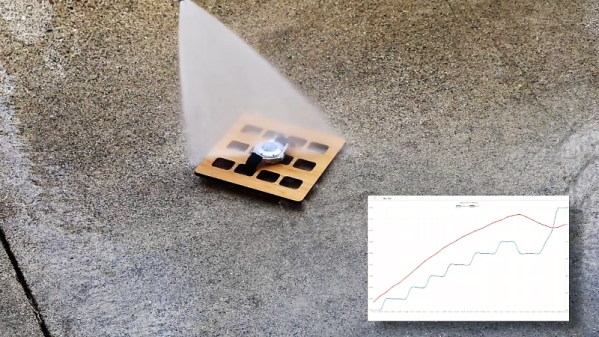
Case in point: those that purport that watches rated for 300-meter dives will leak if you wiggle them around too much in the shower. Seems preposterous, but rather than just dismiss the claim, [Kristopher Marciniak] chose to disprove it with a tiny wireless pressure sensor stuffed into a dive watch case. The idea occurred to him when his gaze fell across an ESP-01 module next to a watch on his bench. Figuring the two needed to get together, he ordered a BMP280 pressure sensor board, tiny enough itself to fit anywhere. Teamed up with a small LiPo pack, everything was stuffed into an Invicta dive watch case. A little code was added to log the temperature and pressure and transmit the results over WiFi, and [Kristopher] was off to torture test his setup.

The first interesting result is how exquisitely sensitive the sensor is, and how much a small change in temperature can affect the pressure inside the case. The watch took a simulated dive to 70 meters in a pressure vessel, which only increased the internal pressure marginally, and took a skin-flaying shower with a 2300-PSI (16 MPa) pressure washer, also with minimal impact. The video below shows the results, but the take-home message is that a dive watch that leaks in the shower isn’t much of a dive watch.

Hats off to [Kristopher] for doing the work here. We always love citizen science efforts such as this, whether it’s hardware-free radio astronomy or sampling whale snot with a drone.

Continue reading “Torturing An Instrumented Dive Watch, For Science”

Tuning Into Atomic Radio: Quantum Technique Unlocks Laser-Based Radio Reception

The basic technology of radio hasn’t changed much since an Italian marquis first blasted telegraph messages across the Atlantic using a souped-up spark plug and a couple of coils of wire. Then as now, receiving radio waves relies on antennas of just the right shape and size to use the energy in the radio waves to induce a current that can be amplified, filtered, and demodulated, and changed into an audio waveform.

That basic equation may be set to change soon, though, as direct receivers made from an exotic phase of matter are developed and commercialized. Atomic radio, which does not rely on the trappings of traditional radio receivers, is poised to open a new window on the RF spectrum, one that is less subject to interference, takes up less space, and has much broader bandwidth than current receiver technologies. And surprisingly, it relies on just a small cloud of gas and a couple of lasers to work.

Continue reading “Tuning Into Atomic Radio: Quantum Technique Unlocks Laser-Based Radio Reception”