Ferrofluid Display Fuels The Fun, And The Procrastination

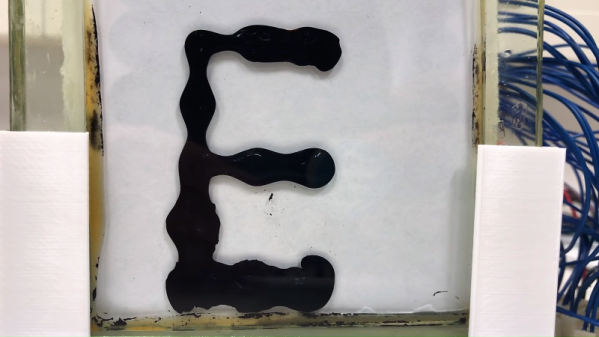
When deadlines loom and your future is on the line, do what top college students through the ages have always done: procrastinate! [Simen] and [Amund] did that in grand style by starting a YouTube channel, delightfully and aptly named “Applied Procrastination”, wherein they plan to avoid their responsibilities as long as possible in favor of making a large-scale ferrofluidic display panel. (Video, embedded below.)

We suppose we should encourage them to hit the books, but honestly they look like they’re having much more fun and learning more than they would in class. The idea isn’t new; we’ve seen ferrofluid clocks before, after all. [Amund] and [Simen] have grander plans for their display, but they’re wisely starting small with basic experiments. They had an early great idea to use a double-pane window as a tank for their display, but coatings on the inside of the glass and the aluminum frame conspired to cloud the display. They also did some tests to make sure they can control 252 electromagnets safely. They did manage to get a small test display working, but really the bulk of the video is just them playing with magnets and ferrofluid. And again, we’re OK with that.

It looks like this is going to be an interesting project, with hopefully regular updates to the channel now that summer break is upon us. Unless they find something else to do, of course.

Continue reading “Ferrofluid Display Fuels The Fun, And The Procrastination”
Retrocomputing For The Masses Hack Chat

Join us on Wednesday 29 May 2019 at noon Pacific for the Retrocomputing for the Masses Hack Chat!

Of the early crop of personal computers that made their way to market before IBM and Apple came to dominate it, few machines achieved the iconic status that the Sinclair ZX80 did.

Perhaps it was its unusual and appealing design style, or maybe it had more to do with its affordability. Regardless, [Sir Clive]’s little machine sold north of 100,000 units and earned a place in both computing history and the hearts of early adopters.

Spencer Owen is one who still holds a torch for the ZX80, so much so that in 2013, he hatched a seemingly wacky idea to make his own. A breadboard prototype of the Z80 machine slowly came to life over Christmas 2013, one thing led to another, and the “RC2014” was born.

The RC2014 proved popular enough to sell on Tindie, and Spencer is now following his dream as a retrocomputing mogul and working on RC2014 full time. He’ll be joining us to discuss the RC2014, how it came to be, and how selling computing nostalgia can be more than just a dream.

join-hack-chatOur Hack Chats are live community events in the Hackaday.io Hack Chat group messaging. This week we’ll be sitting down on Wednesday May 29 at 12:00 PM Pacific time. If time zones have got you down, we have a handy time zone converter.

Click that speech bubble to the right, and you’ll be taken directly to the Hack Chat group on Hackaday.io. You don’t have to wait until Wednesday; join whenever you want and you can see what the community is talking about.


Vintage Fairchild IC Proves Tough To Decap

You’d think that something called “white fuming nitric acid” would be more than corrosive enough to dissolve just about anything. Heck, it’s rocket fuel – OK, rocket fuel oxidizer – and even so it still it wasn’t enough to pop the top on this vintage Fairchild μL914 integrated circuit, at least not without special measures.

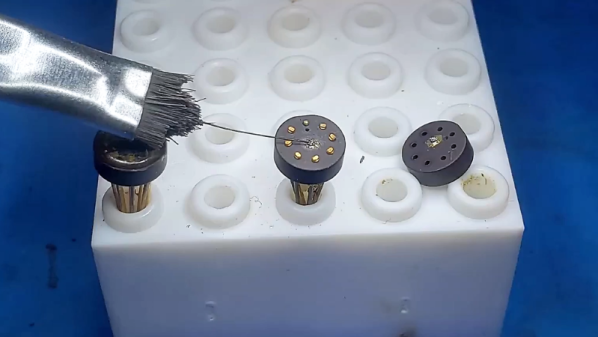
As [John McMaster], part of the team that analyzed the classic dual 2-input NOR gate RTL chip from the 1960s, explains it, decapping modern chips is a straightforward if noxious process. Generally a divot is milled into the epoxy, providing both a reservoir for the WFNA and a roughened surface for it to attack. But the Fairchild chip, chosen for dissection for the Maker Faire Bay Area last week specifically because the features on the die are enormous by modern standards, was housed in an eight-lead TO-99 case with epoxy that proved nigh invulnerable to WFNA. [John] tried every chemical and mechanical trick in the book, going so far as to ablate epoxy with a Nd:YAG laser. He eventually got the die exposed, only to discover that it was covered with silicone rather than the silicon dioxide passivation layer of modern chips. Silicone can be tough stuff to remove, and [John] resorted to using lighter fluid as a solvent and a brush with a single bristle to clean up the die.

We applaud the effort that this took, which only proves that decapping is more art than science sometimes. And the results were fabulous; as Hackaday editor-in-chief [Mike Szczys] notes, the decapping led to his first real “a-ha moment” about how chips really work.

Continue reading “Vintage Fairchild IC Proves Tough To Decap”

Vintage Monoscope Tubes Generate Classic TV Test Patterns Once Again

Night creatures and insomniacs of a bygone era may fondly recall a TV test pattern appearing once [Jack Parr] or [Steve Allen] had had their say and the local TV station’s regular broadcast day had concluded. It was affectionately known as the Indian Head test pattern, for the stylized Native American, resplendent in a feathered headdress, that featured prominently in the graphic.

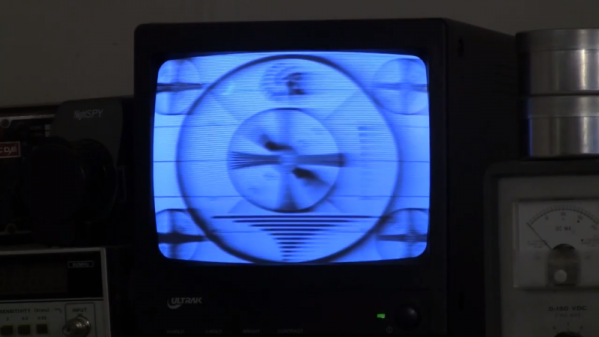
Unknown to most viewers was exactly how that test pattern and others like it were generated. But thanks to [Rich “The Lab Guy” Diehl] and his monoscope restoration project, we can all share in the retro details. It turns out that while some test patterns were merely a studio camera trained on a printed card, most were generated by a special tube called a monoscope. It functioned in basically the same manner as a studio camera, but rather than scanning the incident light of a scene with an electron beam, the image was permanently etched into a thin aluminum plate. [Rich] laid hands on two vintage monoscope tubes, one containing the Indian Head test pattern, and set about building a device to use them. “The Chief” can hold either tube in a Faraday cage of thin, flexible PCB material and 3D-printed parts, with supporting electronics like the power supply and video amplifiers in an aluminum chassis below.

It’s a nice piece of work and a great lesson in how it used to be done, and the lithophane of the Indian head is a nice touch. Hats off to [The Lab Guy] for build quality and great documentation, including a detailed video series that starts with the video below. If you need a little more background on how video came to be, [Philo Farnsworth]’s story is a good place to start.

Continue reading “Vintage Monoscope Tubes Generate Classic TV Test Patterns Once Again”

DIY Vactrols Give MIDI-Controlled Video Distortion

It’s one thing to assemble your own circuits from scratch using off the shelf components. It’s quite another to build the components first, and then build the circuit.

That’s the path [Joris Wegner] took with this video distortion effects box, dubbed PHOSPHOR. One might wonder why you’d want a box that makes a video stream look like playback from a 1980s VHS player with tracking problems, but then again, audio distortion for artistic effect is a thing, so why not video? PHOSPHOR is a USB MIDI device, and therein lies the need for custom components. [Joris] had a tough time finding resistive optoisolators, commonly known as Vactrols and which are used to control the distortion effects. He needed something with a wide dynamic range, so he paired up a bright white LED and a cadmium sulfide photoresistor inside a piece of heat shrink tubing. A total of 20 Vactrols were fabricated and installed on a PCB with one of the coolest silkscreens we’ve ever seen, along with the Sparkfun Pro Micro that takes care of MIDI chores. Now, distortions of the video can be saved as presets and played back in sync with music for artistic effects.

This isn’t the first time Vactrols have made an appearance here, of course. We saw them a while back with this Arduinofied electric guitar, and more recently with a triple-555 timer synth.

Continue reading “DIY Vactrols Give MIDI-Controlled Video Distortion”

AI-Enabled Teletype Live Streams Nearly Coherent Conversations

If you’ve got a working Model 33 Teletype, every project starts to look like an excuse to use it. While the hammering, whirring symphony of a teleprinter going full tilt brings to mind a simpler time of room-sized computers and 300 baud connections, it turns out that a Teletype makes a decent AI conversationalist, within the limits of AI, of course.

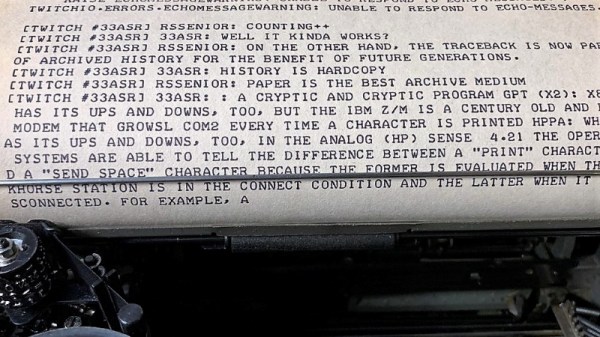
The Teletype machine that [Hugh Pyle] used for this interesting project, a Model 33 ASR with the paper tape reader, is a nostalgia piece that figures prominently in many of his projects. As such, [Hugh] has access to tons of Teletype documentation, so when OpenAI released their GPT-2 text generation language model, he decided to use the docs as a training set for the model, and then use the Teletype to print out text generated by the model. Initial results were about as weird as you’d expect for something trained on technical docs from the 1960s. The next step was obvious: make a chat-bot out of it and stream the results live. The teletype can be seen clattering away in the recorded stream below, using the chat history as a prompt for generating text responses, sometimes coherent, sometimes disturbing, and sometimes just plain weird.

Alas, the chat-bot and stream are only active a couple of times a week, so you’ll have to wait a bit to try it out. But it looks like a fun project, and we appreciate the mash-up of retro tech and AI. We’ve seen teleprinters revived for modern use before, both for texting and Tweeting, but this one almost has a mind of its own.

Continue reading “AI-Enabled Teletype Live Streams Nearly Coherent Conversations”

Flexible PCBs Hack Chat With OSH Park

Join us Thursday at noon Pacific time for the Flexible PCBs Hack Chat with Drew and Chris from OSH Park!
Note the different day from our usual Hack Chat schedule!
Printed circuit boards have been around for decades, and mass production of them has been an incalculable boon to the electronics industry. But turning the economics of PCB production around and making it accessible to small-scale producers and even home experimenters is a relatively recent development, and one which may have an even broader and deeper impact on the industry in the long run.

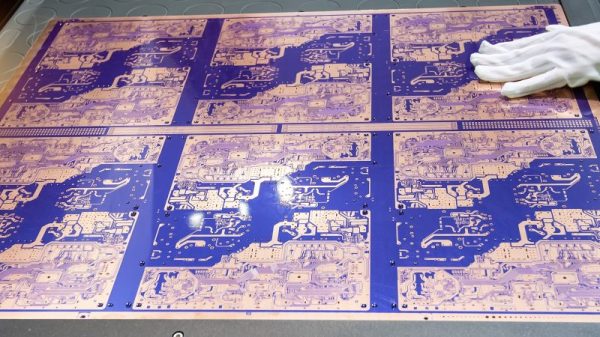
And now, as if professional PCBs at ridiculous prices weren’t enough, the home-gamer now has access to flexible PCBs. From wearables to sensor applications, flex PCBs have wide-ranging applications and stand to open up new frontiers to the hardware hacker. We’ve even partnered with OSH Park in the Flexible PCB Contest, specifically to stretch your flexible wings and get you thinking beyond flat, rigid PCBs.

join-hack-chatOur Hack Chats are live community events in the Hackaday.io Hack Chat group messaging. This week we’ll be sitting down on Thursday, May 23 at 12:00 PM Pacific time. If time zones have got you down, we have a handy time zone converter.

Click that speech bubble to the right, and you’ll be taken directly to the Hack Chat group on Hackaday.io. You don’t have to wait until Thursday; join whenever you want and you can see what the community is talking about.