Testing Hardware With ASCII Waveforms

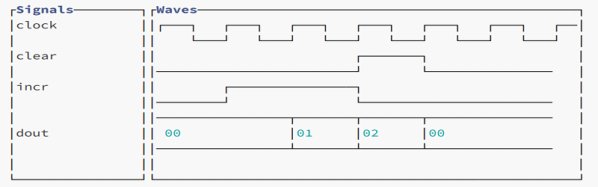
Testing software is — sometimes — easier than testing hardware. After all, you can always create test files and even fake user input before monitoring outputs using common tools. Hardware though, is a bit different. Sometimes it is hard to visualize exactly what’s happening. [Andrew Ray’s] answer? Produce simulated waveforms using ASCII text.

The process uses some custom tools written in OCaml, but the code is available for you on GitHub. The tool, called Hardcaml, allows you to write test benches for hardware — not a new idea for FPGA developers. The output, however, is an ASCII text waveform and common software development tools can check that waveform against the expected output.

Continue reading “Testing Hardware With ASCII Waveforms”

New Microscope Directly Images Protein Atoms

There’s an old joke that you can’t trust atoms — they make up everything. But until fairly recently, there was no real way to see individual atoms. You could infer things about them using X-ray crystallography or measure their pull on tiny probes using atomic force microscopes, but not take a direct image. Until now. Two laboratories recently used cryo-electron microscopy to directly image atoms in a protein molecule with a resolution of about 1.2 x 10⁻⁷ millimeters or 1.2 ångströms. The previous record was 1.54 ångströms.

Recent improvements in electron beam technology helped, as did a device that ensures electrons that strike the sample travel at nearly the same speeds. The latter technique resulted in images so clear, researchers could identify individual hydrogen atoms in the apoferritin molecule and the water surrounding it.

Continue reading “New Microscope Directly Images Protein Atoms”

Ancient History Of The Phone Jack

While watching a video about old radios from the 1920s, a phone jack popped up. The host mentioned that phone jacks are super old and he wondered what was their origin. I always assumed they had something to do with the telephone system, and that’s right, but I had no idea how old they really are and how they’ve evolved. Turns out the venerable plug goes back to at least 1878.

Keep in mind, I’m talking about the good old fashioned 1/4″ phone jack with two wires. Over time, the jack and plug have spawned different versions with more wires and — particularly — smaller dimensions. The headphone jack that many smartphone makers are dropping is a direct descendant of that old phone jack. But a mono cable like you would see connecting an electric guitar or another mono source would be right at home connected to a 1900s switchboard. Let’s take a look at the origins of a design that’s almost 150 years old and still in use.

Continue reading “Ancient History Of The Phone Jack”

Linux Fu: Raspberry Pi Desktop Headless

It seems to me there are two camps when it comes to the Raspberry Pi. Some people use them as little PCs or even laptops with a keyboard and screen connected. But many of us use them as cheap Linux servers. I’m in the latter camp. I have probably had an HDMI plug in a Pi only two or three times if you don’t count my media streaming boxes. You can even set them up headless as long as you have an Ethernet cable or are willing to edit the SD card before you boot the machine for the first time.

However, with the Raspberry Pi 4, I wanted to get to a desktop without fishing up a spare monitor. I’ll show you two ways to get a full graphical KDE desktop running with nothing more than a network connection.

The same principle applies to most other desktop environments, but I am using KDE and Ubuntu on the Pi, even though something lighter would probably perform better. But before we get there, let’s talk about how X11 has had a big identity crisis over the years.

The Plan

There are many ways to remotely access X programs, many of which are rarely used today. However, for this purpose, we are going to use SSH tunneling along with some special tricks to get the entire desktop running. It is easy to just run a single X program over SSH, and you’ve probably done that often. If so, you can skip to the next section.

Continue reading “Linux Fu: Raspberry Pi Desktop Headless”

A Tasty Output Device

We have headphones for your ears, and monitors for your eyes. Some computers even have tactile feedback. Now researchers have an output device for taste. The decidedly odd device uses five gels, one for each of the tastes humans can sense. If we understand the paper, the trick is that ionizing the gels inhibits the taste of that gel. By controlling the ionization level of each gel, you can synthesize any taste, just like you can make colors with three LEDs.

The five gels are made from agar and glycine (sweet), magnesium chloride (bitter), citric acid (acidic), salt (salty), and glutamic sodium (umami). If you didn’t learn about umami in school, that’s a savory taste likened to the taste of a broth or meat and often associated with monosodium glutamate.

The shape of the device is made like a sushi roll so that while the gels contact the tongue, a copper foil cathode can connect also. Using this will make you look even stranger than someone wearing Google Glass, but that’s the price of being on the cutting edge of technology, we suppose. There doesn’t seem to be any reason you couldn’t duplicate something like this, although we wonder about the hygiene of passing it around at parties. Maybe your next home movie could show a meal and let the viewer taste it too.

If you are wondering about smell, that’s another set of researchers. You would think this is the first taste output device we have seen, but no… surprisingly, it isn’t.

Continue reading “A Tasty Output Device”

WiFi Goes Open

For most people, adding WiFi to a project means grabbing something like an ESP8266 or an ESP32. But if you are developing your own design on an FPGA, that means adding another package. If you are targeting Linux, the OpenWifi project has a good start at providing WiFi in Verilog. There are examples for many development boards and advice for porting to your own target on GitHub. You can also see one of the developers, [Xianjun Jiao], demonstrate the whole thing in the video below.

The demo uses a Xilinx Zynq, so the Linux backend runs on the Arm processor that is on the same chip as the FPGA doing the software-defined radio. We’ll warn you that this project is not for the faint of heart. If you want to understand the code, you’ll have to dig into a lot of WiFi trivia.

Continue reading “WiFi Goes Open”

Build Your Own Grid Tie Inverter

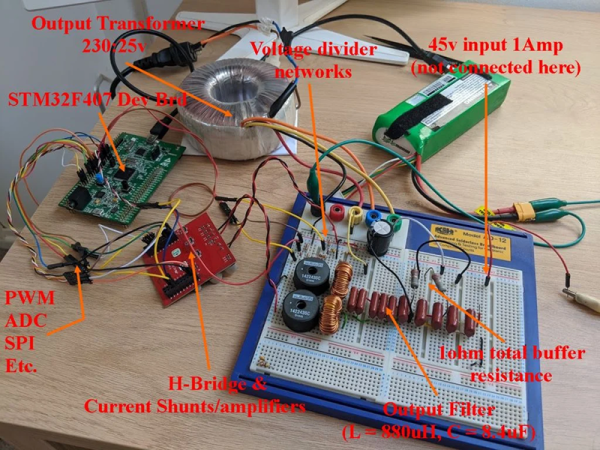
Inverters that convert DC into AC are pretty commonplace, some cars even have standard AC receptacles in them for you to plug in your favorite appliance. However, there’s a particular type of inverter called a grid tie inverter that allows you not only to make AC, but also inject it back through an AC outlet to power other devices in conjunction with the normal AC service. Why? Maybe you want to use your own generator or solar power. In some cases, the power company will pay you if you produce more power than you consume. Maybe you just want to know you can do it. That seems to be the motivation behind [fotherby’s] build, which is quite substantial.

The setup only handles about 60 watts, but it does all the functions you need: DC to AC conversion as well as phase and voltage matching. Actually, just converting DC to AC is almost trivial if you don’t care about the waveform. But in this case, you do care that you can create an AC signal to match the one already on the line.

Continue reading “Build Your Own Grid Tie Inverter”