Warp Point: A Web Ring For Gaming Sites Built For 2026

At one point in time web rings were one of the best ways to find content on the World Wide Web — involving not just a directory of participating sites, but also each site linking to each other in a ring-like fashion. With search results these days becoming increasingly less useful, having such a focused resource sounds better and better, with the Warp Point directory and web ring now doing just that for video game websites. Topics range from reviews to retro gaming and game development, so there’s probably something for everyone here.

For the reasoning behind this effort take a look at this article by [Wes Fenlon] and [Matt Sayer]. The inspiration was part nostalgia and part longing for the return of a simple system that Just Works™ without algorithms, advertising, ‘AI’ and corporate overlords involved at any point in time. Everything is just focused on helping you find the content and community you were looking for as quickly as possible, though spending a few hours just clicking through the ring is also perfectly fine.

Everyone is free to submit their own awesome site to Warp Point, after which it’ll be manually reviewed. Even if not strictly curated, it would seem to be a refreshing return to a more simpler time, using an approach that should still hold up just as well as it did in 1999.

Although the big commercial web directories like those on Yahoo! quickly became unwieldy and unusable, there’s a lot to be said for having these small, focused web directories and rings to regain that sense of community and humanity that’s become so scarce on the WWW in 2026.
Building A Wireless Fingerprint Authorization Device

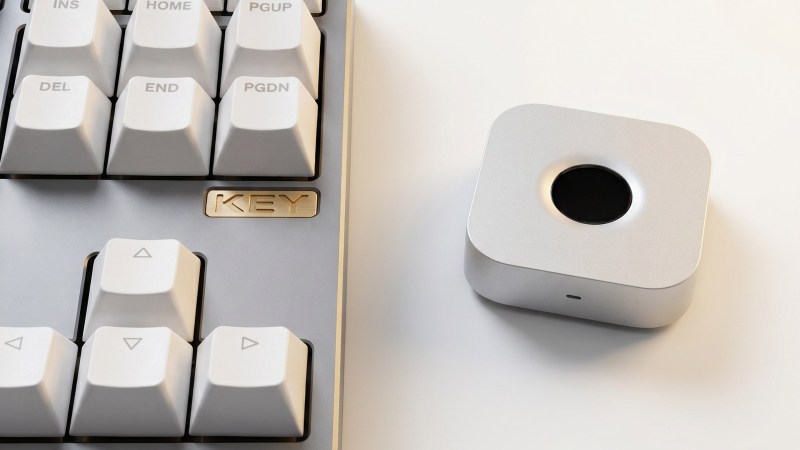
Once upon a time, there was a bit of a fad for fingerprint authentication in laptops and desktop computers. It has long since faded, but [superdog] wanted just such a device for Linux and Mac machines. Thus, it was time to build one.

[superdog] designed the device, nicknamed immurok, as a tool for people who use external keyboards, and do lots of terminal work on Mac and Linux machines. Repeat password requests can interrupt one’s flow when hustling at the keys, so immurok was designed to ease this pain.

The device is based on a WCH CH592F microcontroller, which comes with Bluetooth connectivity out of the box. This allows immurok to connect wirelessly to the machine of your choice, advertising itself as a standard Bluetooth HID keyboard device. Fingerprint-wise, scanning is done with an R559S capacitive sensor, which verifies the match locally so there’s no transmitting biometric data anywhere. On the computer side, Linux is setup to use a CLI/TUI app plus PAM integration to handle authorization for system logins and sudo in the terminal. On the Mac platform, it’s used with a menu bar app, with PAM integration for admin prompts. There’s also a separate helper path for using it with the lock screen.

If you’re sick of entering your password all the time and wish unlocking your PC was more like unlocking your phone, this might be the project for you. We’ve seen similar projects before, too. If you’re whipping up fun gear for biometric auth, don’t hesitate to let us know on the tipsline.

Microdistillery For Microchemistry

Much like radio operators being encouraged to use the least possible amount of power to make a contact, chemists have a similar rule encouraging using the least amount of materials in experiments. Not only is this rooted in economics, but in safety as well; if something goes wrong it’s generally good if there’s not excess amounts of reactants. With modern techniques, though, it’s possible to bring experimental chemistry down to incredibly small scales, and [Marb’s lab] found that they needed a custom built still for these new, diminutive experiments.

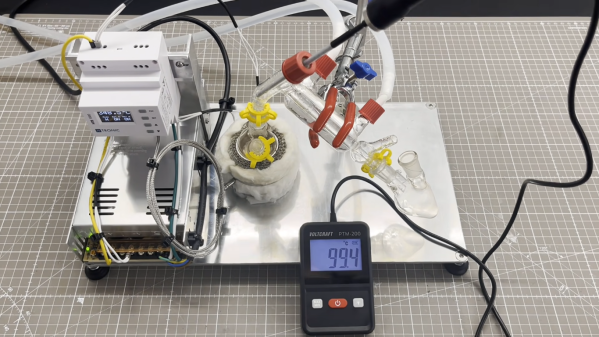
The first step is to build the heating component of the still. This is provided with a few custom aluminum parts for the base and a pair of heaters originally meant for 3D printers, with the assembled unit wrapped in insulation. The heater accomodates a 25 mL round-bottom flask. Temperature control of the heating mantle is provided by a controller mounted to a DIN rail which receives power from a 24V power supply, and an additional temperature probe is added to measure the temperature of the distillate. A test run with water shows the small still quickly and efficiently evaporating the water up to a condenser.

Although building a still doesn’t have to be technically difficult, building something this small that’s effective and safe is a bit more challenging than a backyard moonshining operation. Scaling chemical reactions down can often be a challenge but is possible with the right mindset and equipment. We’ve seen miniaturization of many things that we might not have expected including hydrogen production, aluminum smelting, and even the construction of a microscope.

Continue reading “Microdistillery For Microchemistry”

A device with a brown plastic gear cylinder and indicator on the left and a series of black pieces approximately the size of tongue depressors sits on a butcher block workbench. A thin brown divider with the word "Finished" sits between sets of the presumably chalkboard tongue depressors.

A New Twist On The To Do List

Humans are odd creatures, and no two are exactly alike, which is likely why so many different methods exist for tracking the progress of tasks that must be accomplished. [Simone Giertz] has graced us with her own spin on task tracking that adds an element of chance.

[Giertz] tells us that she started with written lists that she tackled in dice-determined order to keep her from overthinking or cherry-picking tasks. While this worked fine, she longed for a more elegant solution. Approaching the UI first, unlike any Open Source project ever, she determined that a marker that could randomly point to a task on a vertical list would be most pleasant.

The bulk of the project was evaluating different mechanisms to make the marker pick tasks at random while not selecting a task that had already been completed. A set of magnetic toggles that could repel the marker proved ineffective, but a simpler solution involving moving the completed tasks past a divider won the day. The finished product has a satisfying selection mechanism that makes interacting with the chore chart a joy, which probably helps make it more likely things get done.

We’ve seen many productivity hacks over the years, including Arya’s Hacking the Self, this rotary time tracker, or this e-ink macropad.

Continue reading “A New Twist On The To Do List”

This KVM Runs A P4 Instead Of A Pi.

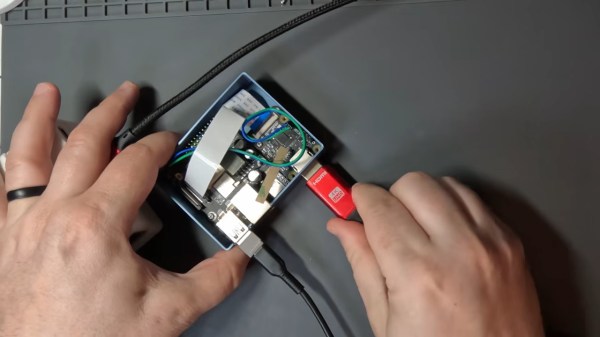
If you asked us to build you a KVM last week, we’d likely have reached for a Raspberry Pi. Now, thanks to [JonathanRowny], we’d seriously consider an ESP32-P4, because his IP KVM seems pretty capable.

He’s using the P4 hardware to its fullest, getting the supported 1080p graphics, and doing so in an interesting way– he’s got a commercial adapter board to try and translate HDMI signals to the camera input on his dev board. Conveniently enough, it’s the same ribbon-cable pinout as the RPi, which is not guaranteed by the CSI standard. Writing a driver to take that signal proved the hardest part– aside from the usual chip revision confusion that plagues this chip– and we can’t help but wonder if the client on the other side of the KVM-IP link might have an easier time doing the image processing that was required for a good image. Regardless, he’s got the code as it is now up on GitHub under the Apache license. 

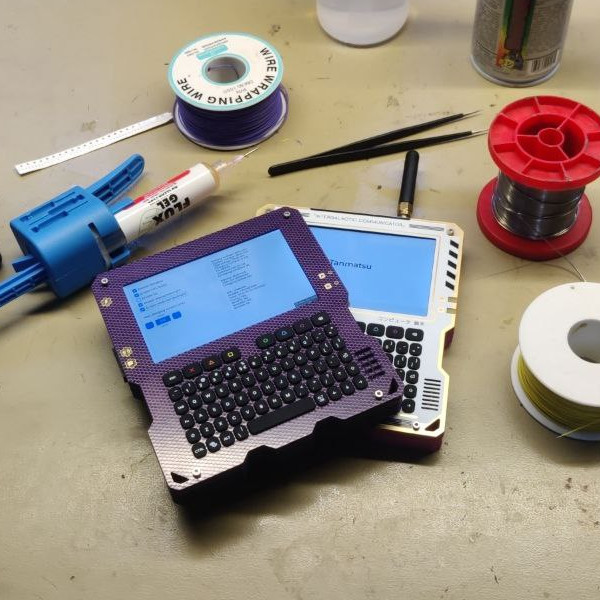
As of this this writing, there’s no audio, and ironically for an ESP32 project networking is wired-only– but much more importantly, there is no security. So it’s a work in progress, but great to see the P4 in the wild doing something other than emulation. Not that we haven’t seen the P4 at work before–the Tanmatsu handheld also makes use of Expressif’s most powerful chip for a handy little terminal. Between the KVM and the handhelds, we cannot help but wonder how many of the projects that were once the provenance of a Pi will get squeezed into these overpowered microcontrollers. Sure, they can’t even match the original Pi in horsepower, never mind a modern Pi5, but how many times have you seen a Linux SBC seriously under-taxed in a project like this?

If you’re swapping Pi for P4– or doing anything else interesting– please let us know on the tips line.

Continue reading “This KVM Runs A P4 Instead Of A Pi.”

Settling The Debate On Soldered Versus Crimped High-Current Connectors

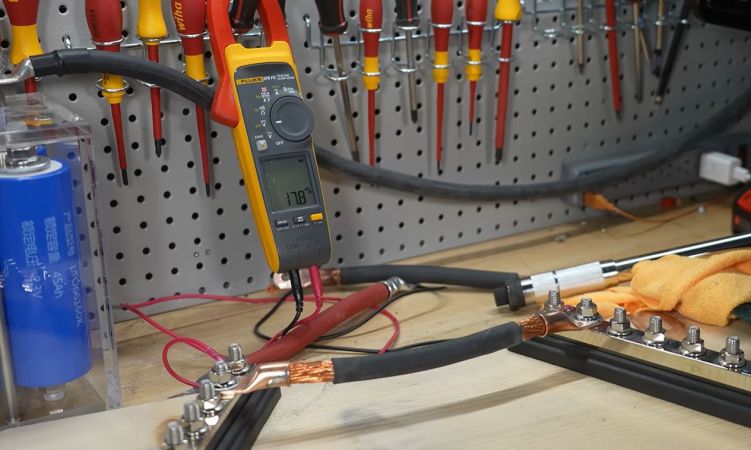
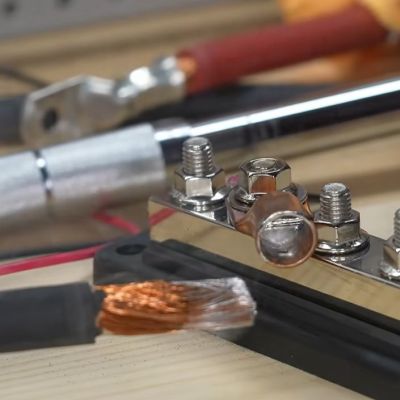
For some reason there’s heated debate around the topic of whether high current carrying wiring ought to use crimped or soldered connections, even though the industry standard is to crimp everything. As a practical demonstration of why this is the case, [Will Prowse] set up a test involving a rig capable of dispensing a few hundred amps through both a crimped and a soldered copper cable.

Prior to making things go spicy, [Will] made sure to check the resistance of the two cables, noting that the soldered version had significantly lower resistance than the crimped connectors. This could be one metric that proponents of soldered connectors can point to as a benefit.

Of course, the main benefit of crimping is that you create a cold weld if crimped properly, which is a sold-state welding process that effectively blends two metal surfaces together. This is also why wire wrap is generally considered to be so very reliable, as it creates a gas-free, solid connection that does not rely on a softer, dissimilar material like solder to hold things together. Of note here is also that the cold weld process tends to continue for a while, so this kind of connection is likely to get better over time.

In the subsequent testing this difference is demonstrated quite well, especially when both cables are subjected to the sort of mechanical abuse that would be expected in an installation, such as vibrations and direct impacts. Here the soldered connections quickly begin to fail, resulting in one soldered connector even unsoldering itself due to heat development. Ultimately cold welding is simply superior over relying on a flimsy and capricious interface of intermetallic compounds.

Continue reading “Settling The Debate On Soldered Versus Crimped High-Current Connectors”

Hackaday Podcast Episode 376: Modern Retro Projects, Retro Modern Projects, And The Teen Years For 3D Printing

Hackaday’s Elliot Williams and Al Williams were in a retro mood this week. There was a new ‘486 computer, a new mechanical TV, and a USB stick with a magnetic personality. Can you watch YouTube on a Game Boy? Maybe.

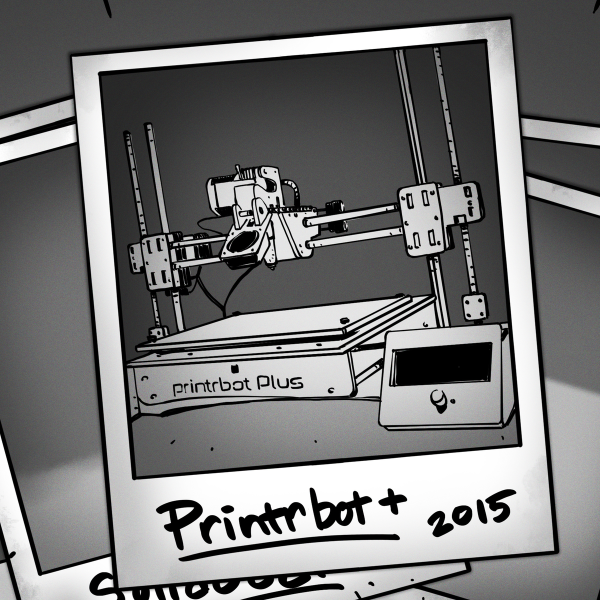
For the can’t miss articles, this week, Elliot and Al reflected on the awkward phase of 3D printers when they transformed from being expensive commercial machines, to where they are now. Meanwhile, Al was interested in how airplanes know how fast they are going. Along the way, there were musical hacks, precision machine tools, and a quantum 8 ball.

Check out the links if you want to follow along, and as always, tell us what you think about this episode in the comments! Or write or record something for our mailbag segment.

Direct download in authentic retro DRM-free MP3.

Continue reading “Hackaday Podcast Episode 376: Modern Retro Projects, Retro Modern Projects, And The Teen Years For 3D Printing”