Helping Secure Amateur Radio’s Digital Future

The average person’s perception of a ham radio operator, assuming they even know what that means, is more than likely some graybeard huddled over the knobs of a war-surplus transmitter in the wee small hours of the morning. It’s a mental image that, admittedly, isn’t entirely off the mark in some cases. But it’s also a gross over-simplification, and a generalization that isn’t doing the hobby any favors when it comes to bringing in new blood.

In reality, a modern ham’s toolkit includes a wide array of technologies that are about as far away from your grandfather’s kit-built rig as could be — and there’s exciting new protocols and tools on the horizon. To ensure a bright future for amateur radio, these technologies need to be nurtured the word needs to be spread about what they can do. Along the way, we’ll also need to push back against stereotypes that can hinder younger operators from signing on.

On the forefront of these efforts is Amateur Radio Digital Communications (ARDC), a private foundation dedicated to supporting amateur radio and digital communication by providing grants to scholarships, educational programs, and promising open source technical projects. For this week’s Hack Chat, ARDC Executive Director Rosy Schechter (KJ7RYV) and Staff Lead John Hays (K7VE) dropped by to talk about the future of radio and digital communications.

Rosy kicked things off with a brief overview of ARDC’s fascinating history. The story starts in 1981, when Hank Magnuski had the incredible foresight to realize that amateur radio packet networks could benefit from having a dedicated block of IP addresses. In those early days, running out of addresses was all but unimaginable, so he had no trouble securing 16.7 million IPs for use by licensed amateur radio operators. This block of addresses, known as AMPRNet and then later 44Net, was administered by volunteers until ARDC was formed in 2011 and took over ownership. In 2019, the decision was made to sell off about four million of the remaining IP addresses — the proceeds of which went into an endowment that now funds the foundation’s grant programs.

So where does the money go? The ARDC maintains a list of recipients, which provides for some interesting reading. The foundation has helped fund development of GNU Radio, supported the development of an open hardware CubeSat frame by the Radio Amateur Satellite Corporation (AMSAT), and cut a check to the San Francisco Wireless Emergency Mesh to improve communications in wildfire-prone areas. They even provided $1.6 million towards the restoration of the MIT Radio Society’s radome and 18-foot dish.

Of all the recipients of ARDC grants, the M17 project garnered the most interest during the Chat. This community of open source developers and radio enthusiasts is developing a next-generation digital radio protocol for data and voice that’s unencumbered by patents and royalties. In their own words, M17 is focused on “radio hardware designs that can be copied and built by anyone, software that anyone has the freedom to modify and share to suit their own needs, and other open systems that respect your freedom to tinker.” They’re definitely our kind of folks — we first covered the project in 2020, and are keen to see it develop further.

John says the foundation has approximately $6 million each year they can dole out, and that while there’s certainly no shortage of worthwhile projects to support as it is, they’re always looking for new applicants. The instructions and guides for grant applications are still being refined, but there’s at least one hard requirement for any project that wants to be funded by the ARDC: it must be open source and available to the general amateur population.

Of course, all this new technology is moot if there’s nobody to use it. It’s no secret that getting young people interested in amateur radio has been a challenge, and frankly, it’s little surprise. When a teenager can already contact anyone on the planet using the smartphone in their pocket, getting a ham license doesn’t hold quite the same allure as it did to earlier generations.

Depending on how old you are, this might have been one of the most shocking moments in Stranger Things.

The end result is that awareness among youth is low. During the Chat, one participant recounted how he had to put Netflix’s Stranger Things on pause so he could explain to his teenage son how the characters in the 1980s set show were able to communicate across long distances using a homemade radio. Think about that for a minute — in a show about nightmarish creatures invading our world from an alternate dimension, the hardest thing for this young man to wrap his head around was the fact a group of teenagers would be able to keep in touch with each other without the Internet or phone lines to connect them.

So its no surprise that John says the ARDC is actively looking for programs which can help improve the demographics of amateur radio. The foundation is looking to not only bring younger people onboard, but also reach out to groups that have been traditionally underrepresented in the hobby. As an example, he points to a grant awarded to the Bridgerland Amateur Radio Club (BARC) last year to bolster their youth engagement program. Funds went towards putting together a portable rig that would allow students to communicate with the International Space Station, and the development of hands-on workshops where teens will be able to launch, track, and recover payloads on a high altitude balloon. Let’s see them do that on their fancy new smartphone.

We want to not only thank Rosy Schechter and John Hays for taking part in this week’s Hack Chat, but everyone else at Amateur Radio Digital Communications for their efforts to support the present and future of amateur radio and digital communication.


The Hack Chat is a weekly online chat session hosted by leading experts from all corners of the hardware hacking universe. It’s a great way for hackers connect in a fun and informal way, but if you can’t make it live, these overview posts as well as the transcripts posted to Hackaday.io make sure you don’t miss out.


Hackaday Podcast 177: Microscopes, Telescopes, Telephonoscopes, And A Keyboardoscope?

This week, Editor-in-Chief Elliot Williams and Assignments Editor Kristina Panos stood around talking like they weren’t thousands of miles apart. And we mean that literally: Kristina just got an up/down desk, and it turns out that Elliot’s had the exact same one for years.

Kristina’s phone is heavier than yours.

In between the hammerings on Kristina’s house (she’s getting new siding), we kick things off by drooling over the first images from the James Webb Space Telescope, and compare a few of them to the same shots from Hubble.

We managed to save a bit of saliva for all the seriously swell keyboards and not-keyboards we saw throughout the Odd Inputs and Peculiar Peripherals contest, all of which are winners in our book.

This week, we ask the tough questions, like why would someone who has never played guitar want to build one from scratch? We can only guess that the answer is simply, ‘because l can’. As lazy as that reasoning may sound, this build is anything but.

Later on, we’ll ogle an ocean of PS/2 keyboards and their new owner’s portable testing rig, complain about ASMR, and laugh about a giant nose that sneezes out sanitizer.

Direct download. And burn it to CD-RW!

Check out the links below if you want to follow along, and as always, tell us what you think about this episode in the comments!

Continue reading “Hackaday Podcast 177: Microscopes, Telescopes, Telephonoscopes, And A Keyboardoscope?”

Style Your Tile With 3D Printed Countertops

We’re all familiar with supply chain issues as they relate to chips and DIPs, but anyone who has requested an estimate for home improvements lately knows that the problems extend to things like plywood, and probably tile, marble, and Formica. Faced with adversity when it came to renovating the kitchen, [3DPC] decided to have a go at 3D printing custom countertops instead of buying tile.

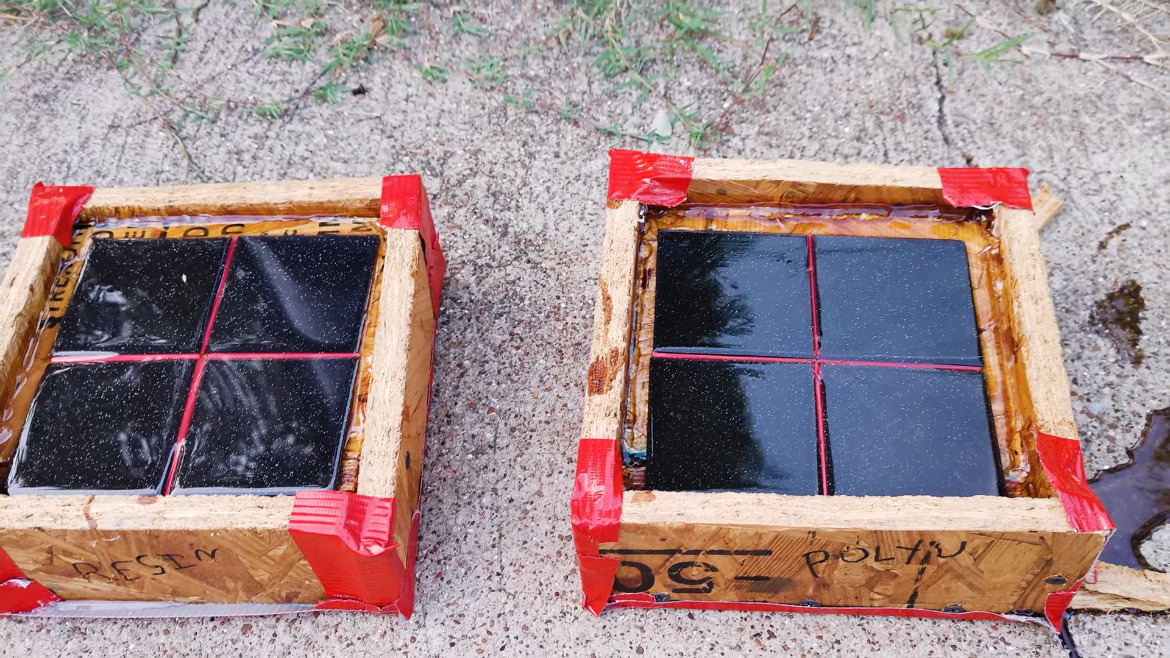
Always build a testing rig first! Polyurethane looked great when wet, but resin was the clear winner.

Since grout isn’t required here but is ultimately expected, [3DPC] beveled the edges of the tiles in order to allow for decorative ‘grout’ filler pieces that provide a nice contrast. That high-gloss shine comes from a combination of printing onto glass, the direction of the layer lines, and the resin sealer that [3DPC] hired a professional to pour. Because of these factors, the tiles have an increased transparency that makes them look super cool. Be sure to check out the brief build video after the break.

To be fair, this is not [3DPC]’s first 3D-printed home-improvement rodeo — he has already saved tens of thousands of dollars by printing instead of purchasing. For this particular project, [3DPC] calculated a total cost under $400 —  a fraction of what a professionally installed countertop would have cost. We wonder how much he’ll save on tiling the bathroom, which is already in progress. We can’t wait to see it!

Are you still without a printer? Might as well make one that can use trash. Or if you already have a printer, just make filament from recycled plastic. It’s all here among the 2022 Hackaday Prize Round 2 winners; just let your imagination wander.

Continue reading “Style Your Tile With 3D Printed Countertops”

This Week In Security: Retbleed, Post-Quantum, Python-atomicwrites, And The Mysterious Cuteboi

Yet another entry in the “why we can’t have nice things” category, Retbleed was announced this week, as yet another speculative execution vulnerability. This one is mitigated in hardware for AMD’s Zen 3 and Intel Generation 9 and later. For earlier devices the performance hit in mitigation is quite painful. What exactly makes this different from previous weaknesses, and why didn’t the previous mitigations cover this problem?
Continue reading “This Week In Security: Retbleed, Post-Quantum, Python-atomicwrites, And The Mysterious Cuteboi”

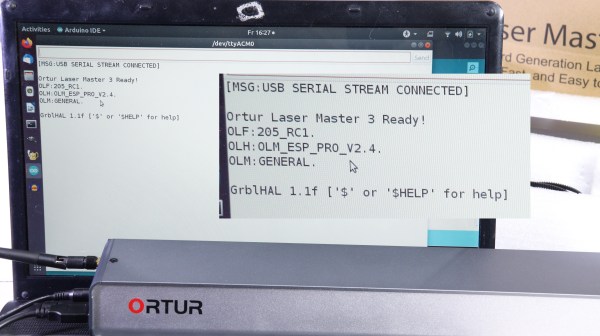
Showing an Ortur lasercutter control module in front of a screen. There's a serial terminal open on the screen, showing the "Ortur Laser Master 3" banner, and then a Grbl prompt.

Watch Out For Lasercutter Manufacturers Violating GPL

For companies that build equipment like CNC machines or lasercutters, it’s tempting to use open-source software in a lot of areas. After all, it’s stable, featureful, and has typically passed the test of time. But using open-source software is not always without attendant responsibilities. The GPL license requires that all third-party changes shipped to users are themselves open-sourced, with possibility for legal repercussions. But for that, someone has to step up and hold them accountable.

Here, the manufacturer under fire is Ortur. They ship laser engravers that quite obviously use the Grbl firmware, or a modified version thereof, so [Norbert] asked them for the source code. They replied that it was a “business secret”. He even wrote them a second time, and they refused. Step three, then, is making a video about it.

Unfortunately [Norbert] doesn’t have the resources to start international legal enforcement, so instead he suggests we should start talking openly about the manufacturers involved. This makes sense, since such publicity makes it way easier for a lawsuit eventually happen, and we’ve seen real consequences come to Samsung, Creality and Skype, among others.

Many of us have fought with laser cutters burdened by proprietary firmware, and while throwing the original board out is tempting, you do need to invest quite a bit more energy and money working around something that shouldn’t have been a problem. Instead, the manufacturers could do the right, and legal, thing in the first place. We should let them know that we require that of them.

Continue reading “Watch Out For Lasercutter Manufacturers Violating GPL”

Embedded Dashboard Definitely Displays Data

Oftentimes, we’ll find ourselves using an PC attached to a project for serial debugging. Other times, we’ll be squinting at a status LED trying to remember the flash code we invented. This embedded dashboard from [hgrodriguez] aims to land somewhere in the middle.

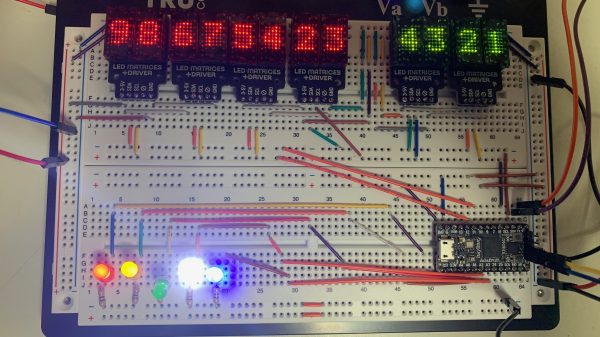
The dashboard features LEDs, several 5×7 matrix displays, and will also mount a small OLED display as well. Everything onboard is driven by an ItsyBitsy board, featuring an Atmega32u4 microcontroller. Data can be fed to the ItsyBitsy via UART, SPI, or eventually, I2C as well.

With the ItsyBitsy handling actually driving the various displays, your project only need send out debug data over one of the listed interfaces. The ItsyBitsy will then display your byte values or word values on the matrix displays, flash the LEDs as required, and so on.

The result is a useful little console that can show you what’s going on in the brain of your microcontroller project. It’s no substitute for a full serial terminal, but it could definitely come in handy when you need to get eyes on a few variables in RAM!

Homebrew Stream Deck Pedal Emulates The Real Thing

Pedals are a great way to control functions on your computer. You’re rarely using your feet for anything else, so they can handle some tasks, freeing up your hands. This Elgato Stream Deck controller from [DDRBoxman] does just that.

[DDRBoxman] wanted to control Elgato Stream Deck much like the offical pedal sold by the company. Thus, some hacking was in order. Using Wireshark with the Elgato pedal helped to determine the communication method of the real hardware.

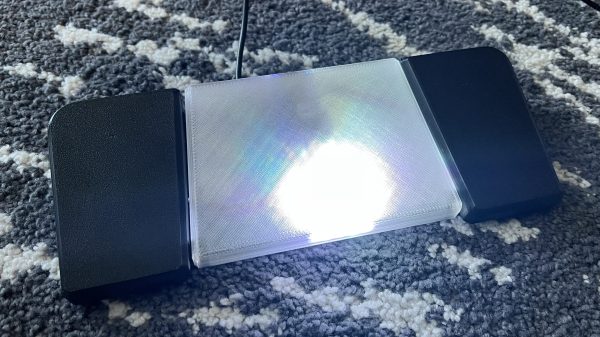
Once the protocol was figured out, it was just a task of getting the Raspberry Pi Pico to replicate the same functionality. With the help of the tinyusb library, [DDRBoxman] was able to emulate the real Elgato device successfully. Paired with a 3D-printed footswitch design from Adafruit, and the project was functional and complete.

We’ve seen great foot pedal devices over the years, from a simple macro device to a super-useful page turner for sheet music. If you’ve been hacking away at your own nifty input devices, be sure to drop us a line!