Doom Clone Shows What An Alternate-Reality Amiga Could’ve Had

Can you run Doom on the Amiga? No, not really, and arguably that was one of the causes for the computer’s demise in the mid-90s as it failed to catch up on the FPS craze of the PC world. [Krzysztof Kluczek] of the Altair demogroup has managed not exactly to remedy that status with the original article, but to show us how a potential contender could’ve been designed for the unexpanded Amiga hardware back in the day.

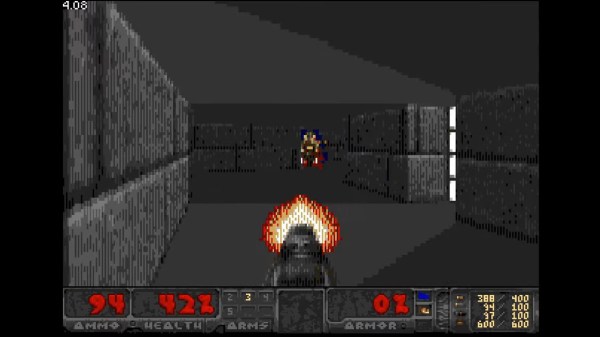
Many developers tried to emulate the thrill and ambiance of the id Software shooter, but they all required high-end Amigas with faster processors and expanded memory, limiting their player base on an already diminished demographic. Not only that, but even with fancier hardware, none of them quite managed to match how well Doom ran on your run-of-the-mill 486 at the time. [Krzysztof] isn’t trying to port Doom itself, but instead creating an engine custom-designed to take advantage of, and minding the limitations of the OCS Amiga as it existed in 1987. The result is Dread, a 2.5D engine that resembles the SNES port of Doom and uses assets from the Freedoom project in order to remain copyright-abiding.

It might not be Doom, but it’s a good peek at what the 33-year old hardware could’ve done in the right hands back then. Technically it already surpasses what the Wolfenstein 3D engine could do, so there’s an idea if someone ever aims to make a straight up port instead of their own game. If you like seeing Doom run on machines it wasn’t meant to, boy do we have some posts for you. Otherwise, stick around after the break for two videos of Dread’s engine being demonstrated.

Continue reading “Doom Clone Shows What An Alternate-Reality Amiga Could’ve Had”
Classic 8-Bit Computing The Atari Way

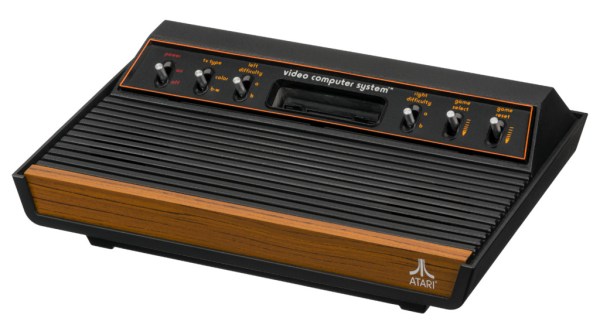
In the classic gaming world, even before the NES arrived on the scene, there was no name more ubiquitous than Atari. Their famous 2600 console sold almost as many units as the Nintendo 64, but was released nearly 20 years prior. In many ways, despite making mistakes that led to the video game crash of the early 80s, Atari was the first to make a path in the video game industry. If you want to explore what the era of 8-bit computing was like in the Atari age, a new resource is compiling all kinds of Atari-based projects.

This site has everything, from assembling Atari 8-bit computers based on the 6502 chip, to programming them in BASIC and assembly, to running official and homebrew games on the hardware itself. This was put together by [Jason H. Moore] who grew up around Atari systems and later, their home computers. He even puts his biomedical experience to use here by designing a game for the 2600 called Gene Medic which can be found at the site as well.

If you grew up in the 70s and 80s and are looking for a bit of Atari nostalgia this site is the place to go. It’s even worth a visit from younger folks as well since the 8-bit world is a lot easier to get immersed in and learn the fundamentals of computer science. Of course, if you want to take it the other direction, it’s possible to modify the old Atari to add a few modern conveniences.

Photo via Evan-Amos

Brain Transplant Makes One Arcade Machine Play Games From Another

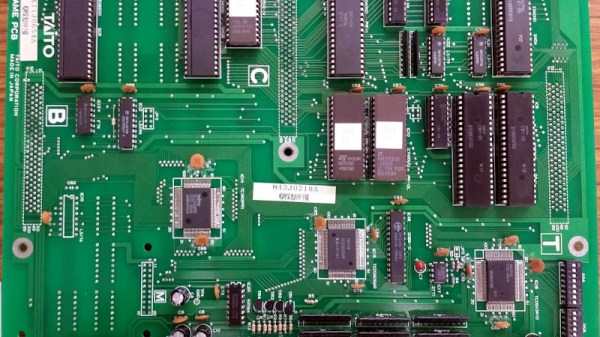
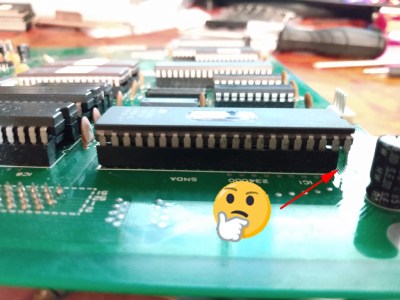
We’re used to games consoles in which the same hardware plays a variety of different games, but if we were to peer inside arcade cabinets of an older vintage we’d find custom boards unique to every game. Some boards from the same manufacturers shared common hardware traits even if they weren’t identical though, and [twistedsymphony] has taken advantage of this to make one vintage Taito game — Gun & Frontier — run on the hardware for another, Ah Eikou no Koshien. It’s a fascinating tale across a forum thread, that’s well worth a read even if you will never touch a vintage arcade board.

We might expect that the tool of choice would be a logic analyser or similar, but unexpectedly the solution to this hack was found in MAME. The arcade emulator conceals a wealth of information about these boards, from which you can discover their differences and try out possible solutions. The hardware hacks are surprisingly straightforward, a few bodge wires and an extra address line for a larger ROM. A programmable logic array required dumping and rewriting to fix a graphics corruption issue and a little bit of ROM tweaking after emulating a controller problem in MAME was required, but it seems that yes, one game can run on another. Certainly less painful than the Taito hack that required a chip to be decapped.
[via r/ReverseEngineering]

Tired Of Fruit Ninja? Try Vegetable Assassin Using An ESP32 Sword

In a world where ninjas no longer rule the social hierarchy, where can a ninja-wannabe practice their sword fighting skills? In the popular Introduction to Embedded Systems class at the Massachusetts Institute of Technology, a team of students made their own version of the popular mobile game Fruit Ninja with a twist – you’re fighting your true nemesis, vegetables.

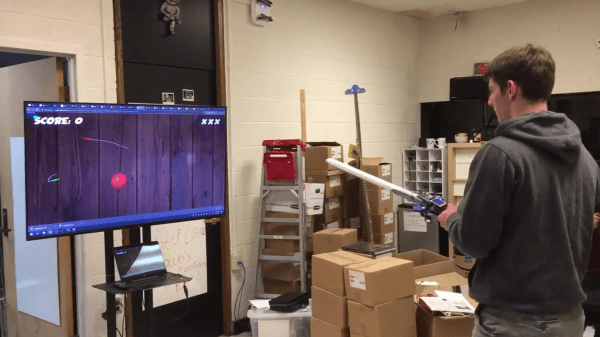
Vegetable Assassin allows single or multi-player mode, with players slicing vegetables on a screen using fake swords with sensors to detect the players’ motion. The web-based game allows swords to communicate their orientation to the game session with a WebSocket connection to a server, with the game generated and rendered using a 3D client JavaScript library. Rather than using MQTT, which also uses a persistent TCP connection as well as lower overhead, WebSocket provided maximum browser support.

An onboard ESP32 microcontroller and IMU track the sword movements. The game begins by calibrating the sword movements within the play area. Information is generated using the Madgwick algorithm, a 9-degrees-of-freedom algorithm that uses 3-axis data from the sword’s gyroscope, accelerometer, and magnetometer and outputs the absolute orientation of the sword.

The sword and browser both connect to the same channel on the server through a WebSocket connection, identified by a session ID similar to how web chat rooms are implemented. A statistics server manages the allocation of session IDs and other persistent game data to track high scores.

As for the graphics, a Three.js WebGL library creates the scene and camera, loading the game into the browser’s animation frame. Other scripts load the 3D models for the fruits and vegetables in the game, update their positions based on the physics engine provided by Cannon.js, and render UI elements within the game.

Curious? The project site has the microcontroller code to build your own sword that you can use to play the demo. If you don’t have an ESP32 and accelerometer handy you can play Vegetable Assassin in your browser instead.

3D Print Your Way To A Bartop Arcade Cabinet

Custom arcade machines have always been a fairly common project in the hacker and maker circles, but they’ve really taken off with the advent of the Raspberry Pi and turn-key controller kits. With all the internals neatly sorted, the only thing you need to figure out is the cabinet itself. Unfortunately, that’s often the trickiest part. Without proper woodworking tools, or ideally a CNC router, it can be tough going to build a decent looking cabinet out of the traditional MDF panels.

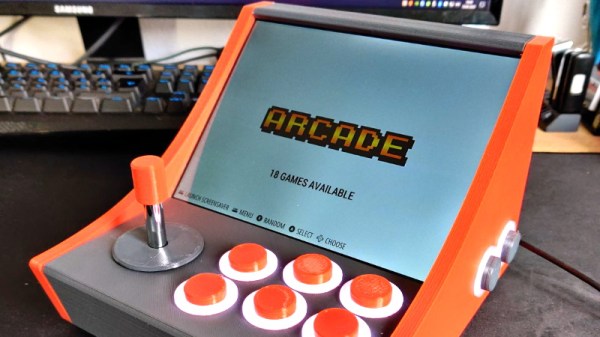
But if you’re willing to leave wood behind, [Gerrit Gazic] might have a solution for you. This bartop arcade, which he calls the simplyRetro D8, uses a fully 3D printed cabinet. He’s gone through the trouble of designing it so there are no visible screw holes, so it looks like the whole thing was hewn from a chunk of pure synthwave ore. He notes that this can make the assembly somewhat tricky in a few spots, but we think it’s a worthy compromise.

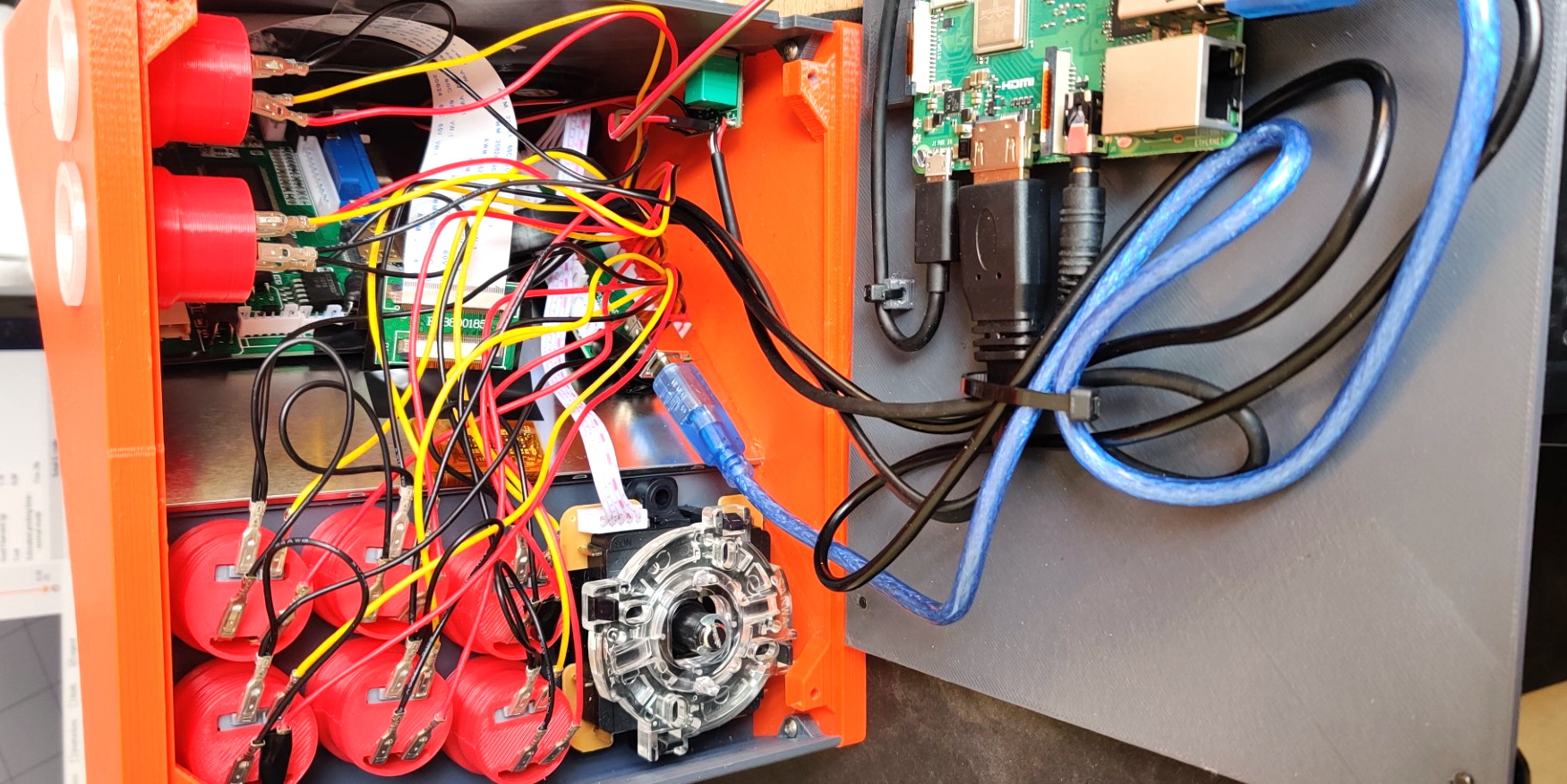
Given the squat profile of the simplyRetro, the internals are packed in a bit tighter than we’re accustomed to seeing in a arcade build. But there’s still more than enough room for the Raspberry Pi, eight inch touch screen HDMI panel, and all the controls. To keep things as neat as possible, [Gerrit] even added integrated zip tie mount points; a worthwhile CAD tip that’s certainly not limited to arcade cabinets.

[Gerrit] has included not only the STL files for this design, but also the Fusion 360 Archive should you want to make any modifications. There’s also a complete Bill of Materials, as well as detailed instructions on how to pull it all together. If you’ve ever wanted your own arcade machine but felt a bit overwhelmed about figuring out all the nuances on your own, the simplyRetro could be the project you’ve been waiting for.

Of course if you do have access to a CNC or laser cutter, then there are some designs you could produce quite a bit faster.

Accessible Controller Plays Around With Modularity

Video games are a great way to have some fun or blow off a little steam when real life becomes laughable. But stock controllers and other inputs are hardly one size fits all. Even if you have no physical issues, they can be too big, too small, or just plain uncomfortable to hold.

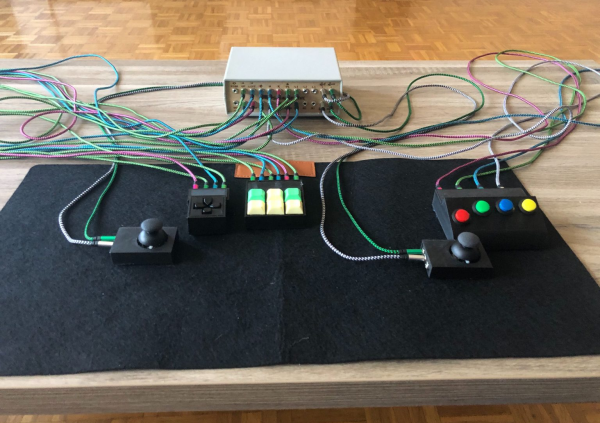
[kefcom] wrote in to give us a heads up about a modular, adaptive system he designed for anyone who is unable to operate a PS3, PS4, or PC with a standard controller. The project was inspired by Microsoft’s adaptive XBOX controller and works pretty much the same way — broken-out buttons, joysticks, and other inputs all connect to a hub that unifies them into a controller the console or computer can communicate with. The major difference is that this project is open source and can be realized much more cheaply.

If you want to give this a try, [kefcom]’s project repo has step-by-step instructions for disassembling two types of wireless controllers and converting them into hubs for modular controls. He’s looking for help with design, documentation, and finding reliable suppliers for all the parts, so let him know if you can assist.

Some players need something more accessible than just broken-out buttons and full-size joysticks. Here’s an adaptive controller that uses ridged foam rollers to actuate buttons.

The New Xbox: Just How Fast Is 12 TeraFLOPS?

Microsoft’s new Xbox Series X, formerly known as Project Scarlet, is slated for release in the holiday period of 2020. Like any new console release, it promises better graphics, more immersive gameplay, and all manner of other superlatives in the press releases. In a sharp change from previous generations, however, suddenly everybody is talking about FLOPS. Let’s dive in and explore what this means, and what bearing it has on performance.

Continue reading “The New Xbox: Just How Fast Is 12 TeraFLOPS?”