This excellent content from the Hackaday writing crew highlights recurring topics and popular series like Linux-Fu, 3D-Printering, Hackaday Links, This Week in Security, Inputs of Interest, Profiles in Science, Retrotechtacular, Ask Hackaday, Teardowns, Reviews, and many more.
The first time I was in school for electrical engineering (long story), I had a professor who had never worked in the industry. I was in her class and the topic of the day was measuring AC waveforms. We got to see some sine waves centered on zero volts and were taught that the peak voltage was the magnitude of the voltage above zero. The peak to peak was the voltage from–surprise–the top peak to the bottom peak, which was double the peak voltage. Then there was root-mean-square (RMS) voltage. For those nice sine waves, you took the peak voltage and divided by the square root of two, 1.414 or so.
You know that kid in the front of the class? They were in your class, too. Always raising their hand with some question. That kid raised his hand and asked the simple question: why do we care about RMS voltage? I was stunned when I heard the professor answer, “I think it is because it is so easy to divide by the square root of two.”
An SD card is surely not an enterprise grade storage solution, but single board computers also aren’t just toys anymore. You find them in applications far beyond the educational purpose they have emerged from, and the line between non-critical and critical applications keeps getting blurred.
Laundry notification hacks and arcade machines fail without causing harm. But how about electronic access control, or an automatic pet feeder? Would you rely on the data integrity of a plain micro SD card stuffed into a single board computer to keep your pet fed when you’re on vacation and you back in afterward? After all, SD card corruption is a well-discussed topic in the Raspberry Pi community. What can we do to keep our favorite single board computers from failing at random, and is there a better solution to the problem of storage than a stack of SD cards?
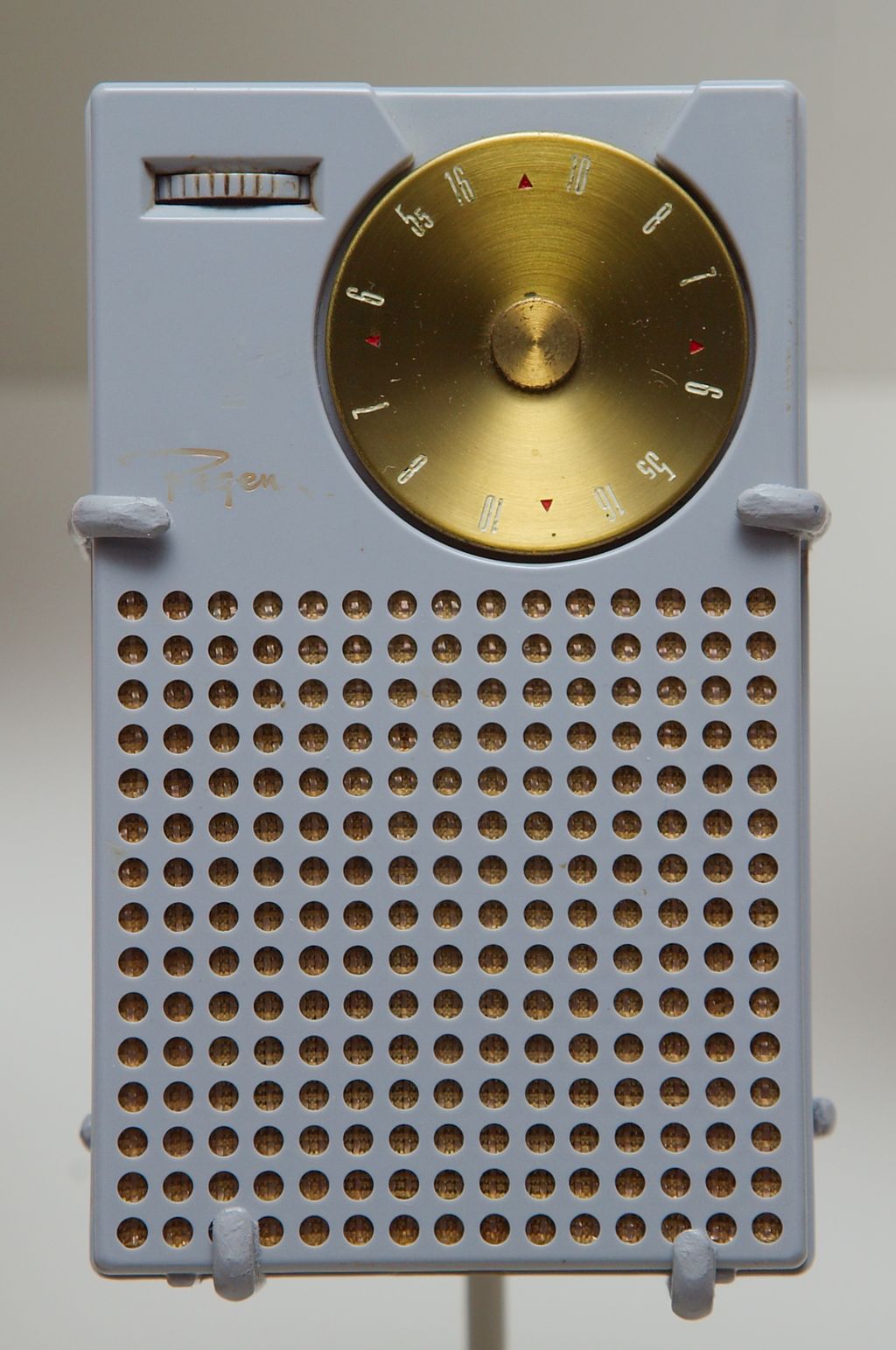
Transistors have come a long way. Like everything else electronic, they’ve become both better and cheaper. According to a recent IEEE article, a transistor cost about $8 in today’s money back in the 1960’s. Consider the Regency TR-1, the first transistor radio from TI and IDEA. In late 1954, the four-transistor device went on sale for $49.95. That doesn’t sound like much until you realize that in 1954, this was equivalent to about $441 (a new car cost about $1,700 and a copy of life magazine cost 20 cents). Even at that price, they sold about 150,000 radios.
Part of the reason the transistors cost so much was that production costs were high. But another reason is that yields were poor. In some cases, 4 out of 5 of the devices were not usable. The transistors were not that good even when they did work. The first transistors were germanium which has high leakage and worse thermal properties than silicon.
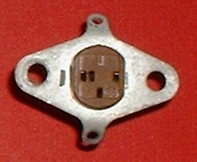
Early transistors were subject to damage from soldering, so it was common to use an alligator clip or a specific heat sink clip to prevent heat from reaching the transistor during construction. Some gear even used sockets which also allowed the quick substitution of devices, just like the tubes they replaced.
When the economics of transistors changed, it made a lot of things practical. For example, a common piece of gear used to be a transistor tester, like the Heathkit IT-121 in the video below. If you pulled an $8 part out of a socket, you’d want to test it before you spent more money on a replacement. Of course, if you had a curve tracer, that was even better because you could measure the device parameters which were probably more subject to change than a modern device.
Of course, germanium to silicon is only one improvement made over the years. The FET is a fundamentally different kind of transistor that has many desirable properties and, of course, integrating hundreds or even thousands of transistors on one integrated circuit revolutionized electronics of all types. Transistors got better. Parameters become less variable and yields increased. Maximum frequency rises and power handling capacity increases. Devices just keep getting better. And cheaper.
A Brief History of Transistors
The path from vacuum tube to the Regency TR-1 was a twisted one. Everyone knew the disadvantages of tubes: fragile, power hungry, and physically large, although smaller and lower-power tubes would start to appear towards the end of their reign. In 1925 a Canadian physicist patented a FET but failed to publicize it. Beyond that, mass production of semiconductor material was unknown at the time. A German inventor patented a similar device in 1934 that didn’t take off, either.
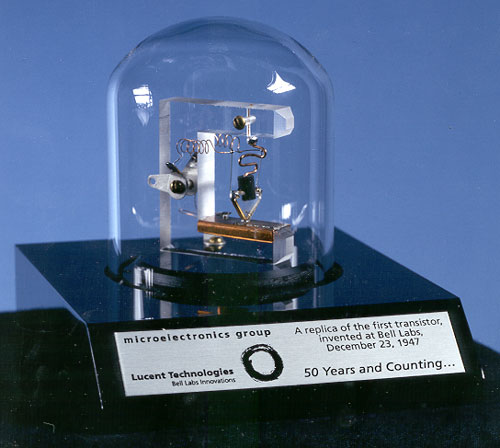
Replica of the First Transistor
Bell labs researchers worked with germanium and actually understood how to make “point contact” transistors and FETs in 1947. However, Bell’s lawyers found the earlier patents and elected to pursue the conventional transistor patent that would lead to the inventors (John Bardeen, Walter Brattain, and William Shockley) winning the Nobel prize in 1956.
Two Germans working for a Westinghouse subsidiary in Paris independently developed a point contact transistor in 1948. It would be 1954 before silicon transistors became practical. The MOSFET didn’t appear until 1959.
Of course, even these major milestones are subject to incremental improvements. The V channel for MOSFETs, for example, opened the door for FETs to be true power devices, able to switch currents required for motors and other high current devices.
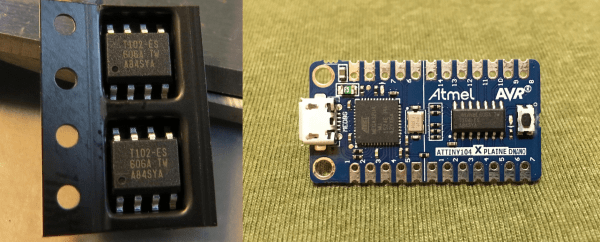
Atmel put out some new, small microcontroller chips early this year, and we’re just now starting to think about how we’d use them. The ATtiny102 and ATtiny104 (datasheet) sell for about a buck (US) and come in manageable SOIC packages with eight and fourteen pins respectively. It’s a strange chip though, with capabilities that fit somewhere between the grain-of-rice-sized ATtiny10 and the hacker-staple ATtiny25-45-85 series.
The ATtiny104 has a bunch of pins for not much money. It’s got a real hardware USART, which none of the other low-end AVRs do, and it’s capable of SPI in master mode. It has only one counter, but it’s a 16-bit counter, and it’s got the full AVR 10-bit ADC instead of the ATtiny10’s limited 8-bit ADC. The biggest limitation, that it shares with the ATtiny10, is that it has only 1 KB of program flash memory and 32 bytes (!) of RAM. You’re probably going to want to program this beast in assembler.
Read on for more reviews, and check out [kodera2t]’s video review at the end.
The Hara Arena is closing down. The Hara Arena in Dayton, Ohio is the home of Hamvention, the largest gathering of amateur radio enthusiasts in the US. I was there last May, and I can assure you, the Hara Arena has fallen into a state of disrepair. The ARRL reports hamvention will be at a new venue next year. The last scheduled event, after which there will be an auction for venue equipment and furniture, will be on August 27th. It’ll be a comic book and toy show.
Hackaday.io has a log of projects. Some might say it has too many projects. The search is great, but sometimes you just want to look at a random project. That’s the problem [Greg] solved with his Hackaday.io randomizer. It returns a random Hackaday.io project, allowing you to gawk at all the boards and resistors found within.
Primitive Technology is a YouTube channel you should watch. It’s a guy (who doesn’t talk), building everything starting with pre-stone age technology. He built a house with a heated floor, somewhat decent pottery, and this week he entered the iron age. The latest video shows him building a squirrel cage fan out of clay and bark to smelt iron. The ore was actually iron-bearing bacteria, mixed with charcoal and wood ash, and placed into a crude but accurate smelting furnace. The end result is a few bb-sized grains of iron and a lot of melted flux. That’s not much, and is certainly not an accurate portrayal of what was being done 5,000 years ago, but it does mean the Internet’s favorite guy in the woods has entered the iron age while completely skipping over bronze.
Freeside Atlanta says they’re the largest hackerspace on the east coast, and to show off all the cool goings on, they made a walk through video.
Hackaday has a retro edition. It’s a wide selection of Hackaday posts presented in a format without JavaScript, CSS, ads, or any other Web 2.0 cruft. There’s an open challenge for anyone to load the retro site with a 4004 CPU. I know it can be done, but no one has presented evidence of doing it. [Lukas] just sent in his retro submission with a Z80 single board computer displaying some of the page on seven-segment displays. It’s basically a terminal emulator connected to a laptop that does most of the work, but this is the most minimal retro submission we’ve ever received.
The first remote control for a TV was the Zenith Space Command back in the 1950’s. Space Command used sounds at ultrasonic frequencies to control the set. It wasn’t until the 1980’s and the Viewstar cable box that infrared entered the picture. Remote controls spread like wildfire. It wasn’t long before every piece of consumer electronics had one. Coffee tables were littered with the devices. It didn’t take long for universal remotes to hit the scene. [Woz] himself worked on the CL9 Core device, back in 1987. Even in today’s world of smart TV’s and the internet of things, universal remotes are still a big item. Hackers, makers, and engineers are always trying to build a device that works better for them. This week’s Hacklet is about some of the best universal and IR remote projects on Hackaday.io!
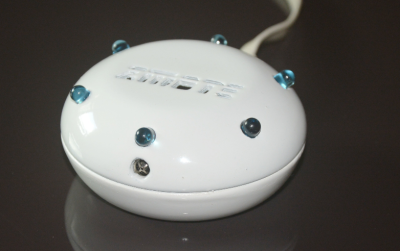
We start with [Harikrishna] and zmote. Zmote is an open source WiFi enabled, infrared, 360° remote control. That’s a mouthful. It might be easier to say it’s an ESP8266 and some IR LEDs. An ESP-01 module connects the device to WiFi and provides the 32-bit processor which runs the show. Learning functionality comes courtesy of a TSOP1738 modulated infrared receiver. The beauty of the Zmote is in the software. REST and MQTT connectivity are available. Everything is MIT licensed, and all the code is available on Github.
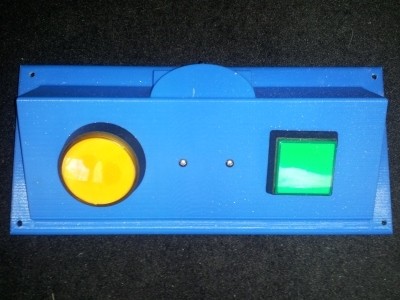
Next up is [Benjamin Kenobi] with TV Remote Control, Limited. Not everyone can operate the tiny buttons on a modern remote. [Benjamin] built this device for Easton, a special kid with a disability that impairs his motor skills. The 3D printed case holds two buttons – one for power, and one to change the channel. An Arduino Nano running [Ken Shirriff’s] IR library is the brains of the operation. The IR signal timing is hard coded for simplicity. One problem [Ben] ran into was the Nano’s high current draw, even in sleep mode. Batteries wouldn’t last a week. A simple diode circuit with a reed relay keeps the Nano shut down until Easton presses a button.
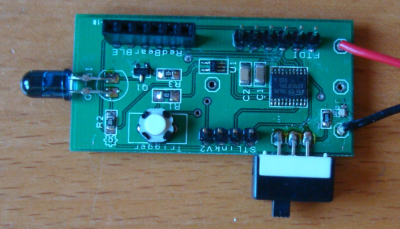
Next we have [Nevyn] with OpenIR – Infrared Remote Control. A dead DSLR remote shutter release was all the motivation [Nevyn] needed to start work on his own universal remote control. OpenIR can be connected to (and controlled by) just about anything with a UART – a PC via an FTDI cable, a Bluetooth module, even an ESP8266. The module can be programmed by entering pulse length data through a custom Windows application. The Windows app even allows the user to view the pulses graphically, like a scope. The data is stored on an EEPROM on OpenIR’s PCB. Once programmed, the OpenIR board is ready to control the world.
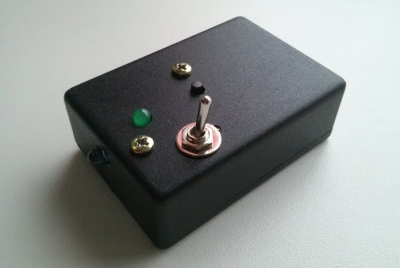
Finally, we have [facelessloser] with One button TV remote. This project may be the simplest open source remote control this side of TV-B-GONE. He wanted to build a simple remote control for his young daughter to scan between the various kids channels. A simple toggle switch turns the device on, and one button performs the rest of the magic. [Facelessloser] wanted to “move up” from an Arduino to an ATtiny85. This project became part of his ATtiny education. A custom PCB from OSH Park ties things together. A simple black project box keeps the electronics safe from tiny fingers – at least until she’s old enough to use a screwdriver.
Physics gives us the basic tools needed to understand the universe, but turning theory into something useful is how engineers make their living. Pushing on that boundary is the subject of this week’s Fail of the Week, wherein we follow the travails of making a working magnetic flowmeter (YouTube, embedded below).
Theory suggests that measuring fluid flow should be simple. After all, sticking a magnetic paddle wheel into a fluid stream and counting pulses with a reed switch or Hall sensor is pretty straightforward, right? In this case, though, [Grady] of Practical Engineering starts out with a much more complicated flow measurement modality – electromagnetic detection. He does a great job of explaining Faraday’s Law of Induction and how a fluid can be the conductor that moves through a magnetic field and has a measurable current induced in it. The current should be proportional to the velocity of the fluid, so it should be a snap to whip up a homebrew magnetic flowmeter, right? Nope – despite valiant effort, [Grady] was never able to get a usable signal out of the noise in his system.
The theory is sound, his test rig looks workable, and he’s got some pretty decent instrumentation. So where did [Grady] go wrong? Could he clean up the signal with a better instrumentation amp? What would happen if he changed the process fluid to something more conductive, like salt water? By his own admission, electrical engineering is not his strong suit – he’s a civil engineer by trade. Think you can clean up that signal? Let us know in the comments section.