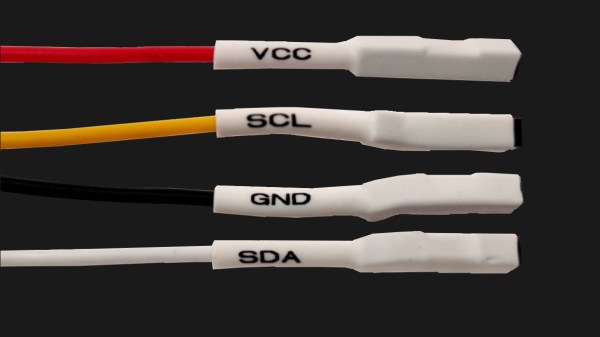
Four jumper wires with white heatshrink on them, labelled VCC, SCL, SDA and GND

The Connector Zoo: I2C Ecosystems

I2C is a wonderful interface. With four wires and only two GPIOs, you can connect a whole lot of sensors and devices – in parallel, at that! You will see I2C used basically everywhere, in every phone, laptop, desktop, and any device with more than a few ICs inside of it – and most microcontrollers have I2C support baked into their hardware. As a result, there’s a myriad of interesting and useful devices you can use I2C with. Occasionally, maker-facing companies create plug-and-play interfaces for the I2C device breakouts they produce, with standardized pinouts and connectors.

Following a standard pinout is way better than inventing your own, and your experience with inconsistent pin header pinouts on generic I2C modules from China will surely reflect that. Wouldn’t it be wonderful if you could just plug a single I2C-carrying connector into an MPU9050, MLX90614 or HMC5883L breakout you bought for a few dollars, as opposed to the usual hurdle of looking at the module’s silkscreen, soldering pin headers onto it and carefully arranging female headers onto the correct pins?

As with any standard, when it comes to I2C-on-a-connector conventions, you would correctly guess that there’s more than one, and they all have their pros and cons. There aren’t quite fifteen, but there’s definitely six-and-a-half! They’re mostly inter-compatible, and making use of them means that you can access some pretty powerful peripherals easily. Let’s start with the two ecosystems that only have minor differences, and that you’ll encounter the most! Continue reading “The Connector Zoo: I2C Ecosystems”

Ask Hackaday: Repair Café Or Not?

A huge part of the work our community does, aside from making things and doing a lot of talking about the things we’d like to make, involves repair. We have the skills to fix our own stuff when it breaks, we can fix broken stuff that other people throw out when it breaks, and we can fix broken stuff belonging to other people. As our consumer society has evolved around products designed to frustrate repairs and facilitate instead the sale of new replacements for broken items this is an essential skill to keep alive; both to escape having to incessantly replace our possessions at the whim of corporate overlords, and to fight the never-ending tide of waste.

Repair Cafés: A Good Thing

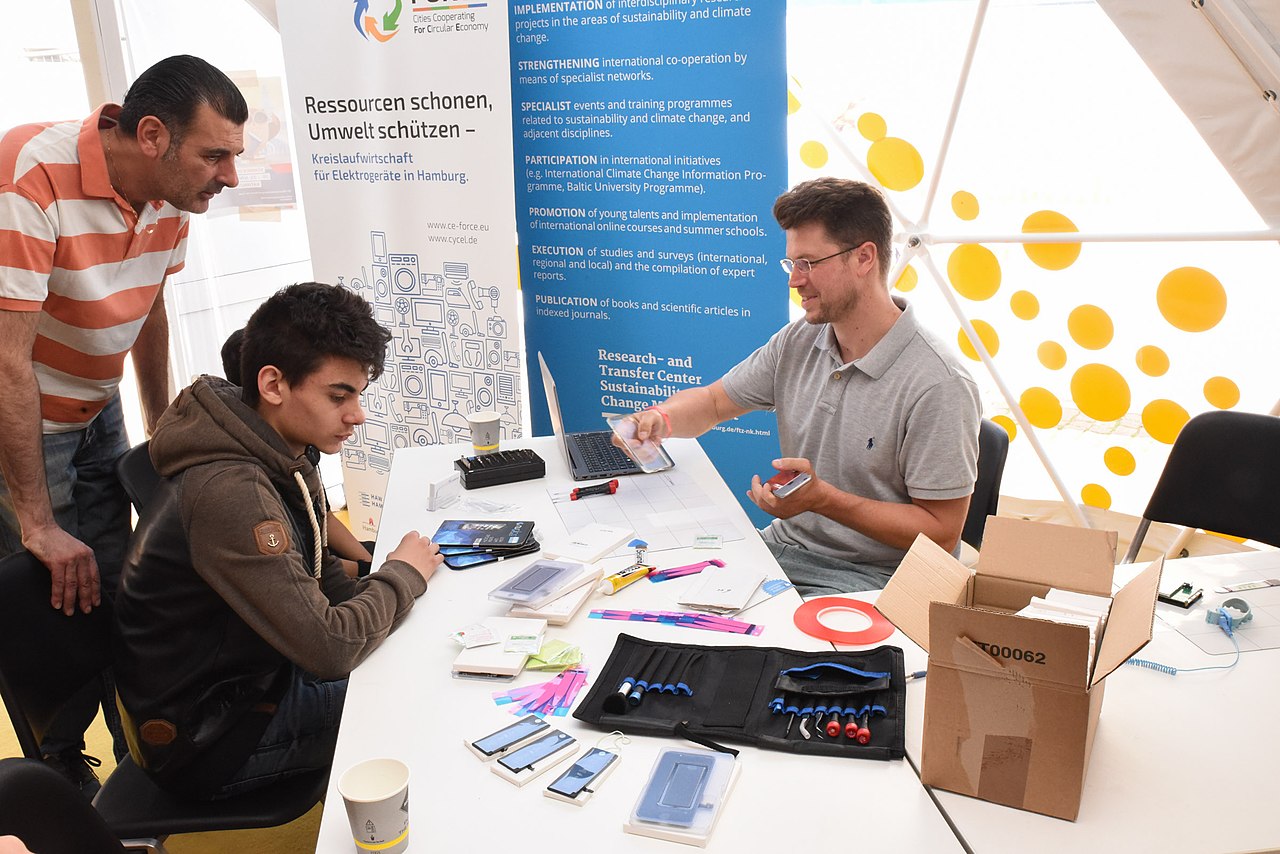
A German repair cafe
A German repair café. , Redaktion NdW, CC BY 2.0

So we repair things that are broken, for example on my bench in front of me is a formerly-broken camera I’ve given a new life, on the wall in one of my hackerspaces is a large screen TV saved from a dumpster where it lay with a broken PSU, and in another hackerspace a capsule coffee machine serves drinks through a plastic manifold held together with cable ties.

We do it for ourselves, we do it within our communities, and increasingly, we do it for the wider community at large. The Repair Café movement is one of local groups who host sessions at which they repair broken items brought in by members of the public, for free. Their work encompasses almost anything you’d find in a home, from textiles and furniture to electronics, and they are an extremely good cause that should be encouraged at all costs.

For all my admiration for the Repair Café movement though, I have chosen not to involve myself in my local one. Not because they aren’t a fine bunch of people or because they don’t do an exceptionally good job, but for a different reason. And it symbolically comes back to an afternoon over thirty years ago, when sitting in a university lab in Hull, I was taught how to wire a British mains plug. Continue reading “Ask Hackaday: Repair Café Or Not?”

Vintage Computer Festival East Raises The Bar Again

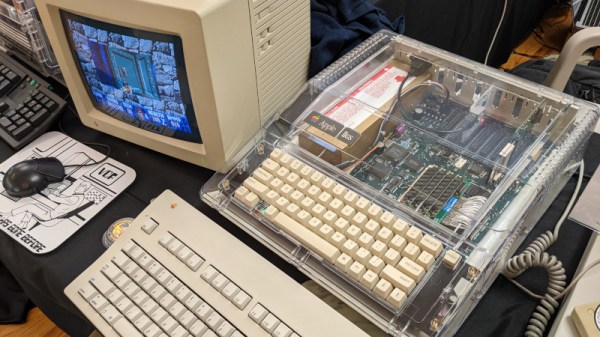
When I arrived at the InfoAge Science and History Museum for this year’s Vintage Computer Festival East, I fully expected it to be a reduced event compared to last year. After all, how could it not? Due to the schedule getting shifted around by COVID, show runner Jeffrey Brace and his team had just six months to put together an event that usually gets planned over the course of an entire year. With such a truncated preparation time, they more than deserved a little slack.

But as anyone who attended VCF East 2022 can attest, they didn’t need it. Not only did the event meet the high expectations set by last year’s Festival, it managed to exceed them. There were more workshops, more talks, more vendors, more consignment rooms, more live streams, more…well, everything. This year’s program even got a splash of glossy color compared to the grayscale handout attendees received in October. It was, by any metric you care to use, better than ever.

It does however leave me in somewhat on an unenviable position. As we’ve learned during the pandemic, a virtual representation of an event as extensive as VCF can give you a taste of what’s offered, but all the nuance is lost. Looking at pictures of somebody’s passion project can’t compare to actually meeting the person and seeing that glint of pride in their eye as they walk you through all the details.

So bear that in mind through this rundown of some of the projects that caught my eye. This isn’t  a “best of” list, and the Festival is certainly not a competition. But each attendee will invariably come away with their own handful of favorite memories, so I’ll document mine here. If you’d like to make your own memories, I’d strongly suggest making the trek out to the Jersey Shore come April 2023 for the next Vintage Computer Festival East.

Continue reading “Vintage Computer Festival East Raises The Bar Again”

EV Charging Connectors Come In Many Shapes And Sizes

Electric vehicles are now commonplace on our roads, and charging infrastructure is being built out across the world to serve them. It’s the electric equivalent of the gas station, and soon enough, they’re going to be everywhere.

However, it raises an interesting problem. Gas pumps simply pour a liquid into a hole, and have been largely standardized for quite some time. That’s not quite the case in the world of EV chargers, so let’s dive in and check out the current state of play.

AC, DC, Fast, or Slow?

Since becoming more mainstream over the past decade or so, EV technology has undergone rapid development. With most EVs still somewhat limited in range, automakers have developed ever-faster charging vehicles over the years to improve practicality. This has come through improvements to batteries, controller hardware, and software. Charging tech has evolved to the point where the latest EVs can now add hundreds of miles of range in under 20 minutes.

However, charging EVs at this pace requires huge amounts of power. Thus, automakers and industry groups have worked to develop new charging standards that can deliver high current to top vehicle batteries off as quickly as possible.

As a guide, a typical home outlet in the US can deliver 1.8 kW of power. It would take an excruciating 48 hours or more to charge a modern EV from a home socket like this.

In contrast, modern EV charge ports can carry anywhere from 2 kW up to 350 kW in some cases, and require highly specialized connectors to do so. Various standards have come about over the years as automakers look to pump more electricity into a vehicle at greater speed. Let’s take a look at the most common options out in the wild today. Continue reading “EV Charging Connectors Come In Many Shapes And Sizes”

The State Of Play In Solid State Batteries

Electric vehicles are slowly but surely snatching market share from their combustion-engined forbearers. However, range and charging speed remain major sticking points for customers, and are a prime selling point for any modern EV. Battery technology is front and center when it comes to improving these numbers.

Solid-state batteries could mark a step-change in performance in these areas, and the race to get them to market is starting to heat up. Let’s take a look at the current state of play.

Continue reading “The State Of Play In Solid State Batteries”

The Sinclair ZX Spectrum Turns 40

It’s an auspicious moment for retrocomputing fans, as it’s now four decades since the launch of the Sinclair ZX Spectrum. This budget British microcomputer was never the best of the bunch, but its runaway success and consequent huge software library made it the home computer to own in the UK. Here in 2022 it may live on only in 1980s nostalgia, but its legacy extends far beyond that as it provided an entire generation of tech-inclined youngsters with an affordable tool that would get them started on a lifetime of computing.

What Was 1982 Really Like?

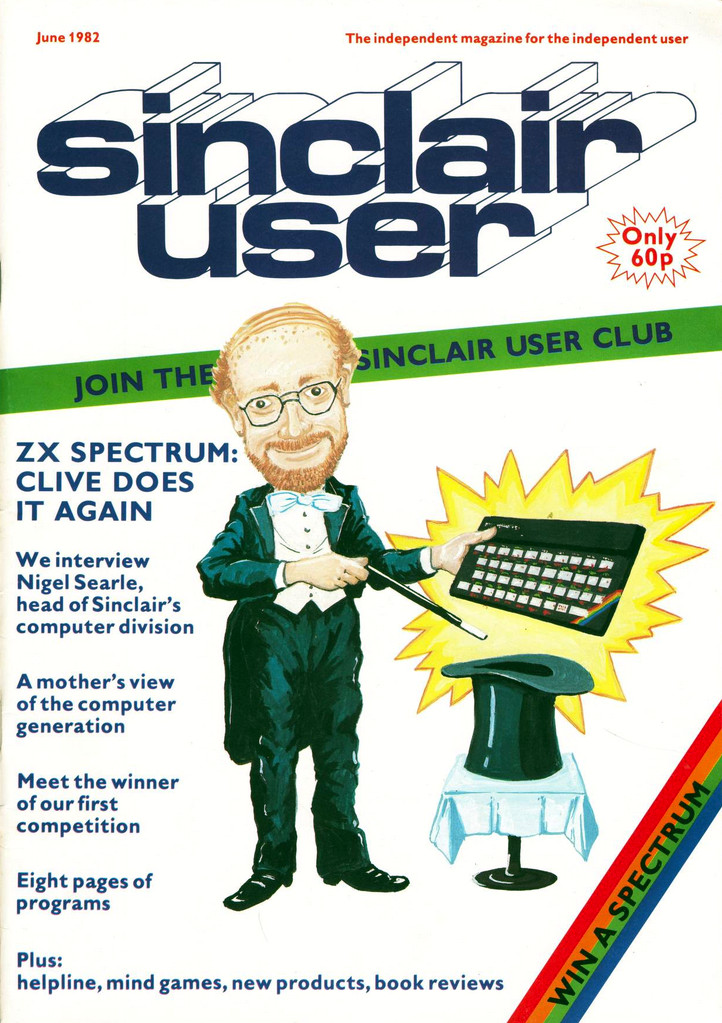
Cover of Sincalir User, Sir Clive Sinclair as a magician
Sinclair User issue 3 captures the excitement surrounding the Spectrum launch.

There’s a popular meme among retro enthusiasts that the 1980s was a riot of colour, pixel artwork, synth music, and kitschy design. The reality was of growing up amid the shabby remnants of the 1970s with occasional glimpses of an exciting ’80s future. This was especially true for a tech-inclined early teen, as at the start of 1982 the home computer market had not yet reached its full mass-market potential. There were plenty of machines on offer but the exciting ones were the sole preserve of adults or kids with rich parents. Budget machines such as Sinclair’s ZX81 could give a taste of what was possible, but their technical limitations would soon become obvious to the experimenter.

1982 was going to change all that, with great excitement surrounding three machines. Here in the UK, the Acorn BBC Micro had been launched in December ’81, the Commodore 64 at the start of ’82, and here was Sinclair coming along with their answer in the form of first the rumour of a ZX82, and then the reality in the form of the Spectrum.

This new breed of machines all had a respectable quantity of memory, high-res (for the time!) colour graphics, and most importantly, sound. The BBC Micro was destined to be the school computer of choice and the 64 was the one everybody wanted, but the Spectrum was the machine you could reasonably expect to get if you managed to persuade your parents how educational it was going to be, because it was the cheapest at £125 (£470 in today’s money, or about $615). Continue reading “The Sinclair ZX Spectrum Turns 40”

Scientists Are Now Declaring New Species Via Photos And Video

Identifying new species is key to the work of zoologists around the world. It’s an exciting part of research into the natural world, and being the first to discover a new species often grants a scientists naming rights that can create a legacy of one’s work that lasts long into the future.

Traditionally, the work of taxonomy involved capturing and preserving an example of the new species. This is such that it could be classified properly and studied in detail by scientists working now and in the future. However, times are changing, and scientists are beginning to identify new species on the basis of videos and photos instead.

Continue reading “Scientists Are Now Declaring New Species Via Photos And Video”