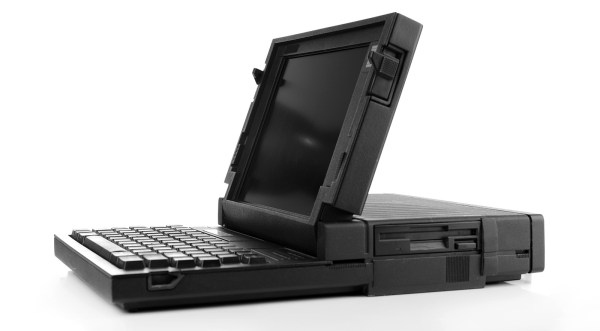
DooM Retrospective: 25 Years Of Metal

Metal is many things. A material hard and coarse in nature that by forging it in fire becomes sharp enough to cut through anything in its path. The music that bares its namesake is equally cutting and exudes an unyielding attitude that seeks to separate the posers from the true acolytes. Metal is the sentiment of not blindly following the rules, a path less taken to the darker side of the street. In videogame form, there is nothing more metal than Doom.

The creators of Doom, id Software, were always hellbent on changing the perception of PC gaming in the 1990s. Games of the time were rigid and slow in comparison to their console counterparts. The graphical fidelity was technically superior on PC, but no other developer could nail movement in a game like id. The team had made a name for themselves with their Commander Keen series (which came about after a failed Super Mario Bros. 3 PC demo) along with the genre defining Wolfenstein 3D, but nothing topped Doom. In an era that was already soaking with “tude”, Doom established an identity all its own. The moody lighting, the grotesque monster designs, the signature push forward combat, and all the MIDI guitars a Soundblaster could handle; Doom looked and felt a cut above everything else in 1993.

In December of that year, Senators Joe Lieberman and Herb Kohl held a hearing to publicly condemn the inclusion of violence in videogames sold in America. The bulk of the arguments sought to portray the videogame industry and its developers as deviants seeking to corrupt the nation’s youth. Id Software responded as if to raise the largest middle finger imaginable, by releasing Doom to the world the very next day. A quarter of a century later people are still talking about it.

Continue reading “DooM Retrospective: 25 Years Of Metal”

The Hydrogen Economy May Be Coming Through Your Cooker

About an hour’s drive from where this is being written there is a car plant, and as you drive past its entrance you may notice an unobtrusive sign and an extra lane with the cryptic road marking “H2”. The factory is the Honda plant at Swindon, it produces some of Europe’s supply of Civics, and the lane on the road leads to one of the UK or indeed the world’s very few public hydrogen filling stations. Honda are one of a select group of manufacturers who have placed a bet on a future for environmentally sustainable motoring that lies with hydrogen fuel cell technologies.

The hydrogen-powered Honda Clarity FCV, a car most of us will probably never see. Lcaa9 [CC BY-SA 4.0].
The trouble for Honda and the others is that if you have seen a Honda Clarity FCV or indeed any hydrogen powered car on the road anywhere in the world then you are among a relatively small group of people. Without a comprehensive network of hydrogen filling stations such as the one in Swindon there is little incentive to buy a hydrogen car, and of course without the cars on the road there is little incentive for the fuel companies to invest in hydrogen generating infrastructure such as the ITM Power electrolysis units that seem to drive so many of the existing installations. By comparison an electric car is a much safer bet; while the charging point network doesn’t rival the gasoline filling station network there are enough to service the electric motorist and a slow charge can be found from most domestic supplies. Continue reading “The Hydrogen Economy May Be Coming Through Your Cooker”

RISC-V Will Stop Hackers Dead From Getting Into Your Computer

The greatest hardware hacks of all time were simply the result of finding software keys in memory. The AACS encryption debacle — the 09 F9 key that allowed us to decrypt HD DVDs — was the result of encryption keys just sitting in main memory, where it could be read by any other program. DeCSS, the hack that gave us all access to DVDs was again the result of encryption keys sitting out in the open.

Because encryption doesn’t work if your keys are just sitting out in the open, system designers have come up with ingenious solutions to prevent evil hackers form accessing these keys. One of the best solutions is the hardware enclave, a tiny bit of silicon that protects keys and other bits of information. Apple has an entire line of chips, Intel has hardware extensions, and all of these are black box solutions. They do work, but we have no idea if there are any vulnerabilities. If you can’t study it, it’s just an article of faith that these hardware enclaves will keep working.

Now, there might be another option. RISC-V researchers are busy creating an Open Source hardware enclave. This is an Open Source project to build secure hardware enclaves to store cryptographic keys and other secret information, and they’re doing it in a way that can be accessed and studied. Trust but verify, yes, and that’s why this is the most innovative hardware development in the last decade.

Continue reading “RISC-V Will Stop Hackers Dead From Getting Into Your Computer”

ABS: Three Plastics In One

It would be really hard to go through a typical day in the developed world without running across something made from ABS plastic. It’s literally all over the place, from toothbrush handles to refrigerator interiors to car dashboards to computer keyboards. Many houses are plumbed with pipes extruded from ABS, and it lives in rolls next to millions of 3D-printers, loved and hated by those who use and misuse it. And in the form of LEGO bricks, it lurks on carpets in the dark rooms of children around the world, ready to puncture the bare feet of their parents.

ABS is so ubiquitous that it makes sense to take a look at this material in terms of its chemistry and its properties. As we’ll see, ABS isn’t just a single plastic, but a mixture that takes the best properties of its components to create one of the most versatile plastics in the world.

Continue reading “ABS: Three Plastics In One”

Hackaday Visits The Electric City

Much to the chagrin of local historians, the city of Scranton, Pennsylvania is today best known as the setting for the American version of The Office. But while the exploits of Dunder Mifflin’s best and brightest might make for a good Netflix binge, there’s a lot more to the historic city than the fictional paper company. From its beginnings as a major supplier of anthracite coal to the introduction of America’s first electrically operated trolley system on its streets, Scranton earned its nickname “The Electric City” by being a major technological hub from the Industrial Revolution through to the Second World War.

Today, the mines and furnaces of Scranton lie silent but not forgotten. In the 1980’s, the city started turning what remained of their industrial sites into historic landmarks and museums with the help of State and Federal grants. I recently got a chance to tour some of these locations, and came away very impressed. They’re an exceptional look into the early technology and processes which helped turn America into an industrial juggernaut.

While no substitute for visiting these museums and parks for yourself, hopefully the following images and descriptions will give you an idea of what kind of attractions await visitors to the modern day Electric City.

Continue reading “Hackaday Visits The Electric City”

Why Is Continuous Glucose Monitoring So Hard?

Everyone starts their day with a routine, and like most people these days, mine starts by checking my phone. But where most people look for the weather update, local traffic, or even check Twitter or Facebook, I use my phone to peer an inch inside my daughter’s abdomen. There, a tiny electrochemical sensor continuously samples the fluid between her cells, measuring the concentration of glucose so that we can control the amount of insulin she’s receiving through her insulin pump.

Type 1 diabetes is a nasty disease, usually sprung on the victim early in life and making every day a series of medical procedures – calculating the correct amount of insulin to use for each morsel of food consumed, dealing with the inevitable high and low blood glucose readings, and pinprick after pinprick to test the blood. Continuous glucose monitoring (CGM) has been a godsend to us and millions of diabetic families, as it gives us the freedom to let our kids be kids and go on sleepovers and have one more slice of pizza without turning it into a major project. Plus, good control of blood glucose means less chance of the dire consequences of diabetes later in life, like blindness, heart disease, and amputations. And I have to say I think it’s pretty neat that I have telemetry on my child; we like to call her our “cyborg kid.”

But for all the benefits of CGM, it’s not without its downsides. It’s wickedly expensive in terms of consumables and electronics, it requires an invasive procedure to place sensors, and even in this age of tiny electronics, it’s still comparatively bulky. It seems like we should be a lot further along with the technology than we are, but as it turns out, CGM is actually pretty hard to do, and there are some pretty solid reasons why the technology seems stuck.

Continue reading “Why Is Continuous Glucose Monitoring So Hard?”

Interstellar 8-Track: The Not-So-Low-Tech Data Recorders Of Voyager

On the outside chance that we ever encounter a space probe from an alien civilization, the degree to which the world will change cannot be overestimated. Not only will it prove that we’re not alone, or more likely weren’t, depending on how long said probe has been traveling through space, but we’ll have a bonanza of super-cool new technology to analyze. Just think of the fancy alloys, the advanced biomimetic thingamajigs, the poly-godknowswhat composites. We’ll take a huge leap forward by mimicking the alien technology; the mind boggles.

Sadly, we won’t be returning the favor. If aliens ever snag one of our interstellar envoys, like one of the Voyager spacecraft, they’ll see that we sent them some really old school stuff. While one team of alien researchers will be puzzling over why we’d encode images on a phonograph record, another team will be tearing apart – an 8-track tape recorder?

Continue reading “Interstellar 8-Track: The Not-So-Low-Tech Data Recorders Of Voyager”