Reflection On A Decade Of Hackerspace Expansion

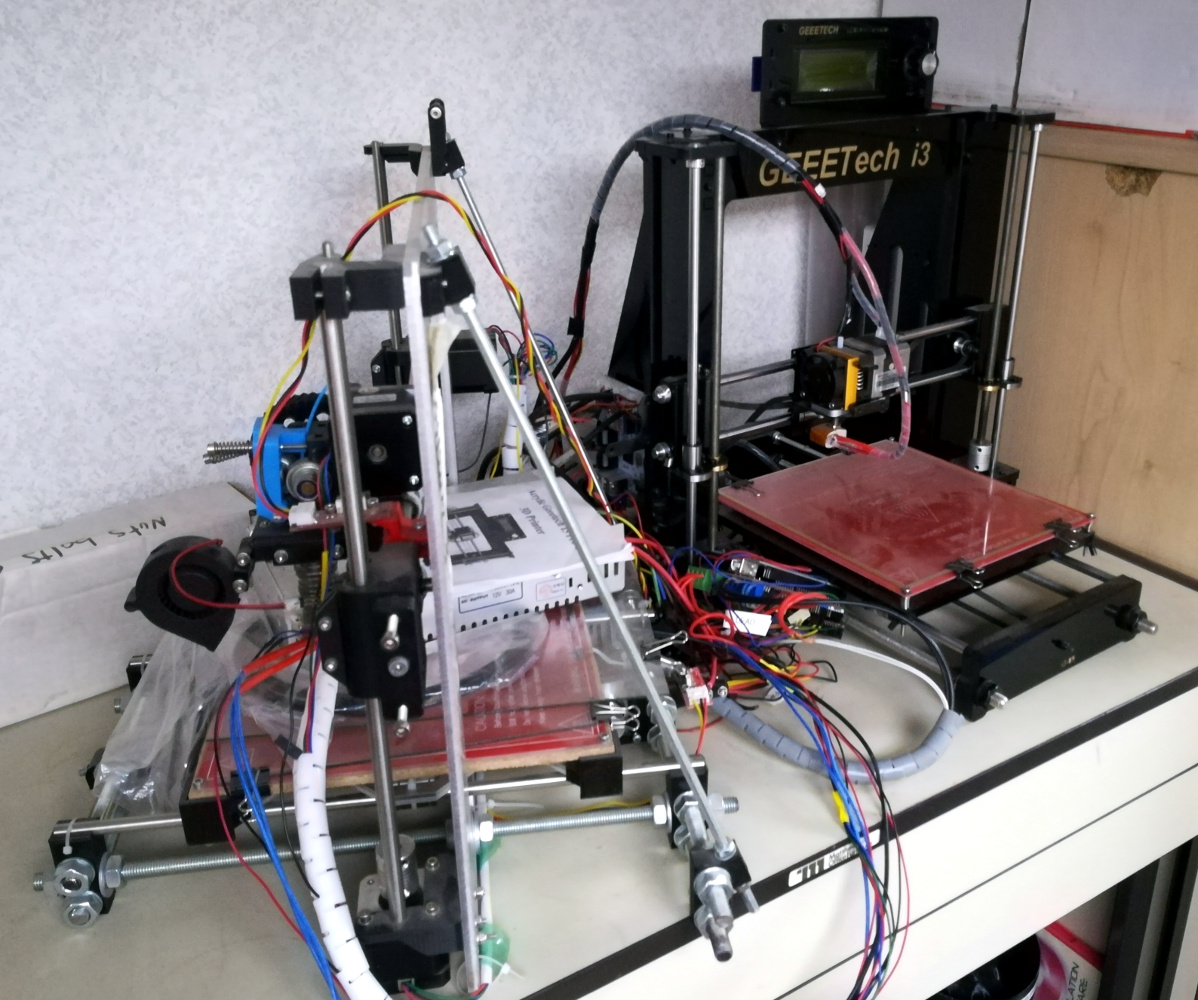
A few days ago I was invited to a party. Party invites are always good, and if I can make it to this one I’ll definitely go. It’s from a continental European hackerspace, and it’s for their tenth birthday party. As I spent a while checking ferries and flights it struck me, a lot of the spaces in my sphere are about a decade old. I went to London Hackspace’s 10th earlier in the year, and a host of other British hackerspaces aren’t far behind. Something tells me I’ll be knocking back the Club Mate and listening to EDM of some form at more than one such party in the coming year.

For most of the decade since I found the then-recently-established mailing list of my local hackerspace I’ve spent a lot of my time involved in more than one space. I’ve been a hackerspace director, a member, and many roles in between and I’ve seen them in both good times and bad ones. Perhaps it’s time to sit back and take stock of that decade and ask a few questions about hackerspaces. How have they fared, what state are they in now, and where are they going?

Continue reading “Reflection On A Decade Of Hackerspace Expansion”

The Story Of The Quickening: Mercurial Metal

Of all known metals, mercury is probably one of the most famous, if only for its lustrous, liquid form at room temperature. Over the centuries, it has been commonly used in a wide variety of applications, including industrial chemical processes, in cosmetics, for telescope mirrors, thermometers, fluorescent lamps, dental fillings, bearings, batteries, switches and most recently in atomic clocks.

Though hardly free from the controversy often surrounding a toxic heavy metal, it’s hard to argue the myriad ways in which mercury has played a positive role in humanity’s technological progress and scientific discoveries. This article will focus both on its historical, current, and possible future uses, as well as the darker side of this fascinating metal.

Continue reading “The Story Of The Quickening: Mercurial Metal”

Patch, Or Your Solid State Drives Roll Over And Die

Expiration dates for computer drives? That’s what a line of HP solid-state drives are facing as the variable for their uptime counter is running out. When it does, the drive “expires” and, well, no more data storage for you!

There are a series of stages in the evolution of a software developer as they master their art, and one of those stages comes in understanding that while they may have a handle on the abstracted world presented by their development environment they perhaps haven’t considered the moments in which the real computer that lives behind it intrudes. Think of the first time you saw an SQL injection attack on a website, for example, or the moment you realised that a variable type is linked to the physical constraints of the number of memory locations it has reserved for it. So people who write software surround themselves with an armoury of things they watch out for as they code, and thus endeavour to produce software less likely to break. Firmly in that arena is the size of the variables you use and what will happen when that limit is reached.

Your Drive Is Good For About 3 Years And 9 Months

Sometimes though even developers that should know better get it wrong, and this week has brought an unfortunate example for the enterprise wing of the hardware giant HP. Their manufacturer has notified them that certain models of solid-state disk drives supplied in enterprise storage systems contain an unfortunate bug, in which they stop working after 32,768 hours of uptime. That’s a familiar number to anyone working with base-2 numbers and hints at a 16-bit signed integer in use to log the hours of uptime. When it rolls over the value will then be negative and, rather than the drive believing itself to be in a renewed flush of youth, it will instead stop working.

Egg on the faces of the storage company then, and an urgently-released patch. We suspect that if you own a stack of these drives you will already know about the issue and be nervously pacing the racks of your data centre.

Continue reading “Patch, Or Your Solid State Drives Roll Over And Die”

Can You Store Renewable Energy In A Big Pile Of Gravel?

As the world grapples with transitioning away from fossil fuels, engineers are hard at work to integrate new types of generation into the power grid. There’s plenty of challenges, particularly around the intermittent nature of many renewable energy sources. Energy storage projects are key to keeping the lights on round the clock, even when the wind isn’t blowing and the sun isn’t shining.

Conventional grid-level energy storage has long made use of pumped hydro installations where water is pumped uphill to a storage reservoir where it can later be used to run a generator. More recently, batteries are being used to do the job. When you consider the cost of these installations and their storage capacities, there is a gap between batteries and pumped hydro. A recently published whitepaper proposes Mountain Gravity Energy Storage — gravity-based energy storage using sand or gravel in mountainous areas — is the technology that can bridge the gap.

Continue reading “Can You Store Renewable Energy In A Big Pile Of Gravel?”

Jonas Salk, Virologist And Vaccination Vanguard

In the early 1950s, the only thing scarier than the threat of nuclear war was the annual return of polio — an easily-spread, incurable disease that causes nerve damage, paralysis, and sometimes death. At the first sign of an outbreak, public hot spots like theaters and swimming pools would close up immediately.

One of the worst polio epidemics in the United States struck in 1952, a few years into the postwar baby boom. Polio is more likely to infect children than adults, so the race to create a vaccine reached a fever pitch.

Most researchers were looking into live-virus vaccines, which had worked nicely for smallpox and rabies and become the standard approach. But Jonas Salk, a medical researcher and budding virologist, was keen on the idea of safer, killed-virus vaccines. He believed the same principle would work for polio, and he was right. Within a few years of developing his vaccine, the number of polio cases in the United States dropped from ~29,000 in 1955 to less than 6,000 in 1957. By 1979, polio had been eradicated in the US.

Jonas Salk is one of science’s folk heroes. The polio vaccine was actually his sophomore effort — he and Thomas Francis developed the first influenza vaccine in the 1940s. And he didn’t stop with polio, either. Toward the end of his life, Salk was working on an AIDS vaccine.

Continue reading “Jonas Salk, Virologist And Vaccination Vanguard”

How To Get Into Cars: Choosing Your First Project Car

The automobile is a wonderous invention, perhaps one of the most transformative of the 20th century. They’re machines that often inspire an all-consuming passion, capturing the heart with sights, sounds, and smells. However, for those who grew up isolated from car culture, it can be difficult to know how to approach cars as a hobby. If this sounds like you, fear not – this article is a crash course into getting your feet wet in the world of horsepower.

So You Like Cars, Eh?

Project cars let you do things that you’d never dare attempt in a daily.

The first step to becoming a true gearhead is identifying your specific passion. Car culture is a broad church, and what excites one enthusiast can be boring or even repulsive to another. Oftentimes, the interest can be spawned by a fond memory of a family member’s special ride, or a trip to a motor race during childhood.

Knowing what kind of cars you like is key to your journey. You might fall in love with classic American muscle and drag racing, or always fancied yourself in the seat of a tweaked-out tuner car a la The Fast And The Furious. Movies, posters, magazines, and your local car shows are a great way to figure out what excites you about cars. Once you’ve got an idea of what you like, it’s time to start thinking about picking out your first project car. Continue reading “How To Get Into Cars: Choosing Your First Project Car”

The Young Engineers Guide To University Capstone Projects

Engineering degrees are as wide and varied as the potential careers on offer out in the real world. There’s plenty of maths to learn, and a cavalcade of tough topics, from thermodynamics to fluid mechanics. However, the real challenge is the capstone project. Generally taking place in the senior year of a four-year degree, it’s a chance for students to apply everything they’ve learned on a real-world engineering project.

Known for endless late nights and the gruelling effort required, it’s an challenge that is revered beforehand, and boasted about after the fact. During the project, everyone is usually far too busy to talk about it. My experience was very much along these lines, when I undertook the Submarine That Can Fly project back in 2012.  The project taught me a lot about engineering, in a way that solving problems out of textbooks never could. What follows are some of the lessons I picked up along the way. Continue reading “The Young Engineers Guide To University Capstone Projects”