Tony Brooker And Autocode – The First High-level Language

The field of computer science has undeniably changed the world for virtually every single person by now. Certainly for you as Hackaday reader, but also for everyone around you, whether they’re working in the field themselves, or are simply enjoying the fruits of convenience it bears. What was once a highly specialized niche field for a few chosen people has since grown into a discipline that not only created one of the biggest industry in modern times, but also revolutionized every other industry, some a few times over.

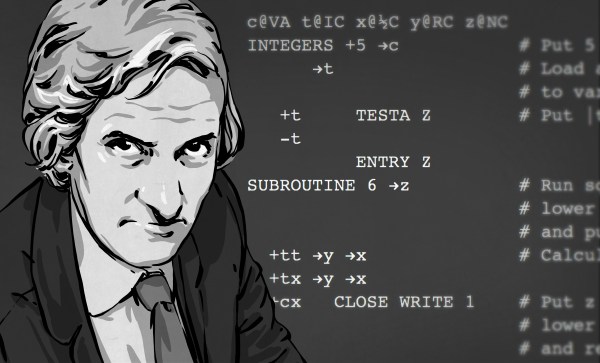
The fascinating part about all this is the relatively short time span it took to get here, and with that the privilege to live in an era where some of the pioneers and innovators, the proverbial giants whose shoulders every one of us is standing on, are still among us. Sadly, one of them, [Tony Brooker], a pioneer of the early programming language concept known as Autocode, passed away in November. Reaching the remarkable age of 94, the truly sad part however is that this might be the first time you hear his name, and there’s a fair chance you never heard of Autocode either.

But Autocode was probably the first high-level computer language, and as such played a fundamental role in the development of whatever you’re coding in today. So to honor the memory of [Tony Brooker], let’s remember the work he did with Autocode, and the leap in computer science history that it represented.

Continue reading “Tony Brooker And Autocode – The First High-level Language”

Ask Hackaday: How Do You Keep The 3D Printer From Becoming EWaste

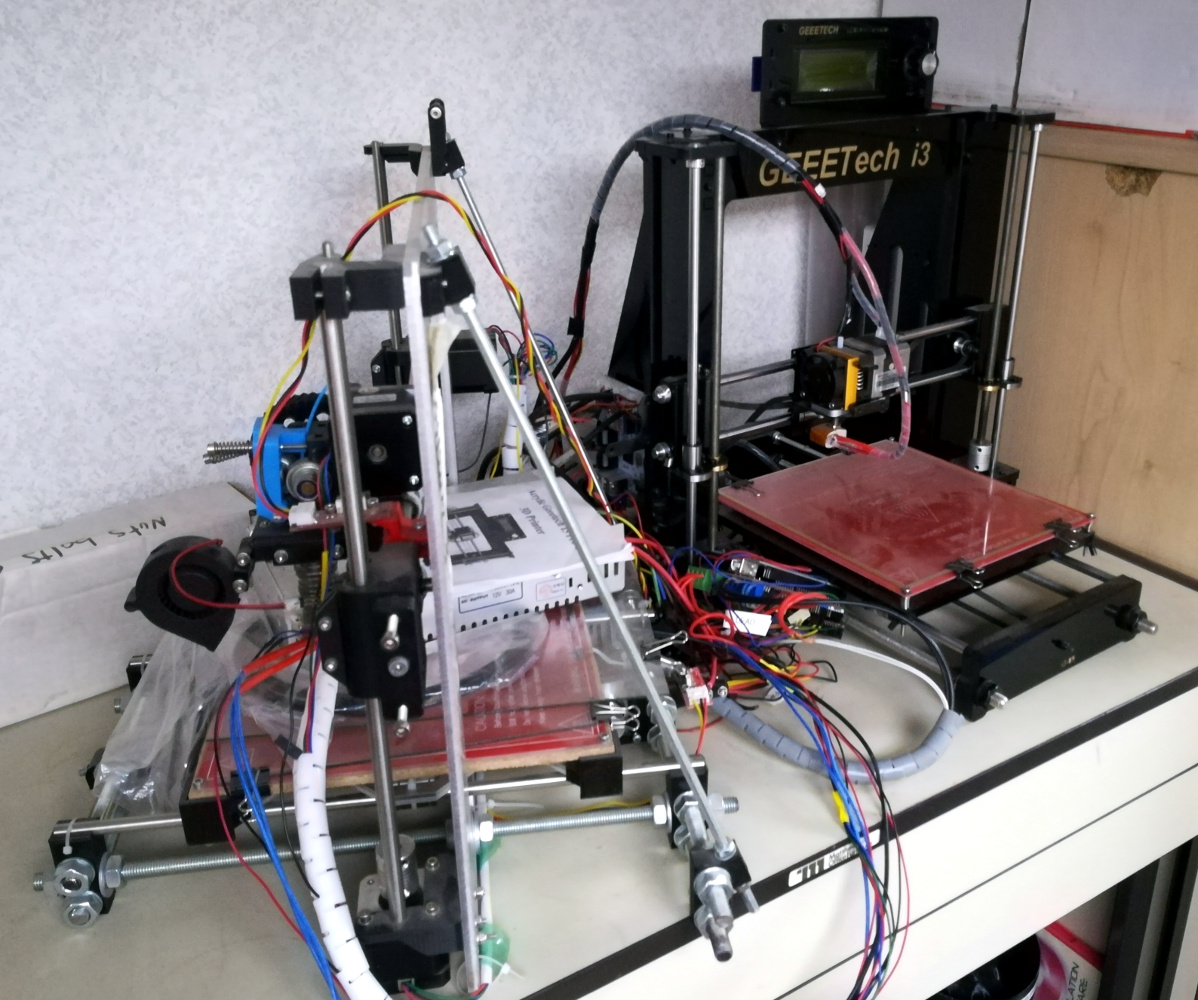
One thing we sometimes forget in our community is that many of the tecniques and machines that we take for granted are still something close to black magic for many outsiders. Here’s a tip: leave a 3D printer running next time you take a group of visitors round a hackerspace, and watch their reaction as a Benchy slowly emerges from the moving extruder. To us it’s part of the scenery, but to them it’s impossibly futuristic and their minds are blown.

Just because something says it's a Prusa i3, doesn't mean it is a Prusa i3.
Just because something says it’s a Prusa i3, doesn’t mean it is a Prusa i3.

Nearly 15 years after the dawn of the RepRap project we have seen a huge advancement in the capabilities of affordable 3D printers, and now a relatively low three-figure sum will secure a machine from China that will churn out prints whose quality would amaze those early builders. We’ve reached the point in our community at which many people are on their third or fourth printer, and this has brought with it an unexpected side-effect. Where once a hackerspace might have had a single highly prized 3D printer, now it’s not unusual to find a pile of surplus older printers on a shelf. My hackerspaces both have several, and it’s a sight I’ve frequently seen on my travels around others. Perhaps it’s a sign of a technology maturing when it becomes ewaste, and thus it seems affordable 3D printing has matured. Continue reading “Ask Hackaday: How Do You Keep The 3D Printer From Becoming EWaste”

Happy 50th Birthday To All You Epoch Birthers

Good morning everyone, and what a lovely start to the new year it is, because it’s your birthday! Happy birthday, it’s your 50th! What’s that you say, you aren’t 50 today? (Looks…) That’s what all these internet databases say, because you’ve spent the last decade or so putting 1970-01-01 as your birth date into every online form that doesn’t really need to know it!

It’s been a staple for a subset of our community for years, to put the UNIX epoch, January 1st 1970, into web forms as a birth date. There are even rumours that some sites now won’t accept that date as a birthday, such is the volume of false entries they have with that date. It’s worth taking a minute though to consider UNIX time, some of its history and how its storage has changed over the years.

Continue reading “Happy 50th Birthday To All You Epoch Birthers”

Linux Fu: Leaning Down With Exec

Shell scripting is handy and with a shell like bash it is very capable, too. However, shell scripting isn’t always very efficient. Think about it. If you run grep or tr or sort to do some operation in a shell script, you are spawning a whole new process. That takes time and resources. But there are some answers to reducing — but not eliminating — the problem.

Have you ever written a program like this (in any language, but I’ll use C):

int foo(void)
{
  ...
  bar();

}

You hope the compiler doesn’t write assembly code like this:

_foo: 
....

      call _bar
      ret

Most optimizers should pick up on the fact that you can convert a call like this to a jump and let the ret statement in _bar return to foo’s caller. However, shell scripts are not that smart. If you have a shell script called MungeData and it calls another program or shell script called PostProcess on its last line, then you will have at one time three processes in play: your original shell, the shell running MungeData, and either the PostProcess program or a shell running the script. Not to mention, the processes to do things inside post process. So what do you do?

Continue reading “Linux Fu: Leaning Down With Exec”

Parallel Pis For Production Programming; Cutting Minutes And Dollars Off Of Assembly

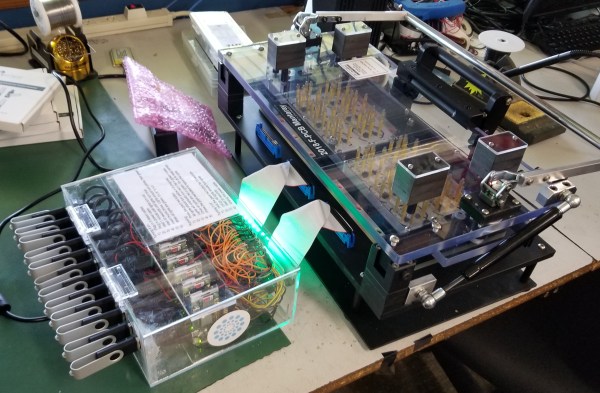
Assembly lines for electronics products are complicated beasts, often composed of many custom tools and fixtures. Typically a microcontroller must be programmed with firmware, and the circuit board tested before assembly into the enclosure, followed by functional testing afterwards before putting it in a box. These test platforms can be very expensive, easily into the tens of thousands of dollars. Instead, this project uses a set of 12 Raspberry Pi Zero Ws in parallel to program, test, and configure up to 12 units at once before moving on to the next stage in assembly.

Continue reading “Parallel Pis For Production Programming; Cutting Minutes And Dollars Off Of Assembly”

2019: As The Hardware World Turns

Well, this is it. The end of the decade. In a few days the 2010s will be behind us, and a lot of very smug people will start making jokes on social media about how we’re back in the “Roaring 20s” again. Only this time around there’s a lot more plastic, and drastically less bathtub gin. It’s still unclear as to how much jazz will be involved.

Around this time we always say the same thing, but once again it bears repeating: it’s been a fantastic year for Hackaday. Of course, we had our usual honor of featuring literally thousands of incredible creations from the hacking and making community. But beyond that, we also bore witness to some fascinating tech trends, moments that could legitimately be called historic, and a fair number of blunders which won’t soon be forgotten. In fact, this year we’ve covered a wider breadth of topics than ever before, and judging by the record setting numbers we’ve seen in response, it seems you’ve been just as excited to read it as we were to write it.

To close out the year, let’s take a look at a few of the most popular and interesting stories of 2019. It’s been a wild ride, and we can’t wait to do it all over again in 2020.

Continue reading “2019: As The Hardware World Turns”

Russia’s Newest Weather Satellite May Have Been Killed By Space Junk

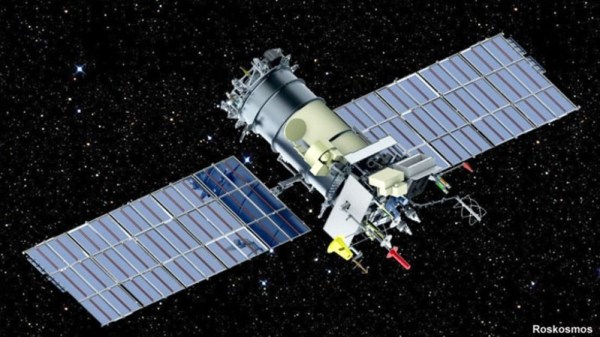
For humans and satellites alike, making a living in space is hard. First, there’s the problem of surviving the brief but energetic and failure-prone ride there, after which you get to alternately roast and freeze as you zip around the planet at 20 times the speed of sound. The latter fact is made all the more dangerous by the swarm of space debris, both natural and man-made, that whizzes away up there along with you, waiting to cause an accident.

One such accident has apparently led to the early demise of a Russian weather satellite. Just a few months after launch, Meteor-M 2-2 suffered a sudden orbital anomaly (link to Russian story; English translation). Analysis of the data makes it pretty clear what happened: the satellite was struck by something, and despite some ground-controller heroics which appear to have stabilized the spacecraft, the odds are that Meteor-M 2-2 will eventually succumb to its wounds.

Continue reading “Russia’s Newest Weather Satellite May Have Been Killed By Space Junk”