Federico Faggin: The Real Silicon Man

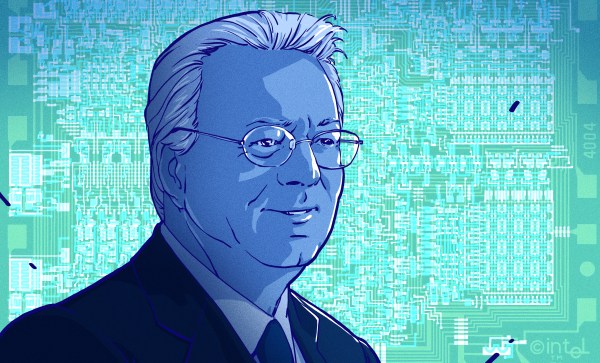
While doing research for our articles about inventing the integrated circuit, the calculator, and the microprocessor, one name kept popping which was new to me, Federico Faggin. Yet this was a name I should have known just as well as his famous contemporaries Kilby, Noyce, and Moore.

Faggin seems to have been at the heart of many of the early advances in microprocessors. He played a big part in the development of MOS processors during the transition from TTL to CMOS. He was co-creator of the first commercially available processor, the 4004, as well as the 8080. And he was a co-founder of Zilog, which brought out the much-loved Z80 CPU. From there he moved on to neural networking chips, image sensors, and is active today in the scientific study of consciousness. It’s time then that we had a closer look at a man who’s very core must surely be made of silicon.

Continue reading “Federico Faggin: The Real Silicon Man”

What Is Our Martian Quarantine Protocol?

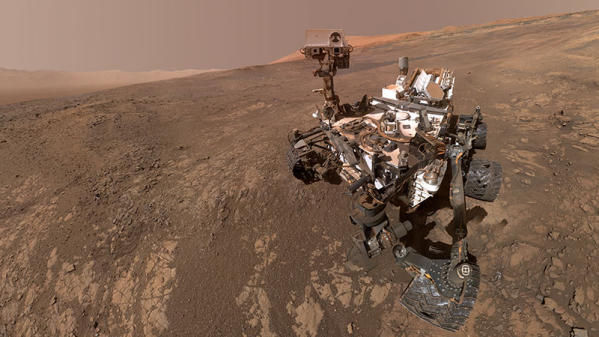
If you somehow haven’t read or watched War of the Worlds, here’s a spoiler alert. The Martians are brought down by the common cold. You can argue if alien biology would be susceptible to human pathogens, but if they were, it wouldn’t be surprising if aliens had little defense against our bugs. The worrisome part of that is the reverse. Could an astronaut or a space probe bring back something that would ravage the Earth with some disease? This is not science fiction, it is both a historically serious question and one we’ll face in the near future. If we send people to Mars are they going to come back with something harmful?

A Bit of News: Methane Gas Fluctuations on Mars

What got me thinking about this was the mounting evidence that there could be life on Mars. Not a little green man with a death ray, but perhaps microbe-like life forms. In a recent press release, NASA revealed that they not only found old organic material in rocks, but they also found that methane gas is present on Mars and the amount varies based on the season with more methane occurring in the summer months. There’s some dispute about possible inorganic reasons for this, but it is at least possible that the variation is due to increased biological activity during the summer.

Continue reading “What Is Our Martian Quarantine Protocol?”

Buttery Smooth Fades With The Power Of HSV

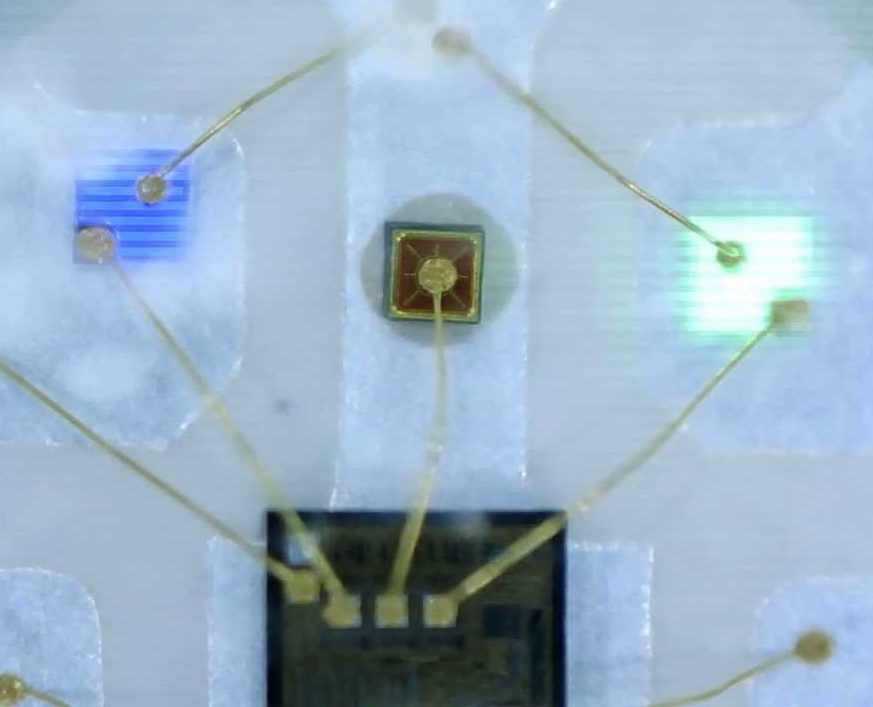
In firmware-land we usually refer to colors using RGB. This is intuitively pleasing with a little background on color theory and an understanding of how multicolor LEDs work. Most of the colorful LEDs we are use not actually a single diode. They are red, green, and blue diodes shoved together in tight quarters. (Though interestingly very high end LEDs use even more colors than that, but that’s a topic for another article.) When all three light up at once the emitted light munges together into a single color which your brain perceives. Appropriately the schematic symbol for an RGB LED without an onboard controller typically depicts three discrete LEDs all together. So it’s clear why representing an RGB LED in code as three individual values {R, G, B} makes sense. But binding our representation of color in firmware to the physical system we accidentally limit ourselves.

The inside of an RGB LED

Last time we talked about color spaces, we learned about different ways to represent color spatially. The key insight was that these models called color spaces could be used to represent the same colors using different groups of values. And in fact that the grouped values themselves could be used to describe multidimensional spacial coordinates. But that post was missing the punchline. “So what if you can represent colors in a cylinder!” I hear you cry. “Why do I care?” Well, it turns out that using colorspace can make some common firmware tasks easier. Follow on to learn how!

Continue reading “Buttery Smooth Fades With The Power Of HSV”

Fatalities Vs False Positives: The Lessons From The Tesla And Uber Crashes

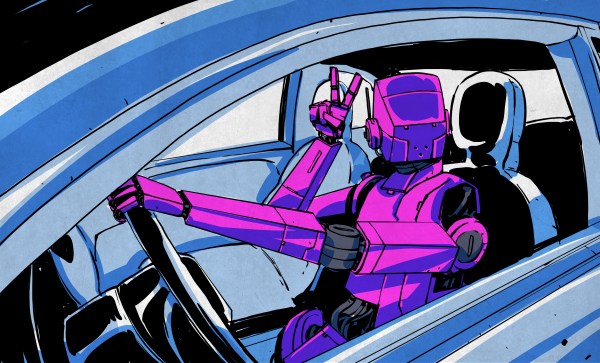
In one bad week in March, two people were indirectly killed by automated driving systems. A Tesla vehicle drove into a barrier, killing its driver, and an Uber vehicle hit and killed a pedestrian crossing the street. The National Transportation Safety Board’s preliminary reports on both accidents came out recently, and these bring us as close as we’re going to get to a definitive view of what actually happened. What can we learn from these two crashes?

There is one outstanding factor that makes these two crashes look different on the surface: Tesla’s algorithm misidentified a lane split and actively accelerated into the barrier, while the Uber system eventually correctly identified the cyclist crossing the street and probably had time to stop, but it was disabled. You might say that if the Tesla driver died from trusting the system too much, the Uber fatality arose from trusting the system too little.

But you’d be wrong. The forward-facing radar in the Tesla should have prevented the accident by seeing the barrier and slamming on the brakes, but the Tesla algorithm places more weight on the cameras than the radar. Why? For exactly the same reason that the Uber emergency-braking system was turned off: there are “too many” false positives and the result is that far too often the cars brake needlessly under normal driving circumstances.

The crux of the self-driving at the moment is precisely figuring out when to slam on the brakes and when not. Brake too often, and the passengers are annoyed or the car gets rear-ended. Brake too infrequently, and the consequences can be worse. Indeed, this is the central problem of autonomous vehicle safety, and neither Tesla nor Uber have it figured out yet.

Continue reading “Fatalities Vs False Positives: The Lessons From The Tesla And Uber Crashes”

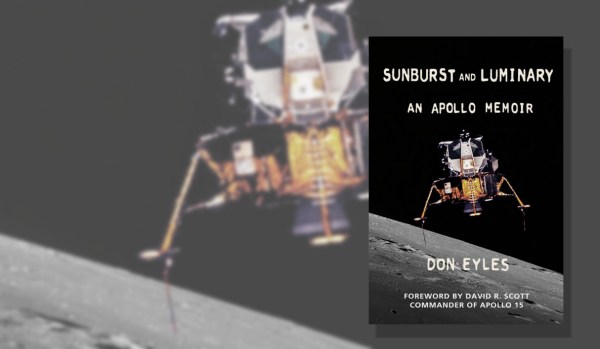
Books You Should Read: Sunburst And Luminary, An Apollo Memoir

The most computationally intense part of an Apollo mission was the moon landing itself, requiring both real-time control and navigation of the Lunar Module (LM) through a sequence of programs known as the P60’s. Data from radar, inertial navigation, and optical data sighted-off by the LM commander himself were fed into the computer in what we’d call today ‘data fusion.’

The guy who wrote that code is Don Eyles and the next best thing to actually hanging out with Don is to read his book. Don’s book reads as if you are at a bar sitting across the table listening to his incredible life story. Its personal, hilarious, stressful, fascinating, and more importantly for those of us who are fans of Hackaday, it’s relatable.

Continue reading “Books You Should Read: Sunburst And Luminary, An Apollo Memoir”

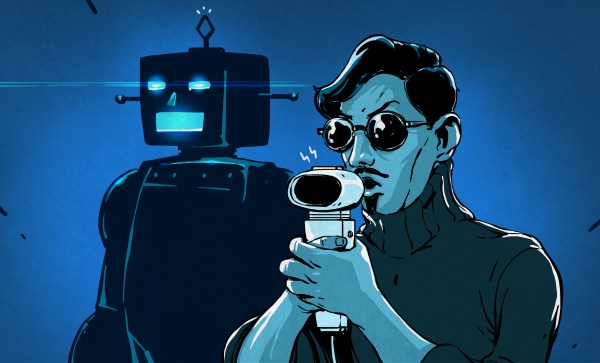
Retrotechtacular: Voice Controlled Robot From 1961

We like to think that all these new voice-controlled gadgets like our cell phones, Google Home, Amazon Echo, and all that is the pinnacle of new technology. Enabled by the latest deep learning algorithms, voice-controlled hardware was the stuff of science fiction back in the 1961s, right? Not really. Turns out in around 1960, Ideal sold Robot Commando, a kid’s toy robot that featured voice control.

Well, sort of. If you look at the ad in the video below, you’ll see that a kid is causing the robot to move and fire missiles by issuing commands into a microphone. How did some toy company pull this off in 1961?

Continue reading “Retrotechtacular: Voice Controlled Robot From 1961”

Hair-Raising Tales Of Electrostatic Generators

We tend to think of electricity as part of the modern world. However, Thales of Mietus recorded information about static electricity around 585 BC.  This Greek philosopher found that rubbing amber with fur would cause the amber to attract lightweight objects like feathers. Interestingly enough, a few hundred years later, the aeolipile — a crude steam engine sometimes called Hero’s engine — appeared. If the ancients had put the two ideas together, they could have invented the topic of this post: electrostatic generators. As far as we know, they didn’t.

It would be 1663 before Otto von Guericke experimented with a sulfur globe rubbed by hand. This led to Isaac Newton suggesting glass globes and a host of other improvements from other contributors ranging from a woolen pad to a collector electrode. By 1746, William Watson had a machine consisting of multiple glass globes, a sword, and a gun barrel. Continue reading “Hair-Raising Tales Of Electrostatic Generators”