Extraterrestrial Excavation: Digging Holes On Other Worlds

We humans are good at a lot of things, but making holes in the ground has to be among our greatest achievements. We’ve gone from grubbing roots with a stick to feeding billions with immense plows pulled by powerful tractors, and from carving simple roads across the land to drilling tunnels under the English Channel. Everywhere we go, we move dirt and rock out of the way, remodeling the planet to suit our needs.

Other worlds are subject to our propensity for digging holes too, and in the 50-odd years that we’ve been visiting or sending robots as our proxies, we’ve made our marks on quite a few celestial bodies. So far, all our digging has been in the name of science, either to explore the physical and chemical properties of these far-flung worlds in situ, or to actually package up a little bit of the heavens for analysis back home. One day we’ll no doubt be digging for different reasons, but until then, here’s a look at the holes we’ve dug and how we dug them.

Continue reading “Extraterrestrial Excavation: Digging Holes On Other Worlds”

Can You Live Without The WS2812?

As near as we can tell, the popular WS2812 individually addressable RGB LED was released to the world sometime around the last half of 2013. This wasn’t long ago, or maybe it was an eternity; the ESP8266, the WiFi microcontroller we all know and love was only released a year or so later. If you call these things “Neopixels”, there’s a good reason: Adafruit introduced the WS28212 to the maker community, with no small effort expended on software support, and branding.

The WS2812 is produced by WorldSemi, who made a name for themselves earlier with LED driver solutions, especially the WS2811, an SOIC chip that would turn a common anode RGB LED into one that’s serially controllable. When they stuffed the brains from the WS2811 into a small package with a few LEDs, they created what is probably the most common programmable LED lighting solution available today.

A lot has changed in the six years that the WS2812 has been on the market. The computer modding scene hasn’t heard the words ‘cold cathode’ in years. Christmas lights are much cooler, and anyone who wants to add blinky to their bling has an easy way to do that.

But in the years since the WS2812 came on the market, there are a lot of follow-up products that do the same thing better. You now have serially addressable LEDs that won’t bring down the rest of the string when they fail. You have RGBW LEDs. There are LEDs with a wider color gamut and more. This is a look at the current state of serially addressable RGB LEDs, and what the future might have in store.

Continue reading “Can You Live Without The WS2812?”

Could Orion Ride Falcon Heavy To The Moon?

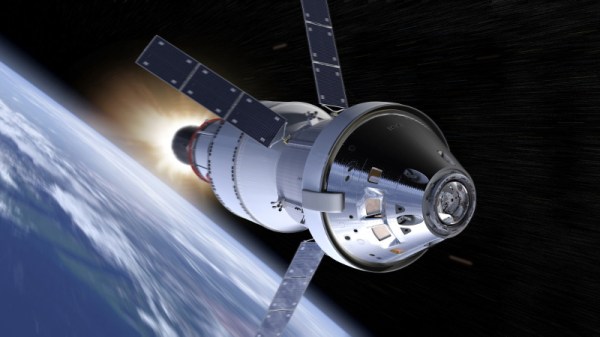
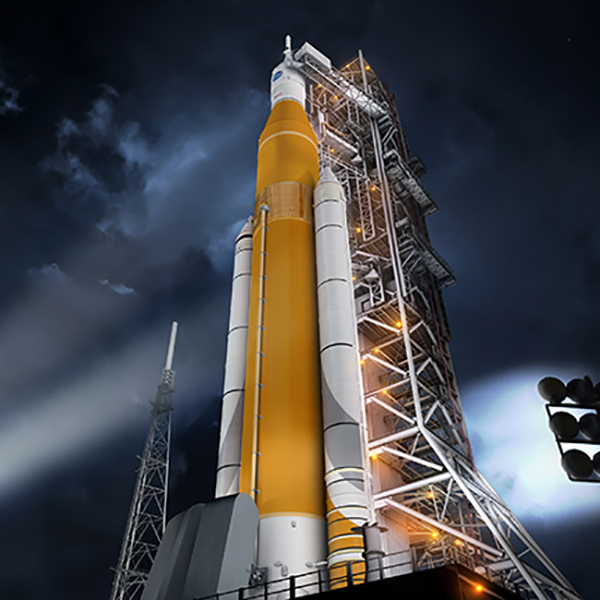
Things aren’t looking good for NASA’s Space Launch System (SLS). Occasionally referred to as the “Senate Launch System”, or even less graciously, the “Rocket to Nowhere”, the super heavy-lift booster has long been a bone of contention for those in the industry. Designed as an evolution of core Space Shuttle technology, the SLS promised to reuse existing infrastructure to deliver higher payload capacities and lower operating costs than its infamous winged predecessor. But in the face of increased competition from commercial launch providers and proposed budget cuts targeting future upgrades and expansions of the core booster, the significantly over budget and behind schedule program is in a very precarious position.
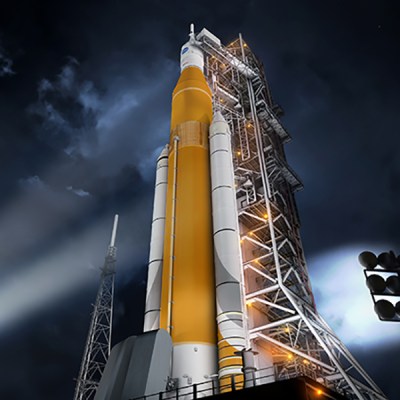
Which is not to say the SLS doesn’t look impressive, at least on paper. In its initial configuration it would easily take the title as the world’s most powerful rocket, capable of lifting nearly 105 tons into low Earth orbit (LEO), compared to 70 tons for SpaceX’s Falcon Heavy. It would still fall short of the mighty Saturn V’s 155 tons to LEO, but the proposed “Block 2” upgrades would increase SLS payload capability to within striking distance of the iconic Apollo-era booster at 145 tons. Since the retirement of the Space Shuttle in 2011, NASA has been adamant that the might of SLS was the only way the agency could accomplish bigger and more ambitious missions to the Moon, Mars, and beyond.

Or at least, they were. On March 13th, NASA Administrator Jim Bridenstine testified to Congress that in an effort to avoid further delays, the agency is exploring the possibility of sending their Orion spacecraft to the Moon with a commercial launcher. The statement came as a shock to many in the aerospace community, as it would seem to call into question the future of the entire SLS program. If commercial rockets can do the job of SLS, at least in some cases, why does the agency need it?

NASA is currently preparing a report which investigates what physical and logistical modifications would need to be made to missions originally slated to fly on SLS; a document which is sure to be scrutinized by SLS supporters and critics alike. Until the report is released, we can speculate about what this hypothetical flight to the Moon might look like.

Continue reading “Could Orion Ride Falcon Heavy To The Moon?”

The Joy Of Properly Designed Embedded Systems

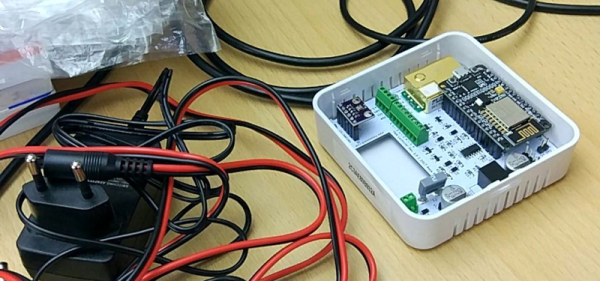
The ages-old dream of home automation has never been nearer to reality. Creating an Internet of Things device or even a building-wide collection of networked embedded devices is “easy” thanks to cheap building blocks like the ESP8266 WiFi-enabled microcontroller. Yet for any sizable project, it really helps to have a plan before getting started. But even more importantly, if your plan is subject to change as you work along, it is important to plan for flexibility. Practically, this is going to mean expansion headers and over-the-air (OTA) firmware upgrades are a must.

I’d like to illustrate this using a project I got involved in a few years ago, called BMaC, which grew in complexity and scope practically every month. This had us scrambling to keep up with the changes, while teaching us valuable lessons about how to save time and money by having an adaptable system architecture.

Continue reading “The Joy Of Properly Designed Embedded Systems”

Hands-On: New Nvidia Jetson Nano Is More Power In A Smaller Form Factor

Today, Nvidia released their next generation of small but powerful modules for embedded AI. It’s the Nvidia Jetson Nano, and it’s smaller, cheaper, and more maker-friendly than anything they’ve put out before.

The Jetson Nano follows the Jetson TX1, the TX2, and the Jetson AGX Xavier, all very capable platforms, but just out of reach in both physical size, price, and the cost of implementation for many product designers and nearly all hobbyist embedded enthusiasts.

The Nvidia Jetson Nano Developers Kit clocks in at $99 USD, available right now, while the production ready module will be available in June for $129. It’s the size of a stick of laptop RAM, and it only needs five Watts. Let’s take a closer look with a hands-on review of the hardware.

Continue reading “Hands-On: New Nvidia Jetson Nano Is More Power In A Smaller Form Factor”

Hitchhiking To The Moon For Fun And Profit

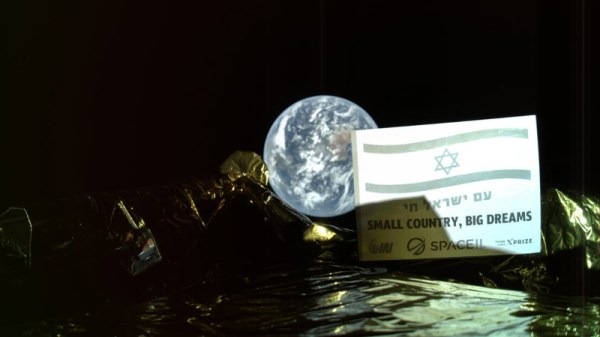
On February 22nd, a Falcon rocket lifted off from Cape Canaveral carrying the Indonesian communications satellite Nusantara Satu. While the satellite was the primary payload for the mission, as is common on the Falcon 9, the rocket had a couple of stowaways. These secondary payloads are generally experiments or spacecraft which are too small or light to warrant a rocket of their own such as CubeSats. But despite flying in the economy seats, one of the secondary payloads on this particular launch has a date with destiny: Israel’s Beresheet, the first privately-funded mission to attempt landing on the Moon.

But unlike the Apollo missions, which took only three days to reach our nearest celestial neighbor, Beresheet is taking a considerably more leisurely course. It will take over a month for the spacecraft to reach the Moon, and it will be a few weeks after that before it finally makes a powered descent towards the Sea of Serenity, not far from where Apollo 17 landed 47 years ago. That assumes everything goes perfectly; tack a few extra weeks onto that estimate if the vehicle runs into any hiccups on the way.

At first glance, this might seem odd. If the trip only took a few days with 1960’s technology, it seems a modern rocket like the Falcon 9 should be able to make better time. But in reality, the pace is dictated by budgetary constraints on both the vehicle itself and the booster that carried it into space. While one could argue that the orbital maneuvers involved in this “scenic route” towards the Moon are more complicated than the direct trajectory employed by the manned Apollo missions, it does hold promise for a whole new class of lunar spacecraft. If you’re not in any particular hurry, and you’re trying to save some cash, your Moon mission might be better off taking the long way around.

Continue reading “Hitchhiking To The Moon For Fun And Profit”

Mid-Winter Hacker Camp In Civilised Surroundings

Imagine a weekend of opulence in which you meet your companion at the railway station and whisk away across the continent in a 190mph express train for a relaxing couple of days enjoying the ambience of a luxury resort hotel in the fresh surroundings of a woodland in midwinter. Break out the Martinis, it’s a scene of elegance and sophistication from a byegone era! This is the general idea of Hacker Hotel 2019, and I had a wonderful time!

On a recent February weekend I broke out the Club-Mate instead stea of a Martini. My companion for the Eurostar and Thalys trip was my local hackspace friend Matt “Gasman” Westcott with his keytar in a bulky suitcase for a chiptune gig, and we were heading for the Netherlands. It’s a pivot from the summer’s hacker camps as over 200 hackers fill a resort hotel for the weekend, scoring comfortable beds instead of dust or mud!

What follows is my experience from this weekend. Join me below and find out why you simply can’t miss the next one! Continue reading “Mid-Winter Hacker Camp In Civilised Surroundings”