Old cars are great. They represent a different time, reflecting the state of society at the point of their design and manufacture, and can charm and delight while also providing useful transport. Except, well… old cars are great, except when they’re not.
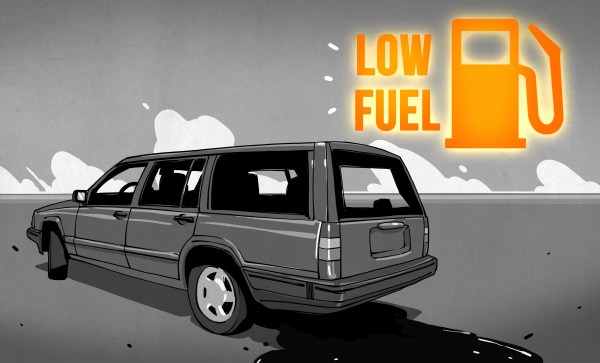
With my Volvo 740 hitting its thirtieth birthday and cresting over 200,000 miles, to say its a little worse for wear is an understatement. The turbo dadwagon has suffered transmission issues, and cold starting woes… but most frustrating is the sudden spike in fuel use. After some work, my humble daily driver had slid from using an acceptable 21 miles per gallon, to getting just 15. Add on the fact that the turbocharged engine demands premium fuel, and you can understand my consternation.
Now that I was haemorrhaging cash on a gargantuan weekly fuel bill, I had plenty of motivation to track down the problem. Busy, and eager for a quick solution, I deferred to a mechanic recommended as the local expert in all things Volvo. Sadly, the results were inconclusive — initial appearances were that all the engine’s electronic controls were functioning to specifications, and I was told that it was “probably a bad batch of fuel”.
Unfortunately, several expensive tanks later, sourced from all over town, revealed that the problem was in fact real. With a supposedly reliable report that the fuel mixture was correct, thus ruling out culprits like the oxygen sensor, I began to wonder, was I simply pouring fuel out the tank?
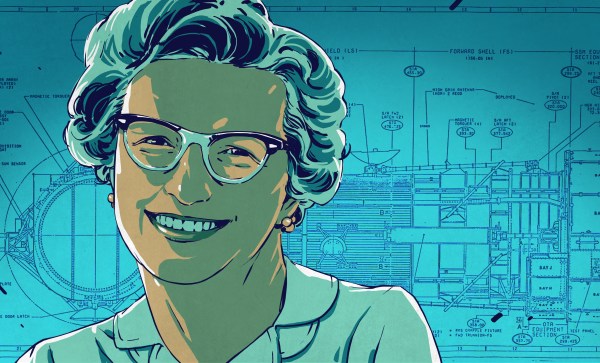
When she was four years old, Nancy Grace Roman loved drawing pictures of the Moon. By the time she was forty, she was in charge of convincing the U.S. government to fund a space telescope that would give us the clearest, sharpest pictures of the Moon that anyone had ever seen. Her interest in astronomy was always academic, and she herself never owned a telescope. But without Nancy, there would be no Hubble.
Goodnight, Moon
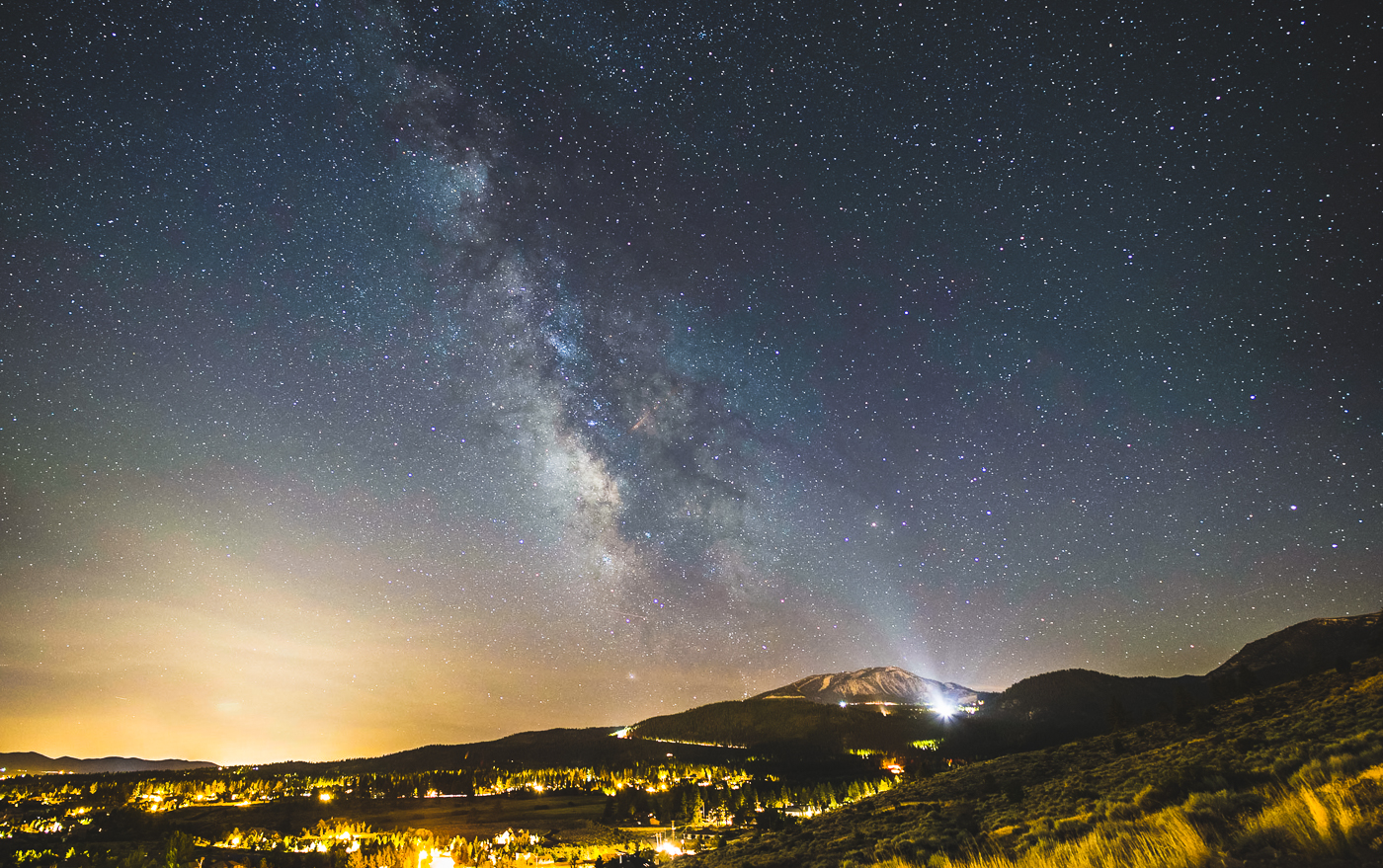
A view of the Milky Way from Reno, Nevada. Via Lonely Speck
Nancy was born May 16, 1925 in Nashville, Tennessee. Her father was a geophysicist, and the family moved around often. Nancy’s parents influenced her scientific curiosities, but they also satisfied them. Her father handled the hard science questions, and Nancy’s mother, who was quite interested in the natural world, would point out birds, plants, and constellations to her.
For two years, the family lived on the outskirts of Reno, Nevada. The wide expanse of desert and low levels of light pollution made stargazing easy, and Nancy was hooked. She formed an astronomy club with some neighborhood girls, and they met once a week in the Romans’ backyard to study constellations. Nancy would later reminisce that her experience in Reno was the single greatest influence on her future career.
By the time Nancy was ready for high school, she was dead-set on becoming an astronomer despite a near-complete lack of support from her teachers. When she asked her guidance counselor for permission to take a second semester of Algebra instead of a fifth semester of Latin, the counselor was appalled. She looked down her nose at Nancy and sneered, “What lady would take mathematics instead of Latin?”
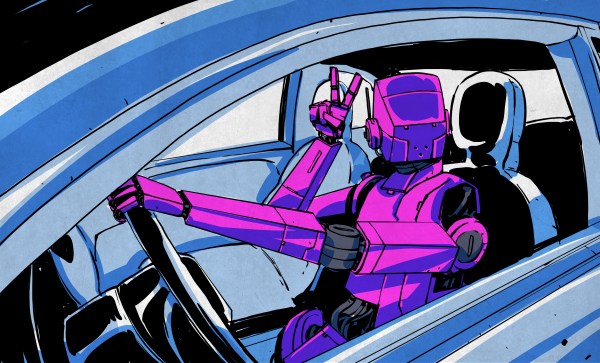
Self-driving cars have been in the news a lot in the past two weeks. Uber’s self-driving taxi hit and killed a pedestrian on March 18, and just a few days later a Tesla running in “autopilot” mode slammed into a road barrier at full speed, killing the driver. In both cases, there was a human driver who was supposed to be watching over the shoulder of the machine, but in the Uber case the driver appears to have been distracted and in the Tesla case, the driver had hands off the steering wheel for six seconds prior to the crash. How safe are self-driving cars?
Trick question! Neither of these cars were “self-driving” in at least one sense: both had a person behind the wheel who was ultimately responsible for piloting the vehicle. The Uber and Tesla driving systems aren’t even comparable. The Uber taxi does routing and planning, knows the speed limit, and should be able to see red traffic lights and stop at them (more on this below!). The Tesla “Autopilot” system is really just the combination of adaptive cruise control and lane-holding subsystems, which isn’t even enough to get it classified as autonomous in the state of California. Indeed, it’s a failure of the people behind the wheels, and the failure to properly train those people, that make the pilot-and-self-driving-car combination more dangerous than a human driver alone would be.
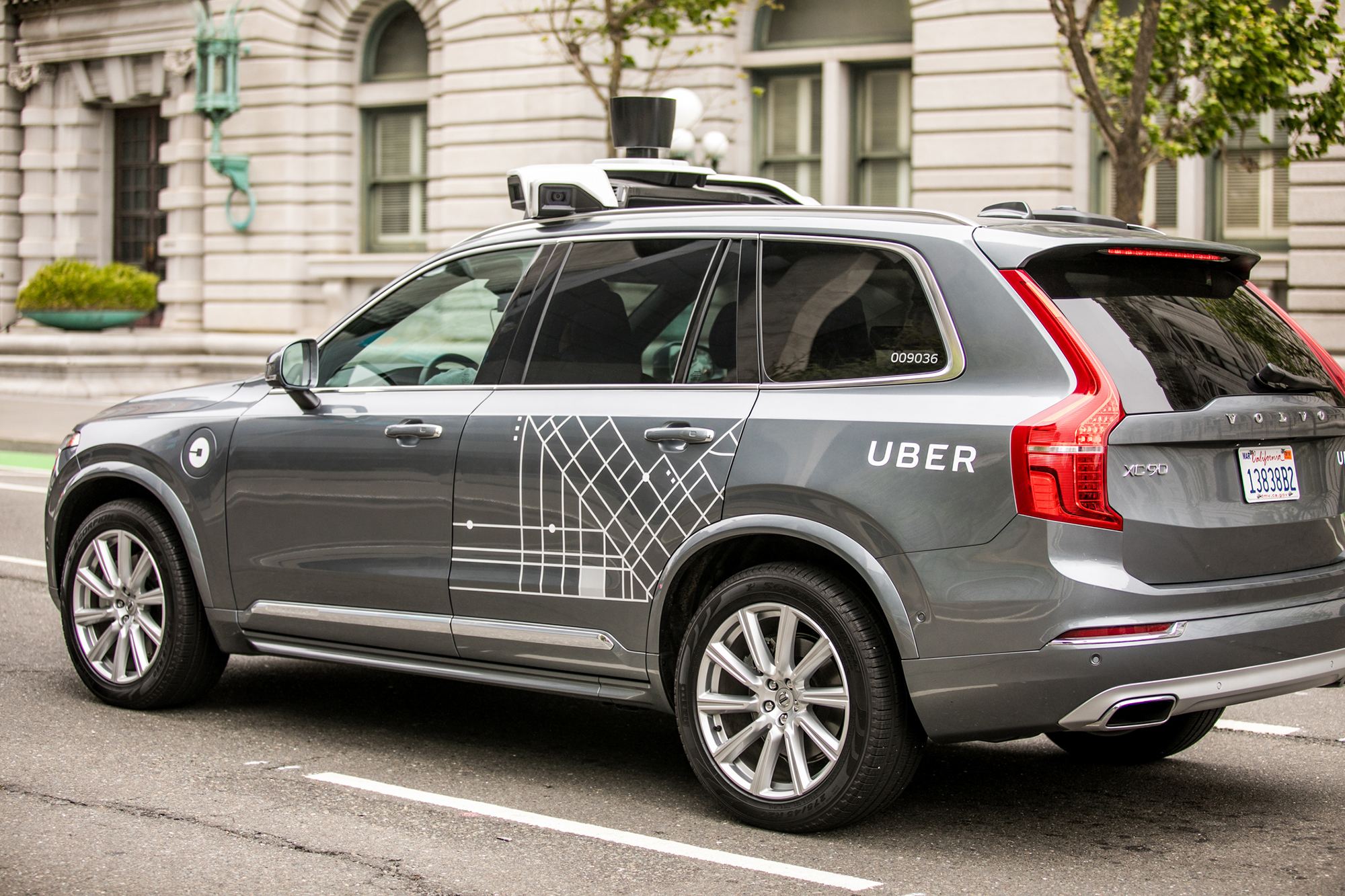
A self-driving Uber Volvo XC90, San Francisco.
You could still imagine wanting to dig into the numbers for self-driving cars’ safety records, even though they’re heterogeneous and have people playing the mechanical turk. If you did, you’d be sorely disappointed. None of the manufacturers publish any of their data publicly when they don’t have to. Indeed, our glimpses into data on autonomous vehicles from these companies come from two sources: internal documents that get leaked to the press and carefully selected statistics from the firms’ PR departments. The state of California, which requires the most rigorous documentation of autonomous vehicles anywhere, is another source, but because Tesla’s car isn’t autonomous, and because Uber refused to admit that its car is autonomous to the California DMV, we have no extra insight into these two vehicle platforms.
Nonetheless, Tesla’s Autopilot has three fatalities now, and all have one thing in common — all three drivers trusted the lane-holding feature well enough to not take control of the wheel in the last few seconds of their lives. With Uber, there’s very little autonomous vehicle performance history, but there are leaked documents and a pattern that makes Uber look like a risk-taking scofflaw with sub-par technology that has a vested interest to make it look better than it is. That these vehicles are being let loose on public roads, without extra oversight and with other traffic participants as safety guinea pigs, is giving the self-driving car industry and ideal a black eye.
If Tesla’s and Uber’s car technologies are very dissimilar, the companies have something in common. They are both “disruptive” companies with mavericks at the helm that see their fates hinging on getting to a widespread deployment of self-driving technology. But what differentiates Uber and Tesla from Google and GM most is, ironically, their use of essentially untrained test pilots in their vehicles: Tesla’s in the form of consumers, and Uber’s in the form of taxi drivers with very little specific autonomous-vehicle training. What caused the Tesla and Uber accidents may have a lot more to do with human factors than self-driving technology per se.
You can see we’ve got a lot of ground to cover. Read on!
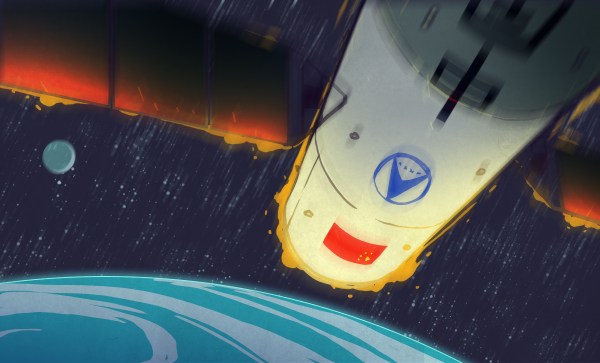
China’s first space station, Tiangong-1, is expected to do an uncontrolled re-entry on April 1st, +/- 4 days, though the error bars vary depending on the source. And no, it’s not the grandest of all April fools jokes. Tiangong means “heavenly palace”, and this portion of the palace is just one step of a larger, permanent installation.
But before detailing just who’ll have to duck when the time comes, as well as how to find it in the night sky while you still can, let’s catch up on China’s space station program and Tiangong-1 in particular.
Earlier, we had covered setting up an AS3935 lightning detector module. This detector picks up radio emissions, then analyzes them to determine if they are a lightning strike or some other radio source. After collecting some data, it outputs the estimated distance to the incoming storm front.
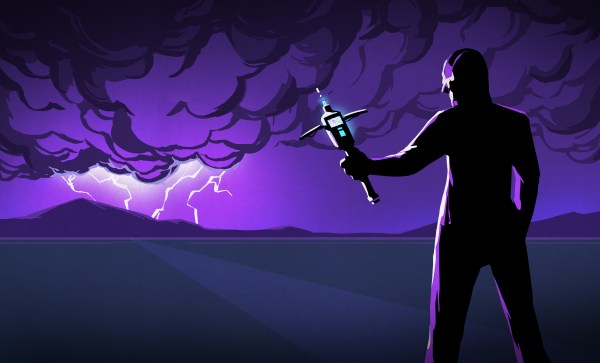
But that only gets you halfway there. The device detects many non-lightning events, and the bare circuit board is lacking in pizzazz. Today I fix that by digging into the detector’s datasheet, and taking a quick trip to the dollar store buy a suitable housing. The result? A plastic plant that dances when it’s going to rain! Continue reading “Storm Detector Modules: Dancing In The Rain”→
If you’re interested in 3D printing or CNC milling — or really any kind of fabrication — then duplicating or interfacing with an existing part is probably on your to-do list. The ability to print replacement parts when something breaks is often one of the top selling points of 3D printing. Want some proof? Just take a look at what people made for our Repairs You Can Print contest.
Of course, to do that you need to be able to make an accurate 3D model of the replacement part. That’s fairly straightforward if the part has simple geometry made up of a primitive solid or two. But, what about the more complicated parts you’re likely to come across?
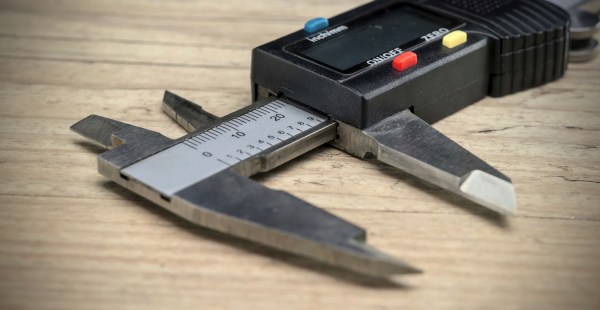
In this article, I’m going to teach you how to reverse engineer and model those parts. Years ago, I worked for a medical device company where the business model was to duplicate out-of-patent medical products. That meant that my entire job was reverse engineering complex precision-made devices as accurately as possible. The goal was to reproduce products that were indistinguishable from the original, and because they were used for things like trauma reconstruction, it was critical that I got it right.
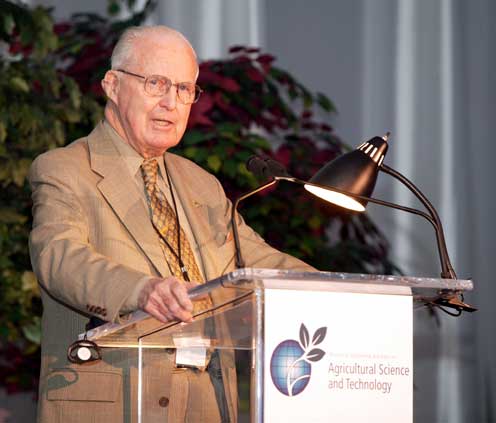
Everyone loves a hero. Save someone from a burning building, and you’ll get your fifteen minutes of fame. That’s why I’m always surprised that more people don’t know Norman Borlaug, who would have celebrated his 104th birthday on Sunday. He won the Nobel prize in 1970 and there’s good reason to think that his hacking efforts saved about a billion people from starving to death. A billion people. That’s not just a hero, that’s a superhero.
To understand why that claim is made, you have to go back to the 1970s. The population was growing and was approaching an unprecedented four billion people. Common wisdom was that the Earth couldn’t sustain that many people. Concerns about pollution were rampant and there were many influential thinkers who felt that we would not be able to grow enough food to feed everyone.
Paul Ehrlich, in particular, was a Stanford University biologist who wrote a book “The Population Bomb.” His forecast of hundreds of millions starving to death in the 1970s and 1980s, including 65 million Americans, were taken very seriously. He also predicted doom for India and that England would not exist by the year 2000.
Here we are 40 or 50 years later and while there are hungry people all over the world, there isn’t a global famine of the proportions many people thought was imminent. What happened? People are pretty good problem solvers and Norman Borlaug — along with others — created what’s known as the Green Revolution.