Wordle Comes To The Nokia N-Gage Thanks To New SDK

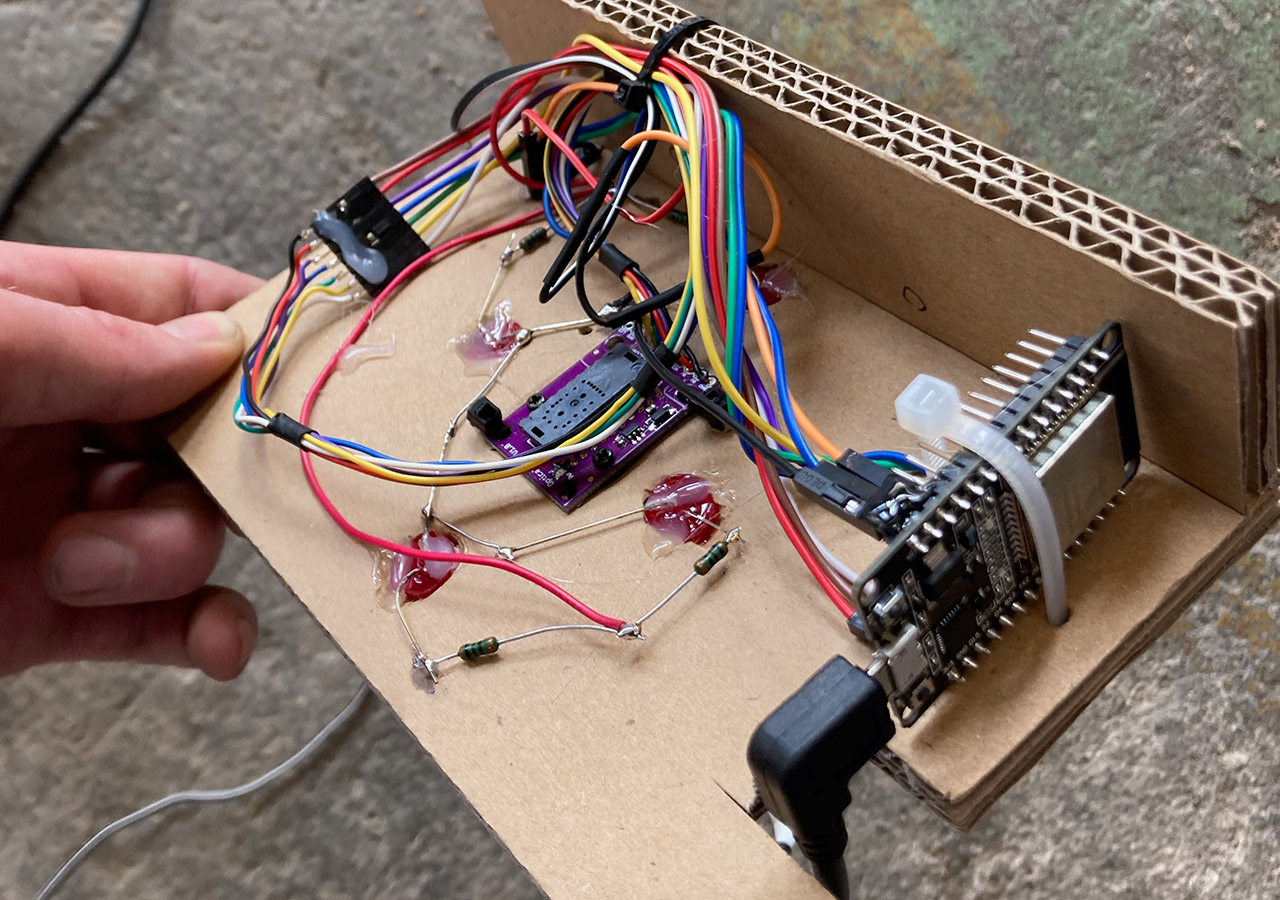
You probably never imagined you’d be reading about new software getting developed for Nokia’s infamous N-Gage handheld game system in 2022, and we certainly never thought we’d be writing about it. But here we are. Of course, we aren’t talking about a commercial title — this is an unofficial port of Wordle by “taco phone” superfan [Michael Fitzmayer].

[Michael] tells us that this first version is pretty simplistic, and currently uses a single word list with all 2,309 terms in the New York Times version. Translations to Finnish, Russian, and German are in the works, though interestingly it looks like the effort is currently stymied by the fact that the code doesn’t support words with hyphens in them; meaning it’s possible to find yourself in an unwinnable situation if you’re playing in Russian. We’re sure that’s just a coincidence and not meant as any kind of political commentary, but still…you can’t make this stuff up.

In Soviet Russia, N-Gage plays you!

So how does one go about developing a new game for a failed console from the early 2000s? The answer is by using the modern N-Gage SDK that’s is currently in development, which lets you write code for the system using popular tools and libraries like Visual Studio 2022, CMake, and SDL. But [Michael] isn’t just a user of this new SDK, he’s also the brains behind the operation.

The hope is this new development platform will lead to something of a renaissance for the maligned device, and he’s even started a Discord server to discuss the past, future, and present of sidetalkin’. If you’re surprised to find yourself looking up what a used N-Gage goes for on eBay these days, join the club.

A miniature Vectrex console being used

Finally, The Venerable Vectrex Gets A Mini Makeover

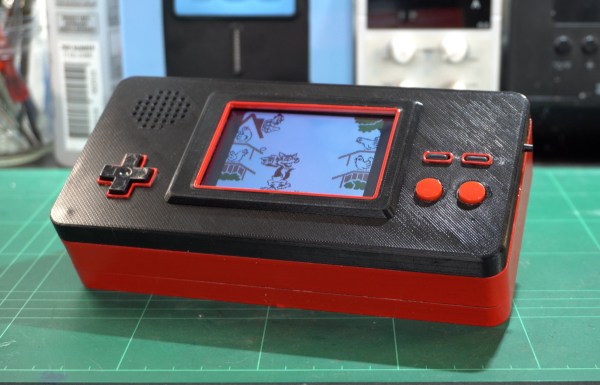
It appears that every great console is bound to get a miniature remake: we’ve had the PlayStation Classic, the Mini NES and SNES, and even a miniature Sega Genesis/Mega Drive. But one great console that was sorely missing from that list, at least according to [Brendan], was the Vectrex. So he went ahead and built a fully-functioning miniature Vectrex Console.

If the name “Vectrex” doesn’t ring a bell in your mind, you’re not alone: a commercial failure, it was quickly forgotten by most following the 1983 video game crash. But it has retained a cult status among enthusiasts due to its unique design featuring a monochrome vector monitor, onto which you can place transparent overlays to obtain a sort-of color display. Its games can now all be emulated using software like RetroPie, which is what [Brendan] chose to run on a Raspberry Pi Model 2 that he had lying around.

As for the display, he settled on a Pi-compatible 3.5″ TFT device. Hooking it up to the Pi was easy enough, but getting the image rendered in its proper portrait orientation was quite a headache, requiring endless fiddling with drivers and configuration files.

Once he got this working, [Brendan] set to work designing a miniature copy of the Vectrex’s original case. It took a few iterations and several 10-hour runs on his 3D printer before he ended up with a sturdy case that securely held the Pi and its display in place. A few more hours of printing later he also had a handheld controller, which he based on an Arduino Pro Mega. The Arduino reads out four regular pushbuttons and a joystick, and communicates with the Pi through a coiled USB cable.

The end result, as you can see in the video embedded below, is the cutest little Vectrex we’ve ever seen. It’s really the opposite of this big-screen Vectrex project. We’ve also seen a Vectrex projector, and even one with a real color monitor hacked in. Continue reading “Finally, The Venerable Vectrex Gets A Mini Makeover”

Chris playing his tiny pinball machine

Tiny Pinball Is As Cute As Pi

Pinball machines are large, complex, and heavy boxes of joy and delight. However, when you don’t have the money or space for one, you have to make your own mini Raspberry Pi-powered one.

With access to a local makerspace and a bit of extra free time, [Chris Dalke] had plans to capture the flavor of a full-scale pinball machine in a small package. Laser-cut Baltic birch forms the enclosure, and a screen makes up the playing field rather than a physical ball. An Arduino Uno handles the three buttons, the four LED matrixes, and a solenoid for haptic feedback, communicating

with the Pi via serial. Unfortunately, even with a relatively decent

volume inside, it is still a tight squeeze.

Rather than use an off-the-shelf pinball game, [Chris] wrote his own in C using raylib and raygui, two handy libraries that can be included in the project quickly. SQLLite3 writes high scores out to disk. All in all, an inspiring project that has a very high level of polish.

If you’re looking for a tiny pinball machine but want more of the classic pinball feel, why not look at this scale pinball machine?

Continue reading “Tiny Pinball Is As Cute As Pi”

Air Football Looks Pro

If you are an American, you’d probably think of [Silas Hansen’s] project as “air soccer” but most people will prefer air football. Either way, it is like air hockey but more of a football field feel. The project looks great — if you saw this on the shelves of the local toy store, you wouldn’t think anything of it. You can see a video of the game in action, below.

Unsurprisingly, the brains of the game are an Arduino. The case looks good thanks to laser cutting and 3D printing. A Roland printer produced the stickers that really dress the case up, but you could find another artistic way to do the decoration.

Continue reading “Air Football Looks Pro”

Old School Mechanical Pong Still Amazes

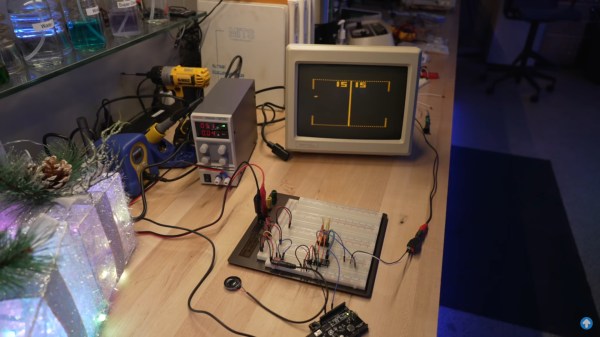
[Tom], of the YouTube channel ThingsTomLike, found a very sweet little mechanical Pong clone at a thrift store. It came in broken, but in only fifteen minutes of your time, [Tom] manages a complete teardown and repair. (Video, embedded below.)

The game works by balancing a lightbulb on the end of a pivot arm that projects a “ball” onto a screen, while players move their paddles up and down to hit the spring that surrounds the light assembly. The ball arm gets periodically kicked by a DC motor and cam assembly, which makes it careen wildly back and forth across the screen.

It’s a marvel of simple, no-IC engineering. Ironically, it might have been cheaper than making it out of silicon at the time, but viewed from today’s economy, just the human labor in adjusting that counterweight so that the “ball” floats would blow the budget.

Why a screen and lightbulb? Because it’s emulating Pong, a video game, the new kid on the block. But even 45 years later, we think it has got a charm all of its own that the cold digital logic of Pong lacks, even if the gameplay suffers.

Continue reading “Old School Mechanical Pong Still Amazes”

A desktop LED implementation of the arcade game Cyclone

Going Around In Circles With Homemade Arcade Classic Cyclone

The classic arcade game Cyclone has attracted many players, along with their coins, thanks to its simple yet addictive gameplay. In its most basic form it consists of a light racing around a circular track, which the player then has to stop at exactly the right place. Arduino enthusiast [mircemk] made a home version of this game, which allows addicts to keep playing forever without running out of quarters.

Instead of an arcade cabinet, this smaller version has an upright 3D-printed ring that holds 60 WS2812 LEDs. A further six in the center of the ring act as a score counter. An Arduino in the base drives the LEDs and runs the game, which is based on an earlier iteration built by [oKeeg]. An interesting addition is a large homemade “arcade button”, which is large and sturdy enough to withstand any abuse inflicted on it by a frustrated player.

Retro-style sound effects and flashing light sequences give the game a bit of an arcade vibe, even without a big cabinet and piles of coins. Simple LED games like this are always great eye-catchers in any home or office; if you like this one, be sure to check out other LED games like the handheld LEDBOY, the one-dimensional dungeon crawler TWANG, and this LED racing game. Continue reading “Going Around In Circles With Homemade Arcade Classic Cyclone

DOOM Comes To The RP2040

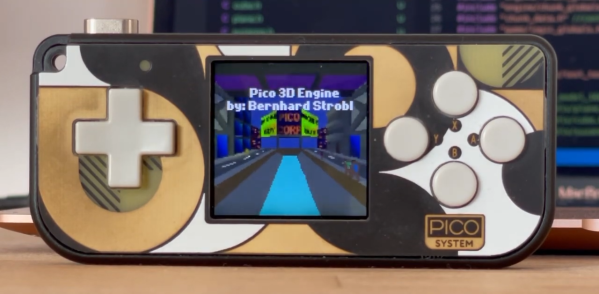
To the point of being a joke, it seems like DOOM is adapted to run on everything these days. So it was only natural that we would see it ported to the RP2040 by [Graham Sanderson], the tiny chip powering the Raspberry Pi Pico.

You might be thinking, what’s different about this port? There have been 55 articles about DOOM here on Hackaday, showing it running on everything from web checkboxes to desk phones. The RP2040 has 256 K of RAM, two decently clocked processor cores, and 2 MB of flash, so it’s not the most constrained platform ever to have DOOM run it. But [Graham] also set some very lofty goals: all nine levels needed to be playable, faithful graphics and music, multiplayer, and it would output to VGA directly. It should play just like the original. DOOM has a demo that is stored as a sequence of input events. They form excellent regression tests as if the character gets stuck or doesn’t make it to the end; then you’re not accurate according to the original code.

There are two big problems right out the gate. First, a single level is larger than the 2 MB storage that the RP2040 has. And to drive the 320×200 display, you either need to spend a lot of your CPU budget racing the beam or allocate a vast amount of RAM to framebuffers, making level decompression much harder.

A default compression scheme wouldn’t cut it because it needed a high compression ratio and random access since decompressing into RAM wasn’t an option. However, carefully optimizing and compressing the different data structures yielded great results. Save game files are given a similar treatment to ensure they fit into the remaining flash after all the levels (34k).

The result is fantastic, and it supports DOOM, Ultimate DOOM, and DOOM II. The write-up goes into far more detail than we could here; enjoy the read. If you decide to make a day trip to the depths of Hell on your own Pi Pico, be sure to let us know in the comments.

Continue reading DOOM Comes To The RP2040″