Hack My House: ZoneMinder’s Keeping An Eye On The Place

Hacks are often born out of unfortunate circumstances. My unfortunate circumstance was a robbery– the back door of the remodel was kicked in, and a generator was carted off. Once the police report was filed and the door screwed shut, it was time to order cameras. Oh, and record the models and serial numbers of all my tools.
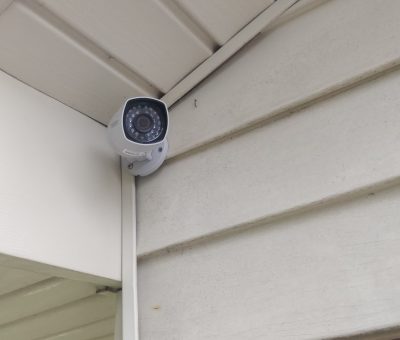
We’re going to use Power over Ethernet (POE) network cameras and a ZoneMinder install. ZoneMinder has a network trigger capability, and we’ll wire some magnetic switches to our network of PXE booting Pis, using those to inform the Zoneminder server of door opening events. Beyond that, many newer cameras support the Open Network Video Interface Forum (ONVIF) protocol and can do onboard motion detection. We’ll use the same script, running on the Pi, to forward those events as well.

Many of you have pointed out that Zoneminder isn’t the only option for open source camera management. MotionEyeOS, Pikrellcam, and Shinobi are all valid options.  I’m most familiar with Zoneminder, even interviewing them on FLOSS Weekly, so that’s what I’m using.  Perhaps at some point we can revisit this decision, and compare the existing video surveillance systems.

Continue reading “Hack My House: ZoneMinder’s Keeping An Eye On The Place”
A Close Look At The Prusa I3 MK3

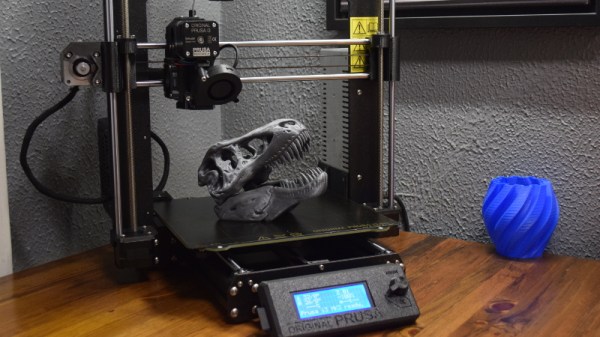
The Prusa i3 MK3 is, for lack of a better word, inescapable. Nearly every hacker or tech event that I’ve attended in 2018 has had dozens of them humming away, and you won’t get long looking up 3D printing on YouTube or discussion forums without somebody singing its praises. Demand for Prusa’s latest i3 printer is so high that there’s a literal waiting list to get one.

At the time of this writing, over a year after the printer was officially put up for sale, there’s still nearly a month lead time on the assembled version. Even longer if you want to wait on the upgraded powder coated bed, which has unfortunately turned out to be a considerable production bottleneck. But the team has finally caught up enough that the kit version of the printer (minus the powder coated bed) is currently in stock and shipping next day.

I thought this was a good a time as any to pull the trigger on the kit and see for myself what all the excitement is about. Now that I’ve had the Prusa i3 MK3 up and running for a couple of weeks, I can say with confidence that it’s not just hype. It isn’t a revolution in desktop 3D printing, but it’s absolutely an evolution, and almost certainly represents the shape of things to come for the next few years.

That said, it isn’t perfect. There’s still a few elements of the design that left me scratching my head a bit, and some parts of the assembly weren’t quite as smooth as the rest. I’ve put together some of those observations below. This isn’t meant to be a review of the Prusa i3 MK3 printer, there’s more than enough of those already, but hopefully these assorted notes may be of use to anyone thinking of jumping on the Prusa bandwagon now that production has started really ramping up.

Continue reading “A Close Look At The Prusa I3 MK3”

Hackaday Links Column Banner

Hackaday Links: October 21, 2018

A few weeks ago, we got word [Fran] was being kicked out of her workshop. You might remember [Fran] from her exploits in reverse engineering the launch computer for the Saturn V, her work on replicating the DSKY from an AGC, her visit to the Air & Space Museum annex (so jealous), and her other musical adventures. Why is she getting kicked out? Philly’s getting gentrified, ya jabroinis. Now, there’s a GoFundMe for a new Fran Lab. Go on and ring that bell.

Everyone needs a Sharpie sitting around, so how about one that weighs a pound or so? [MakingStuff] created a new body for a big ‘ol Sharpie marker, complete with knurling. Oh, man, the knurling.

A Powerball ticket costs $2. Last Friday, the expected return on a single Powerball ticket was more than $2. This doesn’t happen often, but last Friday the most logical course of action for everyone was to buy all the Powerball tickets they could.

Boston Dynamics built another dog robot and made it dance to Uptown Funk because we haven’t heard that song enough. No one has listened to Uptown Funk enough times in their life. It’s a great song that never gets old or overplayed.

[Wintergatan] is building a drum machine. You might remember this artisan of plywood from various marble machine builds that also play music. This build goes deep into the techniques of building gigantic mechanical contraptions out of plywood and steel.

Speaking of plywood, Rockler had a contest a while back to build something out of a single sheet of plywood. [OSO DIY] came up with the most interesting table I’ve ever seen. A lot of the entries into this plywood contest turned the plywood on its end, resulting in something that looks like it’s made out of skateboard decks. [OSO DIY]’s coffee table is no exception; it’s basically just a panel of edge-grain plywood made into a table. Where this gets really good is the actual design of the table. It’s clearly a mid-century modern piece, with threaded inserts holding the legs on. However, instead of something that was pressed out of a factory, this table just exudes an immense amount of manual labor. It’s a counterpoint between craftsmanship and minimalist design rendered in plywood and by far one of the most interesting pieces of furniture made in the last few years. Here are some more entries that also capitalize on edge-grain plywood

The BNC Connector And How It Got That Way

When I started working in a video production house in the early 1980s, it quickly became apparent that there was a lot of snobbery in terms of equipment. These were the days when the home video market was taking off; the Format War had been fought and won by VHS, and consumer-grade VCRs were flying off the shelves and into living rooms. Most of that gear was cheap stuff, built to a price point and destined to fail sooner rather than later, like most consumer gear. In our shop, surrounded by our Ikegami cameras and Sony 3/4″ tape decks, we derided this equipment as “ReggieVision” gear. We were young.

For me, one thing that set pro gear apart from the consumer stuff was the type of connectors it had on the back panel. If a VCR had only the bog-standard F-connectors like those found on cable TV boxes along with RCA jacks for video in and out, I knew it was junk. To impress me, it had to have BNC connectors; that was the hallmark of pro-grade gear.

I may have been snooty, but I wasn’t really wrong. A look at coaxial connectors in general and the design decisions that went into the now-familiar BNC connector offers some insight into why my snobbery was at least partially justified.

Continue reading “The BNC Connector And How It Got That Way”

Ask Hackaday: Why Aren’t We Hacking Cellphones?

When a project has outgrown using a small microcontroller, almost everyone reaches for a single-board computer — with the Raspberry Pi being the poster child. But doing so leaves you stuck with essentially a headless Linux server: a brain in a jar when what you want is a Swiss Army knife.

It would be a lot more fun if it had a screen attached, and of course the market is filled with options on that front. Then there’s the issue of designing a human interface: touch screens are all the rage these days, so why not buy a screen with a touch interface too? Audio in and out would be great, as would other random peripherals like accelerometers, WiFi, and maybe even a cellular radio when out of WiFi range. Maybe Bluetooth? Oh heck, let’s throw in a video camera and high-powered LED just for fun. Sounds like a Raspberry Pi killer!

And this development platform should be cheap, or better yet, free. Free like any one of the old cell phones that sit piled up in my “hack me” box in the closet, instead of getting put to work in projects. While I cobble together projects out of Pi Zeros and lame TFT LCD screens, the advanced functionality of these phones sits gathering dust. And I’m not alone.

Why is this? Why don’t we see a lot more projects based around the use of old cellphones? They’re abundant, cheap, feature-rich, and powerful. For me, there’s two giant hurdles to overcome: the hardware and the software. I’m going to run down what I see as the problems with using cell phones as hacker tools, but I’d love to be proven wrong. Hence the “Ask Hackaday”: why don’t we see more projects that re-use smartphones?

Continue reading “Ask Hackaday: Why Aren’t We Hacking Cellphones?”

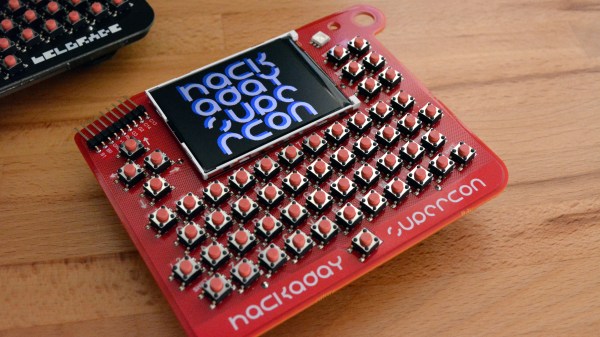
The Supercon Badge Is A Freakin’ Computer

It hangs around your neck, comes with the cost of admission, and would blow away a desktop computer from the 1980’s. This is the Hackaday Superconference badge and you can get your hands on one for the price of admission to the ultimate hardware conference.

Everyone through the door gets one of these badges featuring a 320 x 240 color display, a full qwerty keyboard, and limitless hacking potential! The stock firmware runs a BASIC interpreter, the CP/M operating system, and includes games and Easter Eggs. It’s a giant playground, and we want to see what you can do with this custom hardware during the three days of Supercon. Get your ticket now, then join me after the break for a demo video and plenty more info.

Continue reading “The Supercon Badge Is A Freakin’ Computer”

Friday Hack Chat: Visual Synthesis

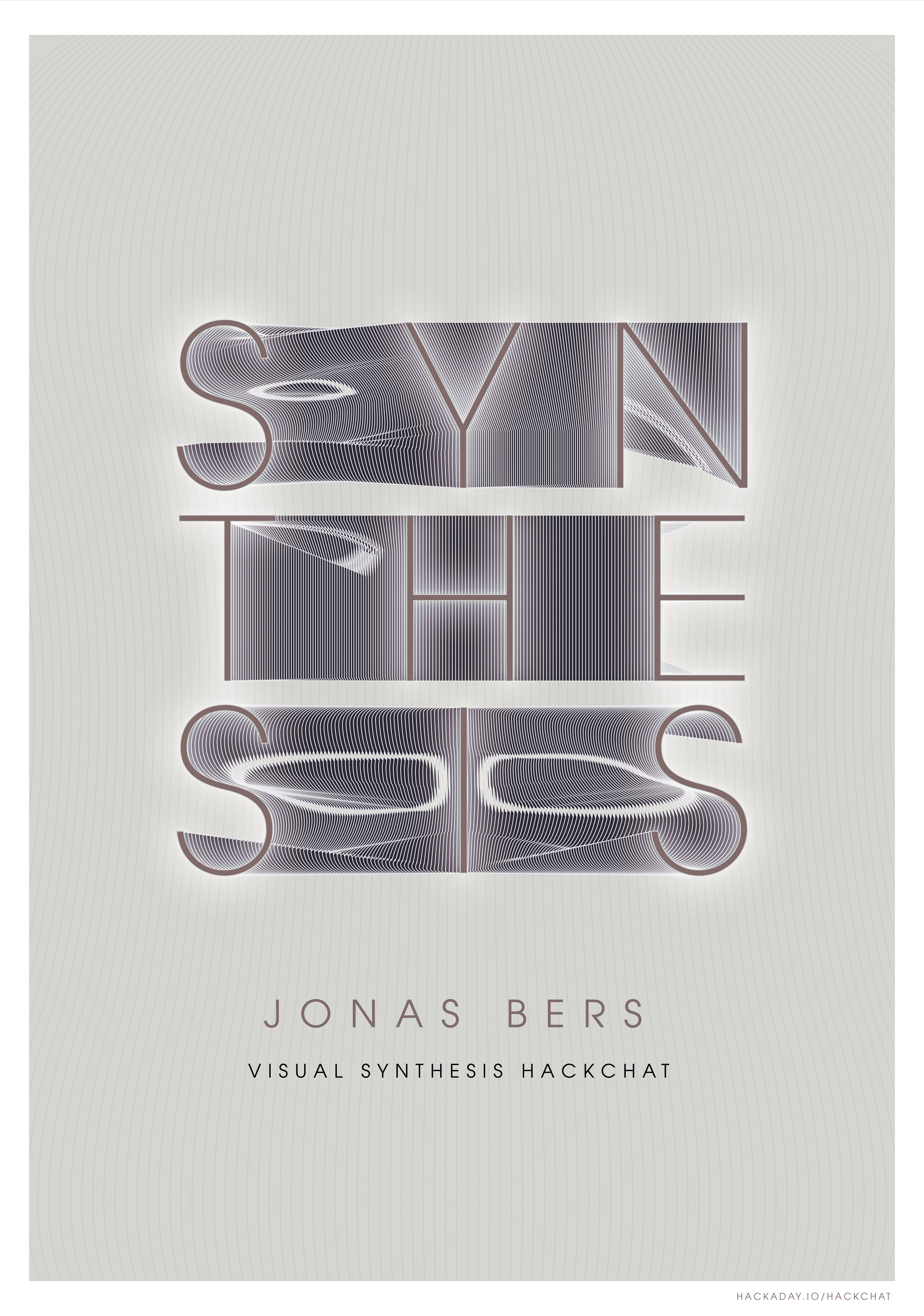
For this week’s Hack Chat, we’re going to be discussing generating analog video for visual synthesis. What’s on the front porch?

Our guest for this week’s Hack Chat will be Jonas Bers, an audiovisual artist and performer. For their work they used hacked video mixers, a hand-built video synthesizer, and various pieces of restored/modded lab equipment and military surplus devices. Jonas has also developed the CHA/V, the Cheap, Hacky, A/V, an open source, DIY, audiovisual video synthesizer. This video synth has been built by people around the world, and has been the subject of international workshops in fancy art schools. It’s a dirt-cheap video synth, quick and easy to make, expandable and customization as a part in a larger system, and requires no computer, Arduino, microcontroller, or programming.

Jonas will be discussing entry points into hardware-based real-time video synthesis such as their own tutorial for the CHA/V, and the LZX cadet/castle DIY series. If you enjoy making analog audio circuits, and you are interested in video synthesis, they can suggest some good places to start and helpful resources. Jonas’s personal practice involves hardware-based scan-processing (aka Rutt/Etra synthesis) which they can also discuss at length.

For this week’s Hack Chat, we’ll be talking about:

  • Hardware-based video synthesis
  • Real time video synthesis
  • Common visual synthesis practices and variations

You are, of course, encouraged to add your own questions to the discussion. You can do that by leaving a comment on the Visual Synthesis Hack Chat and we’ll put that in the queue for the Hack Chat discussion.

join-hack-chat

Our Hack Chats are live community events on the Hackaday.io Hack Chat group messaging. This week we’ll be sitting down on Friday, October 19th, at noon, Pacific time. If time zones got you down, we have a handy time zone converter.

Click that speech bubble to the right, and you’ll be taken directly to the Hack Chat group on Hackaday.io.

You don’t have to wait until Friday; join whenever you want and you can see what the community is talking about.