This excellent content from the Hackaday writing crew highlights recurring topics and popular series like Linux-Fu, 3D-Printering, Hackaday Links, This Week in Security, Inputs of Interest, Profiles in Science, Retrotechtacular, Ask Hackaday, Teardowns, Reviews, and many more.
On the eve of the New York Maker Faire, Hackaday is throwing a meetup in the heart of Manhattan. Join us next Thursday for a low-key get-together, a few talks on assistive technologies, and a demo of the coolest new tool in recent memory.
Although these meetups are highly informal (and bringing some of the cool stuff you’ve built is encouraged), we do have a few speakers lined up. Holly Cohen and John Schimmel of DIYAbility are speaking about using homebrew devices for making everyone’s life easier. Johnny Falla of the Enable Community Foundation will give a talk about using 3D printing technology to make hyper-affordable prosthetic devices for underserved populations. Chad Leaman will be representing the Neil Squire Society and will speak about using technology to empower people with disabilities.
As always, snacks and drinks will be provided, and like all Hackaday meetups, bring some cool gear or whatever project you’re working on along with you. This bring-a-hack isn’t a competition, but if it was, we know who would win. Nisan Larea will be attending the meetup, demoing the Wazer desktop waterjet cutter. We caught a glimpse of this machine in San Francisco, and it’s amazing. If you want to see the Wazer waterjet before Maker Faire, this is your chance.
This month’s Hackaday NYC meetup will be at Pivotal Labs, 625 Avenue of the Americas, on Thursday, September 29. It would be really, really cool if you could RSVP beforehand.
This is Hackaday’s pre-game for the World Maker Faire. We’ll be attending, scoping out all the coolest projects and products from this year’s NYC Maker Faire. Find one of the Hackaday crew at the faire, and we’ll hook you up with some swag.
For the first in a series of posts describing how to make a PCB, we’re going with Eagle. Eagle CAD has been around since the days of DOS, and has received numerous updates over the years. Until KiCad started getting good a few years ago, Eagle CAD was the de facto standard PCB design software for hobbyist projects. Sparkfun uses it, Adafruit uses it, and Dangerous Prototypes uses it. The reason for Eagle’s dominance in a market where people don’t want to pay for software is the free, non-commercial and educational licenses. These free licenses give you the ability to build a board big enough and complex enough for 90% of hobbyist projects.
Of course, it should be mentioned that Eagle was recently acquired by Autodesk. The free licenses will remain, and right now, it seems obvious Eagle will become Autodesk’s pro-level circuit and board design software.
Personally, I learned PCB design on Eagle. After a few years, I quickly learned how limited even the professional version of Eagle was. At that point, the only option was to learn KiCad. Now that Eagle is in the hands of Autodesk, and I am very confident Eagle is about to get really, really good, I no longer have the desire to learn KiCad.
With the introduction out of the way, let’s get down to making a PCB in Eagle.
We’re in the last few weeks for entries in the 2016 Hackaday Prize — specifically the challenge is to show off your take on assisstive technology. This is a hugely broad category and I’ve been thinking about it for a while. I’m sure there’s a ton of low-hanging fruit that’s not obvious to everyone. This would be a great time to hit up the comments below and leave your “hey, I always thought someone should make…” ideas. I’m looking forward to reading them and it might just inspire someone to spend the next couple weeks hammering out a prototype to enter.
For me, it’s medication. I knew this can be a challenging problem having gone through a few cycles of prescription medicines in my life. But recently I helped out a family member who was suddenly on many medications taken on eight different times a day — including once, twice, three, and six times per day. This was further compounded by sleep deprivation (having to set alarms at night to take the medicine) and drowsy/woozy effects from the medicine. I can tell you first hand that this is really tough for anyone to deal with and it’s incredibly easy to make a mistake or not be able to remember if you took a dose.
Pill Organizers Do No More or Less
We’ve seen a number of pill organizers before and that’s what I reached for in this case. However, that organizer only had four slots for each day. I didn’t hack it (other than writing on the doors with a Sharpie for when to take each) but even if there were added buttons or LEDs I’m not convinced this would be a marked improvement.
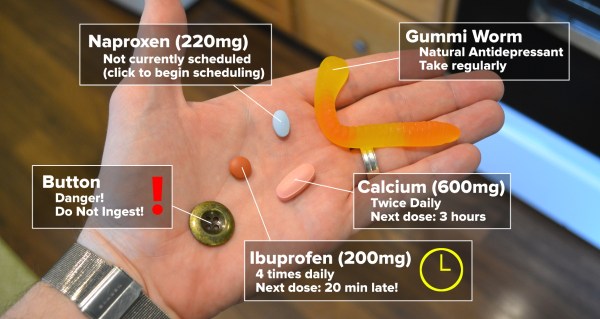
What you see above is my proposal for the medicine problem. Smartphones have become ubiquitous and the processing power and cameras of even budget phones are mind blowing. I think it is entirely possible to write an app that uses computer vision to recognize pills and sync them with the schedule. This may mean whipping the phone out of your pocket, or designing a pill box that has a phone stand next to it (saying that makes me think of using RPi and a Pi camera). Grab your pills and validate them under the camera.
Useful Augmented Reality
The screen of the phone would use augmented reality to overlay information about the pills it sees — you know, like Pokemon Go but in a way that enriches your life. ‘pills, catch ’em all!’ — new pills can be learned of the fly, delivering the user to a screen to identify the pill and the dosing schedule. Taking the validation picture will record when the medicine was taken, and the natural extension of this systems is a pharmacy’s ability to push your dose schedule to your account when you pick up the prescription. A stretch goal would be keeping an eye out for interactions.
This is all very much like how hospitals do it — they’re scanning bar codes on the packaging and the patient bracelet and recording it. This would be an easier user experience and quite frankly I think companies already in this space (like Snapchat and Niantic) could whip this up in a single-day hackathon no problem.
Is it the perfect system? Maybe not. But there is no perfect system or we’d be using it by now. We need you, the world’s talent pool, to step up and make life a little better. Do it in prototype form by October 3rd and you’ll be eligible for one of twenty $1000 cash prizes and a chance at winning the Hackaday Prize. But even if you don’t build a single thing, one idea could be the spark that lets others change the world for the better. So let’s hear it!
I think the restaurant is really close now… CC: E. Broeks
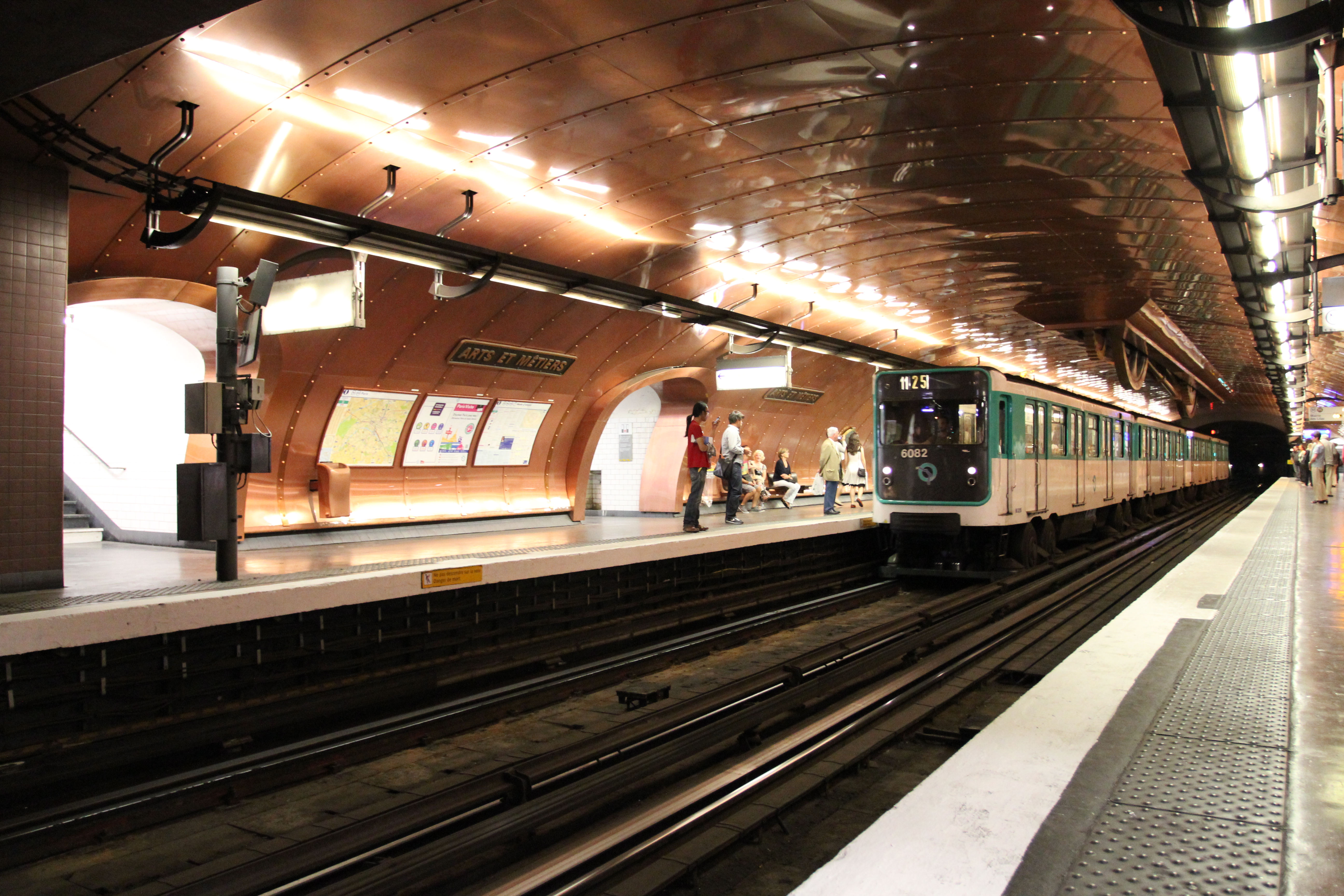
The best way to pull off this deception: tell your significant other that you’d want nothing more than a romantic week in Paris. Arrive in Paris, stash your bags, and then take either the number three or eleven Metro. When you get to the station that looks like the inside of a giant steam engine, Arts et Métiers, get out. You’re now ten Euros away from one of the coolest museums a hacker could visit.
A significant portion of modern science’s beginnings is sitting in the Musée, polished and beautiful. Most of them are housed in cabinets so old they’re part of the exhibit. Now, the Henry Ford museum in Detroit Michigan is a monument to industrialization, and cool in its own right, but it leaves some questions unanswered. We’re all spoiled by desktop CNCs, precision measurement tools for pennies, and more. How did we get here? How did they measure a shaft or turn a screw before precision digital micrometers? What did early automation look like? Early construction?
Also did I mention it has Foucault’s Pendulum? You know, the one that finally convinced everyone that the Earth rotated around an axis? No big deal.
The museum has a few permanent exhibits: instruments scientifique, matériaux, construction, communication, énergie, mécanique et transports.
What kind of basic museum would have just one example of Pascal’s work? CC: Anton Lefterov
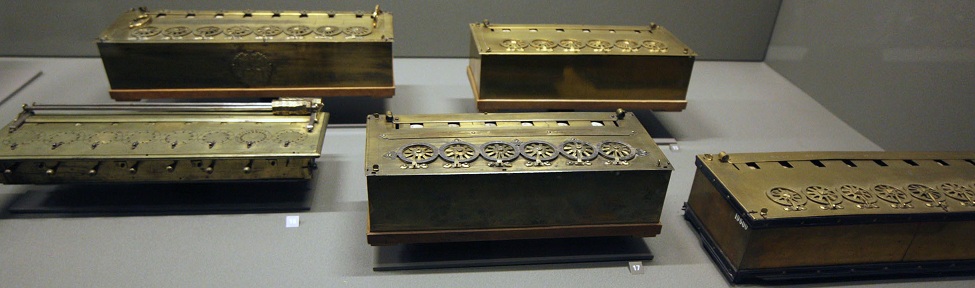
Instruments Scientifiques was one of my favorites. Not only did it include old scientific instruments, it had sections containing some of the original experiments in optics, computation, and more. For example you can see not just one but a few original examples of Pascal’s Pascaline, arguably the first mechanical calculators in the modern era to be used by the layman for every day calculation, signed by Pascal. It’s also worth noting just how incredible the workmanship of these tools are. They’re beautiful.
Matériaux was initially a disappointment as I entered it from the wrong end. For me it started of with a tragically boring and simplistic display on recycling materials designed primarily to torture children on field trips. Luckily it quickly ramped into a fascinating display on materials manufacturing technology. How did we go from hand looms to fully automated Jacquard looms (of which you can see some of the first examples) to our modern day robotic looms? How did ceramic evolve? What was early steelmaking like? It’s very cool and models are all in beautiful condition.
It reeked of copper, machine oil, and phenolics. They just don’t make computers like they used to.
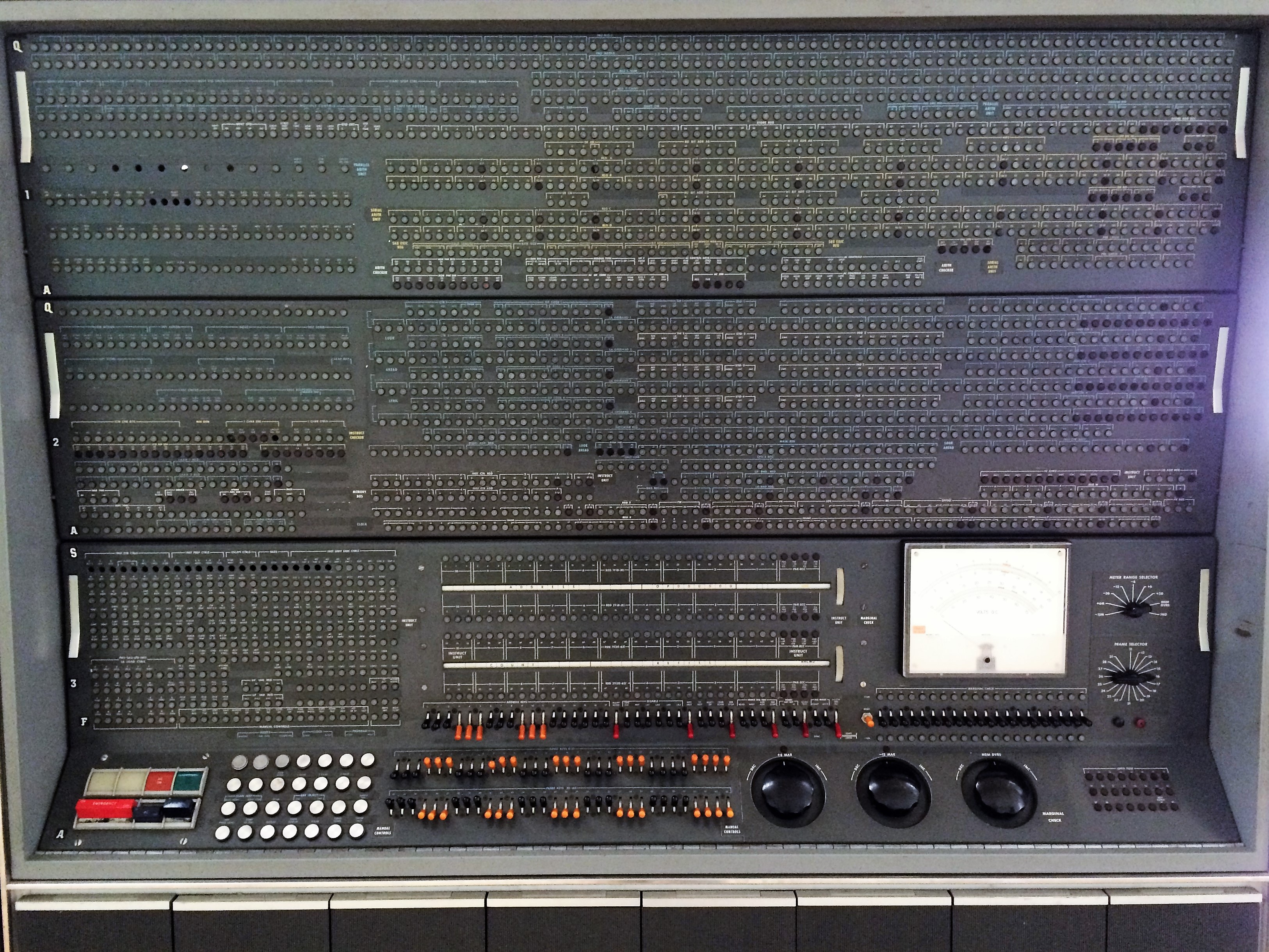
By the time I got to Communication I was reaching the limit of my endurance and also what you can fit into a single day of the museum. It’s a large building. It was packed through many of the early examples of computing, television, and space. There was quite a display of early camera equipment. You could get close enough to some truly massive old computers to smell the still off-gassing phenolics.
Construction held my interest for a long time. It’s not my usual interest, but after living in Paris for a month or so I was absolutely burning with curiosity. How did anyone without a single powered crane or vehicle build so many buildings out of stone? It’s packed for four rooms and two stores from floor to ceiling of beautiful little wood models explaining exactly how.
Énergie was quite cool. It followed the development of steam power for the most part. It started with primitive waterwheels. Moved on to turbines. Then showed the gradual increase in complexity until the the modern day. It had some internal combustion too, but much of that was reserved for the transports section of the museum. It also had some interactive displays to entertain children and Hackaday writers. However they were in desperate need of an oiling and this is by far the most ear-piercingly squeaky exhibit in the whole building.
Mécanique is competing with instruments scientifique as my favorite exhibit. Have you ever wanted to see hundreds of examples of screw machines, old lathes, and the evolution of the milling machine? What about models of the factories that built steam engines or massive wagon wheels. They even had a lathe that belonged to a French king. Apparently he thought metalworking was the way to get in touch with the common people.
Transports was a nice exhibit, but it fell a little short for me since I’d been to the aforementioned Henry Ford museum. However, it covered the history of some of the European automobile manufacturers pretty well. Had a nice section on trains and subways. And even had some models of the ships used in the European Space Agency.
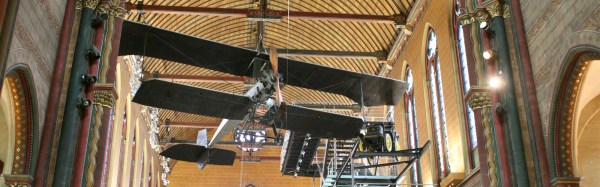
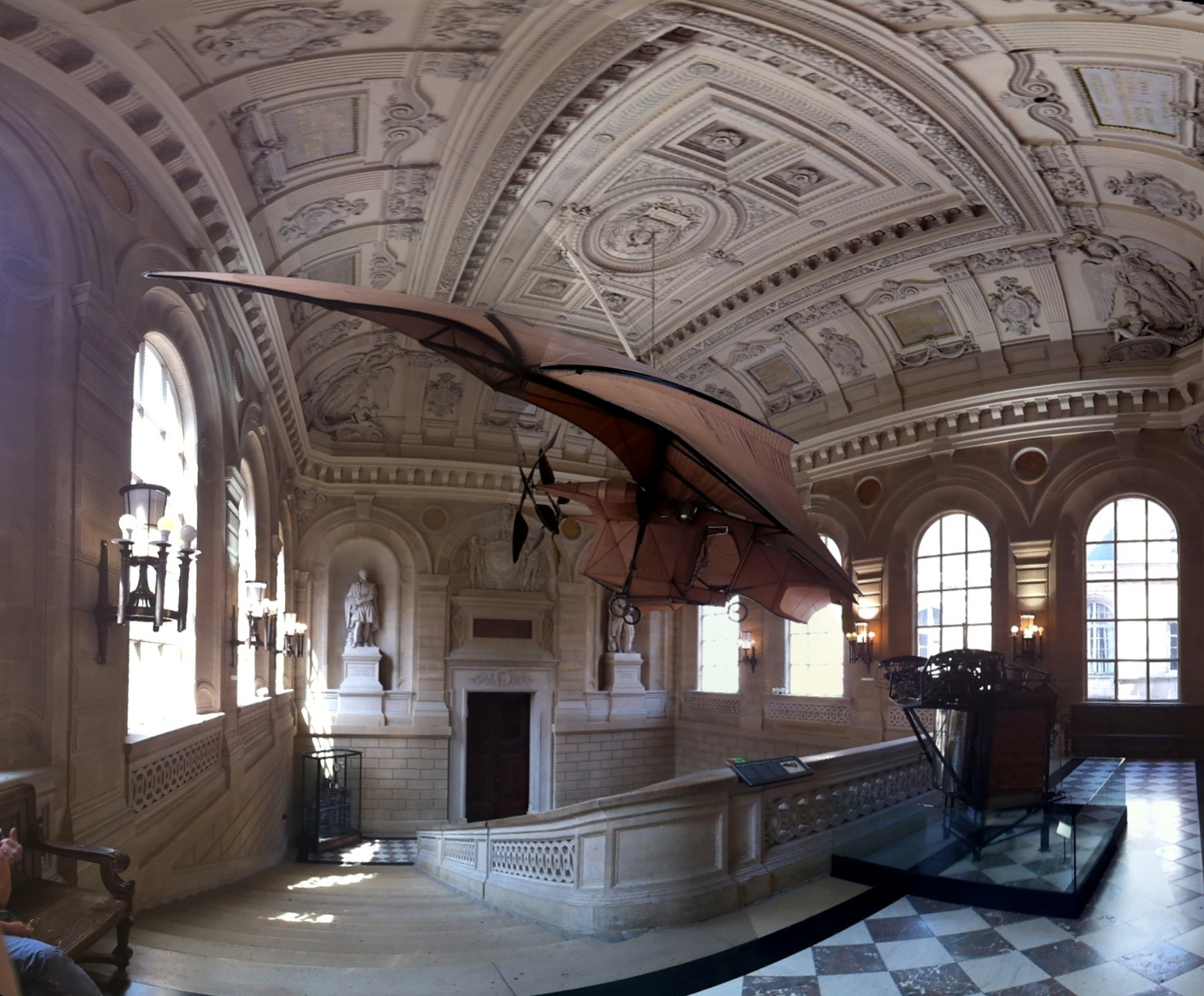
The entrance of the school. Has some original, “flying,” machines. CC: King Boshi
The last exhibit is the museum itself. It’s an historic building. It was originally built as a school for training engineers in 1794 but as the school grew out of it, it slowly transformed into the museum it is today. The architecture is beautiful. It’s adorned in stone and statue like all the French museums. It also has sections cut out in some of the higher storeys of the building so you can see how it was constructed.
Part of its beauty is also related to the school swallowing up the Priory of Saint Martin des Champs (Google translate does a great job if you don’t read French). The Priory is a beautiful old church, founded in 1079. It was home to the last trial by combat the country would see. You can piece together the story between the two pages dedicated to the combatants Jean de Carrouges and Jacques Le Gris.
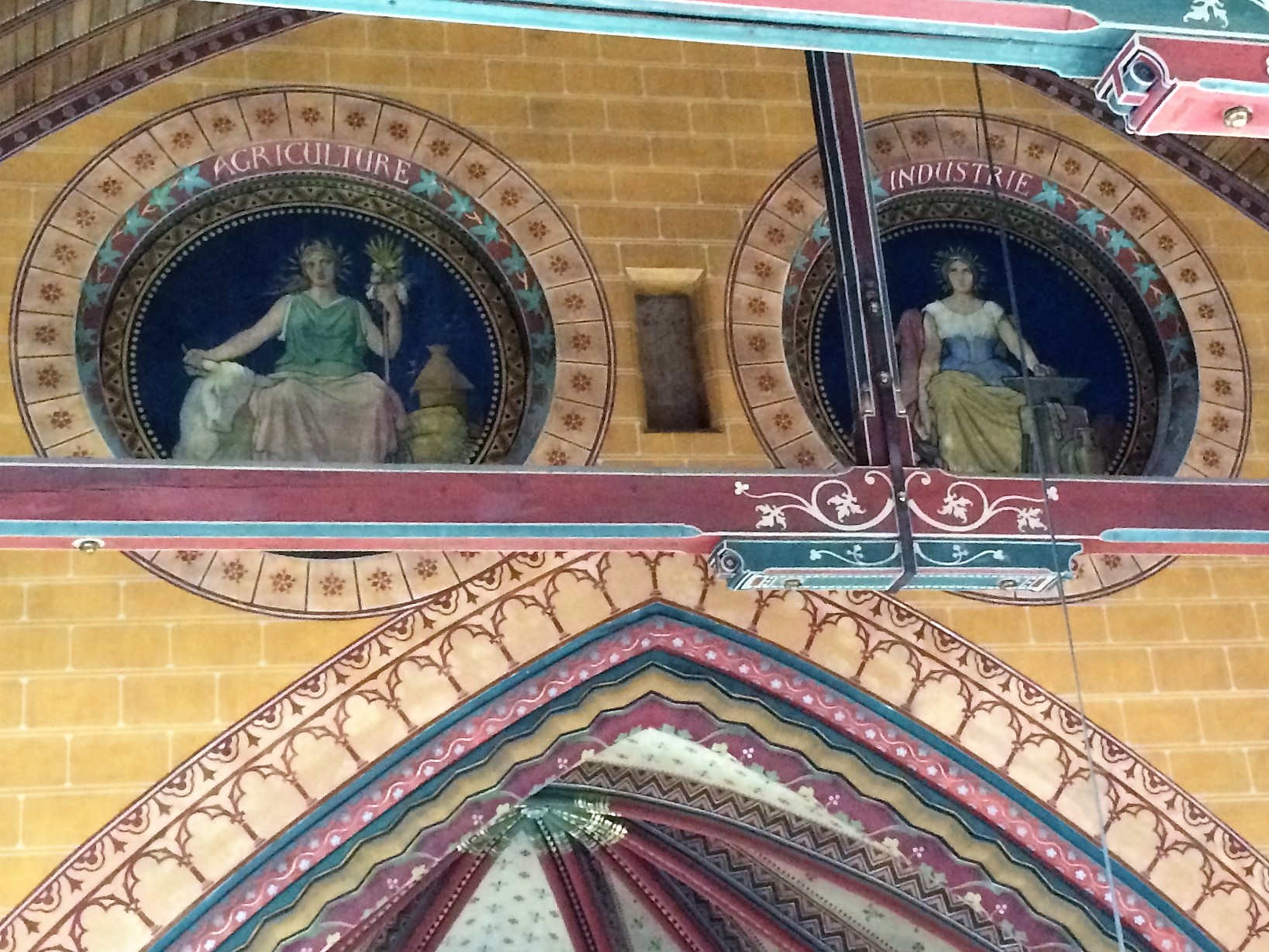
The muses of agriculture and industry now look over the sanctuary.
The final display in the museum is in the church. It holds Foucault’s pendulum, dangling from the center of the sanctuary. If you get there early enough in the day you may get to watch it knock over a peg or two and prove the rotation for yourself.
Rather than the statues of the saints there are statues of the muses of Industrie and Agriculture. The hall is filled with more exhibits. There are cutaway original automobiles. A model of the Statue of Liberty. A catwalk lets you take a high view of the surroundings. It is also beautiful in and of itself. The church is well maintained and painted in the style original to them.
If you find yourself in Paris with a few hours (or days) to spare I highly recommend this museum. Any technical person would be hard pressed to leave uninspired and unawed by the display. It’s good to get a perspective on the past.
Last time I showed you how to expose a web service on a Raspberry Pi (or, actually, any kind of device) by using a reverse proxy from Pagekite. On your Pi, you just need a simple Python script. However, it also depends on the Pagekite server, which isn’t always convenient. There are limits to the free service, and you don’t control the entire thing. The good news is twofold: the same Python script you use to set up the client-side can also set up a server. The other good news is the entire thing is open source.
In practical terms, then, if you have a computer that is always on and has an IP address that can be found on the public internet, you can run your own Pagekite server (they call it a front end) and service your own backends.
This morning it is my pleasure to announce five more confirmed speakers for the Hackaday SuperConference. The ultimate hardware conference takes place in just a few weeks: November 5th and 6th in Pasadena, California.
Everyone’s talking about the Internet of Things (IoT) these days. If you are a long-time Hackaday reader, I’d imagine you are like me and thinking: “so what?” We’ve been building network-connected embedded systems for years. Back in 2003, I wrote a book called Embedded Internet Design — save your money, it is way out of date now and the hardware it describes is all obsolete. But my point is, the Internet of Things isn’t a child of this decade. Only the name is.
The big news — if you can call it that — is that the network is virtually everywhere. That means you can connect things you never would have before. It also means you get a lot of data you have to find a reason to use. Back in 2003, it wasn’t always easy to get a board on the Internet. The TINI boards I used (later named MxTNI) had an Ethernet port. But your toaster or washing machine probably didn’t have a cable next to it in those days.
Today boards like the Raspberry Pi, the Beagle Bone, and their many imitators make it easy to get a small functioning computer on the network — wired or wireless. And wireless is everywhere. If it isn’t, you can do 3G or 4G. If you are out in the sticks, you can consider satellite. All of these options are cheaper than ever before.
The Problem
There’s still one problem. Sure, the network is everywhere. But that network is decidedly slanted at letting you get to the outside world. Want to read CNN or watch Netflix? Sure. But turning your computer into a server is a little different. Most low-cost network options are asymmetrical. They download faster than they upload. You can’t do much about that except throw more money at your network provider. But also, most inexpensive options expose one IP address to the world and then do Network Address Translation (NAT) to distribute service to local devices like PCs, phones, and tablets. What’s worse is, you share that public address with others, so your IP address is subject to change on a whim.
What do you do if you want to put a Raspberry Pi, for example, on a network and expose it? If you control the whole network, it isn’t that hard. You usually use some kind of dynamic DNS service that lets the Pi (or any computer) tell a well-known server its current IP address (see figure below).