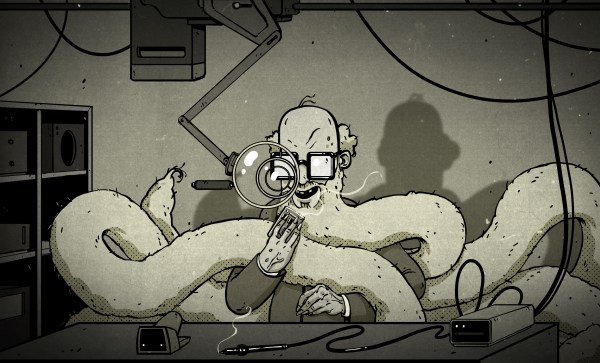
Amazon’s Custom T-Shirt May Rub You The Wrong Way

How far would you go in pursuit of the perfect black t-shirt? Would you let Amazon build a virtual double of your body? They already know so much about you, so what’s a body scan or two between customer and company?

So here’s the deal — Amazon is trying to launch a brand of bespoke clothing called Made for You, and they’re starting with custom solid color t-shirts. Here’s how it works: you give them $25 along with information about your height, weight, and skin tone. Then you upload two pictures of your torso to their app, and these get turned into a 3D model of your body. Once your avatar is built to match, you design your shirt to fit the model. In theory, you get a really good idea of how it will fit.

You can choose from two different fabrics and eight colors, and can customize the neckline, the shirt length, and the sleeve length. If you want to, you can put your name on the tag. Then your perfect t-shirt gets made in the US from imported fabric — either lightweight or medium weight pima cotton. We’re not sure if robots or people are making them, but our money is on people. After all, Amazon is the company that created Mechanical Turk to form a pool of humans available to do on-demand work via the Internet. This is along those lines but with tailors sewing to your specifications. The big questions are what do you get, how does the technology make these better than off-the-rack, and do you give up your privacy in return?

One-Size Fits One

To say that these are custom t-shirts is a bit of a stretch. Oh you don’t need to worry about the t-shirts being skin-tight and showcasing your spare tire — if it’s a relaxed fit you want, that’s one of the options. But the current options are limited.

Continue reading “Amazon’s Custom T-Shirt May Rub You The Wrong Way”

Label Your Shtuff!

Joshua Vasquez wrote a piece a couple of weeks ago about how his open source machine benefits greatly from having part numbers integrated into all of the 3D printed parts. It lets people talk exactly about which widget, and which revision of that widget, they have in front of them.

Along the way, he mentions that it’s also a good idea to have labels as an integrated part of the machine anywhere you have signals or connectors. That way, you never have to ask yourself which side is positive, or how many volts this port is specced for. It’s the “knowledge in the head” versus “knowledge in the world” distinction — if you have to remember it, you’ll forget it, but if it’s printed on the very item, you’ll just read it.

I mention this because I was beaten twice in the last week by this phenomenon, once by my own hand costing an hour’s extra work, and once by the hand of others, releasing the magic smoke and sending me crawling back to eBay.

The first case is a 3D-printed data and power port, mounted on the underside of a converted hoverboard-transporter thing that I put together for last year’s Chaos Communication Congress. I was actually pretty proud of the design, until I wanted to reflash the firmware a year later.

I knew that I had broken out not just the serial lines and power rails (labelled!) but also the STM32 SWD programming headers and I2C. I vaguely remember having a mnemonic that explained how TX and RX were related to SCK and SDA, but I can’t remember it for the life of me. And the wires snake up under a heatsink where I can’t even trace them out to the chip. “Knowledge in the world”? I failed that, so I spent an hour looking for my build notes. (At least I had them.)

Then the smoke came out of an Arduino Mega that I was using with a RAMPS 1.4 board to drive a hot-wire cutting CNC machine. I’ve been playing around with this for a month now, and it was gratifying to see it all up and running, until something smelled funny, and took out a wall-wart power supply in addition to the Mega.

All of the parts on the RAMPS board are good to 36 V or so, so it shouldn’t have been a problem, and the power input is only labelled “5 A” and “GND”, so you’d figure it wasn’t voltage-sensitive and 18 V would be just fine. Of course, you can read online the tales of woe as people smoke their Mega boards, which have a voltage regulator that’s only good to 12 V and is powered for some reason through the RAMPS board even though it’s connected via USB to a computer. To be honest, if the power input were labelled 12 V, I still might have chanced it with 18 V, but at least I would have only myself to blame.

Part numbers are a great idea, and I’ll put that on my list of New Year’s resolutions for 2021. But better labels, on the device in question, for any connections, isn’t even going to wait the couple weeks until January. I’m changing that right now.

PS2 Emulation On The Xbox Series S: A Story Of Walled Gardens

It’s hardly a secret any more at this point that today’s game consoles from Microsoft and Sony are essentially AMD gaming rigs packed up into a custom package and with tweaked system software. So it’s not too surprising that enterprising hackers got the Playstation 2 emulator of RetroArch running on an Xbox Series X|S game console despite Microsoft’s attempts to stop them. (Video, embedded below.)

It’s possible to sneak the RetroArch app past Microsoft’s security checkpoints by shelling out $19 for a Microsoft Developer Account, setting up Developer Mode on the XBox console, and getting the Universal Windows Platform (UWP) port of RetroArch from the official website. This has the advantage of it being a blessed-by-the-Redmond-gods approach. But one cannot play retail games in Developer Mode and large games due to a 2 GB limit.

More recently, a hacker by the name of [tunip3] found a flaw in the Xbox app distribution system which allows one to download a ‘retail’ version of RetroArch. This involves marking the RetroArch app as ‘private’, allowing it to skip a review by Microsoft. People whose email address is on a whitelist are then granted download permission for that app on their Xbox console. The advantage of this ‘retail’ approach is that it does not feature the 2 GB filesize limits. The disadvantage is that Microsoft is free to take the app down and ban [tunip3]’s developer account.

My Way Versus the Highway

A lot about this comes down to a simple question of ‘why?’. Why even jump through these hoops to set up a limited, possibly ToS-breaking emulator on what is ultimately a gaming PC running Windows 10? Why not use that Raspberry Pi 4 or NUC system that’s been giving you sad eyes for the past months from where it’s been stuffed into a dusty corner?

Continue reading “PS2 Emulation On The Xbox Series S: A Story Of Walled Gardens”

How Much Is Too Much?

I definitely tend towards minimalism in my personal projects. That often translates into getting stuff done with the smallest number of parts, or the cheapest parts, or the lowest tech. Oddly enough that doesn’t extend to getting the project done in the minimum amount of time, which is a resource no less valuable than money or silicon. The overkill road is often the smoothest road, but I’ll make the case for taking the rocky, muddy path. (At least sometimes.)

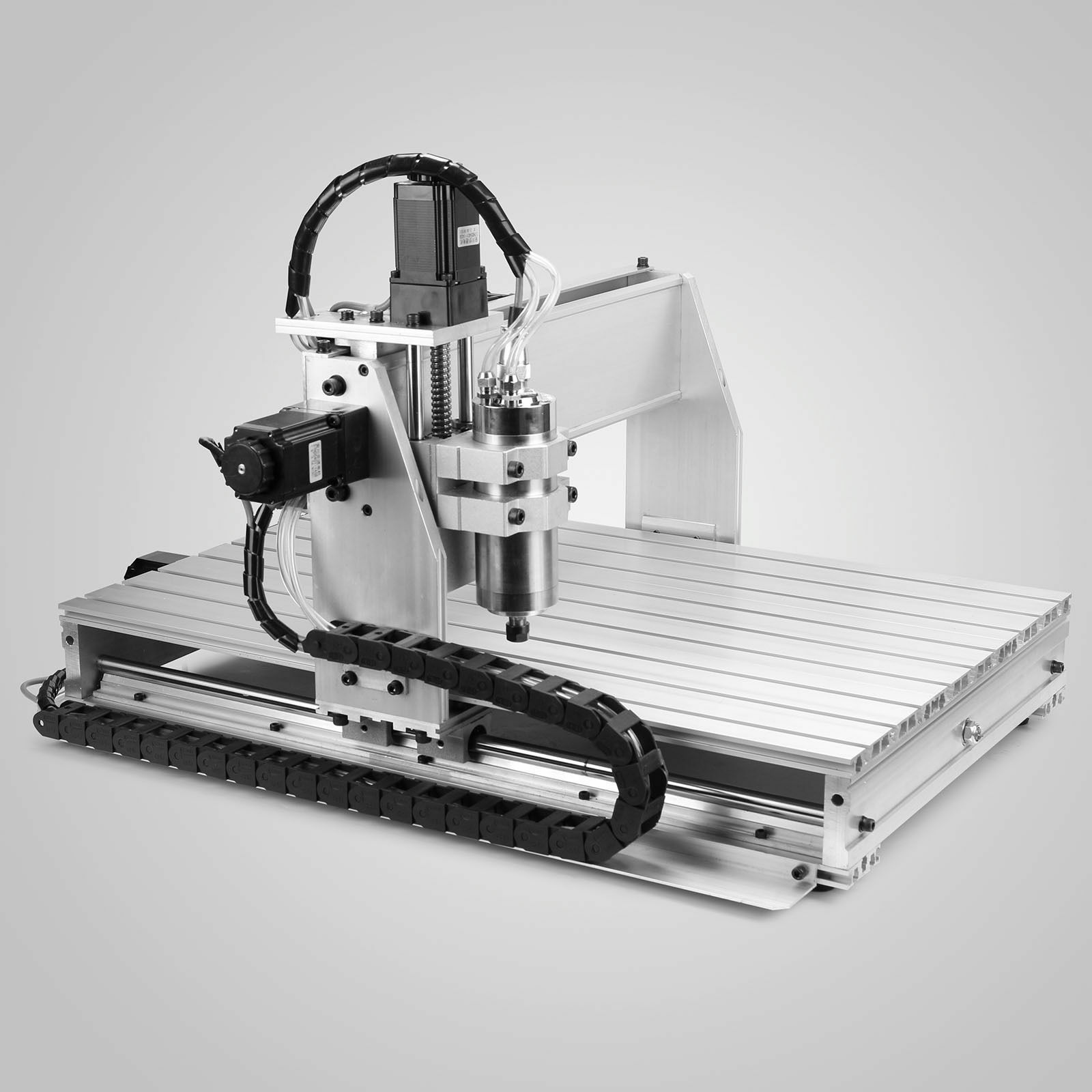
There are a bunch of great designs for CNC hot-wire foam cutters out there, and they range from the hacky to the ridiculously over-engineered, with probably most of them falling into the latter pile. Many of the machines you’ll see borrow heavily from their nearest cousins, the CNC mill or the 3D printer, and sport hardened steel rails or ballscrews and are constructed out of thick MDF or even aluminum plates.

All a CNC foam cutter needs to do is hold a little bit of tension on a wire that gets hot, and pass it slowly and accurately through a block of foam, which obligingly melts out of the way. The wire moves slowly, so the frame doesn’t need to handle the acceleration of a 3D printer head, and it faces almost no load so it doesn’t need any of the beefy drives and ways of the CNC mill. But the mechanics of the mill and printer are so well worked out that most makers don’t feel the need to minimize, simply build what they already know, and thereby save time. They build a machine strong enough to carry a small child instead of a 60 cm length of 0.4 mm wire that weighs less than a bird’s feather.

I took the opposite approach, building as light and as minimal as possible from the ground up. (Which is why my machine still isn’t finished yet!) By building too little, too wobbly, or simply too janky, I’ve gotten to see what the advantages of the more robust designs are. Had I started out with an infinite supply of v-slot rail and ballscrews, I wouldn’t have found out that they’re overkill, but if I had started out with a frame that resisted pulling inwards a little bit more, I would be done by now.

Overbuilding is expedient, but it’s also a one-way street. Once you have the gilded version of the machine up and running, there’s little incentive to reduce the cost or complexity of the thing; it’s working and the money is already spent. But when your machine doesn’t quite work well enough yet, it’s easy enough to tell what needs improving, as well as what doesn’t. Overkill is the path of getting it done fast, while iterated failure and improvement is the path of learning along the way. And when it’s done, I’ll have a good story to tell. Or at least that’s what I’m saying to myself as I wait for my third rail-holder block to finish printing.

Sufficiently Advanced Technology And Justice

Imagine that you’re serving on a jury, and you’re given an image taken from a surveillance camera. It looks pretty much like the suspect, but the image has been “enhanced” by an AI from the original. Do you convict? How does this weigh out on the scales of reasonable doubt? Should you demand to see the original?

AI-enhanced, upscaled, or otherwise modified images are tremendously realistic. But what they’re showing you isn’t reality. When we wrote about this last week, [Denis Shiryaev], one of the authors of one of the methods we highlighted, weighed in the comments to point out that these modifications aren’t “restorations” of the original. While they might add incredibly fine detail, for instance, they don’t recreate or restore reality. The neural net creates its own reality, out of millions and millions of faces that it’s learned.

And for the purposes of identification, that’s exactly the problem: the facial features of millions of other people have been used to increase the resolution. Can you identify the person in the pixelized image? Can you identify that same person in the resulting up-sampling? If the question put before the jury was “is the defendant a former president of the USA?” you’d answer the question differently depending on which image you were presented. And you’d have a misleading level of confidence in your ability to judge the AI-retouched photo. Clearly, informed skepticism on the part of the jury is required.

Unfortunately, we’ve all seen countless examples of “zoom, enhance” in movies and TV shows being successfully used to nab the perps and nail their convictions. We haven’t seen nearly as much detailed analysis of how adversarial neural networks create faces out of a scant handful of pixels. This, combined with the almost magical resolution of the end product, would certainly sway a jury of normal folks. On the other hand, the popularity of intentionally misleading “deep fakes” might help educate the public to the dangers of believing what they see when AI is involved.

This is just one example, but keeping the public interested in and educated on the deep workings and limitations of the technology that’s running our world is more important than ever before, but some of the material is truly hard. How do we separate the science from the magic?

Amazon Sidewalk: Should You Be Co-Opted Into A Private Neighbourhood LoRa Network?

WiFi just isn’t very good at going through buildings. It’s fine for the main living areas of an average home, but once we venture towards the periphery of our domains it starts to become less reliable.  For connected devices outside the core of a home, this presents a problem, and it’s one Amazon hope to solve with their Sidewalk product.

It’s a low-bandwidth networking system that uses capability already built into some Echo and Ring devices, plus a portion of the owner’s broadband connection to the Internet.  The idea is to provide basic connectivity over longer distances to compatible devices even when the WiFi network is not available, but of most interest and concern is that it will also expose itself to devices owned by other people. If your Internet connection goes down, then your Ring devices will still provide a basic version of their functionality via a local low-bandwidth wide-area wireless network provided by the Amazon devices owned by your neighbours. Continue reading “Amazon Sidewalk: Should You Be Co-Opted Into A Private Neighbourhood LoRa Network?”

What Is Worth Saving?

When it rain, it pours. One of the primary support cables holding up the Arecibo Observatory dish in Puerto Rico has just snapped, leaving its already uncertain fate. It had been badly damaged by Hurricane Maria in 2017, and after a few years of fundraising, the repairs were just about to begin on fixing up that damage, when the cable broke. Because the remaining cables are now holding increased weight, humans aren’t allowed to work on the dome until the risk of catastrophic failure has been ruled out — they’re doing inspection by drone.

Arecibo Observatory has had quite a run. It started out life as part of a Cold War era ICBM-tracking radar, which explains why it can transmit as well as receive. And it was the largest transmitting dish the world had. It was used in SETI, provided the first clues of gravitational waves, and found the first repeating fast radio bursts. Its radar capabilities mean that it could be used in asteroid detection. There are a number of reasons, not the least of which its historic import, to keep it running.

So when we ran this story, many commenters, fearing the worst, wrote in with their condolences. But some wrote in with outrage at the possibility that it might not be repaired. The usual suspects popped up: failure to spend enough on science, or on infrastructure. From the sidelines, however, and probably until further structural studies are done, we have no idea how much a repair of Arecibo will cost. After that, we have to decide if it’s worth it.

Per a 2018 grant, the NSF was splitting the $20 M repair and maintenance bill with a consortium led by the University of Central Florida that will administer the site. With further damage, that might be an underestimate, but we don’t know how much of one yet.

When do you decide to pull the plug on something like this? Although the biggest, Arecibo isn’t the only transmitter out there. The next largest transmitters are part of Deep Space Network, though, and are busy keeping touch with spacecraft all around our solar system. For pure receiving, China’s FAST is bigger and better. And certainly, we’ve learned a lot about radio telescopes since Arecibo was designed.

I’m not saying that we won’t shed a tear if Arecibo doesn’t get repaired, but it’s not the case that the NSF’s budget has been hit dramatically, or that they’re unaware of the comparative value of various big-ticket astronomy projects. Without being in their shoes, and having read through the thousands of competing grant proposals, it’s hard to say that the money spent to prop up a 70 year old telescope wouldn’t be better spent on something else.