The ARMv9 ISA, And What It Can Do For You

The number of distinct ARM Instruction Set Architectures (ISA) versions has slowly increased, with Arm adding a new version every few years. The oldest ISA version in common use today is ARMv6, with the ARMv6 ISA (ARM11) found in the original Raspberry Pi SBC and Raspberry Pi Zero (BCM2835). The ARMv6 ISA was introduced in 2002, followed by ARMv7 in 2005 (start of Cortex-A series) and ARMv8 in 2011. The latter was notable for adding 64-bit support.

With ARMv7 being the first of the Cortex cores, and ARMv8 adding 64-bit support in the form of AArch64, what notable features does ARMv9 bring to the table? As announced earlier this year, ARMv9’s focus appears to be on adding a whole host of features that should improve vector processing (vector extensions, or SVE) as well as digital signal processing (DSP) and security, with its Confidential Compute Architecture (CCA).

In addition to this, ARMv9 also includes all of the features that were added with ARMv8.1, v8.2, v8.3 and so on. In essence, this makes an ARMv9-based processor theoretically capable of going toe-to-toe with the best that Intel and AMD have to offer.

Continue reading “The ARMv9 ISA, And What It Can Do For You”

South Australia Vs. Too Much Home Solar

Once upon a time, the consensus was that renewable energy was too expensive and in too sparse supply to be a viable power source to run our proud, electrified societies on. Since then, prices of solar panels have tanked, becoming more efficient along the way, and homeowners have been installing them on their rooftops in droves.

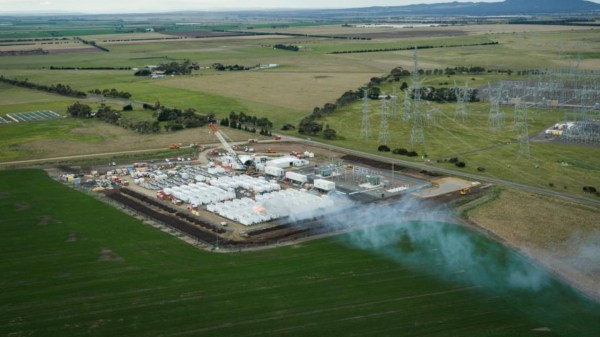
Where once it was thought we’d never have enough solar energy, in some cities, it’s becoming all too much. In South Australia, where solar output can be huge on a sunny day, electricity authorities are facing problems with grid stability, and are taking measures to limit solar output to the grid.

Isn’t More Usually Better?

The problem faced by South Australian utilities is one of how to properly control an electrical grid with many thousands of distributed power sources. Typically, in conventional modern power grids, voltage and frequency is controlled within set limits by carefully matching the supply from major power plants with the demand from users. Fast-response plants can be brought online to meet shortfalls, and switched off when demand drops, and everything hums along nicely.

Unfortunately, solar power isn’t so easy to throttle, and even less so when it’s coming from thousands of separate households each with their own rooftop install and an inverter to feed back into the grid. This has led to authorities contemplating measures such as charging homeowners to export energy to the grid in peak periods in an effort to slow the huge uptake of home solar systems. Export limits have also been proposed for suburbs with the highest concentration of home solar, as substations in certain residential areas struggle to cope under the huge inflows of energy. Continue reading “South Australia Vs. Too Much Home Solar”

Reinventing The Wheel

You’ve got a perfectly working software library to do just exactly what you want. Why aren’t you using it? Some of you are already yelling something about NIH syndrome or reinventing the wheel — I hear you. But at least sometimes, there’s a good enough reason to reinvent the wheel: let’s say you want to learn something.

Mike and I were talking about a cool hack on the podcast: a library that makes a floppy drive work with an Arduino, and even builds out a minimalistic DOS for it. The one thing that [David Hansel] didn’t do by himself was write the FAT library; he used the ever-popular FatFS by [Elm-ChaN]. Mike casually noted that he’s always wanted to write his own FAT library from scratch, just to learn how it works at the fundamental level, and I didn’t even bat an eyelash. Heck, if I had the time, I’d want to do that too!

Look around on Hackaday, and you’ll see tons of hacks where people reinvent the wheel. In this superb soundbar hack, [Michal] spends a while working on the IR protocol by hand until succumbing to the call of IRMP, a library that has it all done for you. But if you read his writeup, he’s not sad; he learned something about IR protocols. This I2C paper tape reader is nothing if not a reinvention of the I2C wheel, but isn’t that the best way to learn?

Yes it is. Think back to the last class you took. The teacher or professor certainly explained something to you in reasonable detail — that’s the job after all. And then you got some homework to do by yourself, and you did it, even though you were probably just going over the same stuff that the prof and countless others have gone through. But by doing it yourself, even though it was “reinventing the wheel”, you learned the material. And I’d wager that you wouldn’t have learned it without.

Of course, when the chips are down and the deadline is breathing hot down your neck, that might be the right time to just include that tried-and-true library. But if you really want to learn something yourself, you have every right to reinvent the wheel.

How To Build A Turbo Car The Cheap, 90s Way

If you want to coax more power out of your car’s engine, a turbocharger is a great way to go about it. Taking waste energy from the exhaust and using it to cram more air into the engine, they’re one of the best value ways to make big gains in horsepower.

However, unlike simpler mods like a bigger exhaust or a mild cam swap, a turbocharger install on a naturally aspirated, fuel-injected engine often requires a complete replacement of the engine management system, particularly on older cars. This isn’t cheap, leaving many to stick to turbocharging cars with factory tuneable ECUs, or to give up altogether. In the 1990s, aftermarket ECUs were even more expensive, leading many to avoid them altogether. Instead, enthusiasts used creative hacks to make their turbo builds a reality on the cheap, and there’s little stopping you from doing the very same today.

Continue reading “How To Build A Turbo Car The Cheap, 90s Way”

This Week In Security: BYOVD, Spectre Vx, More Octal Headaches, And ExifTool

I learned a new acronym while reading about a set of flaws in the Dell BIOS update system. Because Dell has patched their driver, but hasn’t yet revoked the signing keys from the previous driver version, it is open to a BYOVD attack.

BYOVD, Bring Your Own Vulnerable Driver, is an interesting approach to Windows privilege escalation. 64-bit versions of Windows have a security feature that blocks unsigned kernel drivers from the kernel. The exploit is to load an older, known-vulnerable driver that still has valid signatures into the kernel, and use the old vulnerabilities to exploit the system. The caveat is that even when a driver is signed, it still takes an admin account to load a driver. So what use is the BYOVD attack, when it takes administrative access to pull off?

SentinelLabs is witholding their proof-of-concept, but we can speculate. The particular vulnerable driver module lives in the filesystem at C:\Windows\Temp, a location that is writable by any process. The likely attack is to overwrite the driver on the filesystem, then trigger a reboot to load the older vulnerable version. If you’re still running Windows on your Dell machines, then make sure to go tend to this issue. Continue reading “This Week In Security: BYOVD, Spectre Vx, More Octal Headaches, And ExifTool”

SpaceX Drops The Ball On Catching Fairings

You don’t have to look very hard to find another rousing success by SpaceX. It’s a company defined by big and bold moves, and when something goes right, they make sure you know about it. From launching a Tesla into deep space to the captivating test flights of their next-generation Starship spacecraft, the private company has turned high-stakes aerospace research and development into a public event. A cult of personality has developed around SpaceX’s outlandish CEO Elon Musk, and so long as he’s at the helm, we can expect bigger and brighter spectacles as he directs the company towards its ultimate goal of putting humans on Mars.

Of course, things don’t always go right for SpaceX. While setbacks are inevitable in aerospace, the company has had a few particularly embarrassing failures that could be directly attributed to their rapid development pace or even operational inexperience. A perfect example is the loss of the Israeli AMOS-6 satellite during a static fire of the Falcon 9’s engines on the launch pad in 2016, as industry experts questioned why the spacecraft had even been mounted to the rocket before it had passed its pre-flight checks. Since that costly mistake, the company has waited until all engine tests have been completed before attaching the customer’s payload.

SpaceX’s concept art for propulsive landing

But sometimes the failure isn’t so much a technical problem as an inability for the company to achieve their own lofty goals. Occasionally one of Musk’s grand ideas ends up being too complex, dangerous, or expensive to put into practice. For instance, despite spending several years and untold amounts of money perfecting the technology involved, propulsive landings for the Crew Dragon were nixed before the idea could ever fully be tested. NASA was reportedly uncomfortable with what they saw as an unnecessary risk compared to the more traditional ocean splashdown under parachutes; it would have been an impressive sight to be sure, but it didn’t offer a substantive benefit over the simpler approach.

A similar fate recently befell SpaceX’s twin fairing recovery ships Ms. Tree and Ms. Chief, which were quietly retired in April. These vessels were designed to catch the Falcon’s school bus sized payload fairings as they drifted down back to Earth using massive nets suspended over their decks, but in the end, the process turned out to be more difficult than expected. More importantly, it apparently wasn’t even necessary in the first place.

Continue reading “SpaceX Drops The Ball On Catching Fairings”

Ask Hackaday: If Aliens Came By, Would We Even Notice?

A few years ago we talked about the chance that the first known extrasolar visitor — Oumuamua — might be a derelict solar sail. That notion has been picking up steam in the popular press lately, and it made us think again about the chances that the supposed rock was really a solar sail discarded or maybe even a probe flying with a solar sail. At the same time, Mars is as close as it ever gets so there is a gaggle of our probes searching the red planet, some of them looking for signs of past life.

All this makes us think: if we did find life or even artifacts of intelligent life, would we realize it? Sure, we can usually figure out what’s alive here on Earth. But to paraphrase Justice Potter Stewart, “We know it when we see it.” Defining life turns out to be surprisingly tricky, recognizing alien technology would be even harder.

Continue reading “Ask Hackaday: If Aliens Came By, Would We Even Notice?”