Eclipse 2017: Where Will You Be When The Sun Goes Away?

In less than a month, on August 21, 2017, the Moon will cast its shadow upon the Earth, a relative pinprick at only 60 miles across. The shadow will begin in the Pacific Ocean off North America, make landfall south of Portland, Oregon, and rake diagonally across the United States. Charging southeastward at about 2000 miles an hour, the path of totality will touch 12 states before racing off into the Atlantic Ocean around Charleston, South Carolina.

Those are the dry facts of the eclipse, the wheres and the whens of an event that hasn’t been visible to a majority of the US population in 47 years. But beyond the science and the natural wonder of the celestial alignment lies a simple question: Where will you be when the sun goes away?

An Eclipse from a Volcano
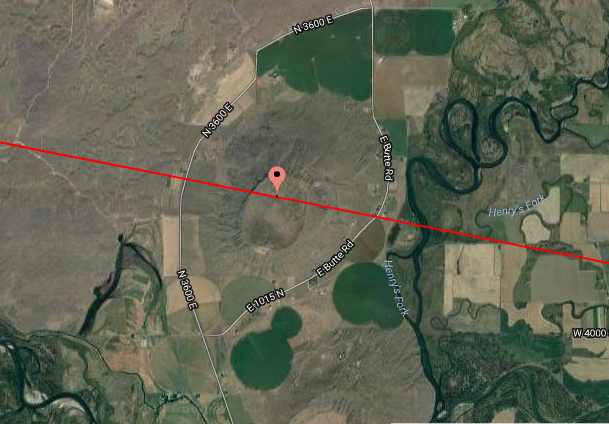
Bullseye! The center of totality passes right through North Menan Butte in Rexburg, ID.

For me, the answer is simple: I’ll be smack dab in the middle of totality on top of an extinct volcano in eastern Idaho. To see an eclipse is pretty cool; to watch the mechanics of the heavens work above you while standing in a unique geological feature will be far cooler.

It will take me eight hours to drive to Menan Buttes with my family from our home in the Panhandle; Idaho is an enormous state. We’ll be camping on private land outside the southern butte, probably in pretty rustic conditions and without a lot of rough camping experience. OK, none. But I don’t care because I want to see totality, and the 92% totality we’d see if we stayed home just won’t cut it.

While most people will likely have their eyes cast heavenward with their cheap cardboard and plastic eclipse glasses or shade 14 welding lens when the big moment arrives, my eyes will be locked on the ground to the west of our vantage point. Menan Butte stands about 500′ above the flat, featureless Snake River plain, and I intend to watch the moon’s shadow racing across the planet toward us. That’s the draw for me, and I hope I get to see it.

That’s not to say I won’t look skyward once the shadow is upon us, gazing in wide wonder at the incandescent dance of our sun’s atmosphere against the suddenly dark sky. I’ll bask in the unnatural twilight, listen to the gasps and cheers of my fellow watchers, and feel the sudden temperature drop, which should be quite marked in the east Idaho drylands. We’ll have about two minutes of totality before the shadow races east toward the vast majority of the US population, and I plan to enjoy every second of it.

Hackaday Eclipse Meetups

Aside from just watching the eclipse, there’s plenty else to do. Hackaday.io members across the country are hosting Hackaday Eclipse Meetups, where like minded folks can mix and mingle before the eclipse. If you know where you’ll be to watch the eclipse — like an extinct volcano, for instance — and you don’t mind sharing the experience with some of your fellow enthusiasts, be sure to post a meetup on the Eclipse Meetups page. Make your event page and we’ll send you some eclipse glasses with the Jolly Wrencher on the side of them for you and your guests.

Have you started thinking of what you’re going to bring with you to the viewing? There are a lot of eclipse projects, from pinhole cameras to watch the eclipse safely, to the Ham operators who will be taking advantage of localized ionospheric changes to make long-distance contacts. Those of us with telescopes might want to build a low-cost solar filter. Someone will likely be trying to prove General Relativity somewhere along the path of totality, and we’d love to see the rig for that. And there will no doubt be petabytes of photographs and videos taken with everything ranging from smartphones to professional cinematic cameras. We’d love to hear what you’re planning and see your setups. And even if you’ve got something cool that’s not eclipse related, bring it along. It’s always a good time to talk shop for hackers.

Continue reading “Eclipse 2017: Where Will You Be When The Sun Goes Away?”

A Wii U That Is Both Computer And Console.

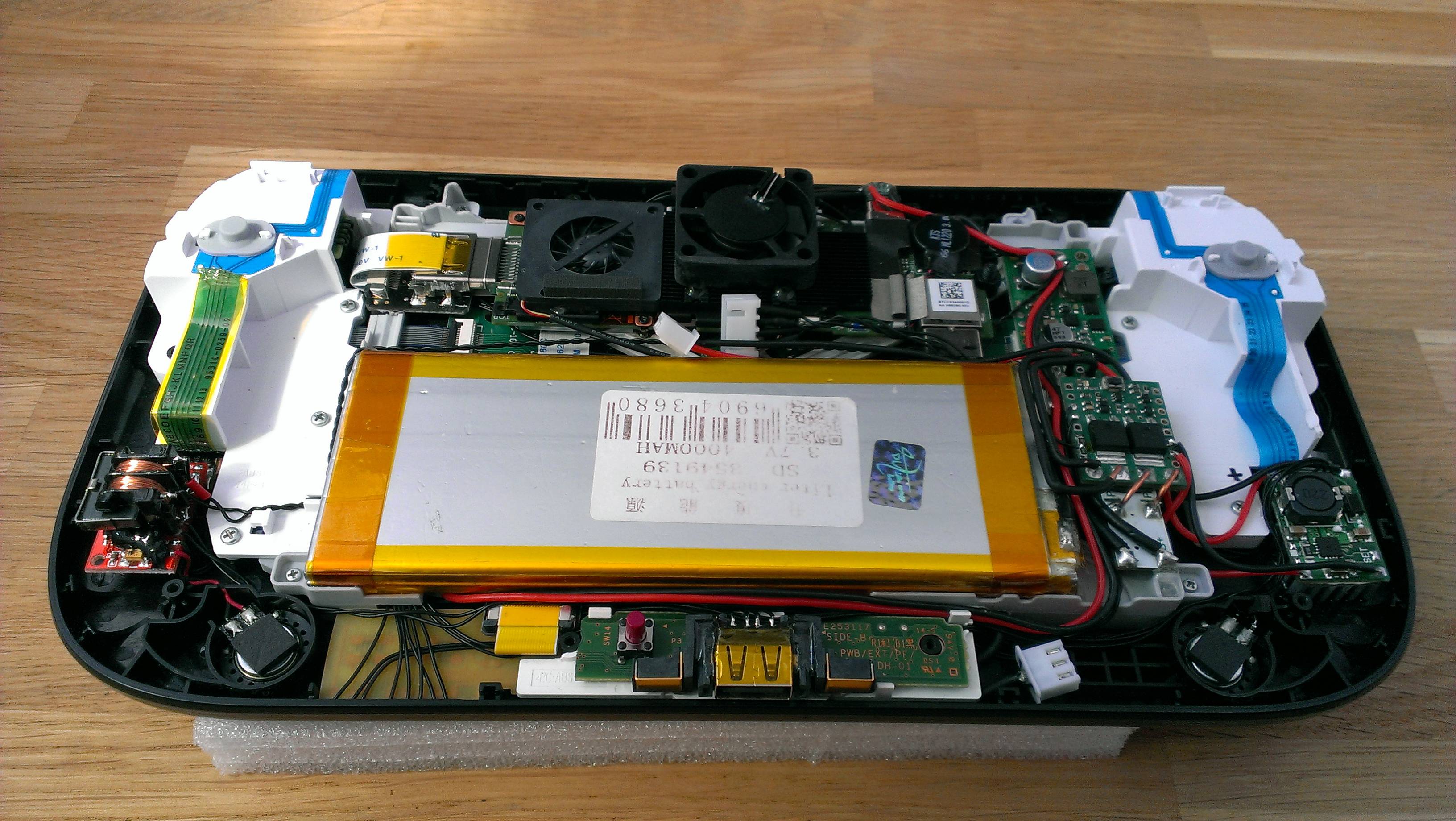
Legendary sudomod forum user [banjokazooie] has once again demonstrated their prowess in Wii U console modification — this time by transforming it into a powerhouse portable computer!

We loved [banjokazooie]’s RetroPie Wii U mod, and happy to see them back again with this build.  What’s in this thing this time around? Buckle up ’cause it’s a ride: an Intel M5 processor core M on their Compute Stick, 4GBs RAM, a 64GB solid-state drive, a 2K LCD touchscreen, Bluetooth, WiFi, a 128GB SD card slot, two 3.7V 4000 mAh batteries, a Pololu 5V,6A step-down voltage regulator, a Teensy 2.0++ dev board, a battery protection PCB, a USB DAC sound card, stereo amp, a USB hub for everything to plug into, and a TP5100 battery charging board. Check it out!

Continue reading “A Wii U That Is Both Computer And Console.”

Why I Got The Job

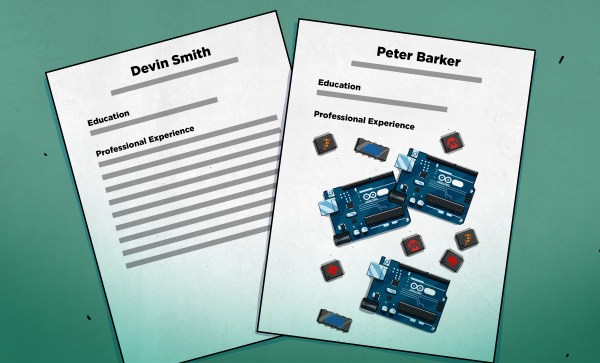
Hackaday readers are a vast and varied bunch. Some of us would call ourselves engineers or are otherwise employed in some kind of technical role. Others may still be studying to gain the requisite qualifications and are perhaps wondering just how to complete that final leap into the realm of gainful employment. Well, this one’s for you.

What sort of job are you looking for?

You might be a straight, down the lines, petroleum engineering graduate who’s looking to land a job in the oil and gas industry. Conversely, you might be an arts student who’s picked up a few skills with electronics over the years and are keen to gain a position doing grand installation pieces for musuems or corporate clients.

There’s a broad spectrum of jobs out there that require high-level technical skills, and my first piece of advice is that you shouldn’t limit yourself. There are things you can do to keep your options open, even over a long career – these could pay dividends when you’re looking for a seachange.

Continue reading “Why I Got The Job”

Amateur Radio Just Isn’t Exciting

As ARRL president, [Rick Roderick, K5UR] spends a significant amount of time proselytising the hobby. He has a standard talk about amateur radio that involves tales gleaned from his many decades as a licence holder, and features QSL cards from rare DX contacts to show how radio amateurs talk all over the world.

He’s delivered this talk countless times, and is used to a good reception from audiences impressed with what can be done with radio. But when he delivered it to a group of young people, as Southgate ARC reports, he was surprised to see a lack of interest from his audience, to whom DX or contesting just don’t cut it when they have grown up with the pervasive Internet. Writing in the 2016 ARRL Annual Report, he said:

“Change generally doesn’t come easy to us. But when I looked out at that group of young faces and saw their disinterest in traditional ham pursuits, I realized that I had to change. We have to change. It won’t come easy, but it’s essential that we get to work on it now.”

If you were to profile a typical group of radio amateurs, it would not be difficult to see why [K5UR] found himself in this position. It might be an unflattering portrait for some amateurs, but it’s fair to say that amateur radio is a hobby pursued predominantly by older more well-off men with the means to spend thousands of dollars on commercial radios. It is also fair to say that this is hardly a prospect that would energize all but the most dedicated of youthful radio enthusiasts. This is not a new phenomenon, where this is being written it was definitely the case back in the days when they were issuing G7 callsigns, for instance.

Were Hackaday to find ourselves in the position of advising the ARRL on such matters, we’d probably suggest a return to the roots of amateur radio, a time in the early 20th century when it was the technology that mattered rather than the collecting of DXCC entities or grid squares, and an amateur had first to build their own equipment rather than simply order a shiny radio before they could make a contact. Give a room full of kids a kit-building session, have them make a little radio. And lobby for construction to be an integral part of the licensing process, it is very sad indeed that where this is being written at least, the lowest tier of amateur radio licence precludes home-made radio equipment. Given all that, why should it be a surprise that for kids, amateur radio just isn’t exciting?

We’ve shown you some fantastic amateur radio builds over the years. If you have a youngster with an interest in radio, show them a BitX transceiver, or the world of QRP.

Header image: enixii. [CC BY 2.0]. We hope these snoozing kids aren’t in the middle of a lecture on amateur radio.

A Case For The Desktop Vinyl Cutter

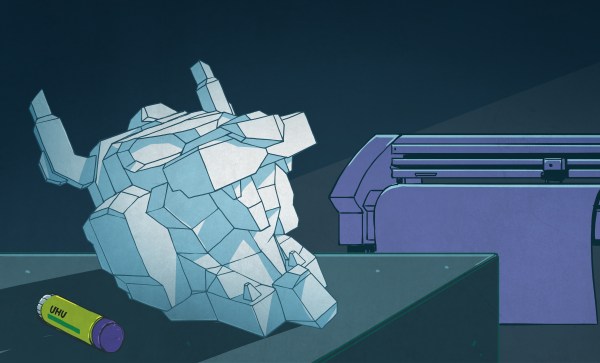
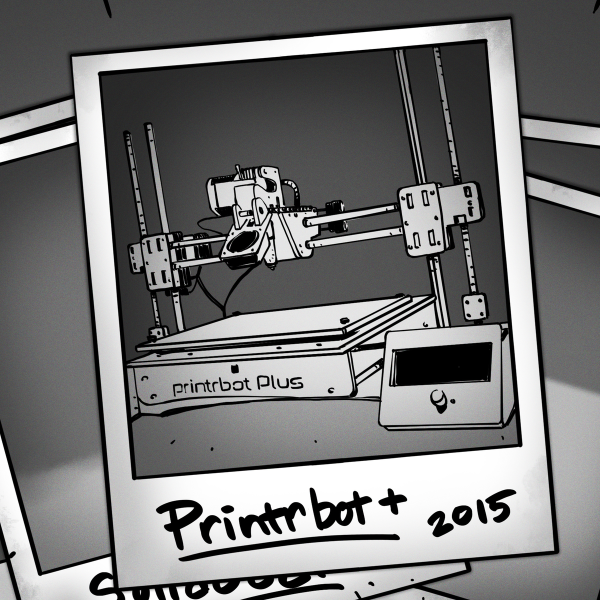
As far as desktop workbench fab tools go, it’s too easy to let 3D printers keep stealing the spotlight. I mean, who doesn’t appreciate that mechatronic “buzz” as our printer squirts a 3D CAD model into plastic life? While the 3D printer can take up a corner of my workbench, there’s still plenty of room for other desktop rapid-prototyping gadgets.

Today, I’d like to shed some light on vinyl cutters. Sure, we can start with stickers and perhaps even jumpstart an after-hours Etsy-mart, but there’s a host of other benefits besides just vinyl cutting. In fact, vinyl cutters might just be the unsung heroes of research in folding and papercraft.

Continue reading “A Case For The Desktop Vinyl Cutter”

Look What People Brought To Breakfast At DEF CON

Sunday was our Breakfast at Hackaday meetup and a swarm of folks showed up, take a look at the hardware they brought with them! Vegas can be a tough place to set up a meetup — especially if you don’t want to rent a room. We filtered into a Starbucks across the street from Caesar’s and ended up packing the high-top table areas. It turns out you get a really funny look from the baristas when you go through the coffee line and ask for four dozen pastries and a few buckets of coffee.

The size of the space made it hard to get a picture of the entire crowd. I did manage to get a posed photo with the people who showed up about a half hour early. Once it filled up all I got for crowd shots were people with their back to me and heads down comparing hardware projects — that might actually be more appropriate for DEF CON where people generally don’t want to be photographed (case in point our bandanna wearing friend).


There was a ton of different hardware on hand. If you look at a picture of the swag and pastries tables, look closely at the high-top behind that. There were a couple of people hacking on RTL-SDRs before we arrive (which means they were at least 45 minutes early).

I’m a fan of wearing your hardware projects at events and this year was really great for that. First, a Captain Phasma helmet from The Force Awakens. It’s 3D printed in ABS, using an acetone/ABS slurry to glue (actually to weld) the parts before sanding and painting to finish the job.

Most of the hacks on hand were unofficial hardware badges built specifically for DEF CON. I was at the Badge Build’s meetup and have a megapost on everything I saw there coming out a bit later. But here we get a look at the dragonfly badge which [Kerry] brought along with him as well as the rectangular PCB that was the prototype. The AND!XOR crew was in the house and I decided to bug [Hyr0n] about the password hashes I was trying to crack from their badge’s firmware. He pulled up the app and it wasn’t surprising to see so many of the Bender on a bender badges in the area. Their botnet was a huge hit this year!

At some point, I was handed this book-like box which had been laser cut and etched out of plywood. It’s a beautiful piece and I had no idea what I would find inside. Turns out it’s a complete quadcopter-badge fun kit. I must have been so enthralled with the electronics when we covered this badge a few weeks back that I completely missed the beautiful box they built for it.

Inside the box, you’ll find two versions of the badge (one that flies, the other that blinks and has a red PCB handkerchief), a separate PCB that is the controller, and a goodie bag with extra batteries and charging hardware. We didn’t fire this up at the meetup, but we’ll have it at the Hackaday Superconference for you to play with. It was really great to get a group picture with so many of the people who worked on making this badge happen.

There was one high-top over in the corner that had been mobbed with people all morning and I only got a look at it when the crowd started to clear out around noon. [Brian McEvoy] built a custom controller for OpenSCAD and did a great job of bringing along a demo. A tablet is running the software, with the controller connected via USB. There are 3 knobs on the right that allow you to adjust height, width, and depth. The fourth knob is for adjusting precision. That precision is displayed in a very clever way. You can see the LED strip with has a red dot on the right (the decimal point) and three colored pixels to the left of it. These are the tens, hundreds, and thousands, but just turn the crank until the red dot is at the other end of the strip and you’ll be setting precision to tenths, hundreths, etc. [Brian] even added a button you can hold down to 10x the precision without making a permanent adjustment. The project is driven by a Teensy LC board.

Is wonderful to see the Hackaday Community turn out for a meetup like this even though so much other stuff is going on at DEF CON. Thank you to all of you for coming to say hi, share your stories, and show off your handy work!

The Dark Arts – Remote File Inclusion

In the waning hours of 2010, a hacking group known as Lulzsec ran rampant across the Internet, leaving a path of compromised servers, a trail of defaced home pages, leaked emails, and login information in their wake. They were eventually busted via human error, and the leader of the group becoming an FBI informant. This handful of relatively young hackers had made a huge mess of things. After the digital dust had settled – researches, journalists, and coders began to dissect just how these seemingly harmless group of kids were able to harness so much power and control over the World Wide Web. What they found was not only eye-opening to web masters and coders, but shined a light on just how vulnerable all of our data was for everyone to see. It ushered in an era of renewed focus on security and how to write secure code.

In this Dark Arts series, we have taken a close look at the primary techniques the Luzsec hackers used to gain illegal access to servers. We’ve covered two them – SQL injection (SQLi) and cross-site scripting (XSS). In this article, we’ll go over the final technique called remote file inclusion (RFI).

DISCLAIMER: Fortunately, the surge of security-minded coding practices after the fall of Lulzsec has (for the most part) removed these vulnerabilities from the Internet as a whole. These techniques are very dated and will not work on any server that is maintained and/or behind a decent firewall, and your IP will probably get flagged and logged for trying them out. But feel free to set up a server at home and play around. Continue reading “The Dark Arts – Remote File Inclusion”