Pokemon Go GPS Cheat (If You Don’t Fear Getting Banned)

Pokemon Go inherits a certain vulnerability to GPS location spoofing from it’s predecessor Ingress, but also the progress that has been made in spoof detection. Since taking advantage of a game’s underlying mechanisms is part of the winner’s game, why not hook up your smartphone to Xcode and see if you can beat Niantic this time? [Dave Conroy] shows you how to play back waypoints and activate your Pokemon Go warp drive.

Continue reading “Pokemon Go GPS Cheat (If You Don’t Fear Getting Banned)”

ArduCAM Introduces A Third Party Raspberry Pi

There are hundreds of ARM-based Linux development boards out there, with new ones appearing every week. The bulk of these ARM boards are mostly unsupported, and in the worst case they don’t work at all. There’s a reason the Raspberry Pi is the best-selling tiny ARM computer, and it isn’t because it’s the fastest or most capable. The Raspberry Pi got to where it is today because of a huge amount of work from devs around the globe.

Try as they might, the newcomer fabricators of these other ARM boards can’t easily glom onto the popularity of the Pi. Doing so would require a Broadcom chipset. Now that the Broadcom BCM2835-based ODROID-W has gone out of production because Broadcom refused to sell the chips, the Raspberry Pi ecosystem has been completely closed.

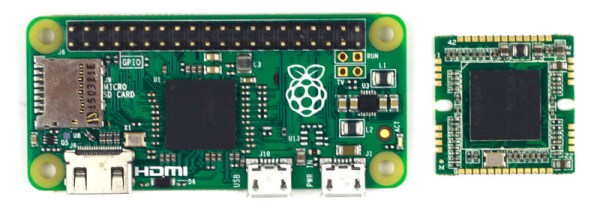
Things may be changing. ArduCAM has introduced a tiny Raspberry Pi compatible module based on Broadcom’s BCM2835 chipset, the same chip found in the original Raspberry Pis A, B, B+ and Zero. This module is tiny – just under an inch square – and compatible with all of the supported software that makes the Raspberry Pi so irresistible.
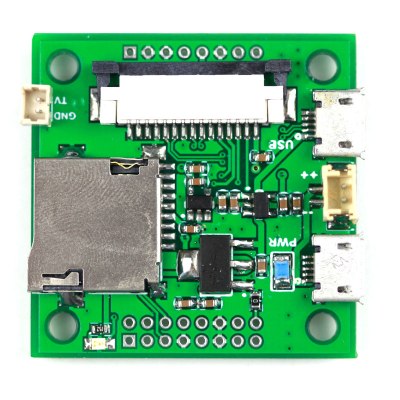
nano-rpi-cmio-backAlthough this Raspberry Pi-compatible board is not finalized, the specs are what you would expect from what is essentially a Raspberry Pi Zero cut down to a square inch board. The CPU is listed as, “Broadcom BCM2835 ARM11 Processor @ 700 MHz (or 1GHz?)” – yes, even the spec sheet doesn’t know how fast the CPU is running – and RAM is either 256 or 512MB of LPDDR2.

There isn’t space on the board for a 2×20 pin header, but a sufficient number of GPIOs are broken out to make this board useful. You will fin a micro-SD card slot, twin micro-USB ports, connectors for power and composite video, as well as the Pi Camera connector. This board is basically the same size as the Pi Camera board, making the idea of a very tiny Linux-backed imaging systems tantalizingly close to being a reality.

It must be noted that this board is not for sale yet, and if Broadcom takes offense to the project, it may never be. That’s exactly what happened with the ODROID-W, and if ArduCAM can’t secure a supply of chips from Broadcom, this project will never see the light of day.


Sonic 3D Printer Auto Bed Leveling Makes A Swoosh

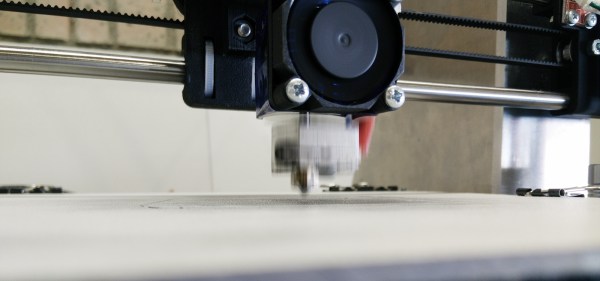
3D Printering: the final frontier. These are the voyages of another 3D printer hack. Its mission: to explore strange new ways of leveling a print bed.

So far, we’ve had servo probes, Allen key probes, Z-sled probes, inductive and capacitive contactless switches, just to name a few. All of them allow a 3D printer to probe its print bed, calculate a correction plane or mesh, and compensate for its own inherent, time variant, inaccuracies.

Continue reading “Sonic 3D Printer Auto Bed Leveling Makes A Swoosh”

Russian Decapping Madness

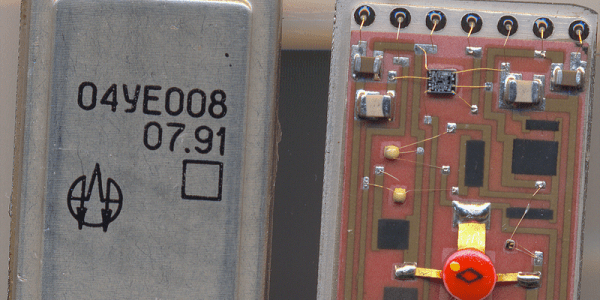
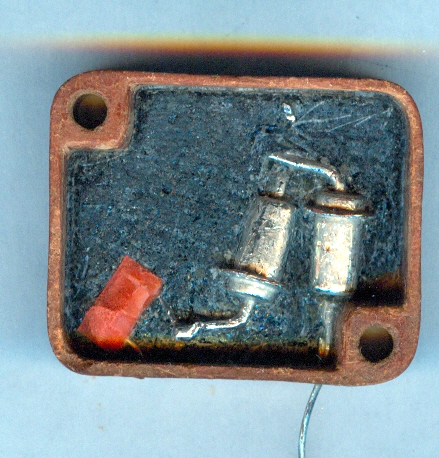
It all started off innocently enough. [mretro] was curious about what was inside a sealed metal box, took a hacksaw to it and posted photographs up on the Interwebs. Over one hundred forum pages and several years later, the thread called (at least in Google Translate) “dissecting room” continues to amaze.

h_1466184174_4168461_2f4afb42b7If you like die shots, decaps, or teardowns of oddball Russian parts, this is like drinking from a firehose. You can of course translate the website, but it’s more fun to open it up in Russian and have a guess at what everything is before peeking. (Hint: don’t look at the part numbers. NE555 is apparently “NE555” in Russian.)

From a brief survey, a lot of these seem to be radio parts, and a lot of it is retro or obsolete. Forum user [lalka] seems to have opened up one of every possible Russian oscillator circuit. The website loads unfortunately slowly, at least where we are, but bear in mind that it’s got a lot of images. And if your fingers tire of clicking, note that the URL ends with the forum page number. It’d be a snap to web-scrape the whole darn thing overnight.

We love teardowns and chip shots, of old gear and of new. So when you think you’ve got a fake part, or if you need to gain access to stuff under that epoxy blob for whatever reason, no matter how embarrassing, bring along a camera and let us know!

Thanks [cfavreau] for the great tip!

Video Games In As Few Dimensions As Possible

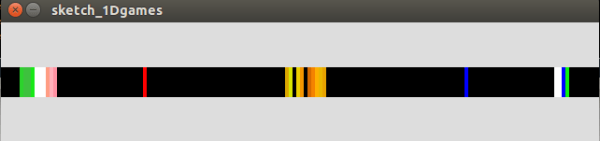
First there were text games, then came 2D dungeons. When Wolfenstein 3D broke out on the gaming scene, it created quite a fuss. But if all you’ve got is a strip of WS2812 LEDs, those are a few dimensions too many.

[treibair] has started up a project on Hackaday.io to develop 1D video games to be played on a single LED strip. While the end application is something with a cool physical interface, probably driven by a microcontroller, prototyping is a lot easier on the big computer. He’s writing it in Processing, though, so that the transition to the Arduino is easier in the end.

There are a couple of other games out there in 1D, including Line Wobbler (YouTube) and, naturally, Wolfenstein 1D. We even saw a one-dimensional “snake” clone at Make Munich a few months back. (Would the author please stand up?)

We think the idea is a good one, and lining up everyone’s 1D gaming experience in one place would be a great help. So link up code and reviews in the comments!

Continue reading “Video Games In As Few Dimensions As Possible”

Pokédex Case Keeps Your Phone Powered Up So You Can Catch ‘Em All

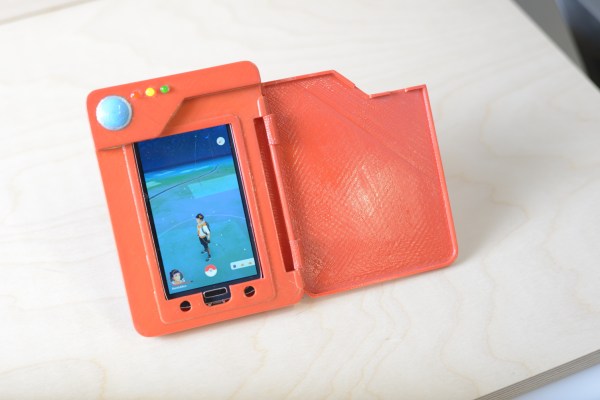
The launch of Pokemon Go has unleashed the franchise upon the world once again but this time it’s encouraging users to get active and socialize in the great outdoors. To show off their dedication to the cause, [Npoole] 3D printed a Pokédex external battery and case to combat the game’s already legendary drain on their Galaxy S4’s resources.

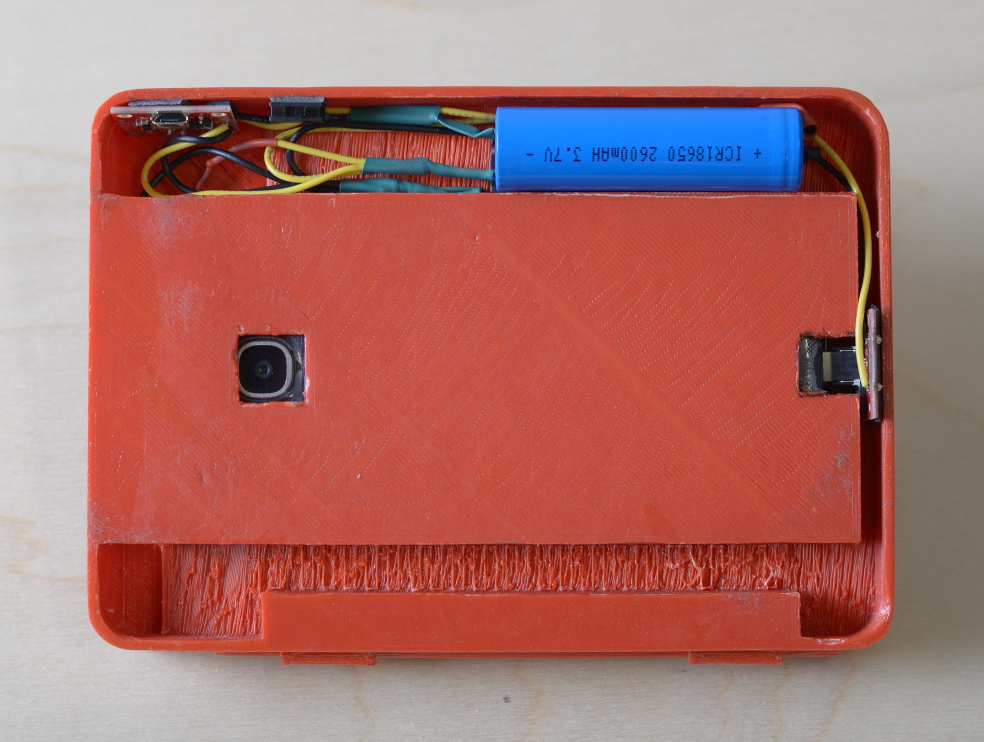
Pokedex Open BackMimicking the first-generation Kanto design, [Npoole] 3D printed it in red ABS and added a small circuit with a red, yellow and green LED to complete the effect. Inside, a 18650 lithium cell provides the much-needed backup power via a micro B plug and is boosted to 5V with a LiPo charger/booster board. Despite a switch on the circuit, the battery slowly drains so that’s something to be corrected in a future version.

As you can see, there is still some room left over in the external bat–I mean–Pokédex, and [Npoole]  intends to add another battery and a cooling fan to further improve the design. The result is a little bulky, but for new and diehard fans alike, a working Pokédex definitely worth it.

While that’s printing, if you’re looking to hack your way to the perfect Poké-ball throw, try out this lo-tech addition to your Pokémon trainer kit.

[via Sparkfun]

Tearing Apart The Nintendo PlayStation

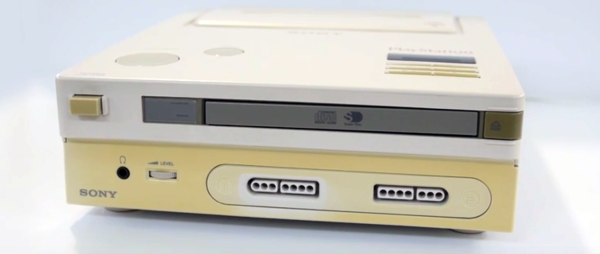
The mid 90s were a weird time for video game hardware. There were devices that could play videos from compact disks. Those never caught on. Virtual reality was the next big thing. That never caught on. The Sony PlayStation was originally an add-on for the Super Nintendo. That never caught on, but a few prototype units were produced. One of these prototype ‘Nintendo Playstations’ was shipped to a company that went into bankruptcy. Eventually, the assets of this company were put up for auction, and this unbelievably rare game console was bought by [Terry Diebold] for $75.

[Terry] allowed [Ben Heck] tear into this piece of videogame history, and he has the video proof that this was a collaboration between Sony and Nintendo.

Continue reading “Tearing Apart The Nintendo PlayStation”