Four Years Later, Off-Grid Office Shed Still Rocks

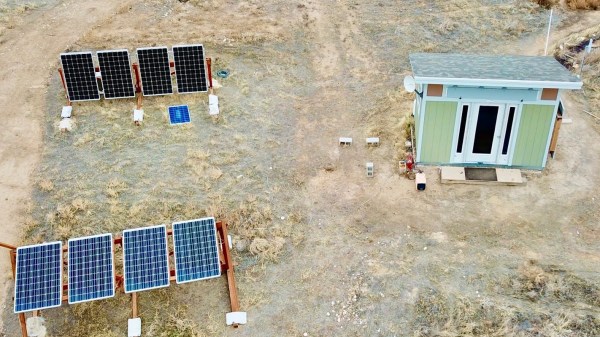
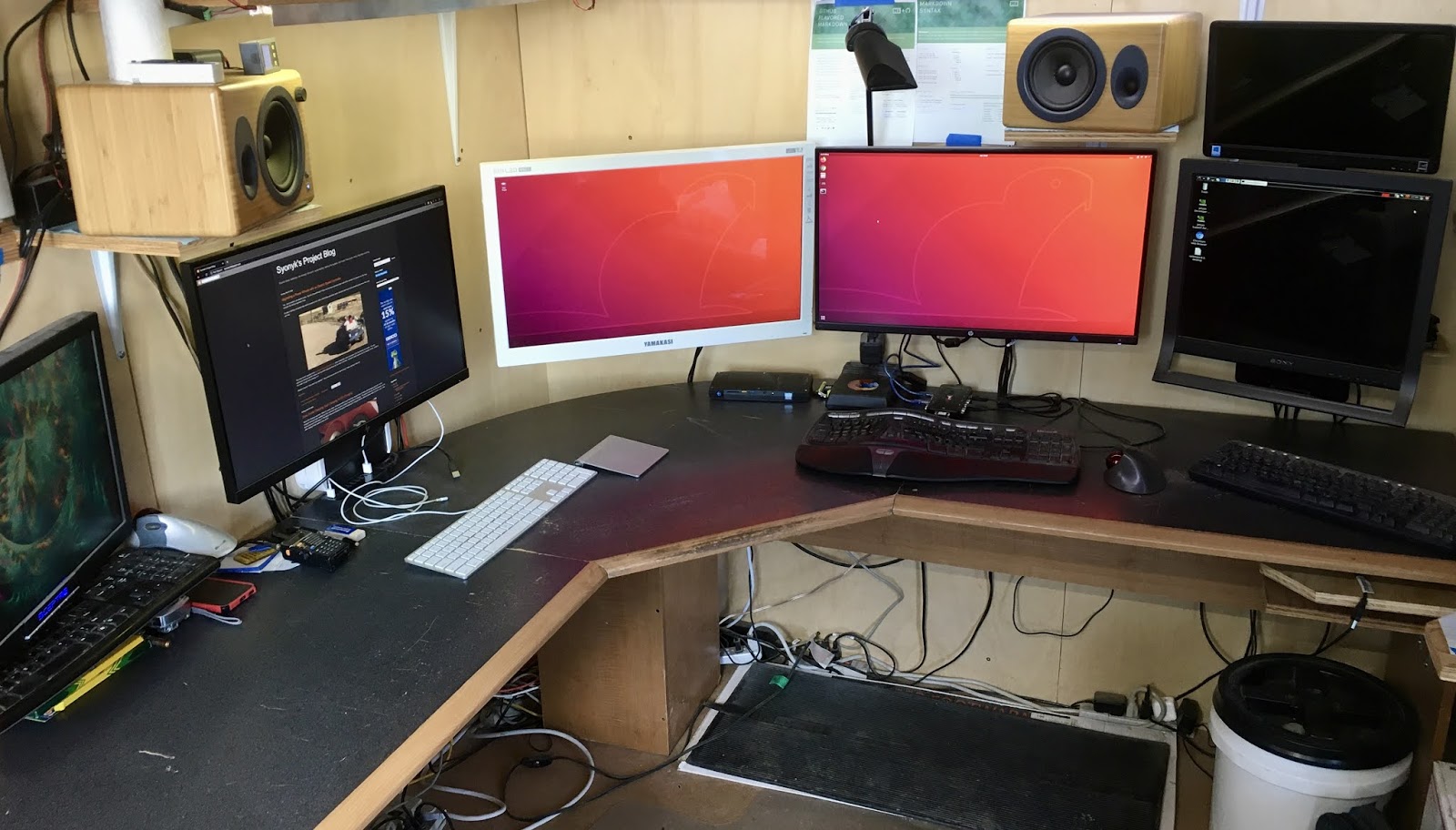
About four years ago, [Russell Graves] created what was, to him, the ultimate work-from-home environment: an off-grid office shed. The shed might look a bit small, but it’s a considerably larger workspace than most people in an office are granted. Four years later, in the middle of a global pandemic, working from home has become much more common and [Russel] shares some thoughts on working from homeĀ and specifically reflects on how his off-grid, solar powered shed office (or “shoffice” as he likes to call it) has worked out. In short, after four years, it rocks hard and is everything he wanted and more.

Its well-insulated plywood walls let him mount monitor arms and just about anything else anywhere he wants, and the solar power system allows him to work all day (and into the night if he wants, which he doesn’t) except for a few spells in the winter where sunlight is just too scarce and a generator picks up the slack. Most importantly, it provides a solid work-life separation — something [Russell] is convinced is critical to basic wellness as a human being.

That’s not to say an off-grid solar shed is the perfect solution for everyone. Not everyone can work from home, but for those who can and who identify with at least some of the motivations [Russell] expressed when we covered how he originally created his office shed, he encourages giving it some serious thought.

The only thing he doesn’t categorically recommend is the off-grid, solar powered part. To be clear, [Russell] is perfectly happy with his setup and even delights in being off-grid, but admits that unless one has a particular interest in solar power, it makes more sense to simply plug a shed office into the grid like any other structure. Solar power might seem like a magic bullet, but four years of experience has taught him that it really does require a lot of work and maintenance. Determined to go solar? Maybe give the solar intensity sensor a look, and find out just how well your location is suited to solar before taking the plunge.

Building A Serious Solar Inverter Battery Pack

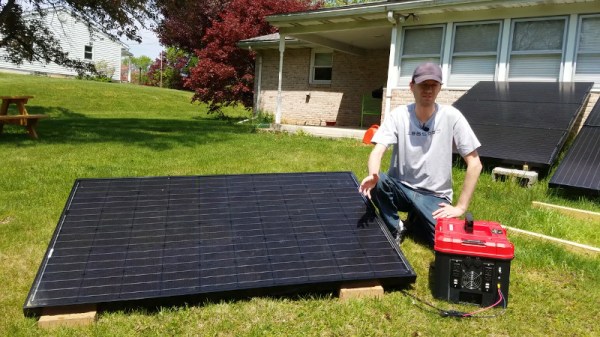
If you’re out in the wilderness, having plenty of electricity on hand is a blessing. Eschewing fossil fuels, [LithiumSolar] is, as their name suggests, a fan of other technologies – undertaking the construction of a 3.5kWh solar generator that’s rugged and ready for the outdoors.

The build starts with 18650 lithium-ion cells sourced from a recycler, packed inside obsolete modem battery packs. After harvesting 390 cells, the best 364 are chosen and assembled into plastic holders to create a 14S26P configuration. A spot welder is employed to weld the pack together, with XT60 connectors used as the main bus connectors, albeit in a very non-standard configuration. Balance leads are hooked up to a 14S battery management system, to keep things in check. The huge pack is then installed inside a stout Craftsman toolbox, along with a MPPT solar charger module, and a 1500W inverter for output.

The build video is a great resource for anyone interested in building custom 18650 packs or battery solar power systems. [LithiumSolar] does a great job of clearly explaining each step and the reasons for part selections along the way. Of course, in a neat dovetail to this project, we’ve even seen solar-powered spot welders before – which would be useful if you need to replicate this build out in the field somewhere. Video after the break.

Continue reading “Building A Serious Solar Inverter Battery Pack”

Searching For Alien Life With The Sun As Gravitational Telescope

Astronomy is undoubtedly one of the most exciting subjects in physics. Especially the search for exoplanets has been a thriving field in the last decades. While the first exoplanet was only discovered in 1992, there are now 4,144 confirmed exoplanets (as of 2nd April 2020). Naturally, we Sci-Fi lovers are most interested in the 55 potentially habitable exoplanets. Unfortunately, taking an image of an Earth 2.0 with enough detail to identify potential features of life is impossible with conventional telescopes.

The solar gravitational lens mission, which has recently been selected for phase III funding by the NASA Innovative Advanced Concepts (NIAC) program, is aiming to change that by taking advantage of the Sun’s gravitational lensing effect. Continue reading “Searching For Alien Life With The Sun As Gravitational Telescope”

Rover Runs Slow And Steady On Solar Power

The solar panel technology we have available today doesn’t really lend itself to practical everyday transport. But when speed isn’t a concern, it can make for some very interesting autonomous rovers. One example of this is [Daniel Riley] aka [rctestflight]’s solar powered rover, which he built to live autonomously at his flight testing field, crawling around whenever it has gathered enough juice from the sun.

[Daniel] has thing for autonomous craft of all types, with quite a few aircraft and boats to his name. This rover is built around a welded steel frame, with each wheel driven by a brushless geared motors via a chain. While it’s technically a skid steer, the electronic speed controls are from a quadcopter and can’t reverse, so it doesn’t turn quite on the spot.

With the rigid steel frame, any small bump in the ground would cause one wheel to lose traction. To fix this, the frame was cut in two and a pivot added in the center, allowing all four wheels to always remain on the ground. Another problem is that the wheels would sometimes dig themselves into the soft wet ground, so this, [Daniel] attached a 3D printed “hump” to each drive wheel, which helps them to climb out of any soft spots. For the next version of this rover, [Daniel] plans to use cheap DC geared motors from a Barbie jeep. They’re a bit too fast though, so he’ll be adding 3D printed cycloidal reduction gearboxes. We’re definitely looking forward to seeing here this project goes from here.

There have been a number of projects to test solar powered robots for agricultural use. We really like the idea, with its potential for long duration missions. Imagine something like this roaming the Black Rock playa in the US, the Makgadikgadi Pan in Botswana, or even the Sahara Desert, while gathering environmental data and making awesome time-lapse videos.

Solar Panel Keeps Car Battery Topped Off Through OBD-II Port

Up until the 1980s or so, a mechanic could check for shorts in a car’s electrical system by looking for sparks while removing the battery terminal with everything turned off in the car. That stopped being possible when cars started getting always-on devices, and as [Kerry Wong] learned, these phantom loads can leave one stranded with a dead battery at the airport after returning from a long trip.

[Kerry]’s solution is simple: a solar trickle charger. Such devices are readily available commercially, of course, and generally consist of a small photovoltaic array that sits on the dashboard and a plug for the lighter socket. But as [Kerry] points out in the video below, most newer model cars no longer have lighter sockets that are wired to work without the ignition being on. So he chose to connect his solar panel directly to the OBD-II port, the spec for which calls for an always-on, fused circuit connected directly to the positive terminal of the vehicle battery. He had to hack together an adapter for the panel’s lighter plug, the insides of which are more than a little scary, and for good measure, he added a Schottky diode to prevent battery discharge through the panel. Even the weak winter sun provides 150 mA or so of trickle charge, and [Kerry] can rest assured his ride will be ready at the end of his trip.

We used to seeing [Kerry] tear down test gear and analyze unusual devices, along with the odd post mortem on nearly catastrophic failures. We’re glad nothing burst into flames with this one.

Continue reading “Solar Panel Keeps Car Battery Topped Off Through OBD-II Port”

Laser Etches Solar Absorbing Material

Having a laser cutter these days isn’t a big deal. But [Chunlei Guo], a professor at the University of Rochester, has a powerful femto-second pulse laser and used it to create what might be the perfect solar absorber. You can see a video about the work, below.

It stands to reason that white materials reflect most light and therefore absorb less energy than black materials — this is part of what makes a radiometer work. Tungsten, in particular, is a good metal for absorbing solar power, but this new laser treatment — which builds nanostructures on the surface of the metal — increases efficiency by 130% compared to untreated tungsten.

Continue reading “Laser Etches Solar Absorbing Material”

Teardown And Analysis Of A Cheap Solar Lamp

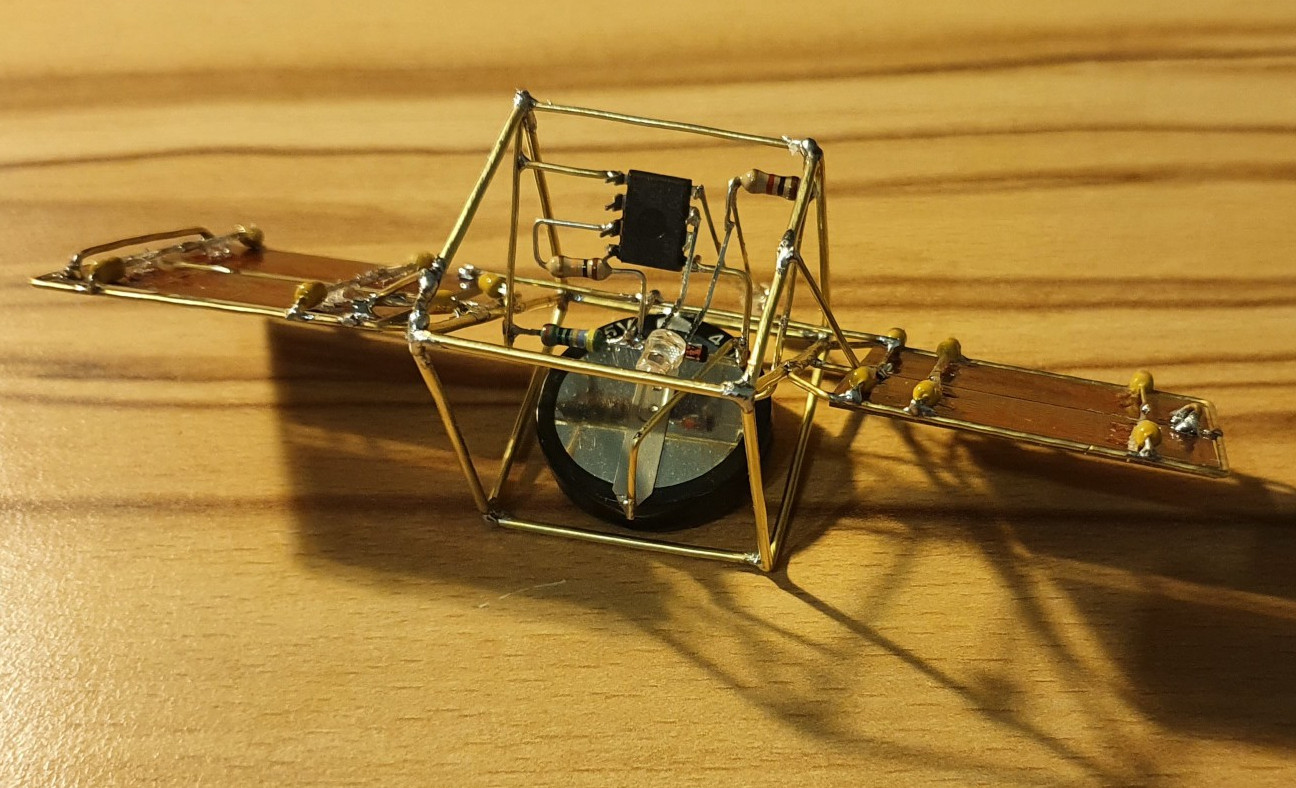
If you walk the aisles of a dollar store one constant that you will see worldwide is the Chinese solar lamp. Your dollar gets you a white LED behind plastic, mounted on a spike to stick into the ground, and with a solar cell on top. It charges in the sunlight during the day and then lights the LED for a few hours at nightfall. They are in gardens everywhere, and no doubt landfill sites are full of them because they do not last very long. [Giovanni Bernardo] had one that stopped working, so he subjected it to a teardown to find out what was up, and what made it tick (Italian, Google Translate link).

As expected, the culprit proved to be a leaking and corroded 1.2 volt NiMh cell, and its replacement with an AA cell brought the lamp back to life. But the interesting part of this tale comes from his teardown and analysis of the lamp’s components. It’s centered around a YX8016 battery charger and power management chip. The device has an amazing economy of design with only four components including the solar cell and the LED. The final component is a small inductor that forms part of the boost converter to keep the LED lit as the battery voltage falls. The chip switches at 580kHz, and produces a 3.2 volt supply.

If this is a subject that interests you, don’t forget to take a look at the power harvesting challenge we ran a while back.