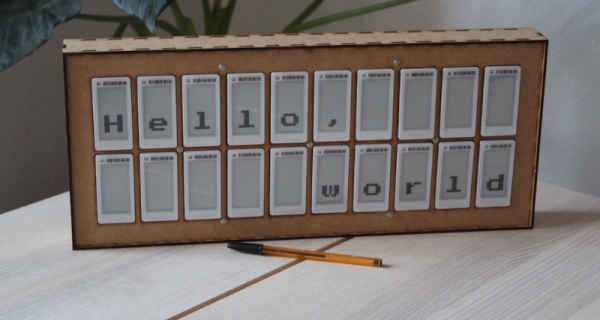
How expensive is it to make a panel that uses e-ink technology? That might depend on how flexible you are. [RBarron] read about reverse engineering point-of-sale shelf labels and found them on eBay for just over a buck apiece. Next thing you know, 20 of them were working together in a single panel.
The panels use RF or NFC programming, normally, but have the capability to use BLE. Naturally you could just address each one in turn, but that isn’t very efficient. The approach here is to use one label as a BLE controller and it then drives the other displays in a serial daisy chain, where each label’s receive pin is set to the previous label’s transmit pin.
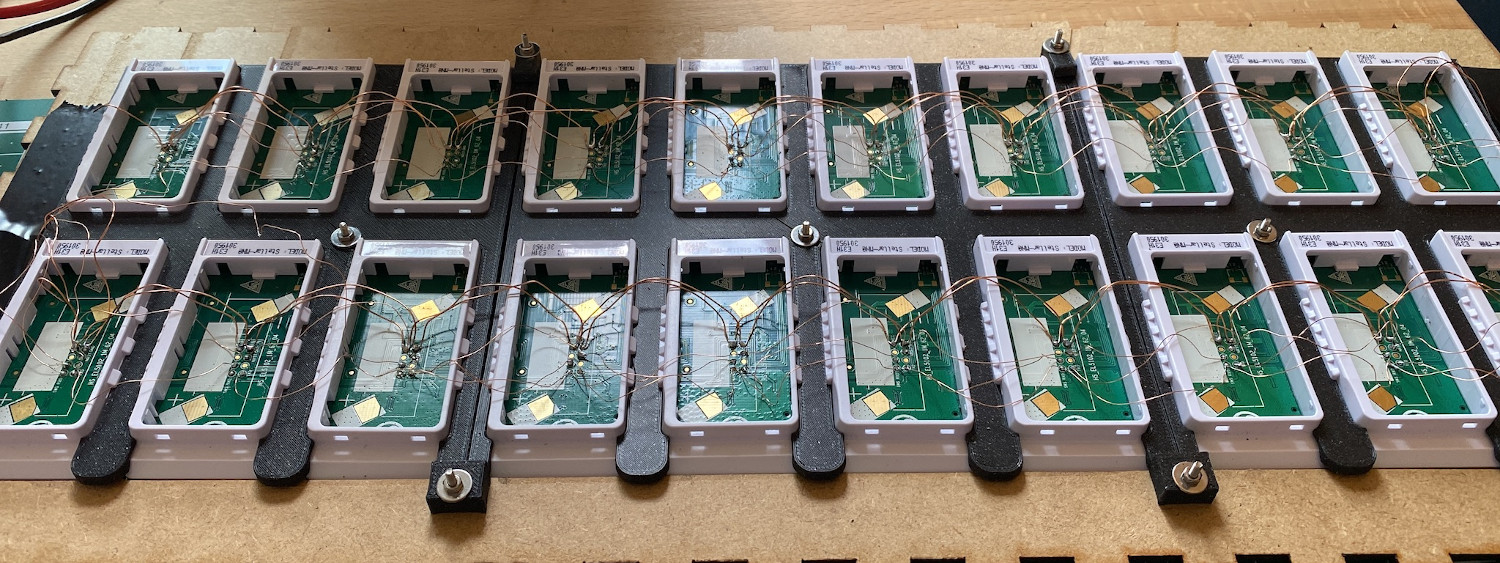
That allows a simple piece of code to read incoming messages and process the ones addressed to that label. Anything else just gets sent out the serial port. Only the BLE node has special firmware. At first, we thought each label would need an address and we wondered how it would be set other than having unique firmware for each one since there doesn’t appear to be a handy way to do a hardware-based configuration.
The actual solution is clever. Each message has a hop counter that each node decrements before passing the message along the chain. When the hop count is zero, the message is at its destination. Simple and very easy to configure. In theory, you could replace any of the labels after the first one with any other label and the system would still work correctly.
Even the wiring is clever, with a jig to bend the wire to ensure even spacing of each element on the panel. A laser-cut box finishes the project off nicely. The code is all available on GitHub. We’ve seen these kinds of tags used for things like weather stations. Not to mention conference badges.
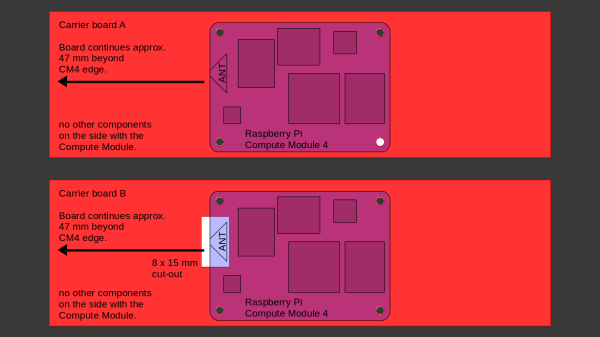
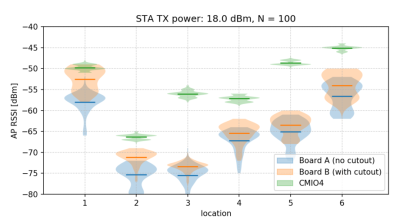 After setting up some test locations and writing a few scripts for ease of testing, [Avian] recorded the experiment data. Having that data plotted, it would seem that, while presence of an under-antenna cutout helps, it doesn’t affect RSSI as much as the module placement does. Of course, there’s way more variables that could affect RSSI results for your own designs – thankfully, the scripts used for logging are available, so you can test your own setups if need be.