Eavesdropping On Cosmonauts With An SDR

Usually when we hear about someone making contact with astronauts in orbit, it’s an intentional contact between a ham on the ground and one of the licensed radio amateurs on the ISS. We don’t often see someone lucky enough to snag a conversation between ground controllers and a spacecraft en route to the ISS like this.

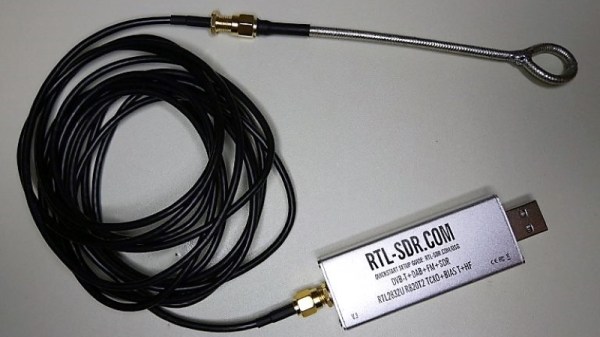
For [Tysonpower], this was all about being in the right place at the right time, as well as having the right equipment and the know-how to use it properly. Soyuz MS-12 launched from Baikonur on March 14 with cosmonaut [Aleksey Ovchinin] and NASA astronauts [Nick Hague] and [Kristina Koch] onboard, destined for the ISS after a six-hour flight. The lucky bit came when [Tysonpower] realized that the rendezvous would happen when the ISS was in a good position relative to his home in Cologne, which prompted him to set up his gear for a listening session. His AirSpy Mini SDR was connected to a home-brew quadrifilar helical (QFH) “eggbeater” antenna on his roof. What’s nice about this antenna is that it’s fixed rather than tracking, making it easy to get on the air with quickly. After digging around the aviation bands at about 121 MHz for a bit, [Tysonpower] managed to capture a few seconds of a conversation between [Ovchinin] and Moscow Flight Control Center. The commander reported his position and speed relative to the ISS a few minutes before docking. The conversation starts at about 1:12 in the video below.

We think it’s just cool that you can listen in on the conversations going on upstairs with a total of less than $50 worth of gear. Actually talking to the hams aboard the ISS is another matter, but not a lot more involved really.

Continue reading “Eavesdropping On Cosmonauts With An SDR”

WiFi Your Door Lock With An ESP

The Internet of Things is upon us, and with that comes a deluge of smart cameras, smart home monitors, and smart home locks. There actually aren’t many smarts in these smart conveniences, and you can easily build your own. That’s what [MakerMan] did with some off-the-shelf parts and just a little bit of code. Now he can open his door with WiFi, and it’s a nice clean build.

The build process began by first removing the existing barrel bolt on the door. This was replaced by a deadbolt that also had some really neat solenoids inside for remote activation. This was mounted to the door in a way that the door could lock, with a minimal amount of damage from some skillful hacksaw work. The only thing left to do after this was add some electronics and brains to the lock.

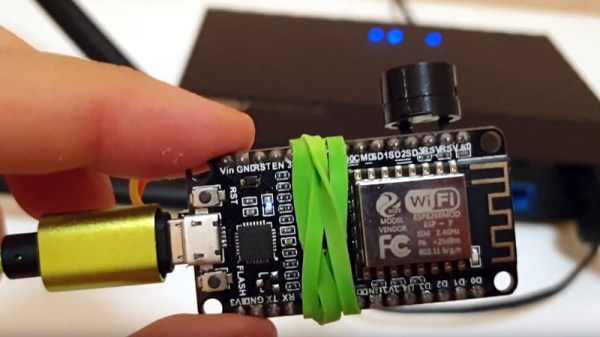
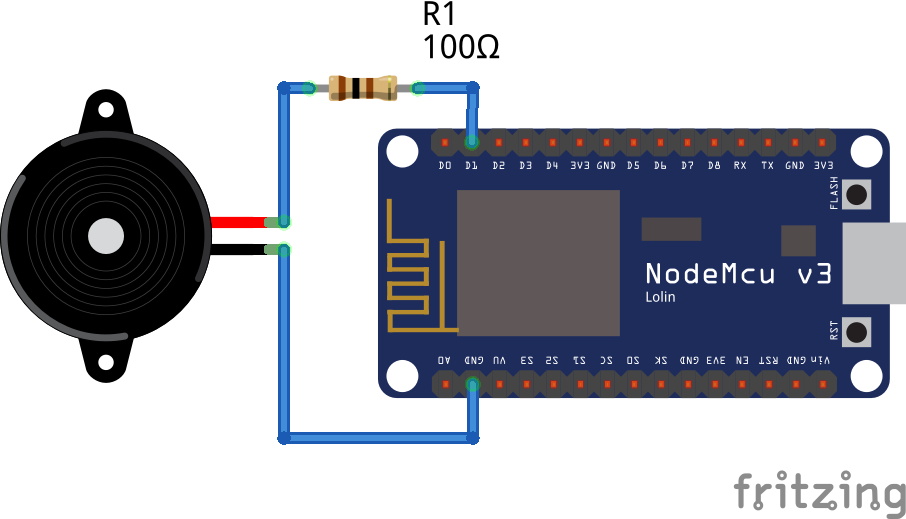
For this, [MakerMan] added a button and LED to the outside of the door. Some of these wires were fed into the lock mechanism, with a few more run over to a project enclosure mounted next to a power outlet. The project enclosure holds an ESP-8266, power regulator, and relay board, and the ESP is running code that instantiates a web server that will unlock the door with a few clicks on a web page.

Sure, it’s probably not the most secure lock on the planet, and the 5V linear regulator is held on to the relay board with hot glue, but this is an exceptionally well-documented project, and all the code is available in an archive.

Continue reading “WiFi Your Door Lock With An ESP”

Library Makes ESP Over The Air Updates Easy

Potentially, one of the great things about having a device connected to the network is that you can update it remotely. However, how do you make that happen? If you use the Arduino setup for the ESP8266 or ESP32, you might try [scottchiefbaker’s] library which promises to make the process easy.

Adding it looks to be simple. You’ll need an include, of course. If you don’t mind using port 8080 and the path /webota, you only need to call handle_webota() from your main loop. If you want to change the defaults, you’ll need to add an extra call in your setup. You also need to set up a few global variables to specify your network parameters.

Continue reading “Library Makes ESP Over The Air Updates Easy”

DIY Six Channel Arduino RC Transmitter

It’s wasn’t so long ago that RC transmitters, at least ones worth owning, were expensive pieces of gear. Even more recently than that, the idea of an RC transmitter running an open source firmware would have been considered a pipe dream. Yet today buying cheap imported transmitters and flashing a community developed firmware (if it didn’t come with it pre-installed to begin with) is common place. It’s not much of a stretch to say we’re currently in the “Golden Age” of hobby RC transmitters.

But what if even cheap hardware running customizable software isn’t enough? What if you want to take it to the next level? In that case, [Electronoobs] has an Arduino powered RC transmitter with your name on it. But this is no scrap of protoboard with a couple of cheap joysticks on it, though he has made one of those too. The goal of this build was for it to look and perform as professional as possible while remaining within the hobbyist’s capabilities. The final product probably won’t be winning any design awards, but it’s still an impressive demonstration of what the individual hacker and maker can pull off today with the incredible technology we have access to.

So what goes into this homebrew radio control system? Inside the back panel [Electronoobs] mounted the batteries, charging module, and the voltage regulator which steps the battery voltage down to the 3.3 V required to drive the rest of the transmitter’s electronics. On the flip side there’s an Arduino Nano, an NRF24 module, and an OLED display. Finally we have an assortment of switches, buttons, potentiometers, and two very nice looking JH-D202X-R2 joysticks for user input.

As you might have guessed, building your own transmitter means building your own receiver as well. Unfortunately you won’t be able to bind your existing RC vehicles to this radio, but since the receiver side is no more complicated than another Arduino Nano and NRF24 module, it shouldn’t be hard to adapt them if you were so inclined.

Low-cost consumer RC transmitters can be something of a mixed bag. There are some surprisingly decent options out there, but it’s not a huge surprise that hackers are interested in just spinning up their own versions either.
Continue reading “DIY Six Channel Arduino RC Transmitter”

Es’hail-2: Hams Get Their First Geosynchronous Repeater

In the radio business, getting the high ground is key to covering as much territory from as few installations as possible. Anything that has a high profile, from a big municipal water tank to a roadside billboard to a remote hilltop, will likely be bristling with antennas, and different services compete for the best spots to locate their antennas. Amateur radio clubs will be there too, looking for space to locate their repeaters, which allow hams to use low-power mobile and handheld radios to make contact over a vastly greater range than they could otherwise.

Now some hams have claimed the highest of high ground for their repeater: space. For the first time, an amateur radio repeater has gone to space aboard a geosynchronous satellite, giving hams the ability to link up over a third of the globe. It’s a huge development, and while it takes some effort to use this new space-based radio, it’s a game changer in the amateur radio community.

Continue reading “Es’hail-2: Hams Get Their First Geosynchronous Repeater”

EBay Modules And Custom PCBs Make A Plug And Play Ham Transceiver

Many of us have fond memories of our introduction to electronics through the “200-in-1” sets that Radio Shack once sold, or even the more recent “Snap Circuits”-style kits. Most of eventually us move beyond these kits to design our circuits; still, there’s something to be said for modular designs. This complete amateur radio transceiver is a great example of that kind of plug and play construction.

The rig is the brainchild of [jmhrvy1947], who set out to build a complete transceiver using mostly eBay-sourced modules. Some custom PCBs are used, but those are simple boards that can be etched and drilled easily. The transceiver is only for continuous-wave (CW) use, which would normally mean you’d need to know Morse, but thanks to some clever modifications to open-source apps like Quisk and FLDigi, Morse can be received and sent directly from the desktop. That will no doubt raise some hackles, but we think it’s a great way to learn code. The rig is QRP, or low power, transmitting only 100 mW with the small power amp shown. Adding eBay modules can jack that up to a full 100 Watts, which also requires adding a 12-volt power supply, switchable low-pass filters, a buck-boost converter, and some bandpass filters for band selection. It ends up looking very experimental, but it works well enough to make contacts.

We really like the approach here, and the fact that the rig can be built in stages. That makes it a perfect project for our $50 Ham series, which just kicked off. Perhaps we’ll be seeing it again soon.

Continue reading “EBay Modules And Custom PCBs Make A Plug And Play Ham Transceiver”

The $50 Ham: Entry-Level Transceivers For Technicians

Last week , I covered the ridiculously low barriers to entry to amateur radio, both in terms of financial outlay and the process of studying for and passing the FCC examination. You’ve had seven days, so I assume that you’ve taken the plunge and are a freshly minted amateur radio operator. The next big question may be: Now what?

We briefly mentioned the image that ham radio is a rich old person’s hobby, and that reputation is somewhat deserved. For ham gear, there really is no upper limit on what you can spend. Glossy brochures and slick web pages hawk transceiver bristling with knobs and switches and loaded with the latest features, all of which will probably be obsolete within a few years when the Next Big Thing comes along and manufacturers respond with new, must-have models – looking at you, ICOM IC-7300. It’s no different than any other technology market, and enough people fall for that marketing to make it a going concern.

But thankfully, while there is no apparent ceiling on what you can spend on ham gear, there certainly is a floor, and it can be very, very low. Our $50 budget can go quite a long way to getting a new Technician on the air, if you’re willing to make some compromises and can forego the latest and greatest for a while.

Continue reading “The $50 Ham: Entry-Level Transceivers For Technicians”