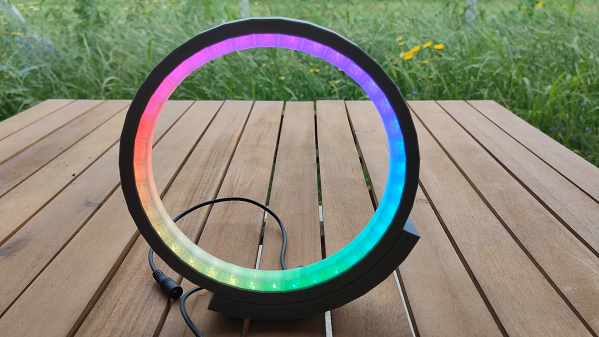
Lamps used to be things built to provide light with specific purpose, whether as reading lamps, desk lamps, or bedside table lamps. Now we just build them for the vibes, as with this minimalist LED lamp from [andrei.erdei].
The build uses a 3D-printed frame printed in opaque grey, with a diffuser element printed in a more translucent white. This is key to allowing the LED to nicely glow through the lamp without ugly distracting hotspots spoiling the effect. The lamp mounts 36 WS2812B LEDs in strip form. These are controlled from an Arduino Nano running the FastLED library for lightweight and easy control of the addressable LEDs. Smooth rainbow animations are made easy by the use of the HSV color space, which is more suitable for this job than the RGB color space you may otherwise be more familiar with.
[andrei.erdei] does a great job of explaining the build, including the assembly, electronics, and code aspects. The latter could serve as a particularly good resource if you’re just starting out on your own builds in the blinky, glowable space. Video after the break.
Continue reading “Minimalist LED Lamp Is Circular Beauty Incarnate”
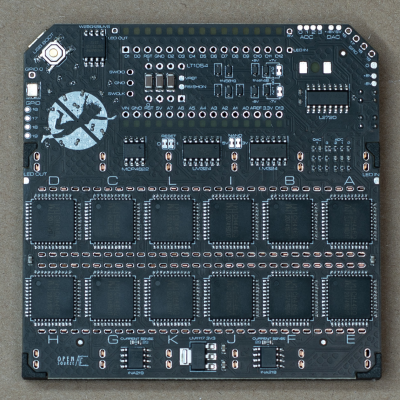 world, which could make for some very interesting non-trivial applications.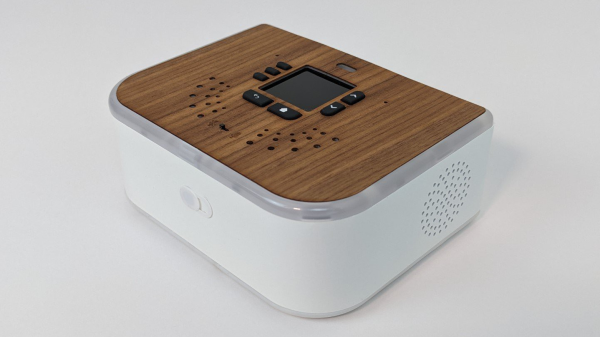
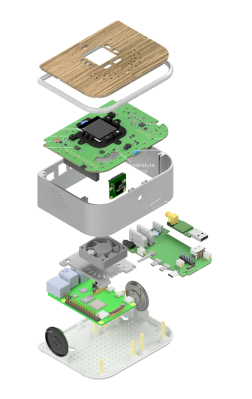 concerns of privacy and data security; they look less and less attractive the closer you look. Luckily the Raspberry Pi and its friends have improved the accessibility to the point where it’s positively easy to create whatever you want with whatever hardware you need, and to that end we think [Mehrdad] has done a splendid job.

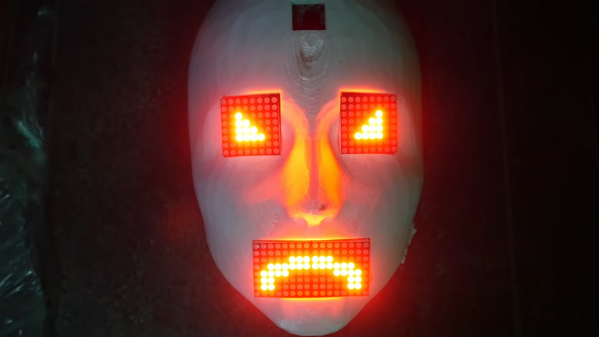
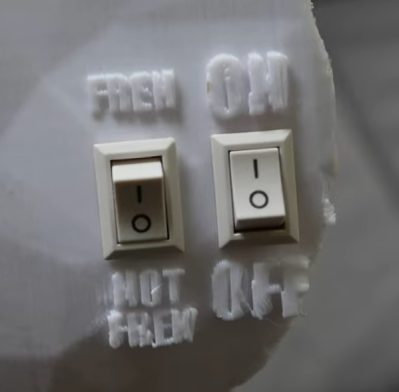 The robot face is introduced to us with a soundtrack befitting Stranger Things, or maybe Luke Million. The build was inspired by The Doorman, a creepy art piece with animatronic eyes. [Jens’] build started with a 3D model of a 3D mask, with the eyes and mouth modified to have rectangular cutouts for LED displays. The displays are run by a Raspberry Pi Pico, which generates a variety of eye and mouth animations. It uses a camera for face tracking, so the robot’s evil eyes seem to follow the viewer as they move around. In good form, the face has a simple switch—from good to evil, happy to angry. Or, as [Jens] designates the modes: “Fren” and “Not Fren.”