Stealing Cars For 20 Bucks

[Yingtao Zeng], [Qing Yang], and [Jun Li], a.k.a. the [UnicornTeam], developed the cheapest way so far to hack a passive keyless entry system, as found on some cars: around $22 in parts, give or take a buck. But that’s not all, they manage to increase the previous known effective range of this type of attack from 100 m to around 320 m. They gave a talk at HITB Amsterdam, a couple of weeks ago, and shown their results.

The attack in its essence is not new, and it’s basically just creating a range extender for the keyfob.  One radio stays near the car, the other near the car key, and the two radios relay the signals coming from the car to the keyfob and vice-versa. This version of the hack stands out in that the [UnicornTeam] reverse engineered and decoded the keyless entry system signals, produced by NXP, so they can send the decoded signals via any channel of their choice. The only constraint, from what we could tell, it’s the transmission timeout. It all has to happen within 27 ms. You could almost pull this off over Internet instead of radio.

The actual keycode is not cracked, like in a HiTag2 attack. It’s not like hacking a rolling key keyfob either. The signals are just sniffed, decoded and relayed between the two devices.

A suggested fix from the researchers is to decrease this 27 ms timeout. If it is short enough, at least the distance for these types of attacks is reduced. Even if that could eventually mitigate or reduce the impact of an attack on new cars, old cars are still at risk.  We suggest that the passive keyless system is broken from the get-go: allowing the keyfob to open and start your car without any user interaction is asking for it. Are car drivers really so lazy that they can’t press a button to unlock their car? Anyway, if you’re stuck with one of these systems, it looks like the only sure fallback is the tinfoil hat. For the keyfob, of course.

[via Wired]

You Think You Can’t Be Phished?

Well, think again. At least if you are using Chrome or Firefox. Don’t believe us? Well, check out Apple new website then, at https://www.apple.com . Notice anything? If you are not using an affected browser you are just seeing a strange URL after opening the webpage, otherwise it’s pretty legit. This is a page to demonstrate a type of Unicode vulnerability in how the browser interprets and show the URL to the user. Notice the valid HTTPS. Of course the domain is not from Apple, it is actually the domain: “https://www.xn--80ak6aa92e.com/“. If you open the page, you can see the actual URL by right-clicking and select view-source.

So what’s going on? This type of phishing attack, known as IDN homograph attacks, relies on the fact that the browser, in this case Chrome or Firefox, interprets the “xn--” prefix in a URL as an ASCII compatible encoding prefix. It is called Punycode and it’s a way to represent Unicode using only the ASCII characters used in Internet host names. Imagine a sort of Base64 for domains. This allows for domains with international characters to be registered, for example, the domain “xn--s7y.co” is equivalent to “短.co”, as [Xudong Zheng] explains in his blog.

Different alphabets have different glyphs that work in this kinds of attacks. Take the Cyrillic alphabet, it contains 11 lowercase glyphs that are identical or nearly identical to Latin counterparts. These class of attacks, where an attacker replaces one letter for its counterpart is widely known and are usually mitigated by the browser:

Continue reading “You Think You Can’t Be Phished?”

OBD-II Dongle Attack: Stopping A Moving Car Via Bluetooth

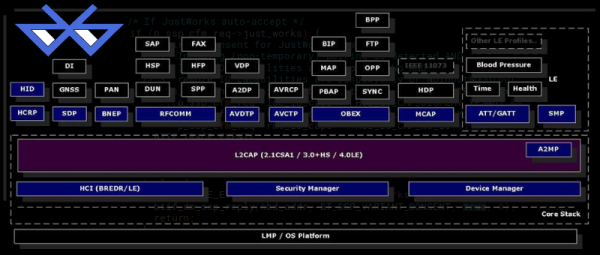
Researchers from the Argus Research Team found a way to hack into the Bosch Drivelog ODB-II dongle and inject any kind of malicious packets into the CAN bus. This allowed them to, among other things, stop the engine of a moving vehicle by connecting to the dongle via Bluetooth.

Drivelog is Bosch’s smart device for collecting and managing your vehicle’s operating data. It allows a user to connect via Bluetooth to track fuel consumption and to be alerted when service is necessary. It was compromised in a two stage attack. The first vulnerability, an information leak in the authentication process, between the dongle and the smart phone application allowed them to quickly brute-force the secret PIN offline and connect to the dongle via Bluetooth. After being connected, security holes in the message filter of the dongle allowed them to inject malicious messages into the CAN bus.

The Bluetooth pairing mechanism, called “Just Works”, has been fixed by Bosh by activating a two-step verification for additional users to be registered to a device.  The second issue, the ability for a maliciously modified mobile application to possibly send unwanted CAN messages, will be mitigated with an update to the dongle firmware to further limit the allowed commands that the dongle is able to place on the CAN bus.

Bosch downplays the issue a bit in their statement:

It is important to note that scalability of a potential malicious attack is limited by the fact that such an attack requires physical proximity to the dongle. This means that the attacking device needs to be within Bluetooth range of the vehicle.

The problem is that physical proximity does not equal Bluetooth range. Standard Bluetooth range is about 10m, which is very arguable physical proximity, but it is pretty easy to buy or even modify a Bluetooth dongle with 10x and 100x more range. When adding a wireless connection to the CAN bus of an automobile, the manufacturer has an obligation to ensure the data system is not compromised. This near-proximity example is still technically a remote hack, and it’s an example of the worst kind of vulnerability.

BrickerBot Takes Down Your IoT Devices Permanently

There is a new class of virii in town, specifically targeting Internet of Things (IoT) devices. BrickerBot and its variants do exactly as their name says, turning your smart devices into bricks. Someone out there has gotten tired of all the IoT security flaws and has undertaken extreme (and illegal) measures to fix the problem. Some of the early reports have come in from a security company called Radware, who isolated two variants of the virii in their honeypots.

In a nutshell, BrickerBot gains access to insecure Linux-based systems by using brute force. It tries to telnet in using common default root username/password pairs. Once inside it uses shell commands (often provided by BusyBox) to write random data to any mounted drives. It’s as easy as

dd if=/dev/urandom of=/dev/sda1

With the secondary storage wiped, the device is effectively useless. There is already a name for this: a Permanent Denial-of-Service (PDoS) attack.

Now any card carrying Hackaday reader will know that a system taken down like this can be recovered by re-flashing through USB, JTAG, SD, other methods. However, we’re not BrickerBot’s intended audience. We’ve all changed our devices default passwords, right? RIGHT?

For more IoT security, check out Elliot’s excellent article about botnets earlier this year, and its follow-up.

Is My Password Safe? Practices For People Who Know Better

A couple of weeks back a report came out where [Tavis Ormandy], a widely known security researcher for Google Project-Zero, showed how it was possible to abuse Lastpass RPC commands and steal user passwords. Irony is… Lastpass is a software designed to keep all your passwords safe and it’s designed in a way that even they can’t access your passwords, the passwords are stored locally using strong cryptography, only you can access them via a master-key. Storing all your passwords in only place has its downfalls. By the way, there is no proof or suggestion that this bug was abused by anyone, so if you use Lastpass don’t worry just yet.

But it got me thinking, how worried and how paranoid should a regular Internet user should be about his password? How many of us have their account details exposed somewhere online? If you’ve been around long enough, odds are you have at least a couple of accounts on some major Internet-based companies. Don’t go rushing into the Dark Web and try to find if your account details are being sold. The easiest way to get your paranoia started is to visit Have I Been Pwned. For those who never heard about it, it’s a website created by [Troy Hunt], a well-known security professional. It keeps track of all known public security breaches he can get his hands on and provides an answer to a simple question: “Was my account in any major data leak?” Let’s take a look.

Continue reading “Is My Password Safe? Practices For People Who Know Better”

Friday Hack Chat: Breaking Security With Samy Kamkar

[Samy Kamkar] is a hardware hacker extraordinaire. This week, he’s joining us on Hackaday.io for this week’s Hack Chat.

Every week, we find someone interesting that makes or breaks the electronic paraphernalia all around us. We sit them down, and get them to spill the beans on how this stuff works, and how we can get our tools and toys to work for everyone. This is the Hack Chat, and it’s happening this Friday, April 7, at noon PDT (20:0 UTC).

Over the years, [Samy] has demonstrated some incredible skills and brought us some incredible hacks. He defeated chip and pin security on a debit card with a coil of wire, exploited locked computers with a USB gadget, and has more skills than the entire DEF CON CFP review board combined. If you want to know about security, [Samy] is the guy you want to talk to.

Here’s How To Take Part:

join-hack-chatOur Hack Chats are live community events on the Hackaday.io Hack Chat group messaging.

Log into Hackaday.io, visit that page, and look for the ‘Join this Project’ Button. Once you’re part of the project, the button will change to ‘Team Messaging’, which takes you directly to the Hack Chat.

You don’t have to wait until Friday; join whenever you want and you can see what the community is talking about.

Upcoming Hack Chats

We’ve got a lot on the table when it comes to our Hack Chats. On April 14th we’ll be talking custom silicon with SiFive and on April 21st, we’re going to be talking magnets with Nanomagnetics. Making magnets, collecting magnets, playing with magnets, it’ll all be over on the Hack Chat.

2017: The Year Of The Dishwasher Security Patch

As if Windows Update wasn’t bad enough, one has to deal with a plethora of attention-hungry programs and utilities all begging for a continual stream of patches from the Internet. It’s exhausting, but unfortunately also par for the course. Many of these updates are to close security vulnerabilities that could otherwise expose your computer to undesirables. The Internet of Things will only expand the amount of hardware and software you need to keep updated and protected on a daily basis. Now, it’s your dishwasher that’s under attack.

The Register reports that Jens Regel discovered the bug in a Miele dishwasher with a webserver. It’s a basic directory traversal attack that can net the intruder the shadow password file. Armed with this, it’s simple to take over the embedded Linux system and wreak havoc on your local network.

It’s not particularly surprising – we’ve talked about IoT security and its pitfalls before. The problem is, a dishwasher is not a computer. Unlike Microsoft, or Google, or even the people behind VLC, Miele don’t have infrastructure in place to push out an update to dishwashers worldwide. This means that as it stands, your only real solutions are to either disconnect the dishwasher from your network, or lock it behind a highly restrictive firewall. Both are likely to impede functionality. Of course, as always, many will ask why a dishwasher needs to be connected to the Internet at all. Why indeed.